Wanyan Liang's Four-Pronged Incursion
Jin armies crossed the Huai River, forcing Song general Wang Quan to abandon the frontier.
Southern Song Dynasty (南宋) · HISTORICAL EVENT
采石之战
The Battle of Caishi (采石之战) was a celebrated riverine engagement fought in the eleventh lunar month of 1161 (the thirty-first year of the Shaoxing era of Southern Song and the sixth year of the Zhenglong era of Jin) in which Southern Song scholar-official Yu Yunwen commanded a small garrison to decisively defeat the invasion host of Jin Emperor Wanyan Liang along the Yangtze River at Caishiji (modern Ma'anshan, Anhui). In the autumn of 1161, Wanyan…
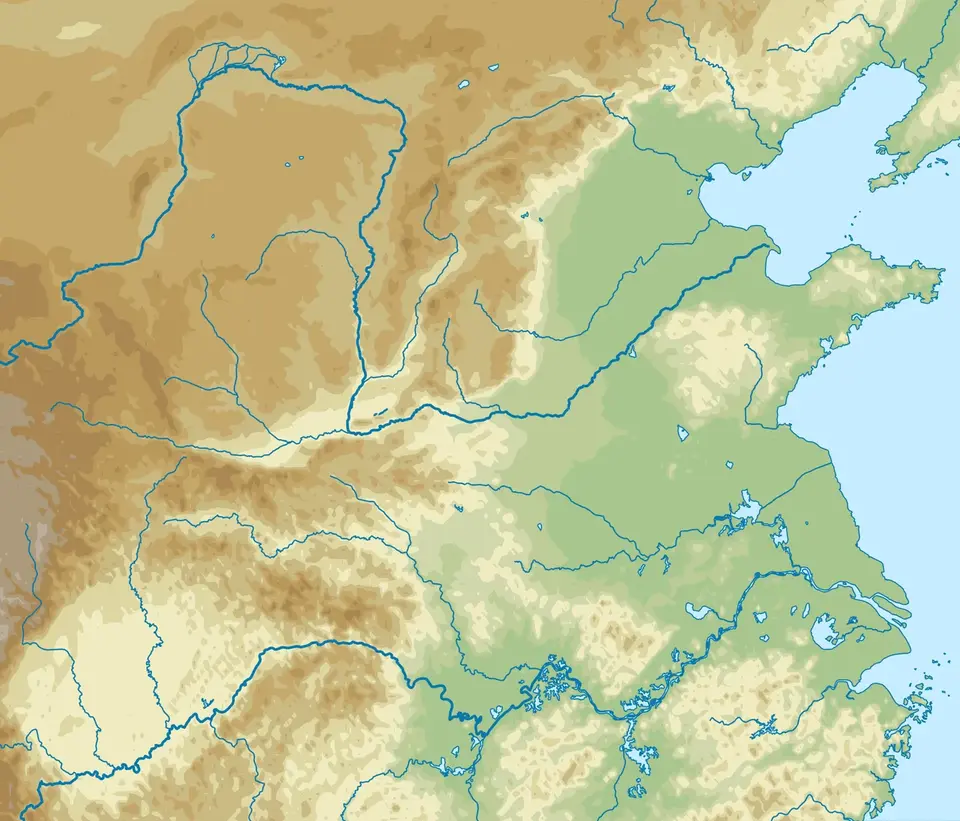
The Battle of Caishi (采石之战) was a celebrated riverine engagement fought in the eleventh lunar month of 1161 (the thirty-first year of the Shaoxing era of Southern Song and the sixth year of the Zhenglong era of Jin) in which Southern Song scholar-official Yu Yunwen commanded a small garrison to decisively defeat the invasion host of Jin Emperor Wanyan Liang along the Yangtze River at Caishiji (modern Ma'anshan, Anhui). In the autumn of 1161, Wanyan Liang mobilized six hundred thousand troops in a four-pronged invasion to annihilate the Southern Song. Song defenses along the Huai River collapsed, and Jin armies reached the northern bank of the Yangtze, constructing crossing flotillas. When the Song commander fled and his successor was delayed, eighteen thousand Song troops at Caishi were left leaderless and demoralized. Sent merely to distribute rations, civilian scholar Yu Yunwen assumed operational command, inspiring the garrison to defend their homeland. On December 15, 1161, as Wanyan Liang directed hundreds of red-bannered barges across the river, Yu deployed maneuverable treadwheel paddle-ships (Haiqiu) to ram the flat-bottomed Jin transports, discharging explosive thunderclap bombs (Pilibao) that blinded and incinerated the enemy. Simulating arriving reinforcements behind the hills, Yu routed the crossing fleet. Frustrated and defeated, Wanyan Liang was assassinated by mutinous officers days later. The victory saved the Southern Song dynasty and elevated Yu Yunwen to enduring national renown.
Jin armies crossed the Huai River, forcing Song general Wang Quan to abandon the frontier.
Arriving to distribute supplies, civilian official Yu Yunwen rallied the leaderless garrison at Caishi.
Wanyan Liang launched hundreds of transport barges; Shi Jun charged into the shallows to pin the vanguard.
Haiqiu treadwheel warships rammed enemy boats, and thunderclap bombs incinerated the invasion flotilla.
Song naval detachments crossed the river to burn surviving Jin vessels at the Yanglin anchorage.
Facing mutiny over his suicidal crossing orders, Wanyan Liang was assassinated by his own commanders.
Following his violent ascension to the Jin throne, the megalomaniacal fourth emperor Wanyan Liang (Prince of Hailing) resolved to conquer the Southern Song Dynasty and unite all under heaven under Jurchen rule. In the autumn of 1161, Wanyan Liang conscripted an enormous army of six hundred thousand soldiers from across Jurchen, Khitan, Xi, and Han populations, dividing them into four columns: armies drove into Sichuan and the Han River valley, an imperial armada sailed toward Lin'an by sea, while Wanyan Liang personally directed the primary assault force across the Huai River.
Confronted by the massive Jin onslaught, Southern Song frontier defenses unraveled. Cowardly Song commander Wang Quan abandoned Chuzhou and Hezhou without fighting, fleeing south across the Yangtze. Jin forces advanced to the northern riverbank opposite Caishiji, felling trees to build hundreds of flat-bottomed crossing vessels. Wanyan Liang constructed an imperial altar on the northern bluffs, sacrificing horses and boasting that he would cross the river within three days.
In Lin'an, Emperor Gaozong dismissed Wang Quan and appointed veteran general Li Xianzhong to command the riverfront. However, as the enemy prepared to cross, Li Xianzhong was still over one hundred miles away in Zhenjiang. The eighteen thousand Song soldiers stationed at Caishi sat scattered along the roads, demoralized, mutinous, and devoid of senior leadership.
On December 12, 1161, Drafting Official of the Secretariat Yu Yunwen arrived at Caishi carrying imperial silks to reward the garrison. Observing the imminent catastrophe, attendant officials urged Yu to distribute the silver and flee back to the capital. Yu Yunwen recognized that if the Jin crossed the natural moat of the Yangtze, the road to Nanjing and Lin'an would lie wide open. Acting with resolute courage, Yu Yunwen declared that he would stay and assume operational command, stepping into the breach as a civilian minister.
Yu summoned commanders Shi Jun and Zhang Zhen, appealing to their honor: "The enemy is ruthless and views us with contempt! If we retreat one pace, Jiangnan is lost forever; where then will you flee? The court has sustained you for thirty years precisely for this day! With the great river before us, let us fight together for our homes and altars!" Deeply moved by his valor, the commanders wept, drew their blades, and pledged to obey his orders to the death.
Yu Yunwen reorganized the eighteen thousand troops into five balanced divisions. He deployed cavalry and infantry along the bluffs and sandbars to guard the shore, while concealing his naval striking force in protected side channels. The Song fleet featured specialized treadwheel paddle-boats known as Haiqiu ships, sturdy vessels equipped with sharpened prows, heavy catapults, and divine-arm crossbows.
At dawn on December 15, 1161 (the eighth day of the eleventh lunar month), Wanyan Liang, clad in imperial gold armor, waved red standards from the northern shore as hundreds of barges carried armored Jurchen warriors across the misty river. As the first wave of Jin boats approached the southern shallows, Song defensive lines wavered. Vanguard commander Shi Jun stripped off his armor, drew twin broadswords, and leaped his warhorse into the shallows, cutting down several enemy vanguard officers. Galvanized by his bravery, Song infantry charged into the shallows to pin the landing parties.
With the Jin transports entangled near the shoreline, Yu Yunwen ordered the concealed naval squadrons to attack. Propelled rapidly by interior paddlewheels operated by treadmills, the towering Haiqiu ships sliced across the river. Utilizing their heavy displacement and reinforced prows, the Song warships rammed the fragile Jin flatboats, splintering hulls and throwing hundreds of heavily armored Jurchen soldiers into the freezing current.
As the Jin fleet fell into chaos, Song catapults hurled salvos of explosive thunderclap bombs (Pilibao). These early gunpowder munitions, encased in ceramic and hardened paper shells filled with sulfur, charcoal, and slaked lime, detonated with deafening roars upon striking the wooden decks. Choking clouds of sulfur smoke and blinding lime dust filled the air, burning enemy eyes and igniting wooden superstructures. Horrified by the noise and flames, Jin soldiers panicked, trampling one another or drowning in droves.
As the engagement hung in the balance toward evening, a party of scattered Song soldiers and refugees arrived from the northern shore, seeking shelter behind the southern hills. Thinking quickly, Yu Yunwen provided them with spare banners and drums, ordering them to march back and forth across the ridge while beating drums and shouting war cries. Looking across the water, the Jin warriors saw forested hills teeming with fluttering standards, concluding that a massive Southern Song relief army had arrived. Panic became total; surviving Jin crews cut their mooring ropes and fled across the river.
That night, Yu Yunwen anticipated that the enemy would attempt to salvage their surviving transports. At dawn on December 16, he sent amphibious raiding parties under Dai Gao across to the Yanglin crossing on the northern bank. Song raiders set fire to over three hundred remaining Jin vessels, incinerating the invasion fleet. Disgraced and furious, Wanyan Liang moved downstream to Guazhou near Yangzhou, issuing an ultimatum that his troops cross within three days or face execution. Pushed beyond endurance, Jin General Wanyan Yuanyi launched a military coup on January 1, 1162, murdering Wanyan Liang in his imperial pavilion and ordering an immediate retreat to the north.
A prominent Southern Song scholar-official who served as Drafting Official and later Chancellor. Displaying supreme moral resolution, he stepped forward during an existential crisis to direct the defense of Caishi, orchestrating combined-arms naval tactics that saved the dynasty.
The fourth emperor of the Jin Dynasty. Driven by megalomaniacal ambition to eradicate the Southern Song, his tactical rigidity and tyranny provoked military catastrophe at Caishi and his assassination by mutinous subordinates.
A veteran Song frontline commander at Caishi. Renowned for raw bravery, his shirtless charge into the shallows with twin broadswords halted the initial Jin landing and inspired the garrison to fight.
The senior naval commander at Caishi. Collaborating closely with Yu Yunwen, he directed the Haiqiu paddle-boats in ramming attacks and orchestrated the deployment of gunpowder artillery.
The second emperor of the Southern Song Dynasty (then Prince Jian). The triumph at Caishi revitalized the pro-war faction at court, facilitating Emperor Gaozong's abdication and Xiaozong's ascension to launch the Longxing Northern Expedition under Yu Yunwen.
The Battle of Caishi stood as an existential triumph alongside the historical defenses at Shunchang and Yancheng. By defeating an invasion force of overwhelming numerical superiority with only eighteen thousand men, Yu Yunwen averted the imminent collapse of the Southern Song, preserved the Yangtze heartland, and shattered Jurchen dreams of conquest.
The victory demonstrated the formidable defensive power of the Yangtze River when supported by innovative naval technology and artillery. The campaign established the river as an unbreachable barrier, leading to the Treaty of Longxing in 1164, which stabilized peaceful diplomatic parity between the Song and Jin empires for four decades.