Mountain Pass Breached
Geshu Han's defeat at Lingbao exposes the Guanzhong plain to rebel forces.
Tang Dynasty (唐朝) · HISTORICAL EVENT
马嵬驿之变
The Mutiny at Mawei Post (马嵬驿之变) refers specifically to the armed insurrection that occurred on July 15, 756 (the fourteenth day of the sixth lunar month in the fifteenth year of the Tianbao era) when imperial guards escorting Emperor Xuanzong during his flight to Sichuan revolted at Mawei Courier Post in Xingping, Shaanxi. Following the fall of the mountain fortress of Tongguan, Xuanzong fled the capital with his family, favorite consort Yang Yuhuan,…
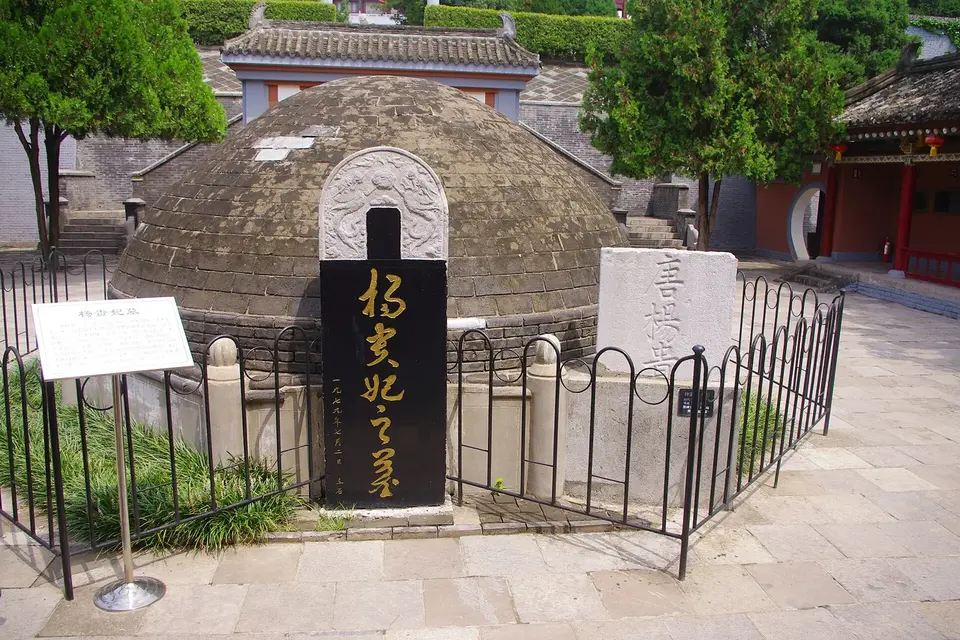
The Mutiny at Mawei Post (马嵬驿之变) refers specifically to the armed insurrection that occurred on July 15, 756 (the fourteenth day of the sixth lunar month in the fifteenth year of the Tianbao era) when imperial guards escorting Emperor Xuanzong during his flight to Sichuan revolted at Mawei Courier Post in Xingping, Shaanxi. Following the fall of the mountain fortress of Tongguan, Xuanzong fled the capital with his family, favorite consort Yang Yuhuan, and Chancellor Yang Guozhong. Suffering from summer exhaustion and food shortages while mourning the loss of their homes, the imperial soldiers blamed Yang Guozhong for provoking the An Lushan Rebellion. General Chen Xuanli orchestrated the insurrection with palace insiders. When Tibetan emissaries petitioned Yang Guozhong for provisions outside the post gates, the cavalry revolted, executing the chancellor, his son, and Consort Yang's sisters. The soldiers then surrounded the imperial quarters with drawn weapons, compelling the sovereign to order Consort Yang strangled in a nearby Buddhist chapel. After inspecting the consort's corpse, the troops acclaimed the emperor and restored order. The mutiny destroyed the Yang clan and established a precedent for imperial guard intervention in court politics.
Geshu Han's defeat at Lingbao exposes the Guanzhong plain to rebel forces.
Emperor Xuanzong leaves Chang'an by dawn with the imperial family and guard cavalry.
Mutineers slay Chancellor Yang Guozhong, his son, and Consort Yang's sisters at Mawei Post.
General Chen Xuanli demands the death of Consort Yang to placate the army.
Gao Lishi strangles Consort Yang; officers inspect her corpse, resolving the mutiny.
Emperor Xuanzong proceeds to Sichuan while Crown Prince Li Heng journeys north to Lingwu.
In November 755, military governor An Lushan launched his rebellion, overrunning Henan and marching on the capital. In June 756, under relentless pressure from Chancellor Yang Guozhong, general Geshu Han abandoned defensive positions at Tongguan, leading to the destruction of the imperial field army at Lingbao. With Guanzhong undefended, Emperor Xuanzong resolved to seek refuge in Sichuan, where Yang Guozhong held long-standing administrative ties. At dawn on July 13, without notifying the civil bureaucracy, Xuanzong departed Chang'an through the Yanqiu Gate with Consort Yang, Yang Guozhong, the imperial family, and two thousand elite cavalry of the Dragon Martial Guard under General Chen Xuanli, abandoning the capital to the rebels.
Escorting the court along the Wei River under summer heat, the expedition faced extreme logistical failure. Local magistrates fled their posts, leaving municipal granaries stripped. Forced to march in iron armor without adequate provisions, the soldiers were reduced to eating wild grasses. The troops grew bitter over the fall of Chang'an and the separation from their families. The rank-and-file held Yang Guozhong responsible for the dynastic catastrophe, accusing him of provoking An Lushan's rebellion to consolidate private power. General Chen Xuanli shared these grievances, conferring with confidential officers: "The empire has fallen into ruin and the emperor wanders as a refugee entirely because of Yang Guozhong. If we do not execute this traitor, how can we satisfy the wrath of the army?"
Around midday on July 15, 756, the imperial convoy halted at Mawei Courier Post (west of modern Xingping, Shaanxi). The soldiers were famished and mutinous. At that moment, over twenty Tibetan envoys converged on Yang Guozhong's horse outside the post entrance, demanding rations. Mounted on his horse, Yang Guozhong dismissed them with insults.
Seizing the tactical moment, cavalrymen of the imperial guard shouted: "Yang Guozhong is conspiring with foreign barbarians to commit treason!" The cry ignited immediate rebellion. Crossbowmen fired into the chancellor's retinue, and Yang Guozhong fled on horseback toward the western gate. Imperial troopers overtook him, cutting him down, decapitating his corpse, and mounting his head upon a lance. Insurgent soldiers then raided the post apartments, hunting down his son, Vice Minister of Revenue Yang Xuan, along with Consort Yang's elder sisters, the Duchess of Han and the Duchess of Guo. When Grandee Secretary Wei Fangjin attempted to intervene, the soldiers hacked him to death, surrounding the post with drawn spears.
Following the slaughter of the chancellor's family, the mutineers refused to disperse, encircling the imperial residence with drawn weapons. Terrified by the uproar, seventy-one-year-old Emperor Xuanzong emerged supported by a walking stick to address the soldiers, urging them to return to their ranks. General Chen Xuanli stepped forward in full armor, declaring: "The traitor Guozhong has been executed for his crimes; yet the Lady Yang still attends Your Majesty's bed. The soldiers fear retribution and refuse to stand down. We petition Your Majesty to execute the consort to secure dynastic stability!"
Distressed, Emperor Xuanzong pleaded that Consort Yang resided in the inner palace and bore no guilt in Guozhong's misdeeds. As silence fell over the post, the emperor retreated into the courtyard. Chief palace eunuch Gao Lishi prostrated himself in tears, warning: "The soldiers have slaughtered Guozhong; if the Consort remains by your side, they will fear execution. If the troops mutiny further, how will Your Majesty preserve your own person? Only by severing personal affection can the sacred dynasty be preserved!" Realizing that the army held the upper hand, Xuanzong consented. Gao Lishi escorted Consort Yang to a Buddhist chapel beside the post, where she was strangled with a white silk cord. Her body was carried into the courtyard, where Chen Xuanli and his officers inspected the remains. Satisfied, the officers removed their helmets and prostrated themselves, shouting "Long live the Emperor!" The mutiny ended, and the imperial convoy resumed its march toward Sichuan.
The Mutiny at Mawei Post concluded with the total eradication of the Yang family from central politics. The mutiny pacified the imperial guards, enabling Emperor Xuanzong to traverse the Qinling mountain passes to reach safety in Chengdu. The incident also finalized the political separation between Xuanzong and Crown Prince Li Heng, who marched north to assume the throne as Emperor Suzong.
The mutiny stands as an institutional turning point in Tang history. Tactically, it removed the principal bureaucratic obstacle to national defense by eliminating the Yang faction. Institutionally, Mawei marked the emergence of the imperial guards as an autonomous political force capable of coercing the throne. This development set the precedent for the late Tang pattern in which the Shence Army and palace eunuchs asserted control over imperial appointments, succession, and state governance.