Accession
Zhu Changluo ascended the throne, inaugurating the Taichang era, abolishing mining taxes, and raising great public expectations
Ming Dynasty (明朝) · HISTORICAL EVENT
红丸案
The Red Pill Case (红丸案) was a major political scandal and forensic mystery that occurred in the Forbidden City in Beijing between August and September of the first year of the Taichang era (1620) under Emperor Guangzong of Ming, ranking alongside the Club-Striking Case and the Palace-Vacating Case as one of the Three Major Cases of the Late Ming Dynasty. In July 1620, following the death of Emperor Shenzong, Crown Prince Zhu Changluo ascended the throne…
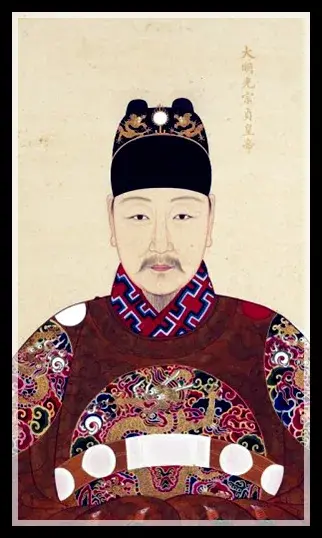
The Red Pill Case (红丸案) was a major political scandal and forensic mystery that occurred in the Forbidden City in Beijing between August and September of the first year of the Taichang era (1620) under Emperor Guangzong of Ming, ranking alongside the Club-Striking Case and the Palace-Vacating Case as one of the Three Major Cases of the Late Ming Dynasty. In July 1620, following the death of Emperor Shenzong, Crown Prince Zhu Changluo ascended the throne after surviving fifteen years of bitter succession disputes, adopting the era name Taichang. However, within ten days of his coronation, the emperor collapsed from physical exhaustion exacerbated by female consorts presented by Noble Consort Zheng. Eunuch Director of the Imperial Pharmacy Cui Wensheng misdiagnosed the ailment and administered massive doses of purgative rhubarb, causing the emperor to suffer diarrhea dozens of times in twenty-four hours, depleting his vital strength. Facing impending demise, Li Kezhuo, an assistant minister in the Court of State Ceremonial, claimed possession of a celestial red elixir capable of reversing fatal illness. Overriding intense objections from Minister of Rites Sun Ruyou and Donglin censors, Senior Grand Secretary Fang Congzhe introduced Li into the bedchamber to administer the pill. After taking the first pill, the emperor felt temporary warmth and asked for rice porridge, eagerly demanding a second pill. However, upon consuming the second dose, Emperor Guangzong died suddenly at dawn on the first day of the ninth month, having reigned for only twenty-nine days. The catastrophe provoked widespread outrage; Donglin statesmen accused Fang Congzhe and Li Kezhuo of regicide. The case evolved into a vicious political weapon that fueled decades of bloody purges.
Zhu Changluo ascended the throne, inaugurating the Taichang era, abolishing mining taxes, and raising great public expectations
Overindulging in consorts sent by Noble Consort Zheng, the emperor collapsed from exhaustion and ceased holding court
Eunuch Cui Wensheng administered rhubarb purgatives, inducing massive diarrhea that left the emperor in critical condition
The emperor summoned grand secretaries to dictate his testamentary edict and eagerly inquired about Li Kezhuo's elixir
Fang Congzhe introduced Li Kezhuo to administer the first pill; the emperor felt temporary relief and consumed rice porridge
Eager for recovery, the emperor took a second pill, but suffered sudden chest agony, sweating, and collapsed into a coma
Emperor Guangzong died in the Qianqing Palace after a twenty-nine-day reign, plunging the court into chaos
Sun Shenxing indicted Fang Congzhe for regicide; Li Kezhuo was exiled and Cui banished, transforming the case into a catalyst for factional warfare
Emperor Guangzong's entire life unfolded under the shadow of palace intrigue and imperial disfavor. As the eldest concubine-born son of Emperor Shenzong, Zhu Changluo was neglected because his mother, Lady Wang, had been a lowly maidservant in the Empress Dowager's palace. Emperor Shenzong passionately favored Noble Consort Zheng, and following the birth of her third son, Zhu Changxun (later Prince of Fu), the emperor sought to overturn ancestral succession rules by passing over his eldest son. This triggered a fifteen-year constitutional standoff known as the Struggle for the Fundamental State Matter, during which hundreds of scholar-bureaucrats were flogged, dismissed, or banished for defending traditional primogeniture.
It was not until the twenty-ninth year of the Wanli era (1601) that Emperor Shenzong reluctantly invested Zhu Changluo as crown prince under pressure from Empress Dowager Li and court ministers. Even so, Noble Consort Zheng's faction never abandoned plots to usurp the succession. In 1615, an intruder armed with a wooden club breached the prince's residence in the Club-Striking Case, implicating Noble Consort Zheng's palace eunuchs. Living for decades under constant terror of deposition or assassination, Zhu Changluo suffered profound psychological trauma that severely undermined his physical health.
On the twenty-first day of the seventh month of the forty-eighth year of the Wanli era (1620), Emperor Shenzong passed away. On the first day of the eighth month, thirty-nine-year-old Zhu Changluo was enthroned in the Forbidden City, inaugurating the Taichang era and winning public praise by abolishing burdensome mining taxes and dispatching funds to frontline troops in Liaodong. However, once freed from the anxiety of his princely years, the new monarch indulged in unrestrained pleasure.
Seeking to secure her status and lobby for the title of empress dowager, Noble Consort Zheng catered to his desires by presenting him with eight beautiful maidens skilled in music and dance. Unable to resist temptation, the emperor indulged in nightly revelries. Within ten days of his accession, Zhu Changluo collapsed in the Qianqing Palace from acute exhaustion and kidney depletion, unable to conduct court business.
Following the emperor's collapse, medical care within the palace deteriorated into chaotic malpractice. On the tenth day of the eighth month, Eunuch Director of the Imperial Pharmacy Cui Wensheng took charge of the emperor's prescriptions. Formerly a trusted retainer of Noble Consort Zheng, Cui possessed no formal medical training. Viewing the emperor's feverish exhaustion as internal heat rather than severe yin deficiency and bodily depletion, Cui recklessly prescribed large doses of purgative rhubarb. Court physicians in the Imperial Academy of Medicine warned privately that rhubarb was an extremely cold and purging substance unsuitable for an emaciated patient, but Cui arrogantly disregarded their counsel.
The purgative drug proved disastrous. Following administration on the twelfth day, the emperor suffered excruciating abdominal cramps and over thirty bouts of violent diarrhea within twenty-four hours, entirely draining his remaining bodily fluids and vital warmth. The sovereign collapsed into critical condition, bedridden, pallid, and too weak to swallow solid food. Outraged by the eunuch's malpractice, Donglin censors Yang Lian and Zheng Zongzhou submitted fiery memorials denouncing Cui Wensheng for daring to wield poisonous drugs against the emperor, alleging a treacherous conspiracy and demanding his immediate arrest and execution.
Amidst the growing storm, Emperor Guangzong realized his time was running out. On the morning of the twenty-ninth day of the eighth month, he summoned Senior Grand Secretary Fang Congzhe, grand secretaries Liu Yijing and Han Kuang, and Donglin leader Yang Lian to the East Warm Chamber of the Qianqing Palace to deliver his testamentary edict. Kneeling before the imperial couch were the sixteen-year-old eldest prince, Zhu Youxiao (later Emperor Xizong), and his younger brother Zhu Youjian (later the Chongzhen Emperor). Weeping, the emperor held Fang Congzhe's hand, inquiring about border defense in Liaodong and urging the immediate investiture of the crown prince.
As the ministers prepared to withdraw, the emperor suddenly turned to Fang Congzhe and asked with desperate urgency: "I have heard that an official in the Court of State Ceremonial possesses an immortal medicine; why has he not presented it to me?" Fang Congzhe replied that Assistant Minister Li Kezhuo claimed to possess a secret Taoist formula named the Red Pill that could cure severe exhaustion, but because Li was a ceremonial functionary ignorant of orthodox medicine, the cabinet had not dared introduce him. Clinging to any possibility of survival, the dying sovereign ordered Fang Congzhe to summon Li Kezhuo into the palace immediately.
On the afternoon of the twenty-ninth day, Fang Congzhe escorted Li Kezhuo into the Forbidden City. Confronting them at the palace gate, Minister of Rites Sun Ruyou protested angrily to Fang Congzhe: "Ancient medical laws dictate that medicines administered to the sovereign must be diagnosed and verified by the Imperial Academy of Medicine. Li Kezhuo is a minor ceremonial clerk who knows nothing of medicine; how can an untested concoction be offered to the Son of Heaven?" Supervising Secretary Hui Shiyang and other censors joined in shouting protests from the terrace, demanding caution.
Physicians in the imperial pharmacy examined the pills, which Li described as a sacred elixir synthesized from red lead, autumn mineral salts, ginseng, deer antler, and cinnabar through alchemical firing. Intimidated by imperial decrees, the physicians neither dared endorse the medicine nor actively oppose the emperor's command. Insisting that the monarch's urgent orders could not be disobeyed, Fang Congzhe escorted Li into the bedchamber, while Li declared he was willing to suffer execution should the remedy fail.
At approximately four o'clock in the afternoon, Li Kezhuo was brought before the imperial bed. The emperor questioned him on its efficacy, and Li promised the pill would restore vital yang. The emperor commanded attendants to dissolve the pill in warm water and drank it.
Within half an hour, an astonishing transformation appeared to take place. The emperor's pallid complexion flushed with color, warmth returned to his limbs, his breathing eased, and he exclaimed happily to his attendants: "This medicine is truly efficacious; my body feels light and tranquil!" His spirits revitalized, the emperor called for a bowl of ginseng rice gruel, which he consumed in bed. After changing robes, the sovereign fell into a peaceful sleep, leading eunuchs and ministers to believe that a miracle had occurred.
However, this brief remission was merely the dying flash of stimulated vitality induced by heavy mineral and aphrodisiac agents. By noon on the thirtieth day of the eighth month, the emperor felt his energy waning and, eager for full recovery, issued an oral command for Li Kezhuo to present a second pill. Fang Congzhe was the sole grand secretary on duty; though imperial physicians and censor Yang Lian pleaded against taking more untested drugs, Fang offered no firm resistance and summoned Li to deliver the second dose.
During the late afternoon of August 30, the emperor swallowed the second red pill. This time, no miracle occurred. Within an hour, his condition reversed catastrophically; the sovereign was seized with suffocating chest pains, violent abdominal agony, and drenching cold sweats, slipping into unconsciousness. By midnight, imperial physicians Zhou Xianchun and He Jiuchou were summoned to read his pulse, finding his vital signs virtually extinct and his body turning blue and cold.
At dawn on the first day of the ninth month, anguished wailing erupted from the Qianqing Palace: Emperor Guangzong had succumbed to sudden poisoning only hours after taking the second red pill. Having ascended the throne on August 1 and died on September 1, Zhu Changluo had occupied the throne for exactly twenty-nine days, becoming one of the shortest-reigning adult monarchs in Ming history.
The sudden death of a monarch in the prime of life within one month of coronation threw the empire into pandemonium. On the morning of September 1, court ministers donned mourning robes and gathered outside the palace gates, with Donglin leaders Yang Lian and Zuo Guangdou demanding justice against the ministers and eunuchs who had administered the fatal drugs. Minister of Rites Sun Shenxing subsequently submitted a bombshell memorial charging Senior Grand Secretary Fang Congzhe and Li Kezhuo with high treason: "He who slays his sovereign commits the ultimate crime against heaven. Li Kezhuo, a common clerk, offered an unauthorized drug, while Fang Congzhe, as head of the cabinet, permitted its ingestion. Fang Congzhe indulged Li Kezhuo in slaying the late emperor, and his guilt cannot be pardoned!" Minister of Justice Wang Ji and judicial officials joined in urging criminal prosecution.
Sun Shenxing's memorial escalated an administrative disaster into an indictment for deliberate imperial murder, splitting the court into two hostile camps. Donglin partisans alleged that Fang Congzhe had colluded with Noble Consort Zheng to eliminate the emperor, while non-Donglin factions defended Fang, insisting he had acted out of loyalty under strict imperial orders. Overwhelmed by moral condemnation, Fang Congzhe submitted repeated resignations and retired to his home prefecture in disgrace, living in seclusion.
In 1622, the court of Emperor Xizong reached a judicial settlement: Eunuch Cui Wensheng was banished to Nanjing, Li Kezhuo was sentenced to penal exile on the northern frontier for illicit medication, and Fang Congzhe was spared criminal punishment while retaining public opprobrium. Far from concluding the crisis, the Red Pill Case became a central ideological weapon used by Wei Zhongxian's eunuch clique during the subsequent compilation of the Essential Documents of Three Reigns (San Chao Yao Dian), serving as a pretext to murder and purge Donglin statesmen like Yang Lian and Zuo Guangdou.
Following Guangzong's death, sixteen-year-old Crown Prince Zhu Youxiao took the throne as Emperor Xizong. Confronted by furious factional recriminations, the new regime enacted a compromise verdict: Senior Grand Secretary Fang Congzhe was allowed to retire with honors, Li Kezhuo was convicted of improper medical administration and banished to frontier garrisons, and Eunuch Cui Wensheng was dismissed and exiled to Nanjing. While designed to restore calm, this superficial settlement failed to dispel profound suspicions of foul play.
The Red Pill Case severed the remaining bonds of political civility within the Ming bureaucracy. Accusations of treason and regicide divided the court into irreconcilable factions. The emerging eunuch dictator Wei Zhongxian capitalized on the Three Major Cases to crush his opponents, commissioning the compilation of the Essential Documents of Three Reigns to reverse judicial verdicts and brand Donglin ministers as conspirators. Loyal officials such as Yang Lian and Zuo Guangdou were tortured to death in prison. This paralysis of imperial decision-making fatally weakened the dynasty as it faced simultaneous threats from the Manchus in the northeast and peasant rebellions in the interior.