Red Pill Crisis
Emperor Taichang ingests red medicine; his condition deteriorates rapidly.
Ming Dynasty (明朝) · HISTORICAL EVENT
移宫案
The Palace Relocation Case (移宫案) was a turbulent succession crisis in the Forbidden City in autumn 1620, remembered as the last of the "Three Great Cases of the Late Ming." Following the death of Emperor Taichang after a reign of twenty-nine days, his favorite consort, Consort Li (popularly known as "West Li"), detained sixteen-year-old Prince Zhu Youxiao inside Qianqing Palace. Conspiring with eunuch Li Jinzhong (later notorious as Wei Zhongxian), she…
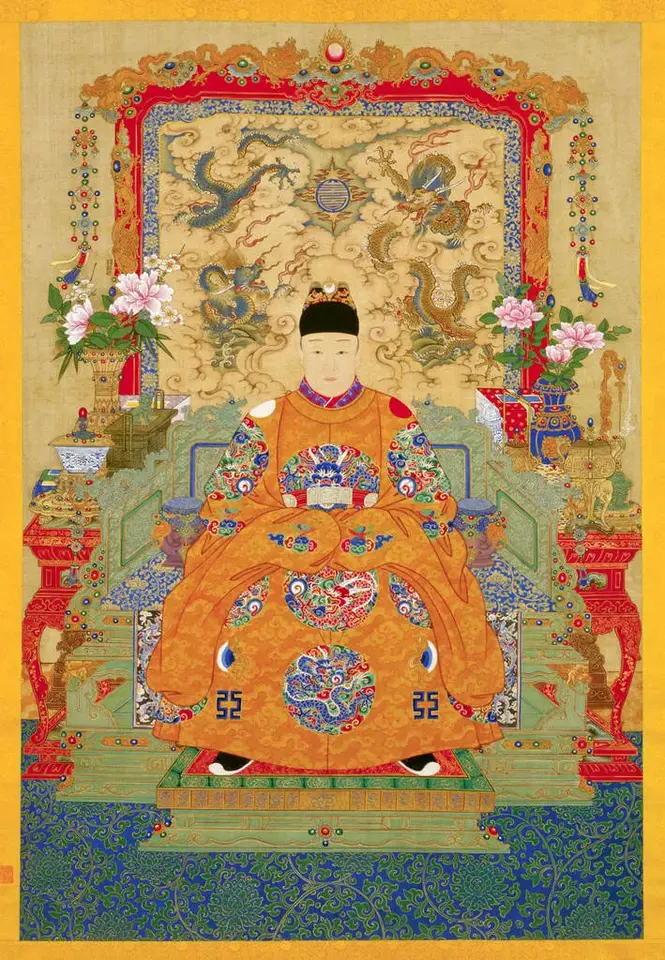
The Palace Relocation Case (移宫案) was a turbulent succession crisis in the Forbidden City in autumn 1620, remembered as the last of the "Three Great Cases of the Late Ming." Following the death of Emperor Taichang after a reign of twenty-nine days, his favorite consort, Consort Li (popularly known as "West Li"), detained sixteen-year-old Prince Zhu Youxiao inside Qianqing Palace. Conspiring with eunuch Li Jinzhong (later notorious as Wei Zhongxian), she demanded appointment as Empress Dowager with regency powers over the court. In response, Donglin officials led by Yang Lian and Zuo Guangdou, assisted by Chief Eunuch Wang An, breached the palace gates, escorted Zhu Youxiao to Ciqing Palace, and issued an ultimatum forcing Consort Li to relocate to the peripheral Huiluan Palace. While the crisis preserved orthodox dynastic succession, the humiliation suffered by the inner court fostered the rise of the eunuch faction under Wei Zhongxian.
Emperor Taichang ingests red medicine; his condition deteriorates rapidly.
Emperor Taichang dies; Consort Li locks Qianqing Palace and detains Prince Zhu Youxiao.
Yang Lian, Zuo Guangdou, and Liu Yijing force entry and escort Zhu Youxiao to Ciqing Palace.
Zuo Guangdou submits a memorial demanding Consort Li's immediate eviction.
Yang Lian delivers an eviction deadline; Wang An severs provisions to Qianqing Palace.
Consort Li capitulates, relocating to Huiluan Palace.
Zhu Youxiao ascends the throne, rewarding the Donglin ministers who secured his succession.
In August 1620 (the forty-eighth year of the Wanli era), the Long-reigning Wanli Emperor died. His son Crown Prince Zhu Changluo ascended the throne as Emperor Taichang. During his brief reign, he favored Consort Li, who resided in the western wing of Qianqing Palace. Because Zhu Youxiao's biological mother, Lady Wang, had died prematurely, the young prince was reared by Consort Li. Ambitious and domineering, Consort Li pressed the emperor daily to grant her the title of empress.
Weakened by palace debauchery, Emperor Taichang fell critically ill. After ingesting two medicinal red pills presented by Li Kezhuo, the emperor died on September 26, 1620, having reigned for only twenty-nine days. His sudden death occurred before Zhu Youxiao could be formally invested as crown prince, leaving the central court without an anointed successor.
On the morning of the emperor's demise, Senior Grand Secretary Fang Congzhe led the civil bureaucracy to Qianqing Palace to mourn. Consort Li, supported by trusted eunuchs Li Jinzhong and Liu Xun, barred the gates of the inner quarters.
Consort Li locked sixteen-year-old Zhu Youxiao within the western chamber, sending word that civil ministers must issue decrees conferring upon her the title of Imperial Noble Consort, followed by Empress Dowager. She further demanded full regency powers (chuilian tingzheng), warning that unless these demands were conceded, the prince would not be permitted to meet ministers or ascend the throne.
Faced with the sequestration of the heir apparent, most senior grand secretaries hesitated. Supervising Secretary of the Ministry of War Yang Lian stepped forward: "The emperor has passed, and the eldest prince is the foundation of the state! If ministers cannot attend their sovereign, how can we remain in office?"
Yang Lian gathered Censor Zuo Guangdou and dozens of supervisory officials, marching directly toward Qianqing Palace. Eunuchs barred the portals with staves, warning that entering without authorization was treason. Yang Lian shouted: "Ministers mourning their sovereign and attending the heir apparent follow the highest duty under heaven! You slaves dare obstruct ministers; do you plot rebellion?" Shoving the eunuchs aside, Yang Lian led officials into the palace halls.
Guided by the upright eunuch Wang An, ministers discovered the terrified prince surrounded by palace guards behind a silk partition. Yang Lian knelt before Zhu Youxiao, weeping and proclaiming him sovereign.
Consort Li rushed from the rear chambers, shouting: "The boy is young; you cannot take him! Return him to me!" Her eunuchs grabbed the prince's ceremonial robes. Yang Lian pushed them back, declaring: "His Highness is lord of all under heaven and must proceed to the coronation! How dare domestic slaves touch the ruler of China!" Grand Secretary Liu Yijing and the Duke of Britain Zhang Weixian shielded the young prince, escorting him safely out through the Qianqing Gate to Ciqing Palace, where royal guards under Wang An established secure cordons.
With Prince Zhu Youxiao safely in Ciqing Palace, Consort Li refused to vacate Qianqing Palace, the private residence reserved exclusively for reigning monarchs.
On September 27, Consort Li dispatched Li Jinzhong to Ciqing Palace with threats, warning Zhu Youxiao that unless she was made Imperial Noble Consort and permitted to remain in Qianqing Palace, his reign would know no stability. The intimidated prince sent messages to grand secretaries requesting honors for his stepmother.
Censor Zuo Guangdou intervened with a scathing memorial denouncing Consort Li: "She conceals the treacherous ambition of Empresses Lü and Wu, allying with palace intriguers." He argued that imperial etiquette strictly forbade a concubine from occupying the monarch's bedchamber, demanding her immediate eviction to Renshou Hall or Huiluan Palace.
Infuriated by the memorial, Consort Li summoned Zuo Guangdou into the palace to face a beating. Zuo Guangdou refused the summons, responding: "I am a minister of the Son of Heaven, not a servant of Consort Li! If she wishes to address me, let the sovereign summon me in open court!"
On September 29, Yang Lian submitted another memorial demanding an immediate resolution: "The late emperor's coffin lies unburied, and the new sovereign must be enthroned. If proper boundaries are not established within the inner court, how can the coronation proceed?" Yang Lian and Liu Yijing delivered a firm ultimatum: Consort Li was given twenty-four hours to vacate Qianqing Palace, warning that refusal would compel officials to summon guards and remove her by force.
Concurrently, Chief Eunuch Wang An isolated Qianqing Palace, severing food deliveries and external communication. He warned Li Jinzhong: "The civil court has decided upon extreme measures! If you persist, the Ministry of War will send imperial guards to batter down the doors, and you will be crushed to powder!"
Terrified, Li Jinzhong and the eunuchs urged Consort Li to yield. On the morning of October 1, realizing resistance was futile, Consort Li gathered her belongings and departed Qianqing Palace in tears, relocating to the dilapidated Huiluan Palace.
With Qianqing Palace secured and cleaned, the grand accession proceeded.
On October 2, 1620, sixteen-year-old Zhu Youxiao ascended the throne at the Hall of Imperial Supremacy as Emperor Xizong, designating the following year as the first year of Tianqi. Following the coronation, Fang Congzhe retired, Liu Yijing became Senior Grand Secretary, Yang Lian was promoted to Vice Minister of the Court of Imperial Sacrifices, Zuo Guangdou became Vice Director of the Court of Judicature, and Wang An assumed leadership of the Directorate of Ceremonial.
However, during the relocation, a minor accidental fire broke out at Huiluan Palace. Consort Li capitalized on the incident, weeping that Donglin ministers sought her death. Conservative factions in the civil bureaucracy exploited her claims to accuse the Donglin movement of abusing the late emperor's concubine, igniting political animosities that consumed the late Ming court.
The crisis ended with the victory of the civil bureaucracy. Zhu Youxiao was enthroned without armed conflict, upholding the ancestral Ming principle that concubines could not exercise sovereign power.
First, it unleashed the most destructive cycle of partisan warfare in Ming history. Eunuch Li Jinzhong deeply resented his humiliation during the eviction. Changing his name to Wei Zhongxian, he allied with the emperor's wet nurse, Madam Ke, murdered Chief Eunuch Wang An, and took control of the Eastern Depot. Wei Zhongxian cited the Palace Relocation Case to conduct systematic purges, executing Yang Lian, Zuo Guangdou, and their colleagues in the Imperial Bodyguard prison. Second, the paralyzing factional warfare crippled the central government at a critical moment when the Jurchen under Nurhaci were overrunning Liaodong, hastening the collapse of the Ming Dynasty.
In the History of Ming (Mingshi), historians praised Yang Lian: "Lian stood firm within the imperial palace, subduing arrogant favorites and securing the sovereign in an hour of peril. His steadfast defense preserved the dynastic altars!"
Scholar Tan Qian recorded in National Discussions: "When Emperor Taichang lay dying, Consort Li barred the inner gates while eunuchs plotted treason. Without the unyielding resistance of Yang Lian and Zuo Guangdou, the palace would have fallen into another imperial harem usurpation!"
Historian Ji Liuqi observed in Northern Annals of the Late Ming: "Donglin ministers fought passionately for the succession, serving the highest interest of the state. Yet their lack of diplomatic restraint sowed bitter hatred, enabling Wei Zhongxian's catastrophic ascendancy."