Gurkha Invasions of Tibet
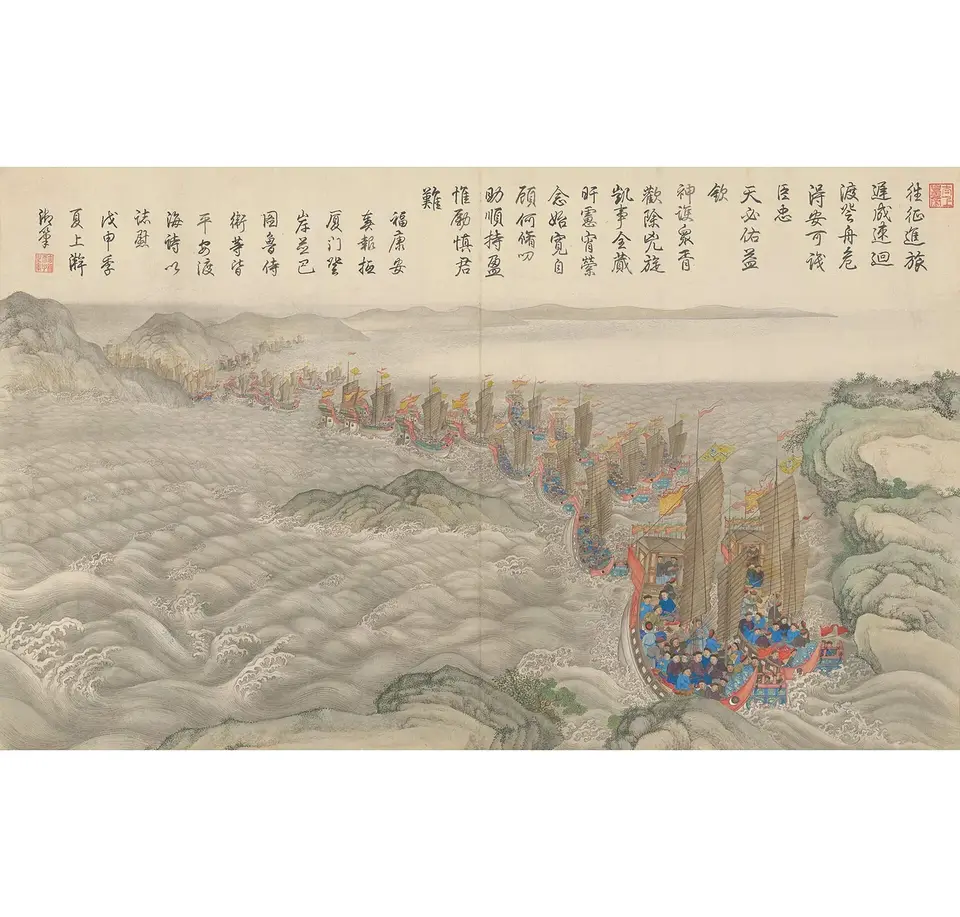
The tenth Shamarpa incites Gurkha troops to breach southern Tibet and ransack Tashilhunpo Monastery
Qing Dynasty (清朝) · HISTORICAL EVENT
金瓶掣签制度建立
The Establishment of the Golden Urn Lottery System (金瓶掣签制度建立) was a pivotal legal and administrative innovation enacted between 1792 (the fifty-seventh year of the Qianlong era) and 1793 (the fifty-eighth year of the Qianlong era), by which the Qing central government eliminated aristocratic manipulation of Tibetan Buddhist reincarnations and solidified state authority over Tibet and Mongolia. Over the long history of Tibetan Buddhism, the identification…
The Establishment of the Golden Urn Lottery System (金瓶掣签制度建立) was a pivotal legal and administrative innovation enacted between 1792 (the fifty-seventh year of the Qianlong era) and 1793 (the fifty-eighth year of the Qianlong era), by which the Qing central government eliminated aristocratic manipulation of Tibetan Buddhist reincarnations and solidified state authority over Tibet and Mongolia. Over the long history of Tibetan Buddhism, the identification of reincarnations (tulku) for supreme hierarchs, including the Dalai Lama and the Panchen Erdeni, had become monopolized by influential Tibetan noble clans. This nepotism concentrated religious wealth and temporal power within a handful of families, ultimately prompting the tenth Shamarpa to collude with the Gurkha kingdom, resulting in two destructive invasions of Shigatse. After imperial armies commanded by General Fuk'anggan marched across the Himalayas to defeat the invaders, the Qianlong Emperor resolved to restructure Tibetan governance. In 1793, the Qing court issued the Twenty-Nine-Article Ordinance for More Effective Governance in Tibet, instituting the Golden Urn lottery as its foremost provision. Two sacred golden urns were cast by the imperial palace for the Jokhang Temple in Lhasa and the Yonghe Temple in Beijing. Under the supervision of the Imperial Resident in Tibet, candidate names were drawn and submitted to the Emperor for formal enthronement. This institution severed aristocratic monopolies and firmly entrenched central sovereignty over Tibetan religious governance.
The tenth Shamarpa incites Gurkha troops to breach southern Tibet and ransack Tashilhunpo Monastery
Imperial expeditionary forces thoroughly crush the Gurkha army and compel total surrender
The Qing government enacts the Twenty-Nine-Article Ordinance, establishing the Golden Urn lottery as fundamental state law
The imperial golden urn arrives at the Jokhang Temple in Lhasa, initiating official lottery rites overseen by the Imperial Resident
Since its consolidation during the Ming and early Qing dynasties, the reincarnation system of the Gelug school of Tibetan Buddhism commanded immense spiritual reverence across Tibet and Mongolia. However, as major monastic institutions amassed vast landed estates, serfs, and lavish tributary revenues, secular Tibetan nobility increasingly exploited their political and spiritual leverage to influence the search for candidate infants.
During the search process, aristocratic clans frequently conspired with oracle diviners and senior lamas to manipulate religious signs, ensuring that reincarnations of paramount hierarchs were selected almost exclusively from their own kin. This hereditary manipulation generated intense factional friction within Tibet, inflamed deep suspicions between Mongol and Tibetan banners, and compromised the stability of the imperial frontier.
Following the death of the Sixth Panchen Erdeni in Beijing, vast wealth was left to Tashilhunpo Monastery. His half-brother, the tenth Shamarpa of the Karma Kagyu red-hat lineage, became embroiled in an acrimonious inheritance dispute with the monastery's treasurer. Fleeing into the neighboring Himalayan kingdom of the Gurkhas, the Shamarpa incited Gurkha forces to launch devastating cross-border invasions in 1788 and 1791, ransacking Tashilhunpo and terrorizing southern Tibet.
Outraged by the crisis, the Qianlong Emperor realized that frontier stability could not endure without comprehensive religious reform. He commissioned Grand Secretary and General Fuk'anggan to lead a veteran expeditionary army across the snow-capped Himalayan passes, decisively repulsing the invaders, penetrating near Kathmandu, and forcing the Gurkha king to capitulate and offer tribute. Following this hard-won triumph, fundamental restructuring of Tibetan civil and monastic administration became paramount.
In the autumn of 1792, General Fuk'anggan returned victorious to Lhasa. The Qianlong Emperor instructed Fuk'anggan and the Imperial Resident Helin to thoroughly investigate the root causes of the Gurkha invasions, conducting inquiries into frontier defense, border customs, currency, and monastic succession.
The investigation conclusively verified that the disaster stemmed from bitter financial disputes within the Panchen Lama's kin and the widespread manipulation of reincarnations by local aristocrats. Fuk'anggan reported to the throne that oracle divinations had degenerated into venal fabrications designed to advance familial interests, petitioning the court to establish an imperial system that would eliminate private favoritism.
In early 1793, guided by personal directives from the Qianlong Emperor, the Qing central government formally promulgated the Twenty-Nine-Article Ordinance for More Effective Governance in Tibet. This landmark charter enacted systematic regulations governing Tibetan frontier garrisons, silver coinage, judiciary administration, and foreign diplomacy, placing the Golden Urn lottery as its paramount first article.
To signify state authority, the Imperial Household Department crafted two pure-gold urns (Gser-bum). One urn was dispatched to Lhasa and enshrined before the sacred statue of Jowo Shakyamuni in the Jokhang Temple, dedicated to selecting reincarnations of the Dalai Lama, the Panchen Erdeni, and major reincarnate lamas across Tibet, Qinghai, and Chamdo. The second urn was enshrined at the Yonghe Temple in Beijing to determine reincarnations of Mongolian and northern nomad banners.
The ordinance established strict statutory procedures for the lottery ceremony: search missions were required to identify multiple candidate boys; their names, native places, and birth dates were inscribed on ivory lots in Manchu, Chinese, and Tibetan scripts. After rigorous inspection by the Imperial Resident in Tibet, the lots were sealed in yellow silk and placed within the Golden Urn before assembly lamas.
In a solemn prayer assembly before the statue of Shakyamuni, the Imperial Resident and leading religious dignitaries presided over the rites, with the Resident personally utilizing long ivory chopsticks to draw the chosen lot. The selected child was declared the authentic reincarnation, but could not be enthroned until the Resident memorialized the imperial throne and received a formal imperial decree. Unchosen candidates were provided with imperial stipends. Through these statutory safeguards, the supreme power to recognize reincarnated lamas was permanently vested in the central government.
The creation of the Golden Urn system broke the hereditary control wielded by Tibetan noble families over reincarnations. Commencing with the identification of the Ninth Dalai Lama in 1808, the lottery was diligently observed throughout Tibet and Mongolia, restoring public credibility and religious sanctity to monastic successions.
The Golden Urn system was a monumental achievement in Qing frontier jurisprudence. It anchored the central government's sovereign right of final approval over supreme Buddhist reincarnations in statutory law, incorporating monastic leadership transitions directly into the imperial constitutional framework. Upheld consistently throughout the Qing Dynasty, the Republic of China, and modern times, this institution remains an indispensable cornerstone for safeguarding territorial integrity, ethnic solidarity, and frontier peace.