Zoroastrianism Enters Hexi
Sogdian caravans introduce Mazdaism into Dunhuang and Liangzhou; imperial elites observe fire rites
Northern and Southern Dynasties to Sui and Tang Dynasties · HISTORICAL EVENT
景教、祆教与摩尼教传入
The Transmission of Nestorianism, Zoroastrianism, and Manichaeism into China (景教、祆教与摩尼教传入), collectively designated in Chinese historiography as the Three Foreign Religions (San Yijiao), encompasses the eastward dissemination of three major Western faiths along the Silk Road into the Central Plains from the Northern and Southern Dynasties through the Tang Dynasty. Zoroastrianism (Mazdaism) spread eastward alongside Sogdian traders during the Northern Wei,…
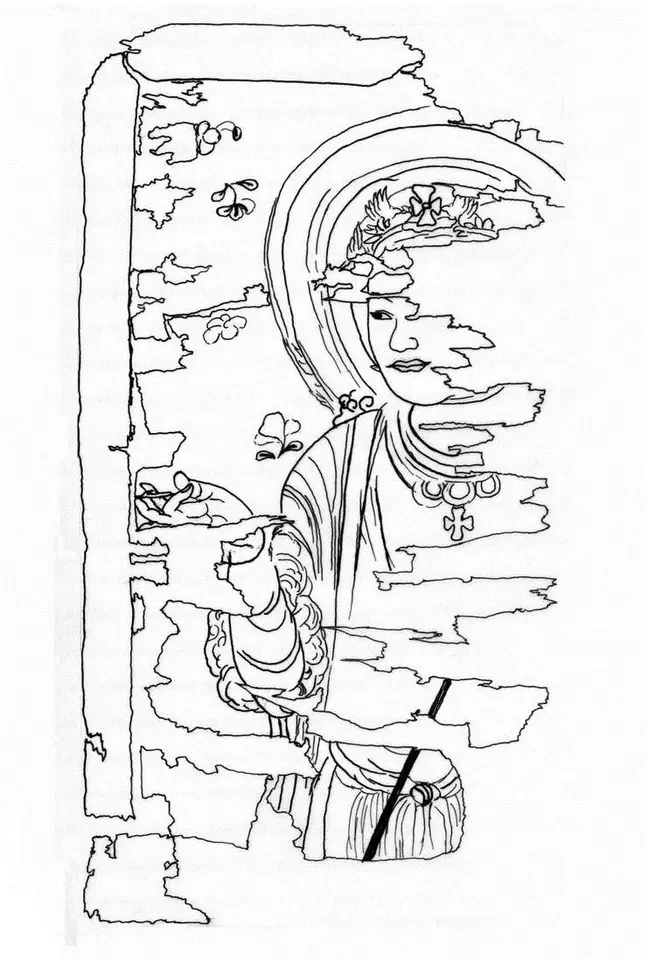
The Transmission of Nestorianism, Zoroastrianism, and Manichaeism into China (景教、祆教与摩尼教传入), collectively designated in Chinese historiography as the Three Foreign Religions (San Yijiao), encompasses the eastward dissemination of three major Western faiths along the Silk Road into the Central Plains from the Northern and Southern Dynasties through the Tang Dynasty. Zoroastrianism (Mazdaism) spread eastward alongside Sogdian traders during the Northern Wei, prompting the Tang court to establish the Sabao Office to oversee communal self-governance. Nestorian Christianity (the Church of the East) was formally introduced in 635 CE under Emperor Taizong, who dispatched Chancellor Fang Xuanling to welcome Persian metropolitan Alopen at the western gate of Chang'an and financed the erection of the Daqin Monastery in the Yining Ward. Manichaeism entered in 694 CE under Wu Zetian when Persian bishop Fuduodan presented the Book of the Two Principles, later expanding nationwide after the Uyghur Khaganate adopted it as state religion in 762 CE and sponsored the Dayun Guangming Monasteries. The Tang dynasty embraced these religions with cosmopolitan tolerance. However, during the Huichang Persecution of 845 CE, Emperor Wuzong banned the three foreign faiths, commanding over three thousand foreign clerics to return to secular life. Subsequently, the faiths decentralized into folk traditions: Zoroastrianism dissolved into local fire cults, Nestorianism retreated into northern nomadic confederations, and Manichaeism transformed into the egalitarian folk society known as the Mingjiao.
Sogdian caravans introduce Mazdaism into Dunhuang and Liangzhou; imperial elites observe fire rites
Tang authorizes a Zoroastrian temple in Buzheng Ward, instituting the Sabao Office
Persian priest Alopen arrives bearing Christian scriptures; Chancellor Fang Xuanling welcomes him
Emperor Taizong issues an edict praising Christian doctrines and authorizes a monastery in Yining Ward
Gaozong titles Alopen Grand Master of the Church, ordering Christian temples erected across commanderies
Persian bishop Fuduodan introduces the Book of the Two Principles to Empress Wu Zetian
Boku Tekin Khagan adopts Manichaeism in Luoyang, extending political patronage over Chinese temples
Emperor Daizong authorizes Manichaean monasteries in Chang'an and southern mercantile hubs
Monk Jingjing composes the inscription for the monumental stele erected in Chang'an
Emperor Wuzong proscribes the Three Foreign Religions, secularizing over three thousand foreign clerics
From the Wei-Jin era onward, transcontinental commerce flourished along the overland Silk Road. Sogdian merchant networks from Transoxiana monopolized trans-Eurasian caravan trade. Establishing fortified trade settlements along the Tarim Basin, the Hexi Corridor, and the dual metropolitan centers of Chang'an and Luoyang, the merchants brought their ancestral religious practices eastward, transforming long-distance commerce into a conduit for cultural dissemination.
In western Eurasia, seismic theological conflicts displaced ancient religious traditions. Zoroastrianism had long flourished as the official state creed of the Achaemenid and Sasanian Persian empires. Concurrently, Nestorian Christianity was condemned as a theological heresy at the Council of Ephesus in 431 CE, compelling its ecclesiastical leaders to migrate into Mesopotamia and Sasanian Persia. Meanwhile, Manichaeism, founded in third-century Persia by Mani on dualistic cosmic principles, suffered ruthless persecution from both Zoroastrian mobeds and Roman authorities, prompting extensive eastward flights into Central Asian oasis kingdoms. In Transoxiana, these traditions merged with local Sogdian culture before looking toward the stable prosperity of China.
Following the unification of China, the Tang Empire under Emperor Taizong pursued an open and magnanimous civilizational policy. Acclaimed as the Heavenly Khagan by nomadic and sedentary peoples alike, Emperor Taizong welcomed foreign philosophical traditions. The imperial administration patronized indigenous Daoism and fostered Mahayana Buddhism while according equitable legal protection and financial patronage to Persian, Syrian, and Indian religious communities, providing hospitable political conditions for foreign missions.
Zoroastrianism (Xianjiao), centered upon the veneration of sacred fire and celestial deities, entered northern China along the Hexi Corridor during the Northern Wei. In the sixth century, Empress Dowager Hu of Northern Wei personally participated in foreign fire rituals outside Luoyang. Under the Sui and Tang dynasties, as thousands of Sogdian merchant households permanently relocated to the dual capitals, Zoroastrian fire temples proliferated across foreign residential quarters.
To supervise immigrant communities, the Tang established the Sabao Office, an official civil bureau within the metropolitan hierarchy directed by eminent Sogdian leaders invested as fifth-rank imperial magistrates. In 621 CE, the court authorized the erection of the Hu Xian Shrine in the Buzheng Ward of Chang'an. Subsequent fire temples were constructed across the Chonghua, Puning, and Jinggong wards, directed by official liturgical functionaries known as Xianzhen and Xianzhu. During seasonal solstices, vibrant public ceremonies celebrated fire deities with sacred music, athletic gymnastics, and public feasting, drawing widespread civilian attendance.
In 635 CE (the ninth year of the Zhenguan era), Persian metropolitan Alopen arrived at Chang'an bearing sacred Syriac scriptures and holy icons. Alerted to the delegation, Emperor Taizong directed Grand Chancellor Fang Xuanling to lead an imperial guard of honor to welcome Alopen at the western gate of Chang'an, escorting him to the Hongfu Monastery in the imperial quarters.
Alopen translated scriptures and expounded doctrine before the imperial throne. Impressed by the moral and civil benefits of the faith, Emperor Taizong promulgated an imperial edict in July 638 CE: "The Way has no immutable name, and holy sages possess no constant form. They adapt doctrines across regions to deliver all living beings. Persian priest Alopen has conveyed scriptures from afar to present them at our capital; examining its tenets, we find them profound, virtuous, and beneficial to humanity. Let it be propagated freely throughout the empire." Taizong directed the imperial treasury to construct a Christian monastery in the Yining Ward, ordaining twenty-one priests to translate theological treatises into classical Chinese.
Under Emperor Gaozong, imperial patronage expanded significantly. Gaozong invested Alopen with the title Grand Master of the Church and Guardian of the Realm, ordering that Christian monasteries be established across all commanderies, inaugurating an era where monasteries flourished across a hundred cities. During the Kaiyuan era, Emperor Xuanzong dispatched imperial princes to perform ceremonial blessings at the Daqin Monastery and placed ancestral portraits of five Tang emperors within the church sanctuary to confer imperial protection.
During the late eighth century, priest Yisi, an aristocratic Persian cleric serving as Assistant Military Commissioner under General Guo Ziyi, contributed private wealth to support monastic philanthropy. In 781 CE, monk Jingjing composed the classical inscription, carved by calligrapher Lu Xiuyan, erecting the famed Nestorian Stele at the Daqin Monastery in Chang'an. Featuring over one thousand seven hundred Chinese characters alongside Syriac notations, the stele articulates Christian theology, records Alopen's journey, and celebrates imperial patronage across six successive reigns, serving as a monumental cultural testament to medieval interfaith harmony.
In 694 CE, Persian bishop Fuduodan presented the fundamental Manichaean scripture, the Book of the Two Principles, to Empress Wu Zetian in Luoyang. Acknowledging its complex dualistic doctrines, Wu Zetian granted permission for the faith to be practiced internally among foreign residents without extensive state promotion.
The historical trajectory of Manichaeism shifted dramatically during the An Lushan Rebellion. In 762 CE, Boku Tekin (Mouyu Khagan) of the Uyghur Khaganate, having mobilized elite cavalry to assist Tang forces in liberating Luoyang, encountered Manichaean missionaries and proclaimed Manichaeism the state religion of the Uyghurs. Leveraging vital Uyghur military protection, Manichaeism expanded into an officially sanctioned faith within the Tang Empire. In 768 CE, Emperor Daizong authorized the construction of the Dayun Guangming Monastery in Chang'an, followed by branch temples across Luoyang, Jingzhou, Yangzhou, and Yuezhou, with white-robed Central Asian clergy moving openly along major riverine trade arteries.
During the 840s, imperial finances were drained by military campaigns against recalcitrant military commissioners, while aggressive Daoist masters gained influence over Emperor Wuzong. In July 845 CE, Emperor Wuzong promulgated sweeping proscriptions initiating the catastrophic Huichang Persecution. Targeting monastic institutions nationwide, the imperial administration confiscated monastic estates, destroyed thousands of Buddhist sanctuaries, and banned foreign West Asian religions.
The imperial decree castigated foreign creeds for corrupting traditional cultural decorum, commanding the closure of all Daqin monasteries, Zoroastrian fire temples, and Dayun Guangming shrines. Over three thousand foreign clerics were forcibly secularized and stripped of clerical privileges, effectively demolishing the formal institutional architecture of the Three Foreign Religions across the metropolitan interior.
Following the Huichang proscription, the dissolution of the Tang Dynasty and regional rebellions severed overland contacts with Middle Eastern mother churches, compelling the surviving communities to undergo profound structural transformations.
Zoroastrianism surrendered its formal bureaucratic status through the Sabao office, dissolving into regional temple festivals across the Hexi Corridor that merged into local folk fire worship. Nestorian Christianity retreated northward into the steppes among the Ongud and Kereit tribes, re-emerging briefly during the Yuan dynasty under the designation Yelikewen, while its practitioners in the interior blended into medical and astrological circles. In contrast, Manichaeism survived underground along the southeastern coasts of Zhejiang and Fujian. Blending cosmic dualism with popular Buddhist and White Lotus doctrines, it transformed into the egalitarian mutual-aid movement known as the Mingjiao, which subsequently exerted a powerful ideological influence upon the popular rebellions that overthrew Mongol rule in the late Yuan Dynasty.
The transmission of the Three Foreign Religions fostered a historic ecumenical summit of global civilizations within Chang'an. These missionary networks not only translated dozens of theological texts into literary Chinese, but also introduced advanced West Asian knowledge regarding optics, astronomy, lens manufacturing, and surgical medicine into China, culminating in enduring cultural monuments such as the Nestorian Stele.
Societally, the episode stands as the preeminent historical symbol of the cosmopolitan openness distinguishing the High Tang, while the Sabao Office pioneered sophisticated legal mechanisms for municipal self-governance among immigrant enclaves. Following the Huichang proscription, the traditions indigenized into Chinese popular culture: Zoroastrian customs merged into folk fire worship, while southern Manichaeism evolved into the egalitarian Mingjiao society, which became an ideological catalyst for the anti-Mongol peasant uprisings of the fourteenth century.