Ban on Private Historical Writings
The imperial court prohibits unauthorized compilation of contemporary histories and political tracts.
Qing Dynasty (清朝) · HISTORICAL EVENT
清代文字狱
The Literary Inquisitions of the Qing Dynasty (清代文字狱) refers to a systematic and protracted series of political persecutions and intellectual purges carried out by Qing emperors from the mid-seventeenth century to the late eighteenth century. These operations targeted scholars, officials, and publishers whose writings, private correspondence, poetry, or examination questions were construed as questioning Manchu legitimacy, expressing nostalgia for the…
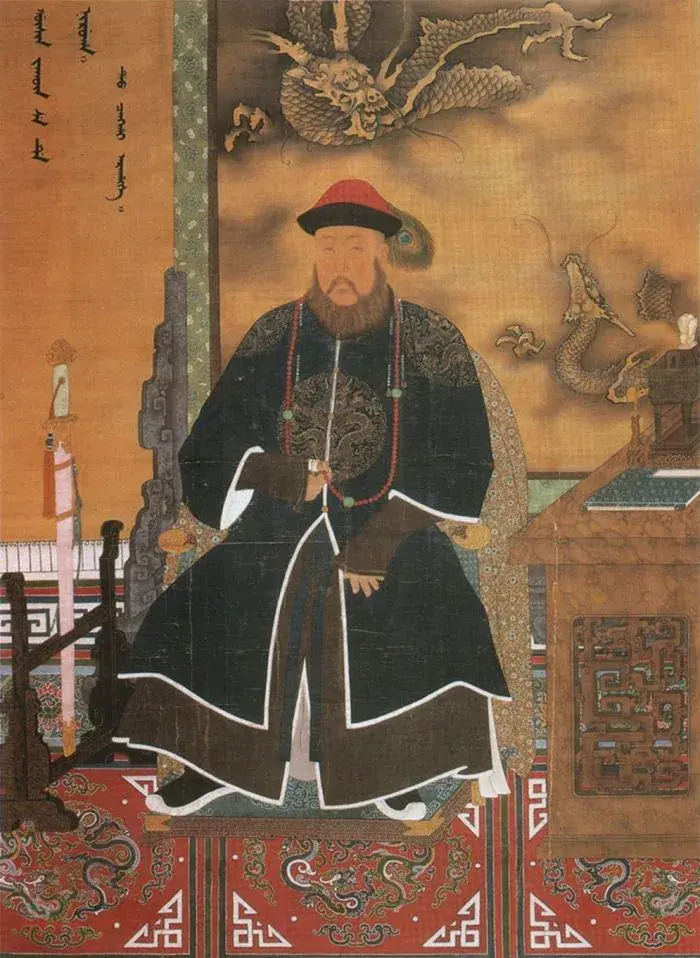
The Literary Inquisitions of the Qing Dynasty (清代文字狱) refers to a systematic and protracted series of political persecutions and intellectual purges carried out by Qing emperors from the mid-seventeenth century to the late eighteenth century. These operations targeted scholars, officials, and publishers whose writings, private correspondence, poetry, or examination questions were construed as questioning Manchu legitimacy, expressing nostalgia for the fallen Ming Dynasty, violating imperial taboos, or subtly disparaging imperial decisions. The campaign reached its zenith during the reign of the Qianlong Emperor, who alone accounted for more than eighty percent of all recorded cases during the Qing era. Through relentless investigations by the Board of Punishments, provincial surveillance networks, and comprehensive censorship conducted under the guise of compiling the Complete Library of the Four Treasuries, the Qing autocracy successfully eradicated dissenting opinions. This intense political terror drove Chinese intellectuals away from practical governance and philosophical inquiry, forcing them into the safe haven of Qianjia philology, textual collation, and phonology.
The imperial court prohibits unauthorized compilation of contemporary histories and political tracts.
Magistrate Wu Zhirong informs authorities of subversive text in the Ming History Summary.
Zhuang Tinglong's corpse is desecrated, and over seventy participants are executed.
Censor accuses Hanlin compiler Dai Mingshi of utilizing Southern Ming chronologies.
Dai is beheaded, collaborators are exhumed, and families are exiled to Heilongjiang.
Zha Siting is arrested for treasonous interpretation of examination topics and dies in prison.
Zeng Jing's plot fails, resulting in the posthumous desecration of Lu Liuliang and publication of Dayi Juemi Lu.
Hu is executed for subversive poetry, marking the expansion of arbitrary imperial paranoia.
Wang Xihou and seven family members are executed over failure to observe imperial naming taboos.
Imperial censors complete the Four Treasuries project alongside the destruction of hundreds of prohibited book titles.
Following their conquest of Beijing and southward expansion, the Manchu rulers encountered staunch resistance from the Han cultural elite. Many scholars in the prosperous Jiangnan area retained intense loyalty to the Ming court, observing Southern Ming reign titles and covertly condemning Manchu policies like the queue order. The imperial court recognized this intellectual resistance as an ongoing existential threat to its sovereign legitimacy, prompting the throne to implement draconian measures to purge any anti-Qing sentiments.
As the Qing consolidated military and administrative control over the empire, especially after crushing the Revolt of the Three Feudatories and absorbing Taiwan, the throne centralized political power to unprecedented levels. Under the Yongzheng and Qianlong emperors, the establishment of the Grand Council elevated bureaucratic absolutism. To maintain supreme authority, the emperors insisted not only on administrative compliance, but also on complete ideological conformity, treating any linguistic ambiguity or historical allusion as treason.
The foundation for widespread literary scrutiny was laid early in the Shunzhi era. In 1647, the imperial government issued decrees explicitly banning private compilation of modern history and unlicensed commentary on state affairs.
In the early Kangxi reign, while four Manchu regents held power, the notorious Case of Zhuang Tinglong's Ming History erupted. Zhuang Tinglong, a wealthy gentry member from Huzhou, purchased an unpublished manuscript by the late Ming grand secretary Zhu Guozhen and published it as the Ming History Summary. The book retained Ming reign titles, directly named the Qing founding ancestor Nurhaci without mandatory imperial honorifics, and documented Qing military setbacks. Following a denunciation by former magistrate Wu Zhirong, the imperial regency launched a brutal investigation. Zhuang's corpse was exhumed and desecrated, his brother was executed by slow slicing, and more than seventy editors, printers, booksellers, and local officials were executed, with hundreds of their relatives exiled as slaves.
In 1711, Hanlin compiler Dai Mingshi was indicted because his collection, the Nanshan Ji, utilized unofficial historical accounts containing Southern Ming reign dates. Despite Dai's standing as a respected scholar, the Kangxi Emperor ordered an exemplary punishment to enforce dynastic orthodoxy. Dai was beheaded in 1713, his collaborator Fang Xiaobiao was posthumously exhumed, and over a hundred individuals were executed, enslaved, or banished to the northern frontier.
The Yongzheng Emperor systematically weaponized literary trials to discipline the bureaucracy and crush political dissent. In 1726, Vice Minister of Rites Zha Siting presided over the Jiangxi provincial examination and selected a quotation from the Book of Songs: "Where the resting people abide." An informant falsely alleged that the first and last Chinese characters in the verse were created by decapitating the two characters forming Yongzheng's reign title. Zha was imprisoned, died in detention, had his body desecrated, and had his entire family executed or exiled.
In 1728, the disaffected scholar Zeng Jing, influenced by the anti-Manchu philosophical treatises of the late scholar Lu Liuliang, sent an emissary to persuade General Yue Zhongqi to stage a rebellion. Yue betrayed the plot to the emperor. Although Lu Liuliang had been dead for forty-five years, Yongzheng ordered his corpse and that of his son dug up and beheaded, his surviving followers executed, and his family enslaved. In a unique move, Yongzheng pardoned Zeng Jing and authored a comprehensive treatise titled Record of Great Righteousness Dispelling Delusion, distributing it to schools across the empire and compelling scholars to study its justification for Manchu rulership.
Under the Qianlong Emperor, literary inquisitions reached their highest frequency and psychological terror. The emperor personally scrutinized poetry collections and genealogical prefaces, ferreting out hidden subversive meanings. Between 1750 and 1780, dozens of intellectuals were executed on fabricated charges of sedition.
In 1755, Grand Secretary Hu Zhongzao was condemned because a poem in his personal anthology contained the phrase "discerning turbid from clear," which Qianlong interpreted as a veiled slander of the Qing Dynasty by pairing the character for clear (Qing) with turbid. Hu was summarily executed, and his patron, former Grand Secretary Ortai, was posthumously expelled from the Imperial Shrine of Virtuous Officials.
In 1777, Jiangxi scholar Wang Xihou was executed because his newly compiled dictionary, Ziguan, printed the personal names of Kangxi, Yongzheng, and Qianlong in its introductory guide to teach readers which characters were forbidden, without adopting customary stroke omissions. Qianlong declared this high treason, beheading Wang, executing seven of his sons and grandsons on the same day, and banishing the rest of his family.
During the nationwide compilation of the Complete Library of the Four Treasuries from 1772 onwards, Qianlong ordered provincial governors to search private libraries and bookshops. Tens of thousands of historical, military, and philosophical texts containing references to the Jurchens or critical evaluations of nomad dynasties were confiscated and permanently incinerated.
The literary inquisitions achieved their immediate imperial objective: they eliminated overt resistance to Manchu authority and cowed the Han intellectual elite into unconditional submission. However, this submission came at an immense cultural cost. The courage, social responsibility, and independent critical faculties of Chinese scholars were effectively destroyed, replaced by widespread fear and strict self-censorship.
Terrified of falling victim to imperial paranoia, scholars completely abandoned studies related to contemporary politics, frontier defence, statecraft, and social thought. Instead, they directed their energies into the safe, apolitical realms of evidential research, ancient phonology, bronze and stone epigraphy, and classical philology, creating the flourishing Qianjia School. Concurrently, the massive book burnings conducted during the Qianlong era destroyed thousands of irreplaceable Ming historical records, geographical accounts, and technical manuals.