Accession of Emperor Ming
Emperor Guangwu dies; Liu Zhuang ascends the throne in Luoyang, initiating judicial and bureaucratic reforms.
Eastern Han Dynasty (东汉) · HISTORICAL EVENT
汉明帝继位与永平之政
The Emperor Ming of Han's Accession and the Yongping Governance (汉明帝继位与永平之政) marked the formal enthronement of Emperor Ming (Liu Zhuang) and his eighteen-year reign (57–75 CE) characterized by rigorous institutional discipline and profound civilizational accomplishments. In 57 CE, Emperor Guangwu passed away, and Crown Prince Liu Zhuang ascended the throne before the imperial bier in the Southern Palace of Luoyang, adopting the Yongping era title.…
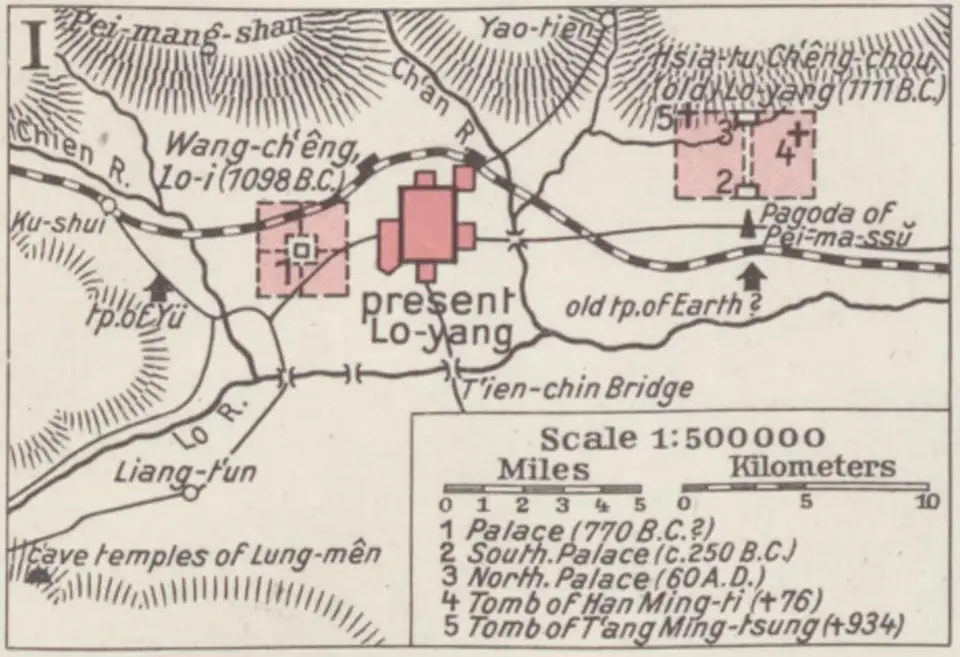
The Emperor Ming of Han's Accession and the Yongping Governance (汉明帝继位与永平之政) marked the formal enthronement of Emperor Ming (Liu Zhuang) and his eighteen-year reign (57–75 CE) characterized by rigorous institutional discipline and profound civilizational accomplishments. In 57 CE, Emperor Guangwu passed away, and Crown Prince Liu Zhuang ascended the throne before the imperial bier in the Southern Palace of Luoyang, adopting the Yongping era title. Thoroughly educated in Confucian statecraft and renowned for uncompromising acumen, Emperor Ming preserved Guangwu's administrative foundation, inaugurating the prosperous "Yongping Governance." Domestically, Emperor Ming conducted rigorous bureaucratic appraisals, prohibited consort clans from ennoblement and political appointments, and crushed the treasonous conspiracy of Prince Liu Ying of Chu to safeguard central authority. Economically, he commissioned engineer Wang Jing to construct a thousand-li embankment along the Yellow River, permanently resolving centuries of catastrophic flooding. Culturally, he honored his mentor Huan Rong, expanded the Imperial Academy, and following an imperial dream of a golden deity, dispatched envoys to India, resulting in the founding of the White Horse Temple—the first state Buddhist monastery in China. Militarily, he directed Dou Gu to crush the Northern Xiongnu and dispatched Ban Chao to pacify the Western Regions, reopening the Silk Road. The Yongping reign served as the indispensable bedrock for the celebrated "Rule of Ming and Zhang."
Emperor Guangwu dies; Liu Zhuang ascends the throne in Luoyang, initiating judicial and bureaucratic reforms.
Emperor Ming lectures at the Imperial Academy and honors master Huan Rong as a devoted student.
Buddhist scriptures arrive in Luoyang aboard white horses; the first state Buddhist monastery is founded.
Emperor Ming mobilizes nationwide labor under Wang Jing to build a thousand-li dike, halting centuries of floods.
Treason by Prince Liu Ying of Chu is exposed; Emperor Ming abolishes the fief and punishes conspiring royals.
Dou Gu defeats Northern Xiongnu at Mount Tianshan, while Ban Chao ventures with thirty-six men to reopen the Silk Road.
Emperor Ming passes away at the Eastern Palace in Luoyang; Crown Prince Liu Da ascends the throne to continue the golden age.
Through decades of arduous campaigns, Emperor Guangwu (Liu Xiu) pacified warlords and restored the Han dynasty. Although the late Guangwu reign achieved domestic tranquility and agrarian revival, deep-seated issues persisted: powerful founding magnates and local gentry continued to hoard land and conceal tenant households. Upon his death in 57 CE, Emperor Guangwu recognized that the empire required a resolute, penetrating ruler to consolidate legal norms and prevent aristocratic clans from eroding sovereign authority.
Liu Zhuang was the fourth son of Emperor Guangwu, born to Empress Guanglie (Yin Lihua). Demonstrating exceptional intellect, he mastered the Spring and Autumn Annals by age ten and distinguished himself during land-survey disputes and local rebellions. Appointed Crown Prince in 43 CE, he studied the Classic of History and ancient state rituals under eminent scholar Huan Rong for more than a decade. This prolonged political apprenticeship endowed Liu Zhuang with deep administrative wisdom and moral rectitude before assuming the throne.
In the second month of 57 CE, Emperor Guangwu passed away in Luoyang. Crown Prince Liu Zhuang ascended the throne before the imperial coffin, inaugurating the Yongping era. Emperor Ming proclaimed his commitment to ancestral institutions, practiced personal frugality, and concentrated state authority upon rigorous supervision of central and provincial magistrates.
Known for judicial severity and piercing insight, Emperor Ming deployed circuit inspectors to punish administrative corruption and extortion, dismissing and executing venal officials regardless of ministerial rank. Regarding the imperial house, he established strict taboos forbidding consort relatives from political meddling; when Princess Guantao petitioned for an official rank for her son, Emperor Ming flatly refused, while Empress Ma's maternal relatives were kept under strict modesty. In 70 CE, when Prince Liu Ying of Chu conspired to rebel, Emperor Ming directed imperial inquisitors to conduct an unsparing investigation, abolishing the Chu principality and banishing Liu Ying, neutralizing separatist threats among imperial princes.
Emperor Ming embraced Confucian agrarian ideals, proclaiming agriculture the foundation of all under heaven. He repeatedly decreed tax remissions, settled landless refugees, and distributed public draught cattle and grain seed while curbing illegal land accumulation by local oligarchs.
The most monumental engineering achievement of the reign was the containment of the Yellow River. Since the late Western Han, chronic levee breaches had inundated the North China Plain, drowning farmlands across Henan and Shandong and severing the Bian Canal. In 69 CE, Emperor Ming appointed hydraulic architects Wang Jing and Wang Wu to oversee comprehensive river conservancy. Mobilizing hundreds of thousands of corvee laborers and massive imperial treasury funds, Wang Jing constructed an unbroken thousand-li embankment from Xingyang to the Bohai Sea, augmented with waterlocks to regulate waterflow. This engineering marvel tamed the floodwaters, transforming vast marshes into fertile grain fields and preventing major course shifts for over eight centuries.
In intellectual culture, Emperor Ming actively championed Confucian rites. In 59 CE, he attended the Imperial Academy in Luoyang, presiding over communal drinking ceremonies and elderly-care banquets before tens of thousands of scholars. He honored his former teacher Huan Rong throughout his life, visiting him on his sickbed and bowing as a humble disciple, establishing an iconic standard of respect for scholarly authority.
In religious history, Emperor Ming experienced an imperial vision of a golden deity flying above the palace. Advised by courtiers that this represented the Buddha of the Western Regions, he dispatched envoys Cai Yin and Qin Jing to India in 67 CE. In 68 CE, the envoys returned to Luoyang with Indian monks Kasyapa Matanga and Dharmaratna, transporting scriptures on white horses. Emperor Ming ordered the construction of the White Horse Temple outside Luoyang's West Yong Gate, translating the Sutra of Forty-Two Chapters and inaugurating the official introduction and translation of Buddhism in China.
Confronting chronic raids by the Northern Xiongnu along the Hexi Corridor, Emperor Ming abandoned defensive passivity, launching an assertive frontier campaign. In 73 CE, he dispatched General Dou Gu with four expeditionary divisions into the northern steppes. Dou Gu crushed the Northern Xiongnu prince at the Heavenly Mountains, pursuing the enemy to Lake Barkol and founding a military colony at Yiwu.
Concurrently, Emperor Ming sent acting major Ban Chao with thirty-six companions into the Western Regions. With daring courage and diplomatic brilliance, Ban Chao assassinated northern nomad envoys in Shanshan and peacefully integrated Khotan and Kashgar, single-handedly re-establishing Chinese suzerainty over more than fifty Central Asian kingdoms. The overland Silk Road was reopened after more than half a century of disruption. Emperor Ming passed away in 75 CE, leaving an empire distinguished by judicial clarity, financial abundance, and continental prestige.
Emperor Ming's accession and eighteenth-year reign successfully solved the critical historical challenge of stabilizing an infant dynasty across its second generation. By disciplining officials, banishing consort clans from government posts, and prosecuting royal conspiracies, Emperor Ming eliminated latent fractures, ensuring that centralized monarchical bureaucracy functioned with optimal efficiency and setting a sterling standard for dynastic succession.
The Yongping Governance left monumental milestones across multiple dimensions. Wang Jing's conservancy protected the North China Plain from catastrophic floods for eight centuries, securing agrarian productivity; the establishment of the White Horse Temple initiated centuries of profound interaction between Buddhism and Chinese civilization; and Ban Chao's pacification of Central Asia reversed nomad supremacy, transforming the Silk Road into a vital artery linking Asian and European civilizations and forging the golden age of the "Rule of Ming and Zhang."
In the Book of the Later Han (Hou Han Shu, Basic Annals of Emperor Xiaoming), Fan Ye delivered the definitive verdict: "Emperor Ming inherited the dynastic restoration, laboring diligently in state affairs and cleansing administrative corruption. His governance was strict yet harbored deep mercy. Scholar-officials submitted to his virtue, while consort clans were barred from authority. The realm enjoyed peace without crushing corvee, celebrating annual harvests of abundance. Emperor Ming's administration was truly magnificent and complete."
In Zizhi Tongjian, Sima Guang praised: "Emperor Ming was decisive, perceptive, and skilled in employing talent. In water control, Wang Jing achieved an achievement that endured for a millennium; in frontier defense, Dou Gu and Ban Chao expanded imperial authority across distant lands. He suppressed consort interference and curbed royal princes, ensuring spotless internal rule and widespread foreign submission. Emperor Ming was truly an exceptional guardian monarch."