Xi'an Reform Edict
Empress Dowager Cixi issues the foundational reform edict initiating the New Policies.
Qing Dynasty (清朝) · HISTORICAL EVENT
清末新政
The Late Qing Reforms (清末新政), commonly known in Chinese historiography as the New Policies, was a decade-long, state-directed modernization movement undertaken by the Qing imperial government between 1901 and 1911. Launched by Empress Dowager Cixi while in refuge in Xi'an following the devastating Boxer Protocol, the program represented the most comprehensive structural reform in Chinese imperial history, spanning military modernization, educational…
The Late Qing Reforms (清末新政), commonly known in Chinese historiography as the New Policies, was a decade-long, state-directed modernization movement undertaken by the Qing imperial government between 1901 and 1911. Launched by Empress Dowager Cixi while in refuge in Xi'an following the devastating Boxer Protocol, the program represented the most comprehensive structural reform in Chinese imperial history, spanning military modernization, educational restructuring, commercial legalization, judicial reform, and constitutional experimentation. Over the course of ten years, the Qing government enacted historic measures: in 1905, it formally abolished the thirteen-century-old imperial civil service examination system, replacing it with a Western-style primary, secondary, and tertiary school curriculum; it restructured provincial armed forces into thirty-six modern divisions known as the New Army; it created the Ministry of Commerce to foster private enterprise and railway construction; and it initiated preparations for constitutional monarchy by establishing provincial assemblies and the national Consultative Council. However, the Manchu court proved unable to surrender absolute imperial power. The creation of the Royal Cabinet in May 1911, dominated by Manchu princes, shattered the gentry's faith in peaceful constitutional evolution. Combined with the explosive Railway Protection Movement, the reforms ultimately backfired, prompting the newly trained New Army to rebel in Wuchang and topple the two-hundred-and-sixty-year-old Qing Dynasty.
Empress Dowager Cixi issues the foundational reform edict initiating the New Policies.
The central coordination body for national modernization is established in Beijing.
Establishment of the Ministry of Commerce to promulgate corporate regulations and foster private industries.
Formal launch of the program to train thirty-six modern infantry divisions known as the New Army.
Promulgation of a comprehensive nationwide educational system from primary schools to universities.
Imperial decree abolishes the imperial civil examinations, ending more than a thousand years of traditional scholar selection.
High commissioners depart to study constitutional systems in Europe, America, and Japan.
The throne officially commits to establishing a constitutional monarchy in China.
Promulgation of the constitutional guidelines stipulating nine years of preparatory governance.
Appointment of a cabinet dominated by Manchu princes, decisively alienating moderate constitutionalists.
New Army units in Hubei revolt, triggering the collapse of the Qing Dynasty and the 1911 Revolution.
The catastrophic climax of the Boxer Rebellion in 1900 resulted in the capture of Beijing by the Eight-Nation Alliance and the humiliating flight of the imperial court to Xi'an. The signing of the Boxer Protocol in September 1901 imposed an astronomical indemnity of 450 million taels of silver, military occupation of key railway lines, and foreign garrisoning of the diplomatic quarter. Facing unprecedented national humiliation, fiscal bankruptcy, and mounting revolutionary insurrections led by Sun Yat-sen, the conservative Manchu leadership recognized that slavish adherence to ancient institutions guaranteed immediate dynastic extinction, making institutional restructuring unavoidable.
The survival of the southern provinces during the crisis of 1900 was largely due to the Mutual Defense of the Southeast, negotiated by progressive provincial governors-general such as Zhang Zhidong and Liu Kunyi. In early 1901, Zhang and Liu jointly submitted the Three Memorials from Jiangchu, detailing an extensive reform blueprint encompassing modern schooling, military reorganizations, administrative streamlining, and legal codification. Meanwhile, exiled reformers Kang Youwei and Liang Qichao mobilized extensive public opinion among overseas Chinese and domestic gentry in favor of constitutional monarchy, creating an irresistible political current for reform.
On January 29, 1901, Empress Dowager Cixi issued a historic reform edict from Xi'an in the name of the Guangxu Emperor, candidly acknowledging that past conservatism had imperiled the empire and commanding high officials to submit proposals for adopting Western institutional strengths. In April 1901, the imperial government formed the Bureau of Government Affairs in Beijing to oversee national modernization policies.
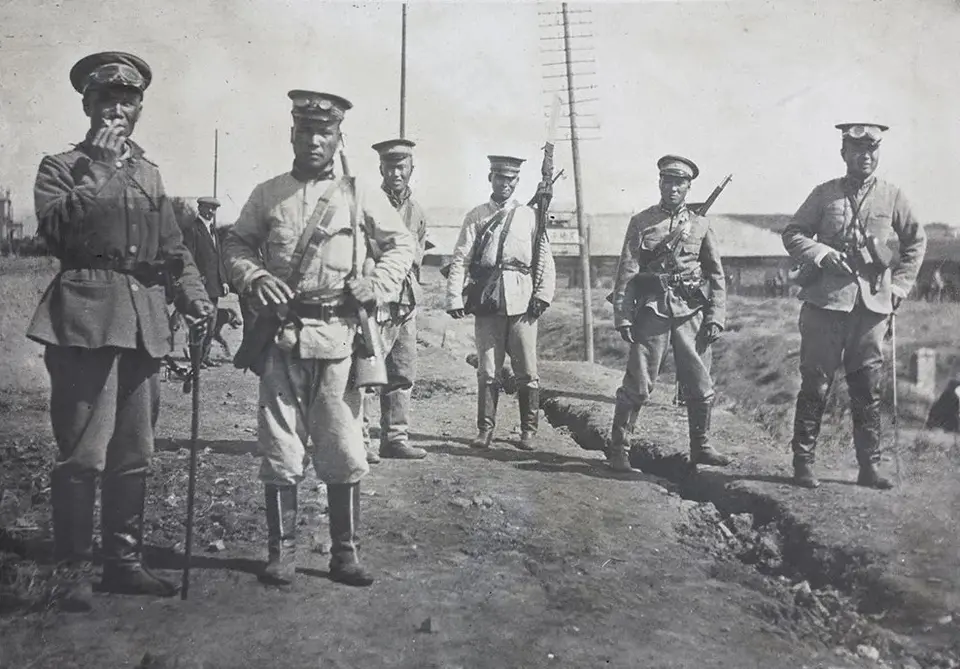
Between 1901 and 1906, dramatic transformations were implemented across three key sectors. In military affairs, the Commission for Army Reorganization was founded under Prince Qing and Yuan Shikai. The antiquated Green Standard and Eight Banners forces were replaced by a modern standing military known as the New Army, organized on German and Japanese tactical lines with modern artillery, standardized uniforms, and specialized officer academies.
In educational affairs, the court promulgated the Imperial School Regulations of 1904 (Guimao School System), instituting nationwide modern primary, secondary, and higher education. In September 1905, following urgent joint petitions from Yuan Shikai and Zhang Zhidong, Cixi issued an edict terminating the traditional civil service examination system starting with the 1906 examinations, permanently dismantling the traditional social escalator of Confucian scholarship. Tens of thousands of young Chinese enrolled in modern schools or traveled abroad to study in Japan, Europe, and the United States.
In economic and legal development, the Ministry of Commerce was created in 1903, issuing China's first modern commercial laws and corporate statutes to protect private capital investment in mines and railways. Simultaneously, legal modernizer Shen Jiaben was commissioned to revise the Qing Code, eliminating brutal corporal punishments like slow slicing and drafting modern penal and civil statutes modeled on continental European law.
The Japanese victory over Tsarist Russia in the Russo-Japanese War of 1904-1905 produced a profound intellectual shock wave across China. The victory of a small Asian constitutional monarchy over a vast Eurasian autocracy was widely celebrated by Chinese elites as proof that constitutionalism was fundamentally superior to autocracy.
In July 1905, the Qing court appointed five prominent dignitaries—Prince Zaize, Duanfang, Dai Hongci, Xu Shichang, and Shaoying—to undertake an extensive constitutional fact-finding mission across Japan, the United States, Britain, France, and Germany. Upon their return, the commissioners argued forcefully that adopting a constitution would secure the imperial throne perpetually, mitigate foreign aggression, and pacify domestic unrest. On September 1, 1906, Cixi formally proclaimed the imperial intention to prepare for constitutional governance.
In August 1908, the court promulgated the Principles of the Imperial Constitution, scheduling a nine-year preparatory period before inaugurating a national parliament. Although the document conceded civic rights, it explicitly reaffirmed absolute imperial prerogatives, proclaiming that the sacred emperor ruled the Great Qing Empire unbroken for ten thousand generations. In November 1908, both the Guangxu Emperor and Empress Dowager Cixi died within twenty-four hours; the toddler Puyi was enthroned as the Xuantong Emperor, with his father, Prince Chun (Zaifeng), serving as Prince Regent.
Prince Regent Zaifeng sought to reconcentrate military and political authority exclusively within the imperial clan. Fearing Han ascendancy, he dismissed Yuan Shikai from office under the pretext of an ailing foot and filled high military commands with his brothers. In 1909, provincial consultative assemblies convened, followed in 1910 by the national Consultative Council. Frustrated by imperial procrastination, delegates staged three massive parliamentary petition movements demanding an immediate convened national assembly.
Under intense popular pressure, the court shortened the preparatory timeline to five years. However, on May 8, 1911, the throne abolished the Grand Council and revealed its long-awaited first responsible cabinet. Of the thirteen cabinet ministers, nine were Manchus, and five were direct members of the imperial lineage, with Prince Qing installed as Prime Minister. This so-called Royal Cabinet exposed the throne's absolute insincerity regarding genuine power-sharing.
The Royal Cabinet fatally alienated the constitutionalist gentry elite who had previously defended the dynasty against radical revolution. Days later, the cabinet nationalized private railway lines in Sichuan and Hubei, planning to mortgage them to foreign banking syndicates. This brazen expropriation triggered the violent Railway Protection Movement. When the Qing transferred New Army units from Hubei to suppress Sichuan unrest, revolutionary soldiers in Wuchang seized the opportunity, launching the Wuchang Uprising on October 10, 1911, which rapidly culminated in the abdication of the last emperor and the birth of the Republic of China.
The Late Qing Reforms constituted the most consequential institutional transformation in modern Chinese history. By abolishing the imperial examination system and creating a standardized national curriculum, the movement produced China's first modern generation of scientists, engineers, lawyers, and educators. The formation of the New Army introduced professional military training and modern organization. Furthermore, the codification of modern commercial and penal laws, alongside the convocation of provincial assemblies, laid the institutional groundwork for subsequent republican parliamentary experiments.
The reforms carried an irreconcilable structural paradox: while the throne sought to modernize its institutions to preserve Manchu imperial autocracy, modernization generated autonomous social forces that ultimately dismantled the dynastic state. The termination of the imperial exams alienated millions of traditional scholars; the New Army became politicized and receptive to anti-Manchu republican propaganda; and the autocratic intransigence of the Royal Cabinet drove moderate constitutionalists into an alliance with radical revolutionaries. Ultimately, the very reforms intended to save the Qing Dynasty created the instruments and mobilized the actors that overthrew it in 1911.