Conquest of Nanyue
Following conquests in the south and southwest, courtiers petition Emperor Wu to perform the fengshan sacrifices.
Western Han (西汉) · HISTORICAL EVENT
汉武帝封禅泰山
The Emperor Wu of Han's Fengshan Sacrifices on Mount Tai (汉武帝封禅泰山) was a momentous state ritual of profound geopolitical and religious consequence performed by Emperor Wu (Liu Che) in the spring of 110 BCE. Ascending the throne decades earlier, Emperor Wu centralized power through the Tuen Order, established Confucianism as the orthodox state philosophy, crushed nomadic Xiongnu forces, pacified the Western Regions, conquered Nanyue, and incorporated…
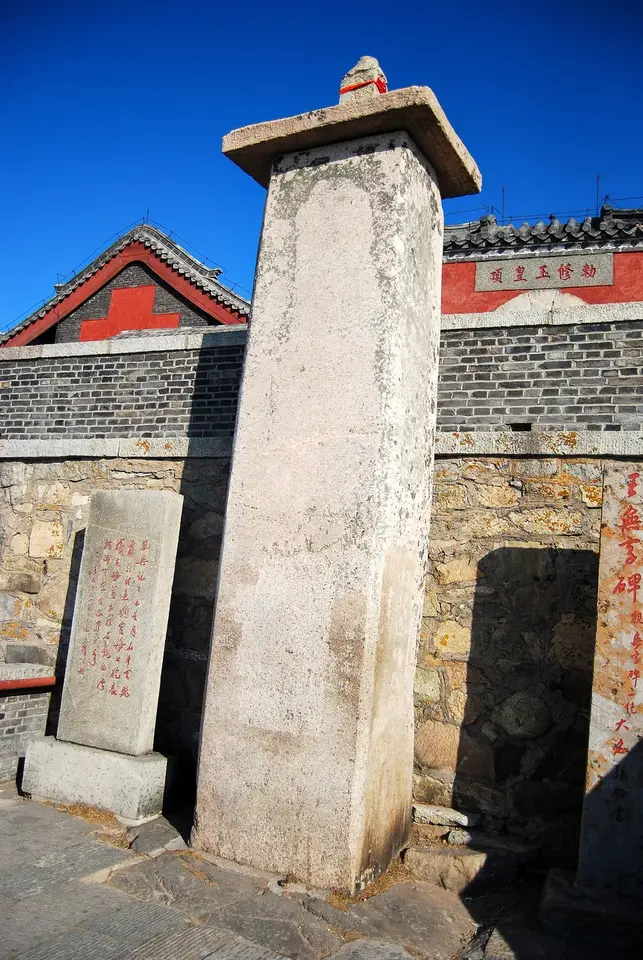
The Emperor Wu of Han's Fengshan Sacrifices on Mount Tai (汉武帝封禅泰山) was a momentous state ritual of profound geopolitical and religious consequence performed by Emperor Wu (Liu Che) in the spring of 110 BCE. Ascending the throne decades earlier, Emperor Wu centralized power through the Tuen Order, established Confucianism as the orthodox state philosophy, crushed nomadic Xiongnu forces, pacified the Western Regions, conquered Nanyue, and incorporated the southwestern tribes. With the realm universally pacified and foreign tribes submitting as vassals, Emperor Wu resolved to enact the supreme ancient ritual of fengshan—sacrifices reserved exclusively for monarchs who achieved epochal peace and unity under heaven. In the spring of 110 BCE, Emperor Wu paraded 180,000 elite cavalry through the northern border before arriving at Mount Tai. Rejecting the cumbersome, conflicting suggestions of conservative scholars, the emperor personally formulated the ceremonial statutes. In the fourth month, he offered sacrifices at the southern base, scaled the summit accompanied solely by his young confidant Huo Shan to conduct confidential sacrifices to Heaven, and performed the shan sacrifice to Earth at Mount Suran the following day. Receiving homage from courtiers and foreign dignitaries in the newly erected Mingtang, he granted imperial amnesties and inaugurated the Yuanfeng era. The event synthesized Confucian Mandate of Heaven doctrine with universal imperial majesty, establishing a revered archetype for Chinese dynastic statecraft.
Following conquests in the south and southwest, courtiers petition Emperor Wu to perform the fengshan sacrifices.
Emperor Wu leads 180,000 cavalry in an imposing northern demonstration before progressing east to Mount Tai.
Scholars argue inconclusively over ceremonial forms; Emperor Wu independently designs the imperial ritual framework.
Emperor Wu and Huo Shan ascend the summit to conduct the secret feng sacrifice and erect an imperial monument.
The emperor descends to Mount Suran, performing nine bows to Earth and completing the shan ceremonies.
The court convenes in the Mingtang; Emperor Wu issues national amnesties and inaugurates the Yuanfeng era.
Throughout decades of assertive statecraft, Emperor Wu overhauled the institutional fabric of imperial China. The Tuen Order dismantled the threat of vassal kingdoms; state monopolies over salt, iron, and liquor concentrated fiscal power in the treasury; and the canonization of the Five Classics established ideological cohesion. Militarily, generals Wei Qing and Huo Qubing expelled the Xiongnu north of the desert, securing the Hexi Corridor. In 111 BCE, imperial forces conquered Nanyue, annexed southwestern tribal territories, and integrated coastal commanderies. The empire possessed unprecedented territorial expanse, overflowing granaries, and undisputed authority, creating an overwhelming impetus to proclaim the triumph of the dynasty before Heaven and Earth.
In ancient Chinese political cosmology, the fengshan sacrifices constituted the ultimate ceremonial communion between the earthly monarch and the cosmos. Treatises in the Rites and Guanzi recorded that seventy-two ancient legendary sovereigns had performed these rites atop Mount Tai to report civilizational harmony. Confucians, Daoist thaumaturges such as Gongsun Qing, and legal scholars vigorously promoted the ceremony. On his deathbed, the renowned poet Sima Xiangru submitted the celebrated Treatise on the Fengshan Sacrifices, urging the emperor to fulfill dynastic destiny. Convinced of his celestial mandate, Emperor Wu sought to demonstrate that Han legitimacy surpassed all preceding dynasties.
In the spring of 110 BCE, Emperor Wu initiated the ceremonial progress with an imposing demonstration of imperial military power. Marshaling 180,000 veteran cavalry, he conducted an extensive military review across the northern frontiers of Shuofang, projecting supreme force into the steppes before marching eastward toward Shandong. In the third month, the imperial entourage arrived at the foot of Mount Tai.
Upon arrival, Emperor Wu convened prominent scholars and imperial doctors from Qi and Lu to determine ceremonial protocols. However, the scholars engaged in protracted factional disputes over trivial details, demanding archaic vessels and rigid sacrificial procedures that proved impracticable. Displeased by their pedantic inflexibility, Emperor Wu dismissed their proposals, electing to personally engineer the ceremonial framework by synthesizing ancient imperial sacrifices to Taiyi (the Supreme Unity) and Houtu (the Earth Empress) with contemporary imperial grandeur.
In the fourth month of 110 BCE, the ceremonies commenced at Mount Tai. Emperor Wu first sacrificed to Heaven at an earthen terrace on the southern slopes, burying white reeds and sacrificial animals. Then, commanding his vast armies and the civil bureaucracy to remain below, the emperor ascended the steep summit path accompanied solely by young attendant Huo Shan, the orphaned son of legendary general Huo Qubing.
At the summit, Emperor Wu performed the confidential feng sacrifice, enshrining an imperial prayer tablet inside a stone casket and erecting a monument to symbolize celestial favor and imperial accomplishment. On the twelfth day of the fourth month, the emperor descended to Mount Suran on the northeastern flank of Mount Tai to perform the shan sacrifice dedicated to the Empress Earth. Clad in yellow imperial vestments, the sovereign knelt nine times before the Earth deity amid ringing bells, chimes, and sacred orchestral hymns.
Following the completion of the terrestrial rites, Emperor Wu proceeded to the newly constructed Mingtang (Hall of Enlightenment) on the banks of the Wen River. Designed with nine chambers and twelve halls according to cosmological numerology, the Mingtang served as the grand imperial stage. Seated upon the throne, Emperor Wu received formal congratulations, memorials, and tributary oaths from imperial princes, senior ministers, and envoys representing Central Asian kingdoms and border tribes.
To commemorate celestial favor, Emperor Wu promulgated an imperial amnesty across the realm, remitting taxes and corvee levies for the nearby counties of Fenggao and Bo. He granted universal tax abatements across all commanderies, conferred a one-step aristocratic rank upon household heads nationwide, and formally adopted the era name "Yuanfeng" ("Primary Consecration"). In subsequent years, Emperor Wu returned repeatedly to Mount Tai to renew the ceremonies, establishing Mount Tai at the spiritual apex of Chinese imperial legitimacy.
Emperor Wu's performance of the fengshan sacrifices marked the supreme practical realization of Chinese imperial political philosophy. The ceremonies translated Confucian cosmological doctrines of celestial mandate into an imposing physical reality. By conducting this ritual before the civil bureaucracy and foreign envoys, Emperor Wu sanctified the legitimacy of the Han house, elevating the imperial monarchy to an unprecedented spiritual apex and binding diverse ethnic subjects to a unified civilizational identity.
Prior to Emperor Wu, Mount Tai was primarily an eastern regional sacred site. Emperor Wu's monumental ceremonies, accompanied by the construction of the Mingtang, the city of Fenggao, and triumphal stone inscriptions, permanently elevated Mount Tai into the supreme national spiritual totem of unified China. Successive rulers, including Emperor Guangwu, Emperor Gaozong of Tang, and Emperor Xuanzong of Tang, revered Mount Tai as the ultimate altar of imperial legitimacy, embedding the peak as an eternal monument of Chinese civilizational unity.
In the Records of the Grand Historian (Shi Ji, Treatise on the Fengshan Sacrifices), Sima Qian recorded: "The Han sacrifices of fengshan were unique in their majesty. Emperor Wu subdued the four directions, pacified Nanyue, projected might across the northern desert, performed the feng at Mount Tai and the shan at Suran, and received the world in the Mingtang—a truly magnificent spectacle."
In Zizhi Tongjian, Song historian Sima Guang evaluated: "Emperor Wu confronted the Xiongnu, expanded territory across tens of thousands of li, and enriched the state; thus he sacrificed at Mount Tai, instituted the Mingtang, and displayed his grandeur to all nations. Although misled by dreams of immortality, his heroic vision and unyielding devotion to dynastic unity can never be obscured."