Linghu Defen Proposes Compiling Prior Histories
Linghu Defen petitions Emperor Gaozu to compile five dynastic histories, but civil war delays the enterprise.
Tang Dynasty (Emperor Taizong Era) · HISTORICAL EVENT
贞观修史
The Historiographical Projects of the Zhenguan Era (贞观修史) encompassed the grand state-sponsored cultural initiative conducted between 629 and 648 in Chang'an by the Tang imperial court to systematically compile the official histories of preceding dynasties. Across centuries of disunion from the Three Kingdoms through the Northern and Southern Dynasties, surviving records of Liang, Chen, Qi, Zhou, Sui, and Jin had been authored by private scholars whose…
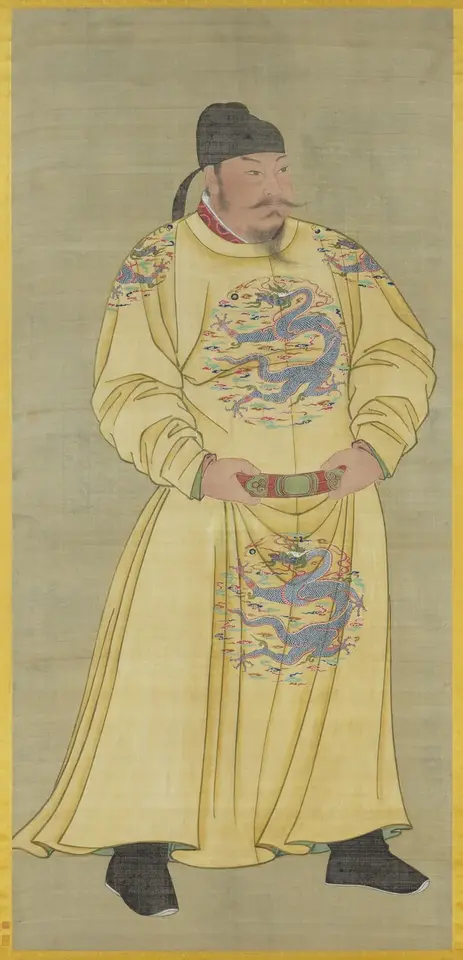
The Historiographical Projects of the Zhenguan Era (贞观修史) encompassed the grand state-sponsored cultural initiative conducted between 629 and 648 in Chang'an by the Tang imperial court to systematically compile the official histories of preceding dynasties. Across centuries of disunion from the Three Kingdoms through the Northern and Southern Dynasties, surviving records of Liang, Chen, Qi, Zhou, Sui, and Jin had been authored by private scholars whose partisan allegiances produced fragmented narratives lacking imperial authority. Emperor Taizong recognized that studying past successes and failures was indispensable for good governance, establishing the Historiographical Office (Shiguan) within the Chancellery under chancellor supervision. Under the supreme direction of Chancellors Fang Xuanling and Wei Zheng, Yao Silian completed the Book of Liang and Book of Chen, Li Baiyao finished the Book of Northern Qi, Linghu Defen directed the Book of Zhou, Wei Zheng led the Book of Sui, and Li Chunfeng compiled the Treatises of the Five Dynasties. In 646, Emperor Taizong mobilized twenty-one renowned scholars to recompile the 130-volume Book of Jin, personally writing four imperial historical appraisals. The Zhenguan historiographical enterprise concluded all six dynastic histories, pioneered the inclusion of the Sixteen Kingdoms via "Chronicles" (Zaiji), and established the standard bureaucratic model of dynastic history compilation in premodern China.
Linghu Defen petitions Emperor Gaozu to compile five dynastic histories, but civil war delays the enterprise.
Taizong creates the Historiographical Office in the Chancellery under Fang Xuanling, launching the five histories project.
Yao Silian, Li Baiyao, Linghu Defen, and Wei Zheng complete the annals and biographies of Liang, Chen, Qi, Zhou, and Sui.
Emperor Taizong commissions Fang Xuanling and twenty scholars to compile a definitive 130-volume history of Jin.
The 130-volume text is completed with four imperial essays written by Taizong, who orders all private Jin histories abolished.
Li Chunfeng completes thirty volumes of specialized treatises, finalizing the standard unified hundred-volume Book of Sui.
From the collapse of the Eastern Han through the Three Kingdoms and the disaster of Yongjia, China was plunged into more than three centuries of territorial fragmentation. The southern basin witnessed the succession of Eastern Jin, Song, Southern Qi, Liang, and Chen, while the north fractured into the Sixteen Kingdoms, Northern Wei, Eastern and Western Wei, Northern Qi, and Northern Zhou. During these turbulent centuries, historical compilation depended almost exclusively upon private individual authorship. According to the bibliographic treatise of the Book of Sui, eighteen distinct private histories existed for the Jin dynasty alone, alongside competing accounts for northern and southern courts.
However, private histories were constrained by personal horizons and regional prejudices, often displaying sectarian bias and factual distortions. Southern chroniclers dismissed northern rulers as barbarian nomads, while northern scribes derided southern dynasties as displaced exiles. Discrepancies abounded regarding chronologies, institutional terminologies, and imperial legitimacy. Lacking access to central state archives, private works could not provide the standardized, comprehensive historical authority required by a reunified empire.
Although the Sui Dynasty had unified China, its rapid collapse prevented the court from organizing a systematic compilation of prior histories. Early in the Tang dynasty under Emperor Gaozu, Director of the Palace Library Linghu Defen petitioned the throne to compile the official histories of the preceding five dynasties; an imperial decree was issued, but warfare delayed its execution.
Upon ascending the throne in 627, Emperor Taizong pondered the causes of dynastic rise and ruin, viewing history as an essential mirror for public peace and moral rectitude. He famously instructed his ministers: "With bronze as a mirror, one can adjust one's garments; with antiquity as a mirror, one can perceive the rise and fall of states; with human character as a mirror, one can discern merits and errors." Determined to extract structural lessons from previous regimes to guide Tang statecraft, Emperor Taizong issued an imperial edict in 629 to mobilize state resources and initiate the largest official historical project in Chinese history.
In the intercalary twelfth month of 629, Emperor Taizong reformed the traditional imperial recording apparatus. Under previous dynasties, historiography had been relegated to subordinate compilers within the Palace Library who were denied access to confidential court debates. Taizong transferred historiographical operations directly into the Chancellery (Menxia Sheng) within the inner palace, establishing the autonomous "Historiographical Office" (Shiguan) headed by the Chancellor serving concurrently as Supervisor of National History.
The court created specialized ranks including Senior Compilers and Duty Compilers, formalizing procedures for archiving daily imperial diaries, administrative records, and veritable records. Chancellor Fang Xuanling presided over the office, allocating imperial treasury funds and granting scholars unrestricted access to the imperial library and the Institute for the Advancement of Literature. This state-directed apparatus concentrated national archives, scholars, and funding, permanently supplanting independent private historiography and inaugurating the institutionalized bureaucratic historiography of imperial China.
Following the 629 decree, Emperor Taizong assigned compilation duties based upon scholarly heritage and expertise: Yao Silian inherited his father Yao Cha's manuscripts to compile the Book of Liang (fifty volumes) and Book of Chen (thirty volumes); Li Baiyao expanded his father Li Delin's drafts to author the Book of Northern Qi (fifty volumes); Linghu Defen partnered with Cen Wenben and Cui Renshi to complete the Book of Zhou (fifty volumes); and Wei Zheng directed the compilation of the Book of Sui (fifty-five volumes), executed by scholars such as Yan Shigu and Kong Yingda.
Wei Zheng contributed profound political commentary, personally drafting several prefaces and imperial evaluations that rigorously analyzed statecraft and administrative collapse. Through seven years of synchronized collaboration, the narrative annals and biographies of all five dynasties were presented to the throne in early 636. Highly pleased, Emperor Taizong rewarded the compilers. Recognizing that earlier private histories lacked treatises, the emperor subsequently ordered Astronomer Royal Li Chunfeng and Linghu Defen to compile thirty volumes across ten specialized treatises covering astronomy, geography, rituals, officialdom, and bibliography, known as the Treatises of the Five Dynasties and incorporated into the Book of Sui.
With five dynastic histories complete, the court recognized that existing accounts of the Western and Eastern Jin remained unsatisfactory. While eighteen older works existed, they were composed by southern authors, displayed archaic literary styles, and overindulged in supernatural omens without capturing northern administrative structures. In the intercalary third month of 646, Emperor Taizong decreed a comprehensive recompilation of the Book of Jin to affirm Confucian loyalist values and reconcile northern non-Han dynasties with imperial legitimacy.
Fang Xuanling directed the grand project, assisted by Chu Suiliang and Xu Jingzong, alongside eighteen scholars including Linghu Defen, Lai Ji, Lu Yuanshi, Liu Ziyi, Lu Chengji, Li Chunfeng, Li Yifu, Xue Yuanchao, Shangguan Yi, Cui Xinggong, and Li Yanshou. The compilation team unified scholarly traditions from the northwestern nobility, northeastern clans, and southern gentry. In a unique development in imperial history, Emperor Taizong personally authored four extended historical appraisals: the basic annals of Sima Yi and Sima Yan, alongside the biographies of Lu Ji and Wang Xizhi. In the seventh month of 648, after two years and five months of labor, the 130-volume Book of Jin was presented to the throne, and Taizong decreed that all competing private versions be discarded in favor of the official imperial text.
The Zhenguan historiographical project established significant conceptual breakthroughs in imperial ideology. Confronting the complex division of the Sixteen Kingdoms, the Book of Jin innovated thirty volumes of "Chronicles" (Zaiji), systematically incorporating the histories of non-Han regimes including the Xiongnu, Xianbei, Jie, Di, and Qiang—such as Former Zhao, Later Zhao, Former Yan, Former Qin, Later Yan, Later Qin, Xia, and Western Qin—into the canonical dynastic framework.
This structural innovation dismantled the traditional ethnocentric prejudice that dismissed nomadic rulers as illegitimate barbarians, treating northern rulers with structural balance alongside the Eastern Jin emperors. This format reflected Emperor Taizong's inclusive concept of "treating all under heaven as one family." By integrating Three Kingdoms, Jin, and Northern and Southern Dynasties into an unbroken lineage, the Zhenguan project forged an authoritative imperial historiography that legitimized the Tang dynasty as the sole heir to universal Chinese orthodoxy.
Across nearly twenty years of state-sponsored labor, the Zhenguan historiographical initiative systematically synthesized 353 years of tumultuous history from Sima Yan's founding of Jin in 265 to the collapse of Sui in 618. The project produced six canonical official histories (Book of Liang, Book of Chen, Book of Northern Qi, Book of Zhou, Book of Sui, and Book of Jin) spanning hundreds of volumes. Upon completion, the court distributed these texts across imperial colleges and provincial bureaus, standardizing historical knowledge across the empire while retiring fragmented, unreliable private manuscripts.
In institutional and historiographical terms, the enterprise marked an enduring turning point. Institutionally, it established the state-operated Historiographical Office directed by the chancellor, creating the enduring standard wherein succeeding dynasties officially compiled the history of their predecessors, a model observed by the Song, Yuan, Ming, and Qing dynasties. Methodologically, it instituted the comprehensive thematic treatise system covering astronomy, administration, and law, while its inclusion of the Sixteen Kingdoms within "Chronicles" formalized a multi-ethnic, universal view of Chinese civilization. Crucially, the project salvaged thousands of archival documents that would otherwise have vanished, preserving the political, legal, and intellectual foundations of medieval China.