Fall of Yangzhou and Imperial Flight
Jurchen cavalry ambushed Yangzhou; Gaozong fled south, while Wang Yuan's looting stranded thousands of troops
Southern Song Dynasty (南宋) · HISTORICAL EVENT
苗刘兵变
The Mutiny of Miao and Liu (苗刘兵变) was a dramatic imperial guard coup and forced abdication that erupted at the temporary Southern Song capital of Hangzhou in the spring of 1129 CE. Following the catastrophic Jurchen surprise raid on Yangzhou, Emperor Gaozong fled south to Hangzhou. Bureau of Military Affairs director Wang Yuan colluded with palace eunuch supervisor Kang Lü to monopolize power, misappropriate military stipends, and commandeer civilian…
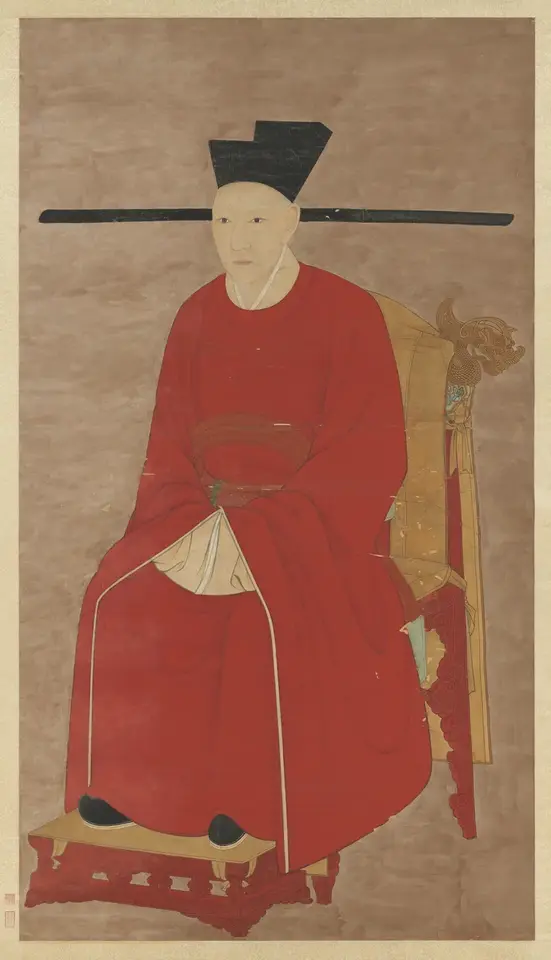
The Mutiny of Miao and Liu (苗刘兵变) was a dramatic imperial guard coup and forced abdication that erupted at the temporary Southern Song capital of Hangzhou in the spring of 1129 CE. Following the catastrophic Jurchen surprise raid on Yangzhou, Emperor Gaozong fled south to Hangzhou. Bureau of Military Affairs director Wang Yuan colluded with palace eunuch supervisor Kang Lü to monopolize power, misappropriate military stipends, and commandeer civilian boats to transport personal plunder while abandoning thousands of soldiers. Aggrieved by official nepotism and denied advancement, Imperial Guard commanders Miao Fu and Liu Zhengyan ambushed and decapitated Wang Yuan on March 26, 1129 CE. They besieged the imperial palace, executed Kang Lü, and forced Emperor Gaozong to abdicate in favor of his three-year-old heir Zhao Fu, with Empress Dowager Longyou serving as regent under the new era name Mingshou. In response, Vice Minister of Rites Zhang Jun and minister Lü Yihao raised loyalist armies at Pingjiang (Suzhou), marshaling elite generals Han Shizhong, Liu Guangshi, and Zhang Jun. On April 20, Han Shizhong spearheaded a fierce amphibious assault at Linping, crushing the rebel forces and restoring Emperor Gaozong to the throne. Miao Fu and Liu Zhengyan fled into Fujian but were captured by Han Shizhong's cavalry and executed by dismemberment in Jiankang. Though lasting only twenty-six days, the mutiny permanently curtailed eunuch authority in Southern Song while entrenching Emperor Gaozong's lasting paranoia toward autonomous military commands.
Jurchen cavalry ambushed Yangzhou; Gaozong fled south, while Wang Yuan's looting stranded thousands of troops
Gaozong granted Wang Yuan autonomous military authority, deepening resentment among frontline commanders
Miao Fu and Liu Zhengyan slew Wang Yuan, surrounded the palace, and executed chief eunuch Kang Lü
Gaozong abdicated in favor of his three-year-old heir Zhao Fu under the regency of Empress Dowager Meng
Zhang Jun and Lü Yihao formed a coalition at Pingjiang, rallying Han Shizhong, Zhang Jun, and Liu Guangshi
Faced with imminent assault, Miao and Liu escorted Gaozong back to the throne, but kept forces at Linping
Han Shizhong routed rebel forces at Linping; Miao and Liu abandoned Hangzhou, and Gaozong was secured
Loyalist cavalry captured Liu Zhengyan at Pucheng and apprehended Miao Fu at Jianyang
Miao Fu and Liu Zhengyan were executed by slow slicing in the Jiankang marketplace
Traumatized during the coup, crown prince Zhao Fu passed away, leaving Emperor Gaozong childless
Following the Jingkang Incident and the fall of the Northern Song, Zhao Gou was enthroned at Yingtian Prefecture (Shangqiu) in 1127 CE as Emperor Gaozong, founding the Southern Song. Rather than mobilizing national defenses, Gaozong marginalized resolute patriots like Li Gang, retreating south toward Yangzhou. In early February 1129 CE, Jurchen cavalry under Jin commander Wanyan Zonghan launched a daring winter raid that caught the court unprepared. Gaozong fled with a handful of retainers, while court officials and hundreds of thousands of refugees retreated panic-stricken across the Yangtze. During the crossing, rear-guard general Wang Yuan commandeered the majority of official transport vessels to evacuate his private gold, silver, and looted treasures, leaving tens of thousands of infantry soldiers and cavalry mounts stranded on the northern bank to be slaughtered or captured by the Jurchen. The loss of Yangzhou and Wang Yuan's avarice triggered furious indignation throughout the military ranks.
Upon reaching Hangzhou, Emperor Gaozong leaned heavily on his palace inner retinue for physical and emotional security. Palace eunuch supervisors Kang Lü, Zeng Ze, and Lan Gui abused this imperial favor, extorting local magistrates, seizing private residences, and selling bureaucratic promotions. Wang Yuan ingratiated himself with Kang Lü, becoming his sworn brother. Through eunuch advocacy, Wang Yuan not only avoided punishment for the Yangzhou disaster but was promoted to Commissioner of the Bureau of Military Affairs, gaining supreme military decision-making authority. Furthermore, Gaozong granted Wang Yuan the exceptional privilege of issuing military decrees without prior imperial endorsement. Veteran commanders with distinguished records resented this favoritism, viewing court administration as utterly corrupted by palace eunuchs and sycophants.
On March 26, 1129 CE (the fifth day of the third month), civil and military officials gathered at Tianzhu Temple to observe ancestral memorial rites for Emperor Shenzong. Guard commanders Miao Fu and Liu Zhengyan secretly conspired with officer Wang Shixiu to stage a palace coup, concealing elite troops beneath the North City Bridge. Although Kang Lü had received intelligence regarding suspicious military oaths bearing cryptographic characters pointing to Miao and Liu, Wang Yuan dismissively ignored the warnings.
As Wang Yuan rode back from the temple, hidden troops rushed from under the bridge, dragged him from his saddle, and Liu Zhengyan personally severed his head with a broadsword, denouncing him for treasonous collusion with corrupt eunuchs. The mutineers then marched thousands of heavily armed troops onto the temporary palace, encircling the northern gates and aiming their spears at the ramparts. Emperor Gaozong and Chancellor Zhu Shengfei climbed atop the Hangzhou palace gate tower to confront the mutineers. When Gaozong demanded an explanation, Miao Fu and Liu Zhengyan prostrated themselves in formal homage before shouting: "Your Majesty places blind trust in palace eunuchs, breaking the hearts of the empire's heroes! Those who bribe eunuchs obtain high office, while those who shed blood in battle are marginalized! Wang Yuan lost Yangzhou yet was awarded high military office purely through Kang Lü's favor! We have slain the traitor Wang Yuan and demand the immediate execution of Kang Lü, Lan Gui, and Zeng Ze to appease the three armies!"
Gaozong initially sought to defuse the mutiny by promoting Miao Fu and Liu Zhengyan to regional defense commissioners. Miao Fu rejected the offer, shouting that if he sought advancement, he could have bribed eunuchs rather than mobilizing troops. Seeing that the soldiers were on the verge of storming the gate, court officials advised the Emperor to sacrifice Kang Lü. Gaozong tearfully ordered Kang Lü lowered from the palace wall by rope, where the soldiers hacked him to pieces and displayed his head on a pole.
Having killed Kang Lü, Miao Fu and Liu Zhengyan escalated their demands, insisting that Emperor Gaozong abdicate the throne in favor of his three-year-old son Zhao Fu. Chancellor Zhu Shengfei descended the walls to negotiate, but Miao Fu obstinately claimed that "the empire belongs to the lineage of Emperor Taizu, and Your Majesty must return governance to his line." The mutineers escorted Empress Dowager Longyou (Empress Meng of the late Emperor Zhezong) into the palace.
Empress Dowager Meng reasoned with Miao Fu, stating: "Even in times of peace, governing through a widowed woman and an infant emperor is fraught with peril. With the barbarian enemy at our gates, such a course invites catastrophe!" Unmoved, the rebel leaders threatened to elevate an alternate royal prince by force. Gaozong realized his life was in immediate jeopardy and whispered to Zhu Shengfei his terms for yielding power: imperial honors equal to retired Emperor Huizong, the formal regency of Empress Dowager Longyou, and the protection of the imperial clan.
On the afternoon of March 26, Gaozong issued an abdication edict, stepping down from the throne and taking up residence in the Xiansi Temple as Retired Emperor. Three-year-old Zhao Fu was enthroned under the reign title Mingshou, with Empress Dowager Meng ruling behind the curtain. Miao Fu assumed the title Grand Commandant of the Eastern Palace, and Liu Zhengyan was named Imperial Grand Commandant, consolidating dictatorial control over the capital and dispersing Gaozong's personal guard.
At the time of the coup, Vice Minister of Rites Zhang Jun was inspecting administrative affairs in Pingjiang (modern Suzhou). Upon receiving intelligence of the mutiny, Zhang Jun wept aloud in grief, resolving to crush the treasonous cabal. Joining with Military Affairs director Lü Yihao, Zhang Jun established a loyalist military command at Pingjiang, issuing an impassioned manifesto to rally the empire.
Zhang Jun recognized that recapturing Hangzhou required elite front-line combat formations. He sent swift messengers to Xiuzhou (modern Jiaxing), where commander Zhang Jun executed rebel envoys and pledged allegiance to the loyalist cause. Concurrently, Zhang dispatched couriers to summon general Han Shizhong from Huaiyin. Han Shizhong, who had been a protege of the slain Wang Yuan, mobilized his veterans, sailed by sea from Yancheng to Suzhou, and joined Zhang Jun's headquarters. General Liu Guangshi arrived with large forces from Zhenjiang. The loyalist leaders swore mutual blood oaths, condemning Miao and Liu's treason and calling upon forces from Jiangdong, Jiangxi, and Fujian to converge upon Hangzhou.
To buy time for mobilization, Zhang Jun repeatedly dispatched scholar Feng Fan into Hangzhou to negotiate with Miao Fu under the pretense of seeking terms. Confused and alarmed by the mounting loyalist mobilization, Miao Fu issued an edict demoting Zhang Jun, which Zhang disregarded. The coalition finalized its tactical plan: Han Shizhong led the vanguard spearhead, Zhang Jun commanded the flanking wings, Liu Guangshi provided reserve defense, while Lü Yihao and Zhang Jun directed the central column down the Grand Canal toward Hangzhou.
Confronted by the approaching loyalist army, Miao and Liu's resolve crumbled. Within Hangzhou, Chancellor Zhu Shengfei orchestrated palace maneuvers alongside secret edicts from Empress Dowager Meng, urging Miao Fu to restore the Emperor to secure a pardon. On April 16, 1129 CE, Miao and Liu led court officials to pay homage to Gaozong at the Xiansi Temple, petitioning him to resume the throne. Gaozong was formally restored, appointing Miao Fu as Pacification Commissioner of Huaixi to entice the rebel armies out of the capital.
However, realizing that retribution was inevitable, Miao Fu refused to lay down arms. He dispatched his younger brother Miao Yu and commander Ma Rouji with the Chixin veteran units to fortify Linping (northeast of modern Yuhang, Zhejiang), a strategic bottleneck surrounded by wetlands, barricading the river canals and positioning tens of thousands of crossbowmen. On April 20 (the first day of the fourth month), Han Shizhong's vanguard warships arrived at Linping. Under a hail of arrows, Han Shizhong donned heavy armor and personally led assault infantry across the mudflats. Loyalist naval boats under Chen Sigong outflanked the enemy from the canals, smashing the barricades in ferocious hand-to-hand combat. The rebel lines broke, and their army dissolved in panic.
Han Shizhong marched unopposed into Hangzhou. Realizing all was lost, Miao Fu and Liu Zhengyan fled through the western gates with several hundred cavalry. On April 21, Han Shizhong entered the palace and prostrated himself before Emperor Gaozong. Gaozong grasped Han's hands and wept: "Had it not been for your valor, I would have died an exile!" Gaozong indicated palace guard Wu Zhan, who had abetted the coup; Han Shizhong stepped forward, fractured Wu Zhan's fingers with bare hands, and had him executed on the spot, reestablishing order in the imperial capital.
Following their flight from Hangzhou, Miao Fu and Liu Zhengyan retreated through Fuyang, Tonglu, and Quzhou, burning bridges and plundering civilian towns in an effort to establish an independent redoubt in the mountains of Fujian. When they attacked Quzhou, magistrate Hu Tanglao defended the walls with catapults and archers, repelling the assault. Gaozong appointed Han Shizhong Commissioner of Jiangnan and Zhejiang, directing a relentless pursuit.
Commanders Wang De and Qiao Zhongfu pursued the fleeing rebels through difficult mountain trails, reinforced by Ju Shigu's regiments. In late April, the loyalists engaged and crushed the rebel rearguard at Pucheng. Liu Zhengyan was captured in battle by Han Shizhong's cavalry. Miao Fu disguised himself under an assumed name, but was identified and apprehended by local officials in Jianyang. In May 1129 CE, Han Shizhong transported Miao Fu, Liu Zhengyan, and their confederates to the temporary court at Jiankang. Following formal interrogation by the Three Judicial Offices, Miao Fu and Liu Zhengyan were executed by slow slicing (zhe) in the Jiankang marketplace, and their heads were displayed on poles, completely concluding the twenty-six-day mutiny.
Following the suppression of the rebellion, Emperor Gaozong showered rewards upon the loyalist leaders. Han Shizhong was promoted to Junior Preceptor and Commander of two regional military garrisons (Wusheng and Zhaoking), with Gaozong personally presenting him with an imperial banner inscribed with the characters "Loyal and Brave" (Zhongyong). In an unprecedented honor, Han's wife, Lady Liang (Liang Hongyu), was created State Noblewoman of Huguo for her courage in delivering secret intelligence during the coup. Zhang Jun was assigned to command Sichuan and Shaanxi, transforming the western provinces into a resilient defense against the Jurchen, while Lü Yihao became Prime Minister.
Nevertheless, the mutiny exacted a tragic toll on the royal house. Three-year-old Prince Zhao Fu suffered acute emotional shock during the chaos and died of illness during the subsequent imperial evacuation to Jiankang. Furthermore, the extreme terror of the mutiny permanently impaired Emperor Gaozong's health, leaving him incapable of fathering further heirs. This personal tragedy ultimately compelled Gaozong to restore the imperial succession to the lineage of founding Emperor Taizu, selecting his adopted heir, the future Emperor Xiaozong.
The Mutiny of Miao and Liu was suppressed within twenty-six days by the loyalist coalition. The rebel instigators Miao Fu, Liu Zhengyan, and Miao Yu were executed by slow slicing (zhe) in Jiankang, and their severed heads were displayed publicly. The mutinous regiments were reorganized and disciplined. Emperor Gaozong returned to the throne, and Empress Dowager Longyou stepped down from the regency. Han Shizhong received supreme honors, becoming Junior Preceptor and receiving the imperial "Loyal and Brave" banner, while his wife Liang Hongyu was granted the title State Noblewoman of Huguo. Zhang Jun took command of the Sichuan-Shaanxi theater, establishing an enduring defense perimeter against northern invaders.
The mutiny permanently transformed early Southern Song political and military governance. Recognizing the peril of palace intrigue, Emperor Gaozong permanently barred court eunuchs from administrative and military commands. However, the terror of the mutiny traumatized Gaozong, resulting in physical complications that left him permanently childless. When three-year-old Crown Prince Zhao Fu died of illness months after the coup, the dynastic succession passed from the lineage of Emperor Taizong back to the descendants of Emperor Taizu, resulting in the eventual accession of Emperor Xiaozong. Militarily, while loyalist generals rescued the throne, the sight of mutinous troops storming the palace reinforced Gaozong's suspicion of autonomous military commands. This lingering distrust revived the dynastic policy of prioritizing civil officials over military generals (zhongwen yiwu), directly inspiring the later dismantlement of independent expeditionary armies and the execution of Yue Fei during the Shaoxing negotiations.