First Expedition and Loss of Jieting
Zhuge Liang advances on Mount Qi, securing three commanderies, but Ma Su loses Jieting, forcing a total withdrawal.
Cao Wei (曹魏) · HISTORICAL EVENT
诸葛亮北伐
Zhuge Liang's Northern Expeditions (诸葛亮北伐) were a sequence of five major military campaigns conducted between 228 (Jianxing 6) and 234 (Jianxing 12) by Chancellor Zhuge Liang of Shu Han against the strategic regions of Guanzhong and Longyou held by Cao Wei. Following Liu Bei's deathbed entrustment in 223, Zhuge Liang assisted the young emperor Liu Shan, restored the diplomatic pact with Eastern Wu, and pacified the southern borderlands to secure the…
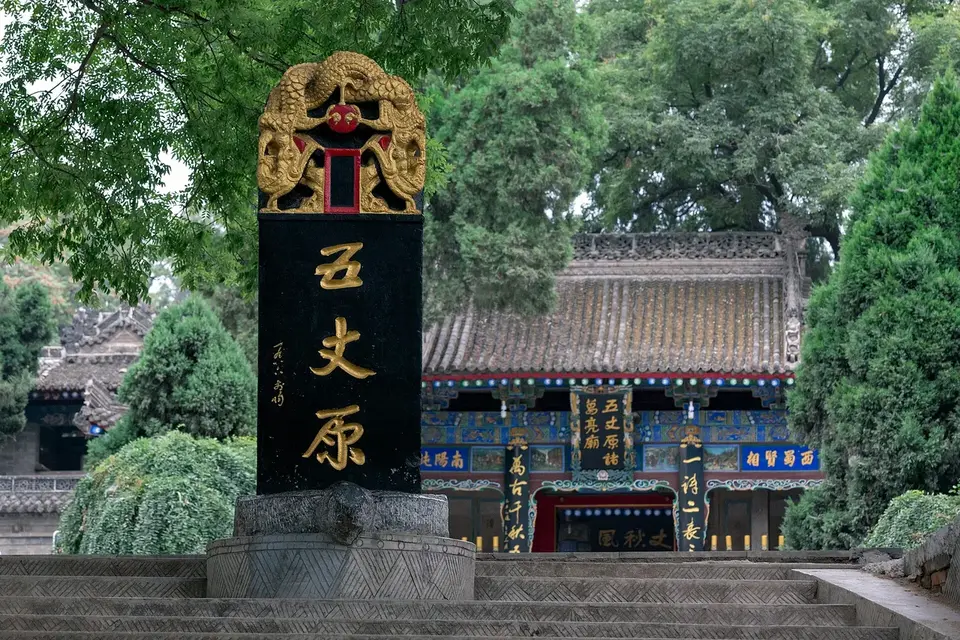
Zhuge Liang's Northern Expeditions (诸葛亮北伐) were a sequence of five major military campaigns conducted between 228 (Jianxing 6) and 234 (Jianxing 12) by Chancellor Zhuge Liang of Shu Han against the strategic regions of Guanzhong and Longyou held by Cao Wei. Following Liu Bei's deathbed entrustment in 223, Zhuge Liang assisted the young emperor Liu Shan, restored the diplomatic pact with Eastern Wu, and pacified the southern borderlands to secure the imperial rear. In 227, Zhuge Liang presented the renowned Memorial on Taking the Field (Chu Shi Biao) and stationed the grand army in Hanzhong, initiating an offensive to reverse the territorial asymmetry dividing the realm. Over seven years of continuous campaigning, Shu forces advanced against Mount Qi, besieged Chencang, annexed border commanderies, fought at Lucheng, and encamped upon the Wuzhang Plains. Zhuge Liang demonstrated superior tactical discipline, inducing the surrender of three commanderies, securing brilliant strategist Jiang Wei, capturing Wudu and Yinping, and fatally ambushing veteran general Zhang He at Mumen Gorge. However, the treacherous paths through the Qinling Mountains created perpetual grain shortages, while Wei commanders Cao Zhen and Sima Yi maintained deeply entrenched positions to outlast the invaders. In the eighth month of 234, Zhuge Liang died of illness at Wuzhang Plains, after which his generals executed a textbook withdrawal. The campaigns consolidated regional equilibrium across the Three Kingdoms.
Zhuge Liang advances on Mount Qi, securing three commanderies, but Ma Su loses Jieting, forcing a total withdrawal.
Zhuge Liang besieges Hao Zhao at Chencang for twenty days, retiring due to rations and ambushing Wang Shuang.
General Chen Shi annexes Wudu and Yinping, repelling Guo Huai's counteroffensive and restoring Zhuge Liang's chancellorship.
Employing wooden oxen, Zhuge Liang reaps wheat at Shanggui, defeats Sima Yi at Lucheng, and kills Zhang He in Mumen Gorge.
Leading one hundred thousand troops, Zhuge Liang cultivates military farms along the Wei River, engaging in a prolonged standoff.
Zhuge Liang dies of illness on the Wuzhang Plains; the army withdraws intact to Hanzhong, ending the campaigns.
In 221, Liu Bei proclaimed himself emperor of Shu Han, but subsequently suffered a catastrophic rout at the Battle of Yiling against Sun Wu, retreating to Baidicheng. In the fourth month of 223, on his deathbed at Yong'an Palace, Liu Bei entrusted Chancellor Zhuge Liang with imperial regency, charging him to guide his heir Liu Shan and achieve the restoration of the Han dynasty. At this juncture, Shu Han was severely depleted: veteran commanders had fallen, the strategic hub of Jingzhou was lost, and local chieftains across the southern commanderies rose in widespread armed revolt.
Confronting this existential crisis, Zhuge Liang deployed consummate statecraft. He first dispatched Deng Zhi to Eastern Wu, demonstrating that both southern regimes shared mutual security interests, successfully reestablishing the Wu-Shu alliance and eliminating threats from the lower Yangtze. In the spring of 225, Zhuge Liang personally led an expedition south, applying a psychological strategy of winning hearts by capturing and releasing chieftain Meng Huo seven times. The southern pacification not only secured the agrarian rear of Sichuan, but also yielded bountiful timber, lacquer, warhorses, cattle, and gold, alongside ferocious tribal recruits who formed the elite "Undefeatable Flying Army" (Wudang Feijun) for upcoming northern campaigns.
In 226, Emperor Wen of Wei (Cao Pi) died and young Emperor Ming (Cao Rui) took the throne, appointing youthful and inexperienced Xiahou Mao to oversee Guanzhong defense. Zhuge Liang recognized an advantageous strategic window. He understood that Shu Han was confined to a rugged, sparsely populated mountain realm; if it remained passive, the demographic and economic disparity with Cao Wei across the Central Plains would inevitably widen until conquest became unavoidable. Therefore, initiating proactive offensive operations ("offense as defense") represented the only viable pathway to state survival.
In the third month of 227, Zhuge Liang submitted the deeply moving Memorial on Taking the Field to Emperor Liu Shan, articulating his resolute ambition to eradicate rebel usurpers and restore the ancestral capital. He then marshaled the core field army from Chengdu to Hanzhong. In Hanzhong, Zhuge Liang encouraged farming, trained infantries and cavalry, manufactured siege engines and crossbows, and promoted veteran commander Wei Yan as forward supervisor and chancellor's chief adjutant, methodically finalizing offensive invasion routes.
In the spring of 228, Zhuge Liang inaugurated the First Northern Expedition. Regarding the route of advance, Wei Yan famously proposed the "Ziwu Valley Strategy," advocating leading five thousand shock troops through the narrow, precipitous Ziwu gorge to seize Chang'an by surprise within ten days, after which Zhuge Liang's main force would link up via the Xie Valley. Wei Yan argued that Xiahou Mao was timid and would flee by boat upon hearing of an imperial advance. Zhuge Liang, however, considered the route excessively hazardous, fearing that if the pass were blocked or ambushed, the entire strike force would be annihilated; he preferred advancing along the open western highways to secure Longyou systematically.
Zhuge Liang dispatched veteran general Zhao Yun and Deng Zhi as a diversionary force through Baoxie Valley into Ji Gorge, openly threatening Mei County to fixate the main Wei defensive forces. Simultaneously, Zhuge Liang led the primary strike force westward across Mount Qi into Longyou. Taken by surprise, the Wei defenders panicked; the commanderies of Tianshui, Nan'an, and Anding surrendered immediately. During the turmoil, Tianshui Governor Ma Zun suspected his subordinates of betrayal and locked his city gates against young officer Jiang Wei; abandoned and without options, Jiang Wei submitted to Zhuge Liang, who marveled at his talent and appointed him chancellor's aide. Cao Rui rushed to Chang'an, dispatching Cao Zhen to Ji Gorge and ordering veteran commander Zhang He with fifty thousand elite cavalry to contest the vital mountain gateway of Jieting.
Zhuge Liang bypassed senior generals Wei Yan and Wu Yi to place his favored strategist Ma Su in charge of holding Jieting. Defying strict orders to entrench upon the road, Ma Su abandoned water sources and encamped atop an isolated hill. Vice-commander Wang Ping pleaded against this blunder, but Ma Su refused. Zhang He arrived, encircled the hill, severed the water supply, and set fire to the slopes, completely routing the thirsty Shu troops. Wang Ping beat his war drums and held his line with a thousand troops, gathering stragglers to prevent a total massacre. With Jieting lost, the logistical gateway was severed. Zhuge Liang was forced to evacuate Longyou, withdrawing the army while resettling over a thousand civilian families into Sichuan. In Hanzhong, Zhuge Liang tearfully executed Ma Su, Zhang Xiu, and Li Sheng to uphold military discipline, punished Chen Shou's father for complicity, promoted the steadfast Wang Ping, and demoted himself three ranks to General of the Right while continuing to direct imperial affairs.
In the winter of 228, Eastern Wu commander Lu Xun crushed Cao Xiu at the Battle of Shiting, prompting Cao Wei to transfer reserve divisions from Guanzhong eastward to the Huai River front. Sizing the opportunity of depleted border defenses, Zhuge Liang submitted the Second Memorial on Taking the Field and launched his Second Northern Expedition in the twelfth month, leading tens of thousands through the Dasan Pass along the Chencang road to encircle Chencang.
However, Wei Grand Marshal Cao Zhen had anticipated this approach and assigned veteran general Hao Zhao with a thousand elite defenders to reinforce the fortress. Zhuge Liang dispatched Hao Zhao's townsman Jin Xiang to urge surrender, but Hao Zhao swore to fight to the death. Shu forces launched ferocious day-and-night assaults using scaling ladders, battering rams, and siege towers. Hao Zhao countered by setting fire to ladders with fire-arrows, smashing battering rams with rolling millstones, and digging counter-trenches to thwart subterranean miners. The fortress held firm through more than twenty days of relentless siege. When Wei relief armies under Fei Yao approached and Shu rations ran short, Zhuge Liang executed an orderly withdrawal. Wei cavalry general Wang Shuang pursued aggressively, but was lured into an ambush and decapitated on the field, allowing the Shu army to retire safely to Hanzhong.
In the spring of 229, Zhuge Liang initiated the Third Northern Expedition. Having recognized that direct advances toward Mount Qi exposed his flanks, Zhuge Liang resolved to capture the northwestern marchlands of Wudu and Yinping. He ordered General Chen Shi to lead an advance corps westward into the border commanderies, while positioning his own primary force at Xiabian as strategic support.
Upon learning of the assault, Wei Governor Guo Huai mobilized regional armies to relieve Chen Shi. Zhuge Liang advanced swiftly through Jianwei toward Guo Huai's rear. Fearing complete encirclement by Zhuge Liang's superior host, Guo Huai abandoned the field and retreated into Longxi. Chen Shi swept through Wudu and Yinping, annexing both territories into Shu Han. Zhuge Liang personally visited the frontier to pacify Di and Qiang chieftains, integrating native tribes into the imperial fold and securing mountain passes connecting northern Sichuan with southern Gansu. In celebration of these territorial acquisitions, Emperor Liu Shan formally restored Zhuge Liang to the full rank of Chancellor.
In late 230, Cao Zhen attempted a three-route invasion of Shu, which collapsed when torrential mountain rains washed away mountain trestle roads. In the second month of 231, Zhuge Liang seized the initiative to launch his Fourth Northern Expedition, laying siege once more to Mount Qi and introducing his newly engineered transport machines, the "wooden oxen" (muxiu), which greatly alleviated mountain logistics. With Cao Zhen critically ill, Cao Rui appointed Grand General Sima Yi to command the Guanzhong armies. Sima Yi left garrisons at Shanggui and hurried toward Mount Qi.
Leaving Wang Ping to pin down Wei defenders at Mount Qi, Zhuge Liang led his main strike division toward Shanggui, defeated Guo Huai and Fei Yao, and harvested the ripening wheat across the valley to replenish army stores. Sima Yi pursued to Lucheng and entrenched atop mountain bluffs, refusing combat despite ridicule from subordinate generals who mocked him for fearing Shu like a tiger. Compelled by subordinate mutiny, Sima Yi finally launched a frontal sally. Zhuge Liang counterattacked with divisions under Wei Yan, Wu Ban, and Gao Xiang, shattering the Wei army, taking three thousand enemy heads, five thousand suits of iron armor, and over three thousand repeating crossbows. However, in the sixth month, continuous torrential rains disrupted southern supply roads, and transport supervisor Li Yan falsely claimed provisions were exhausted, urging a recall. Zhuge Liang ordered a retreat. Despite Sima Yi's caution, veteran general Zhang He insisted on aggressive pursuit into Mumen Gorge. Shu crossbowmen concealed along canyon cliffs unleashed a volley of thousands of bolts; Zhang He was struck in the right knee and died instantly. The Shu army retired to Hanzhong in absolute order.
In the spring of 234, Zhuge Liang deployed improved "flowing horses" (liuma) and mobilized an army of one hundred thousand, coordinating with Sun Quan's three-pronged assault on Wei to embark on his Fifth and final Northern Expedition. Exiting through the Xie Valley, Shu forces occupied the elevated Wuzhang Plains south of the Wei River, establishing fortified camps overlooking the river basin. Determined to overcome logistical exhaustion, Zhuge Liang implemented a wide-scale agricultural colony system (tuntian) along both banks of the Wei River. Soldiers cultivated farmland alongside local Guanzhong peasants under impeccable discipline, producing crops to sustain an enduring war of attrition.
Sima Yi fortified the northern riverbanks and enforced absolute non-engagement. To provoke Sima Yi into battle, Zhuge Liang sent him women's silken headdresses and mourning garments. Outraged Wei officers clamored to fight, prompting Sima Yi to request imperial permission to attack; Cao Rui dispatched Privy Councilor Xin Pi bearing the imperial tally to strictly enforce non-engagement. In the eighth month, Eastern Wu's southern offensive was checked at Hefei, eliminating coordinated pressure. Burdened by administrative minutiae and punishing workloads where he reviewed even petty punishments, Zhuge Liang's health collapsed rapidly under chronic illness and exhaustion.
In late August 234, Chancellor Zhuge Liang passed away within his military tent on the Wuzhang Plains at age fifty-four. Prior to his demise, he secretly entrusted Yang Yi, Fei Yi, and Jiang Wei with command, ordering Wei Yan to protect the rear. The generals concealed the chancellor's death and ordered a deliberate withdrawal. Seeing the camps dismantled, Sima Yi hurried in pursuit. Jiang Wei immediately ordered Yang Yi to reverse banners and sound war drums, presenting a resolute battle array. Fearing an ambush directed by a living Zhuge Liang, Sima Yi halted his horse and withdrew several miles, giving rise to the famous Guanzhong adage: "A dead Zhuge puts to flight a living Zhongda." Inspecting the abandoned Shu camps shortly thereafter, Sima Yi marveled at their impeccable layout and proclaimed Zhuge Liang an unmatched genius of the age. The Shu army returned intact to Hanzhong, concluding the heroic era of the Northern Expeditions.
Zhuge Liang's five Northern Expeditions lasted over seven years. Operating under extreme demographic and economic disparities, Shu Han conquered the commanderies of Wudu and Yinping, expanded its perimeter toward Gansu, and neutralized veteran Wei commanders including Zhang He and Wang Shuang alongside thousands of elite troops. While the ultimate objective of capturing Chang'an was thwarted by rugged terrain and Sima Yi's unyielding defensive patience, Shu forces maintained flawless operational discipline, ensuring orderly, unmolested retreats during every evacuation and preserving imperial security.
The campaigns bequeathed an extraordinary legacy across ancient military engineering, supply logistics, and tactical philosophy. Confronting insurmountable mountain transit, Zhuge Liang invented the wooden oxen and flowing horses, while establishing sustainable agricultural colonies (tuntian) along active frontlines. His perfection of repeating crossbows and the Eight Formations revolutionized infantry resistance against heavy cavalry. Culturally, Zhuge Liang's unyielding devotion embodied in the phrase "bending his back to the task unto death" became the supreme standard for patriotic virtue, duty, and Confucian statesmanship in Chinese civilization.