Outbreak of the Jisi Incident
Hong Taiji leads 100,000 Later Jin troops through Mongolia, bypassing Shanhaiguan and marching on Beijing.
Ming Dynasty (明朝) · HISTORICAL EVENT
袁崇焕之死
Execution of Yuan Chonghuan (袁崇焕之死) was a tragic political miscarriage of justice and military turning point during the late Ming Dynasty spanning 1629 to 1630, wherein Grand Coordinator of Jiliao Yuan Chonghuan, after marching his elite cavalry to Beijing to repel an invasion by the Later Jin, was arrested and executed by slow slicing under orders from the Chongzhen Emperor. In the winter of 1629, Later Jin ruler Hong Taiji bypassed the impregnable…
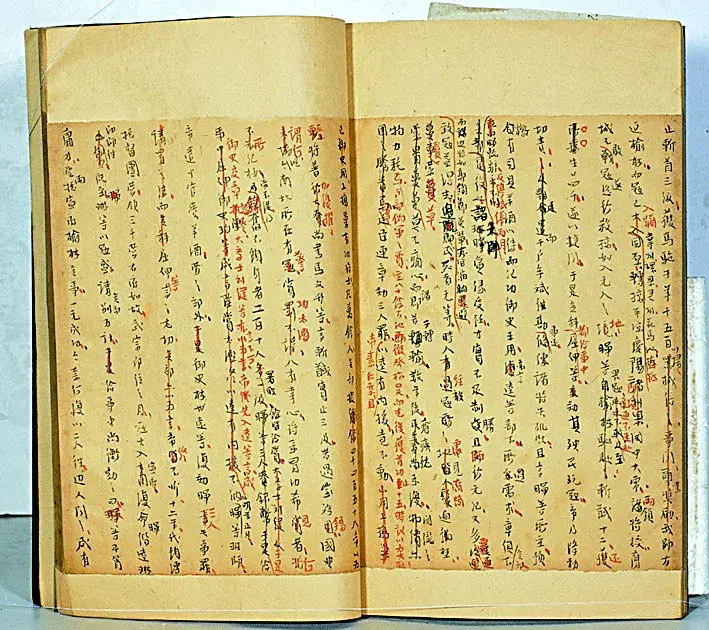
Execution of Yuan Chonghuan (袁崇焕之死) was a tragic political miscarriage of justice and military turning point during the late Ming Dynasty spanning 1629 to 1630, wherein Grand Coordinator of Jiliao Yuan Chonghuan, after marching his elite cavalry to Beijing to repel an invasion by the Later Jin, was arrested and executed by slow slicing under orders from the Chongzhen Emperor. In the winter of 1629, Later Jin ruler Hong Taiji bypassed the impregnable Ningyuan-Shanhaiguan fortifications by marching through Inner Mongolia to breach the Great Wall at Xifengkou, advancing directly beneath the walls of Beijing. Yuan Chonghuan led 9,000 elite Guan-Ning cavalry on a forced march to relieve the capital, fighting pitched engagements outside Guangqumen and Zuo'anmen to drive back the invaders. However, panicked courtiers and residents accused Yuan of treason, while Hong Taiji exploited imperial paranoia by staging a deception that led captured palace eunuchs to report that Yuan harbored secret pacts with the Jurchens. The Chongzhen Emperor, resentful of Yuan's execution of General Mao Wenlong and frustrated by his unfulfilled promise to pacify Liaodong within five years, arrested Yuan during a platform audience in December 1629. On September 22, 1630, Yuan was executed by dismemberment in the Western Market, where deluded onlookers consumed his flesh. This act destroyed the core of the Ming northern defenses, accelerating the fall of the dynasty.
Hong Taiji leads 100,000 Later Jin troops through Mongolia, bypassing Shanhaiguan and marching on Beijing.
Yuan Chonghuan leads 9,000 elite cavalry on a forced march to relieve the capital, encamping outside Guangqumen.
Yuan Chonghuan leads his forces in hand-to-hand combat, taking arrow hits while repelling the Eight Banners assault.
Hong Taiji exploits captured eunuchs to spread rumors that Yuan has concluded a secret alliance with the Later Jin.
The Chongzhen Emperor summons Yuan to a platform conference and has him arrested by bodyguards.
Outraged by their commander's imprisonment, Zu Dashou and fifteen thousand troops withdraw toward Shanhaiguan.
Yuan writes a letter from prison urging Zu Dashou to defend the dynasty, prompting the troops to return and recapture Luanzhou.
The Chongzhen Emperor sentences Yuan to death by slow slicing in the Western Market, where deluded crowds consume his flesh.
A faithful retainer steals Yuan's severed head and buries it near Guangqumen, inaugurating a multi-century family vigil.
The Qianlong Emperor reviews secret archives, confirms the Jurchen deception, and formally rehabilitates Yuan Chonghuan.
During the late Tianqi reign, the military situation in Liaodong was critical. Later Jin leaders Nurhaci and Hong Taiji had captured Shenyang, Liaoyang, and Guangning, forcing Ming defenses back to the Shanhaiguan perimeter. Between 1626 and 1627, Yuan Chonghuan, serving as Military Defense Vice-Commissioner and Governor of Liaodong, leveraged European cannons and fortress networks to achieve major victories at Ningyuan and Ningjin, stalling the Eight Banners. However, political friction with the eunuch faction led by Wei Zhongxian compelled Yuan to resign his commission.
In July 1628, the newly enthroned Chongzhen Emperor, having purged the eunuch faction and eager to end the northeastern war, recalled Yuan Chonghuan as Minister of War and Grand Coordinator of Jiliao, Deng-Lai, and Tianjin. The emperor summoned Yuan to a private audience at the platform behind the Hall of Ultimate Polarities in the Forbidden City.
During this conference, Yuan boldly declared: "If Your Majesty grants me full discretionary authority, I pledge that the eastern barbarians can be pacified and all Liaodong recovered within five years." Pleased by this assurance, the emperor bestowed an imperial sword of state and sweeping authority. However, when supervising secretary Xu Yuqing later inquired about his concrete strategic plan, Yuan privately admitted: "I spoke merely to comfort the imperial mind." This casual pledge fostered inflated expectations that transformed into lethal imperial wrath when reality diverged from rhetoric.
In June 1629, Yuan Chonghuan conducted an inspection tour of Pi Island in the Yellow Sea, the headquarters of the Dongjiang Command led by General Mao Wenlong. Stationed behind enemy lines, Mao had waged irregular warfare against the Later Jin, diverting Jurchen divisions from the Liaoxi front. However, Mao acted with arrogance, inflated military muster rolls, engaged in private commerce, and resisted administrative subordination to the Jiliao coordinator.
Convinced that military unity was essential to recovering Liaodong, Yuan inspected the island and executed Mao Wenlong on twelve charges of insubordination using his imperial sword of state, without securing prior imperial consent. Mao's death destabilized the Dongjiang Command, prompting key naval commanders like Shang Kexi, Geng Zhongming, and Kong Youde to defect to the Jurchens with fleets and artillery, freeing Hong Taiji from rear guard threats. More gravely, this execution instilled deep apprehension in the Chongzhen Emperor regarding Yuan's independent authority.
In October 1629, recognizing that the Ningyuan-Shanhaiguan line was too formidable to breach directly, Hong Taiji adopted a strategy suggested by Han advisors. He bypassed the fortress corridor by leading 100,000 Eight Banners cavalry across the Mongolian steppes, breaching the Great Wall at Longjingguan and Da'ankou. The invaders overwhelmed Zunhua and Santunying, marching directly toward the capital.
The sudden arrival of enemy banners before Beijing threw the Ming court into panic. The nine gates of the capital were sealed, and civil officials and imperial princes were paralyzed by fear. The Chongzhen Emperor issued emergency decrees summoning relief armies from across the empire. The collapse of the northern perimeter ignited the emperor's resentment against Yuan's strategic defense arrangements.
Upon learning that Hong Taiji had breached the interior defenses, Yuan Chonghuan recognized that the imperial court was in mortal peril. Disregarding the freezing winter blizzards, he mobilized 9,000 elite Guan-Ning cavalry under generals Zu Dashou and He Kegang, embarking on a forced march toward the capital.
Advancing nearly two hundred li each day over two continuous days and nights without unbuckling their armor, the vanguard arrived outside the Beijing fortifications on November 27, encamping outside Guangqumen just before Later Jin forces completed an encirclement of the metropolis.
On November 30, more than twenty thousand Later Jin cavalry launched an assault against Guangqumen. Yuan Chonghuan donned double armor and took position at the front line with lance in hand to steady his ranks alongside Zu Dashou and Man Gui. Ming musketeers and artillery fired volleys, while Guan-Ning troopers engaged in hand-to-hand combat along the moat. Yuan was struck by multiple enemy arrows, which were deflected by his heavy mail. After hours of combat, the Ming cavalry repelled the Eight Banners, killing several enemy commanders. On December 7, another assault was repulsed outside Zuo'anmen, securing the suburban perimeter.
Despite the victory at Guangqumen, Yuan's success failed to win imperial gratitude. As Later Jin detachments pillaged the outlying suburbs, terrified residents and courtiers accused Yuan of colluding with the enemy, claiming he had permitted the Jurchens to pass the Wall to coerce the court into concluding a treaty. When Yuan requested permission to lodge his exhausted cavalry inside the outer city gates to rest, the suspicious Chongzhen Emperor refused, declaring that not even thirty soldiers would be permitted entry.
Observing this discord, Hong Taiji exploited the emperor's paranoia through an orchestrated deception.
Jurchen commanders Gao Hongzhong and Bao Chengxian staged a conversation near a captured Ming eunuch named Yang Chun. The officers whispered that the retreat was feigned and that Hong Taiji had concluded a secret agreement with Yuan Chonghuan to deliver the city. That night, guards slackened their watch, allowing Yang Chun to escape into Beijing. He fled to the Forbidden City and reported that Yuan harbored treasonous pacts with the enemy. Prone to suspicion, the Chongzhen Emperor accepted the report and resolved to arrest his commander.
On December 21, 1629, the Chongzhen Emperor summoned Yuan Chonghuan, Zu Dashou, Man Gui, and Hei Yunlong to a military conference at the platform behind the Hall of Ultimate Polarities under the guise of discussing soldiers' pay. Yuan, who was directing scouting patrols against the Jurchens, entered the palace in simple civilian robes.
The atmosphere in the audience chamber was cold. Sitting inside the warmed pavilion, the emperor questioned Yuan harshly: "Why did you execute Mao Wenlong without authorization? Why did you permit the barbarians to cross the frontier? Why did you delay engagements beneath the walls, and why did you demand that your troops enter the city?"
Caught off guard, Yuan faltered, attempting to explain in his native Cantonese dialect. Interpreting his hesitation as guilt, the emperor shouted to his imperial bodyguards: "Strip Yuan Chonghuan of his robes and cast him into the imperial prison!"
The Grand Council was stunned. Senior Grand Secretary Cheng Jiming knelt and wept, knocking his head against the flagstones: "Changing commanders before the enemy is military folly! If the coordinator is imprisoned, the Guan-Ning army will mutiny and the capital will fall!" Ignoring these pleas, the emperor remanded Yuan to the Embroidered Uniform Guard prison and appointed Man Gui to supreme command.
News of Yuan's arrest provoked outrage in the Guan-Ning encampments. General Zu Dashou, He Kegang, and fifteen thousand veteran soldiers wept with indignation, protesting: "If our commander's loyalty results in imprisonment, why should we lay down our lives?" When nervous city artillery crews mistakenly fired upon the Guan-Ning camp, the troops' patience snapped. On December 24, Zu Dashou broke camp and marched eastward toward Shanhaiguan.
The departure of the Guan-Ning forces left the capital exposed. Hong Taiji regrouped, encircling Beijing once more and defeating Man Gui's relief army at Lugouqiao, where Man Gui was killed in action. Terrified by the breakdown of defenses, the Chongzhen Emperor realized that only Yuan Chonghuan could manage the northern troops.
The court sent officials to the imperial prison, compelling the shackled commander to draft an appeal to his generals. Overlooking his mistreatment, Yuan wept and penned an urgent letter from his cell, imploring Zu Dashou to remember his allegiance to the dynastic house. Upon reading their commander's letter, Zu Dashou and his men wept, halting their retreat to recapture the strategic cities of Luanzhou and Qian'an, stabilizing the northeastern frontier.
The pacification of the mutiny failed to soften the emperor's resolve. The Chongzhen Emperor viewed the army's reliance on Yuan as proof of the general's insubordination.
During eight months of confinement, bureaucratic rivals like Wen Tiren and Liang Tingdong fabricated treason charges, alleging that Yuan had colluded with the enemy, traded grain to barbarians, and executed Mao Wenlong to force peace negotiations. On September 22, 1630, the Chongzhen Emperor issued an imperial decree sentencing Yuan Chonghuan to execution by slow slicing (dismemberment) in the Western Market for treason.
On the day of execution, thousands gathered at the Western Market. Yuan was bound to the execution frame. Swayed by rumors that Yuan had invited the Jurchens to plunder their homes, the crowd shouted insults, buying strips of his sliced flesh from the executioners to consume on the spot.
Enduring agonizing torment, the forty-seven-year-old commander raised his head and recited his death poem: "A life's enterprise ends in emptiness; half a lifetime's glory was but a dream. After death, I fear not the lack of brave generals; my loyal soul shall forever guard Liaodong!"
Following the execution, Yuan's severed head was displayed on a pole, and his remains were abandoned in the street. A loyal personal retainer named She, horrified by his master's fate, slipped into the market under cover of darkness, stole the commander's head and bone fragments, and buried them within his private courtyard near Donghuashi inside Guangqumen. The servant took an oath: "No descendant of the She family shall seek imperial office; our family will guard General Yuan's tomb for generations." The She family honored this pledge, guarding the tomb across seventeen generations for nearly four centuries.
By executing Yuan Chonghuan, the Chongzhen Emperor destroyed the northern defense network. Fourteen years later, in 1644, peasant rebel Li Zicheng captured Beijing, and the abandoned Chongzhen Emperor committed suicide on Coal Hill. In 1782, during the compilation of dynastic histories, the Qianlong Emperor of the Qing Dynasty reviewed archival records from the early Eight Banners, verifying that Hong Taiji had framed Yuan through false rumors. Qianlong rehabilitated Yuan Chonghuan's memory, observing that while Yuan had fought against the Qing, his loyalty was stainless: "The ruler of the Ming was blinded by deceit and demolished his own Great Wall, an outcome profoundly worthy of pity."
The execution of Yuan Chonghuan dismantled the defense network shielding northern China. Yuan was not only an exceptional field commander, but the cohesive bond uniting northern frontier garrisons under Ming banners. The emperor's decision to execute a general who had defended the capital alienated frontier commanders. Border officers realized that whether they triumphed or failed, execution remained likely, destroying their will to resist the Qing.
Yuan's trial triggered administrative purges across Beijing. Corrupt courtiers used the crisis to persecute honest officials who had supported Yuan, including Grand Secretary Qian Longxi. The Chongzhen Emperor succumbed to chronic paranoia, replacing fifty prime ministers and executing seven grand coordinators during his seventeen-year reign, paralyzing the central government.
Yuan's death removed the primary obstacle to Qing expansion. Deprived of naval pressure from Pi Island and dynamic field resistance in Liaodong, the Eight Banners breached the Great Wall five times over the following decade, devastating the northern provinces. Following the surrender of senior commanders like Zu Dashou and Hong Chengchou at Songshan and Jinzhou, Ming military power in Liaodong dissolved, culminating in the fall of Beijing in 1644 and the Qing conquest of China.