Battle of Henan
Wei Qing reclaims the fertile Ordos loop and constructs Shuofang city, removing the direct threat to Chang'an.
Western Han (西汉) · HISTORICAL EVENT
漠北之战
The Battle of Mobei (漠北之战), fought in the spring and summer of 119 BCE, was the climactic strategic cavalry confrontation between the Western Han Dynasty under Emperor Wu and the nomadic Xiongnu Confederation. Having previously lost the Ordos loop and the Hexi Corridor, the Xiongnu supreme leader, Yizhixie Chanyu, relocated his court, royal families, and livestock deep north of the Gobi Desert, calculating that Han forces would succumb to thirst,…
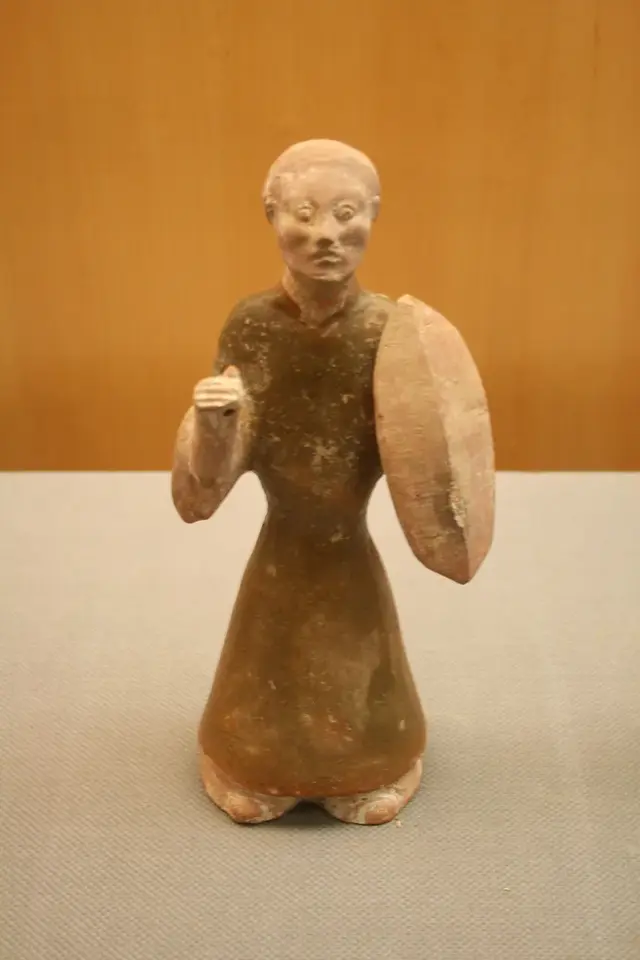
The Battle of Mobei (漠北之战), fought in the spring and summer of 119 BCE, was the climactic strategic cavalry confrontation between the Western Han Dynasty under Emperor Wu and the nomadic Xiongnu Confederation. Having previously lost the Ordos loop and the Hexi Corridor, the Xiongnu supreme leader, Yizhixie Chanyu, relocated his court, royal families, and livestock deep north of the Gobi Desert, calculating that Han forces would succumb to thirst, logistical failure, and harsh terrain. Rejecting passive containment, Emperor Wu launched a massive double-pronged expedition comprising one hundred thousand elite cavalry, hundreds of thousands of auxiliary infantry, and 140,000 warhorses under General-in-Chief Wei Qing and General of Agile Cavalry Huo Qubing. Facing the Chanyu's main host, Wei Qing deployed circling armored war chariots (Wugangche) to anchor his infantry before unleashing heavy cavalry during a violent dusk sandstorm, driving the Chanyu into headlong flight. Simultaneously, the young genius Huo Qubing led his strike force over two thousand li deep into northern Mongolia, routing the Worthy Prince of the Left, capturing eighty-three tribal princes and dignitaries, and eliminating over seventy thousand enemy troops. Huo pursued the nomads to Mount Langjuxu (modern Khentii Mountains), where he conducted the sacred Feng sacrificial ritual before watering his steeds at Lake Baikal. The campaign decisively shattered Xiongnu dominance, securing the northern frontier for generations.
Wei Qing reclaims the fertile Ordos loop and constructs Shuofang city, removing the direct threat to Chang'an.
Huo Qubing destroys Xiongnu kingdoms in Hexi; Han establishes military commanderies across the corridor.
Emperor Wu mobilizes 140,000 steeds and one hundred thousand cavalry for the desert campaign.
Wei Qing and Huo Qubing lead separate grand armies across the waterless waste into northern Mongolia.
Wei uses chariot circles to withstand the nomads, routing the Chanyu during a blinding dust storm.
Wei pursues the nomads to the Khangai Mountains, destroys Zhao Xin's base, and begins withdrawal.
Huo Qubing destroys seventy thousand nomads, performs state sacrifices at Mount Langjuxu, and reaches Lake Baikal.
Han armies return to Chang'an; Emperor Wu creates the rank of Grand Marshal, securing peace along the northern border.
From the founding of the Han Dynasty, fierce Xiongnu cavalry constantly raided the agricultural northern plains of China. Following Emperor Gaozu's humiliation at the Siege of Baideng, early Han rulers maintained the appeasement policy of heqin (harmonious alliance through marriage and tribute) while rebuilding domestic agriculture and fiscal reserves during the Rule of Wen and Jing. Ascending the throne with full imperial coffers and abundant state studs, Emperor Wu resolved to discard appeasement in favor of assertive military preemption.
In 127 BCE, Wei Qing reclaimed the fertile Ordos loop in the Battle of Henan; in 121 BCE, Huo Qubing swept through the Hexi Corridor, severing Xiongnu ties with the Qiang tribes. Stunned by these consecutive disasters, Yizhixie Chanyu adopted the counsel of surrendered Han general Zhao Xin: "Han forces cannot endure the logistical hardships of crossing the desolate desert. If we relocate our royal court north of the Gobi, the exhausted Han troops can be easily surrounded and destroyed upon arrival." Confident in the vast waterless expanse of the desert, the Chanyu concentrated his armies in northern Mongolia. Emperor Wu accepted the strategic challenge, deciding to strike the nomads in their sanctuary.
In the spring of 119 BCE, Emperor Wu executed the largest strategic deployment in Han history. From across the empire, 140,000 prime horses were assembled, carrying one hundred thousand elite mounted warriors divided into two equal grand armies. Hundreds of thousands of foot soldiers and baggage wagons formed the supply echelon.
Initial intelligence suggested the Chanyu was encamped on the eastern front. Consequently, Emperor Wu assigned the aggressive Huo Qubing to advance through Dai County, while veteran commander Wei Qing departed from Dingxiang. However, upon clearing the frontier passes, Wei Qing's scouts captured enemy outposts and discovered that the Chanyu had shifted westward directly into Wei's path. Veteran general Li Guang pleaded repeatedly to serve as vanguard, but Wei Qing, warned by the emperor of Li's recurring ill fortune, ordered Li to link up with Zhao Sheji on the eastern flanking route while Wei personally led the center forward.
Wei Qing advanced more than a thousand li into the arid wilderness, traversing the Gobi waste until his scouts encountered the entrenched and fully assembled cavalry host of Yizhixie Chanyu. The nomads had massed their best units, waiting to crush the marching Han columns.
Displaying profound tactical composure, Wei Qing immediately ordered his train of heavy war chariots, known as Wugangche, to link end-to-end in a massive defensive circle, forming an impenetrable mobile fortress on the open steppe. Strong crossbowmen deployed behind the chariot ramparts poured deadly volleys into the charging steppe horsemen, while five thousand Han cavalry sallied out to engage the enemy center. The battle raged inconclusively from noon until late afternoon.
As dusk approached, a ferocious sandstorm erupted across the desert, hurling stinging dust and gravel into the faces of the combatants. Seizing the blinding storm as a tactical opening, Wei Qing ordered his armored flanking cavalry wings to sweep around both sides of the Xiongnu formation in a rapid double envelopment. Terrified by the sudden appearance of disciplined Han heavy cavalry emerging through the swirling dust, Yizhixie Chanyu panicked, believing his lines were surrounded. Abandoning his army, the Chanyu fled northwest with a bodyguard of several hundred riders in a six-mule chariot.
With the Chanyu gone, Han troops overwhelmed the disordered nomadic lines, pursuing the broken enemy through the night for over two hundred li. Wei Qing captured nineteen thousand enemy warriors and advanced all the way to Zhao Xin Fortress at the southern foothills of the Khangai Mountains. After feeding his troops on captured grain reserves for several days, Wei burned the fortress and its granaries to the ground before marching back to the imperial frontier.
Simultaneously, Huo Qubing's eastern army drove over two thousand li deep into the northern wilderness from Dai County. Employing agile, deep-penetration cavalry warfare, Huo bypassed minor outposts to hunt down the primary forces of the Xiongnu Worthy Prince of the Left.
Upon locating the enemy, Huo launched a devastating frontal assault combined with tactical encirclement. The fierce onslaught shattered the nomadic formations. The Worthy Prince fled in terror, while Huo's horsemen pursued relentlessly, killing three subordinate kings and capturing eighty-three high dignitaries, including royal princes, prime ministers, and generals. Huo's column accounted for 70,443 enemy casualties, completely wiping out the eastern wing of the Xiongnu confederacy.
Continuing his triumphant march north, Huo ascended Mount Langjuxu (modern Mount Khentii). There he conducted the ancient Feng sacrificial ritual to Heaven upon the mountain summit, followed by the Shan sacrifice to Earth at nearby Mount Guyan. He pushed his advance columns forward until they reached the shores of Lake Baikal (the Northern Sea), where his troops watered their mounts and carved inscriptions recording this glorious imperial triumph before marching home in victory.
The Battle of Mobei was the decisive turning point in the ancient struggle between agrarian China and the steppe nomad world. Inflicting over ninety thousand casualties upon the Xiongnu elite forces, the campaign destroyed the demographic core and military prestige of the nomadic confederation. As ancient chronicles recorded, "The Xiongnu fled far away, and no royal court remained south of the Gobi Desert." The victory permanently eliminated nomadic threats to northern China, solidified control over the Ordos and Hexi, and directly enabled the expansion of Chinese diplomacy, commerce, and military authority throughout the Western Regions via the Silk Road.
However, the glorious victory demanded an immense domestic sacrifice. Of the 140,000 warhorses sent on the expedition, fewer than thirty thousand survived the return journey. The vast logistical expenditures drained the imperial treasury, prompting Emperor Wu to institute radical fiscal interventions, including state monopolies over salt and iron, price equalization bureaus, and onerous commercial property taxes. Recognizing the heavy toll on peasant livelihood, Emperor Wu curtailed large-scale military adventures in his later years, culminating in the famous Edict of Luntai that shifted national policy back to domestic recovery.