Jin Southward Flight to Kaifeng
Jin Emperor Xuanzong abandoned northern territories to Mongols and fled to Kaifeng, shrinking Jin's strategic depth
Southern Song Dynasty (南宋) · HISTORICAL EVENT
联蒙灭金
The Joint Song-Mongol Campaign against Jin (联蒙灭金) was a momentous military campaign in 1233–1234 CE that destroyed the Jurchen Jin Dynasty through an alliance between the Southern Song and the Mongol Empire. After losing its northern heartland to Mongol forces, Jin Emperor Xuanzong committed a fatal strategic error by launching seven years of destructive raids against Southern Song to compensate for northern losses, alienating the Song court. In 1231,…
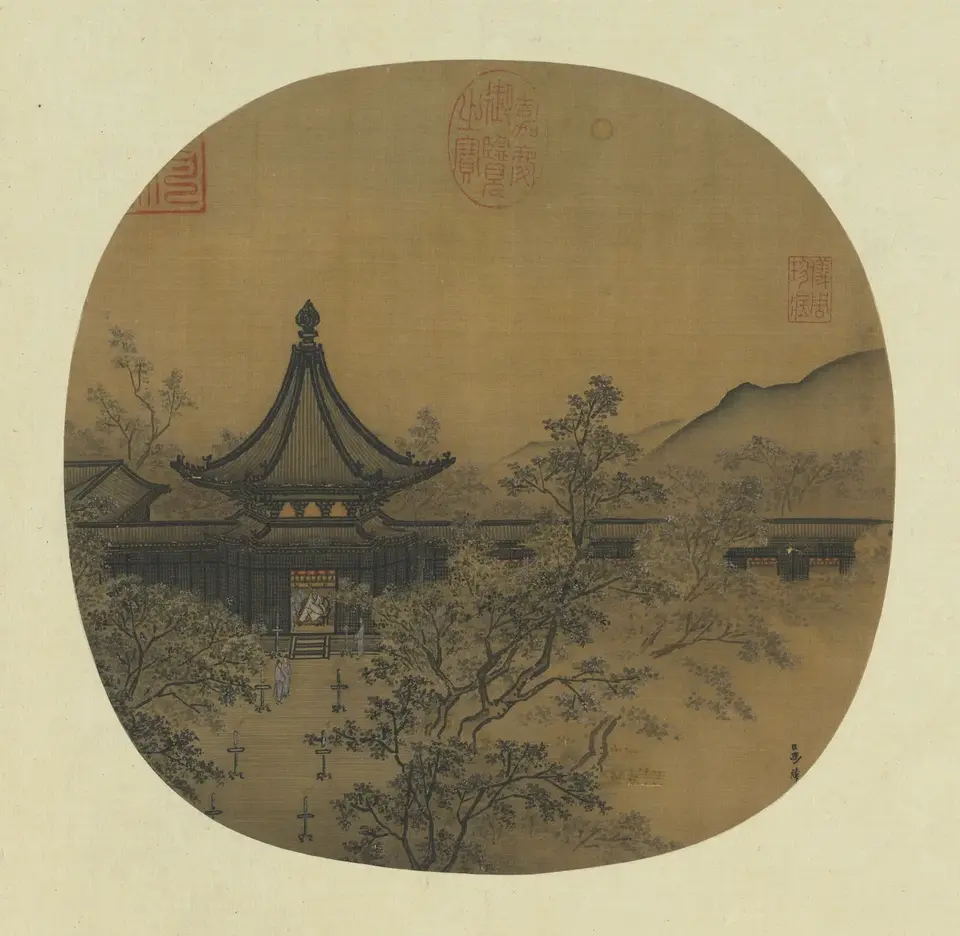
The Joint Song-Mongol Campaign against Jin (联蒙灭金) was a momentous military campaign in 1233–1234 CE that destroyed the Jurchen Jin Dynasty through an alliance between the Southern Song and the Mongol Empire. After losing its northern heartland to Mongol forces, Jin Emperor Xuanzong committed a fatal strategic error by launching seven years of destructive raids against Southern Song to compensate for northern losses, alienating the Song court. In 1231, Mongol prince Tolui detoured through southern Song territory and crushed the Jin field army at Sanfeng Mountain, compelling Jin Emperor Aizong to flee to the fortress of Caizhou. In 1233, Song general Meng Gong routed Wu Xian's 100,000-man Jin relief army, cutting off Aizong's retreat into Sichuan. Facing starvation and resolute defensive walls at Caizhou, Mongol Marshal Tachang'ur requested an alliance and grain supplies from Song. Emperor Lizong deployed Meng Gong and Jiang Hai with 20,000 elite troops and 300,000 bushels of rice. In the first month of 1234, Song troops drained the Chai Pond barrier and breached the southern gate, while Mongol forces breached the north. Emperor Aizong hanged himself and his successor died in the melee, extinguishing the Jin Dynasty and leaving Song to face the full military might of the Mongol Empire.
Jin Emperor Xuanzong abandoned northern territories to Mongols and fled to Kaifeng, shrinking Jin's strategic depth
Jin launched a futile seven-year war against Song, permanently severing diplomatic relations and anti-Mongol trust
Mongol armies forced passage through western Sichuan along the Han River, bypassing Jin mountain defenses
Tolui destroyed 150,000 Jin troops at Sanfeng Mountain; Emperor Aizong fled Kaifeng
Emperor Aizong fled into Caizhou, attempting to link with Wu Xian to seize Sichuan
Meng Gong shattered Wu Xian's relief force at Mount Madeng, severing Aizong's western retreat
Meng Gong arrived with 20,000 troops and 300,000 bushels of grain, forming a brotherly alliance with Tachang'ur
Meng Gong drained Chai Pond and breached Caizhou's outer fortifications
Song troops opened the southern gate; Aizong hanged himself, Modi died in action, and Jin was destroyed
Meng Gong returned in triumph; Song Lizong held ancestral ceremonies in the Imperial Ancestral Temple, avenging Jingkang
Following catastrophic defeats at Yehuling and Huihebu against Genghis Khan, Jin field armies suffered irreparable casualties. In 1214, Jin Emperor Xuanzong abandoned the Central Capital (Zhongdu, modern Beijing) and fled south to Kaifeng, abandoning the Yellow River plains and Shandong. Hemmed into central Henan and suffering acute fiscal shortages, the Jin court adopted Chancellor Shuhu Gaoqi's disastrous theory that "our army may be inferior to the north, but we have strength to spare against the south." In 1217, Xuanzong launched a seven-year aggressive war against Southern Song along the Huai River under the pretext of halted tribute payments. This reckless campaign cost Jin nearly all its remaining veteran cavalry, failed to conquer territory, and completely foreclosed any possibility of a joint defensive coalition between Song and Jin against the encroaching Mongols.
In 1230, following stalemates before the mountain passes of Shaanxi and Henan, Ögedei Khan resolved to execute Genghis Khan's dying strategic testament: borrowing passage through southern Song territory to strike Jin from the rear. In 1231, Mongol envoys demanding transit were rebuffed by the Song court. In response, Tolui's right-wing Mongol force forcibly bypassed Song fortresses in western Sichuan, crossed the Han River, and advanced into Henan behind Tongguan. Caught unprepared, Jin ministers dispatched their last veteran field force of 150,000 troops under Wanyan Heda and Yila Pu'a to intercept them. Amidst blinding blizzards and logistical exhaustion at Mount Sanfeng in Junzhou, the freezing Jin legions were surrounded and wiped out by mobile Mongol cavalry. The destruction of Jin's primary field army left the empire virtually defenseless.
Following the disaster at Sanfeng Mountain, Jin authority collapsed across Henan. In late 1232, as Mongol forces besieged Kaifeng, Emperor Aizong fled eastward through Guide and Weizhou before taking refuge in the isolated citadel of Caizhou in June 1233. The rump state was reduced to Caizhou and a handful of exhausted county outposts.
Within Caizhou, Emperor Aizong and Vice-Chancellor Wanyan Zhongde devised a desperate gamble to seize Sichuan. Aizong sent secret orders to general Zhange Wanzhan to take Raofeng Pass, while General Wu Xian gathered 100,000 routed troops in the Deng-Tang borderlands to escort the emperor westward. However, Southern Song Pacification Commissioner Shi Songzhi dispatched general Meng Gong to intercept them. Meng Gong outmaneuvered the Jin forces, received the surrender of Dengzhou, and shattered Wu Xian's army at Mount Madeng, capturing 70,000 troops. In August, Meng Gong captured Tangzhou, completely sealing Caizhou's western escape route.
Besieged in Caizhou, Emperor Aizong dispatched envoy Wanyan Ahudai to Song, pleading that "if Jin falls, calamity will immediately descend upon Song; the lips being gone, the teeth become cold." However, memories of the Jingkang Humiliation and the traumatic seven-year invasion by Jin Xuanzong ran too deep in the Song court.
Simultaneously, Mongol Marshal Tachang'ur found himself in severe distress. Caizhou's fortifications were formidable, and the desperate garrison repelled repeated cavalry assaults. With the surrounding countryside laid waste, Mongol provisions ran dry. Tachang'ur dispatched envoys to the Song Jinghu headquarters proposing a joint assault and begging for immediate grain supplies. While Chancellor Shi Miyuan hesitated, Jinghu Commissioner Shi Songzhi consulted Meng Gong. Meng Gong pragmatically argued: "If our state possesses surplus strength, we might withhold grain and arms. But under current reality, we must adapt to secure advantage. Otherwise, once Jin falls, an insatiable Mongol force will turn immediately upon us." Meng Gong asserted that joining the siege would display Song military vigor, secure crucial northern territories, and prevent the Mongols from despising Song weakness. Persuaded, Emperor Lizong sanctioned the joint campaign.
In October 1233, Shi Songzhi dispatched Meng Gong and Jiang Hai with 20,000 elite troops and 300,000 bushels of grain. Arriving at Caizhou in November, the Song army was warmly welcomed by Marshal Tachang'ur, who rode five miles outside his camp to greet Meng Gong and established a sworn brotherhood. The allies agreed to coordinate operations: Mongols would assault the north while Song attacked the south.
The southern approach was guarded by Chai Pond, a vast reservoir feeding the city moat and defended by high towers and archery positions. Meng Gong inspected the terrain and ordered Song engineers to breach the downstream dykes while constructing channels to divert the waters into the Ru River. Within days, the lake bed dried up. Meng Gong directed his troops to fill the muddy bed with brushwood, timber, and earth, constructing solid assault causeways right up to Caizhou's southern walls.
In December, allied forces launched a general assault. Meng Gong deployed siege engines, rocket launchers, and scaling ladders against the southern barbicans. Song sub-commander Shen An fought his way into the outer works, while allied catapults leveled the outer defenses. Inside Caizhou, food supplies vanished entirely. Horses and cavalry mounts were slaughtered, followed by horrific incidents of cannibalism among the starving inhabitants. Yet Emperor Aizong and Wanyan Zhongde refused to surrender, conscripting women and children to drop stones from the ramparts as the allies breached the outer walls.
On the night of the ninth day of the first month of 1234, realizing doom was imminent, Emperor Aizong abdicated to his kinsman Wanyan Chenglin (Emperor Modi). Aizong wept to Chenglin: "I am stout and cannot ride fast on horseback; if captured, I will bring dishonor upon the dynasty. You are valiant and experienced; if you break through, you may preserve our ancestral line." Chenglin reluctantly accepted the throne.
At dawn on the tenth day, just as the abdication rituals concluded, Song troops launched their final assault on the southern gate. Song commander Ma Yi scaled the walls, killed the gatekeepers, and swung open the portals. Song infantry poured through the southern breach while Mongol cavalry smashed through the northern gates, initiating fierce house-to-house urban combat. Vice-Chancellor Wanyan Zhongde led several hundred retainers in a desperate last stand before drowning himself in the Ru River.
Emperor Aizong hanged himself in the Youlan Pavilion. In accordance with his last instructions, attendants set fire to his body to avoid capture, but Song troops under Meng Gong arrived in time to extinguish the flames. Song and Mongol forces divided the charred remains of the Jin emperor between them. Emperor Modi was killed in the street fighting only hours after ascending the throne. After one hundred and twenty years, the Jurchen Jin state was completely extinguished.
The Siege of Caizhou ended in decisive allied triumph, completely destroying the Jurchen Jin state after 120 years of reign over northern China. In accordance with the alliance pact, the allies partitioned the spoils: Song forces received half of Emperor Aizong's remains along with Jin state seals and captured dignitaries like Chancellor Zhang Tiangang. In April 1234, Meng Gong returned to Lin'an, where Emperor Lizong presented the captives and royal remains at the Imperial Ancestral Temple, ceremonially washing away the 108-year-old disgrace of the Jingkang Humiliation. Song also reclaimed the entire Huai River basin (Shouzhou, Sizhou, Suzhou, and Bozhou) and three border commanderies in Henan, pushing its defense perimeter north.
The campaign fundamentally altered the geopolitical balance of East Asia. While eliminating its ancient enemy provided Southern Song with temporary euphoria and territorial gains, it completely removed the northern buffer that had shielded southern China since 1142. The Song state found itself directly adjoining the unstoppable Mongol Empire along a 3,000-mile frontier. Overconfident after the Caizhou triumph, Song commanders launched the rash "Duanping Ruoluo" campaign to occupy Kaifeng and Luoyang, providing the Mongols with a pretext for immediate retaliatory invasion and igniting forty-five years of catastrophic Song-Mongol warfare that culminated in the fall of Song at the Battle of Yamen in 1279.