Revolt of Prince Liu Xiufan
Liu Xiufan marched on Jiankang; Xiao Daocheng repelled the rebels at Xinting, seizing command of the palace guards
· HISTORICAL EVENT
萧道成代宋立齐
Xiao Daocheng Usurps Song to Establish Qi (萧道成代宋立齐) was a decisive dynastic transition between 474 and 479 CE that concluded the Liu Song Dynasty and inaugurated Southern Qi. Amid catastrophic imperial fratricide within the Liu Song clan, General Xiao Daocheng crushed the rebellion of Prince Liu Xiufan at Xinting, securing command over the imperial guards. In 477 CE, as the tyrannical young Emperor Houfei (Liu Yu) terrorized the court with sadistic…
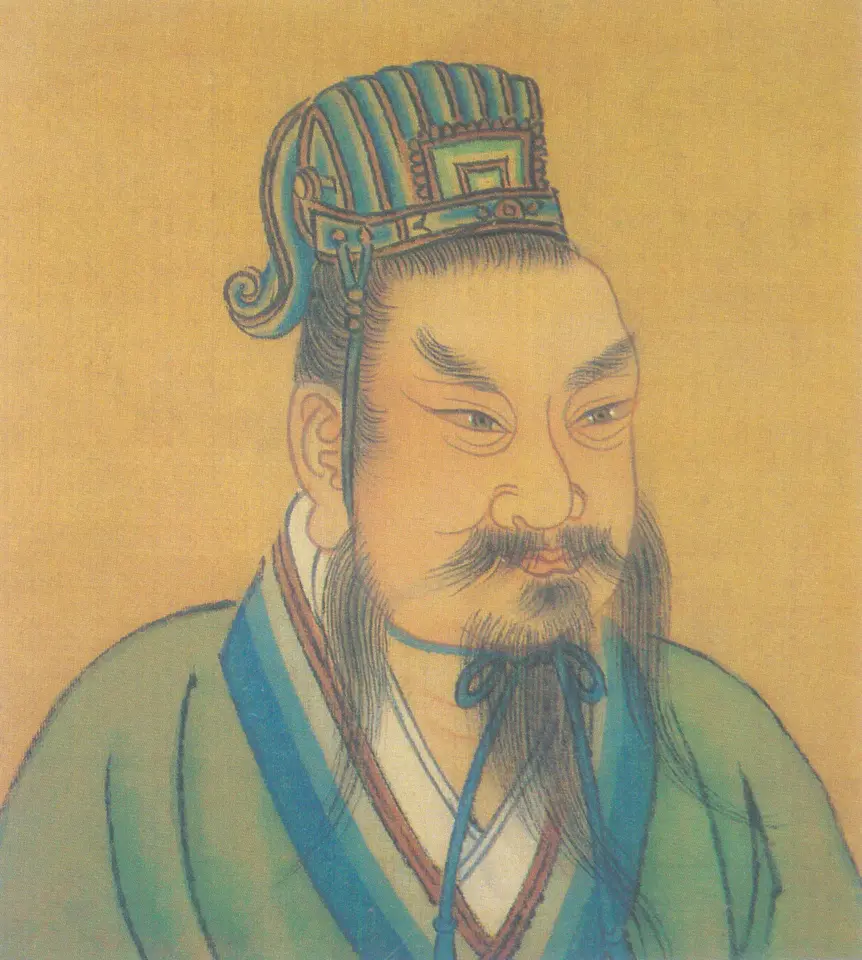
Xiao Daocheng Usurps Song to Establish Qi (萧道成代宋立齐) was a decisive dynastic transition between 474 and 479 CE that concluded the Liu Song Dynasty and inaugurated Southern Qi. Amid catastrophic imperial fratricide within the Liu Song clan, General Xiao Daocheng crushed the rebellion of Prince Liu Xiufan at Xinting, securing command over the imperial guards. In 477 CE, as the tyrannical young Emperor Houfei (Liu Yu) terrorized the court with sadistic killings, Xiao orchestrated his assassination via palace attendant Yang Yufu, installing the thirteen-year-old Emperor Shun (Liu Zhun) as a puppet while seizing administrative control. Later that year, Chancellor Yuan Can and veteran general Shen Youzhi launched simultaneous rebellions to preserve the Song dynasty. Xiao crushed Yuan Can at Stone Fortress and drove Shen Youzhi to suicide. Having eliminated his rivals, Xiao was granted the Nine Bestowals and created Prince of Qi. On May 26, 479 CE, General Wang Jingze dragged Emperor Shun from beneath a Buddhist altar to surrender the imperial seals, prompting the boy's tragic lament: "May I never again be reborn into an imperial household!" On May 29, 479 CE, Xiao Daocheng was enthroned at Jiankang as Emperor Gao, founding the Southern Qi Dynasty.
Liu Xiufan marched on Jiankang; Xiao Daocheng repelled the rebels at Xinting, seizing command of the palace guards
Xiao Daocheng crushed Liu Jingsu's rebellion at Jingkou, consolidating military hegemony over metropolitan armies
Attendant Yang Yufu assassinated the tyrannical Emperor Houfei; Xiao enthroned thirteen-year-old Emperor Shun
Chancellor Yuan Can revolted at Stone Fortress and Shen Youzhi rose in Jiangling to eliminate Xiao Daocheng
Xiao captured Stone Fortress and executed Yuan Can; Shen Youzhi committed suicide after his army collapsed at Yingcheng
Xiao Daocheng was appointed Chancellor of State and created Duke of Qi with the Nine Bestowals, assigning his sons to regional commands
Emperor Shun issued an edict elevating Xiao Daocheng to Prince of Qi with supreme ceremonial honors
Wang Jingze extracted Emperor Shun from hiding; the child surrendered the seal, weeping "May I never be born royal again"
Xiao Daocheng ascended the imperial throne at Jiankang, inaugurating the Southern Qi Dynasty
Xiao Daocheng assassinated the dethroned child Emperor Shun and executed the remaining Liu Song royal princes
Following the golden era of the Yuanjia reign under Emperor Wen of Song, the Liu Song royal house was consumed by vicious civil bloodshed after Crown Prince Liu Shao assassinated his father in 453 CE. Successive monarchs—Emperor Xiaowu, Emperor Qianfei, and Emperor Ming—systematically slaughtered their uncles, brothers, and nephews to eliminate potential claimants to the throne. By the death of Emperor Ming in 472 CE, nearly the entire elder generation of experienced royal princes had been executed, leaving imperial prestige shattered. Ming was succeeded by his ten-year-old son Liu Yu (Emperor Houfei), with power entrusted to four regents: Yuan Can, Chu Yuan, Liu Bing, and military commander Xiao Daocheng.
Xiao Daocheng hailed from the Lanling Xiao clan, a family of non-aristocratic military background that had migrated south during the Jin dynasty. In May 474 CE (2nd year of Yuanhui), Emperor Ming's younger brother, Prince of Guiyang Liu Xiufan, rebelled in Jiangzhou, leading tens of thousands of troops directly to the outskirts of Jiankang. The imperial court was paralyzed with fear. Xiao Daocheng rallied defense forces at Xinting, repelling savage rebel assaults and engineering the assassination of Liu Xiufan on the battlefield. In July 476 CE, Prince of Jianping Liu Jingsu rebelled at Jingkou; Xiao crushed the uprising with ruthless efficiency. Having twice preserved the capital, Xiao was elevated to Right Guard General and Imperial Guard Commander (Zhonglingjun), gaining unassailable control over the metropolitan armed forces.
As Emperor Houfei matured, he exhibited severe homicidal instability, roaming the capital streets with weapons to murder commoners and animals for entertainment. One summer day, discovering Xiao Daocheng sleeping half-naked in the barracks, the boy emperor drew an arrow target around Xiao's navel and prepared to shoot him. Attendant Wang Tian'en intervened, arguing that shooting Xiao dead would end the amusement, prompting the Emperor to strike Xiao's belly with a blunted bone arrow instead. Terrified for his survival, Xiao resolved to strike first.
On the night of the Double Seventh Festival (August 1, 477 CE), Emperor Houfei caroused at Xuanwu Lake before falling into a drunken stupor in the Renshou Palace. He threatened palace attendant Yang Yufu that he would be disemboweled if he failed to awaken the emperor when the Weaving Maiden star crossed the sky. Terrified, Yang Yufu and his co-conspirators beheaded the sleeping emperor, spiriting his severed head over the palace walls to Xiao Daocheng. Xiao entered the palace with guard regiments, assembled the imperial dowager and grandees, and installed Emperor Ming's thirteen-year-old son Liu Zhun as Emperor Shun, adopting the reign title Shengming. Xiao was appointed Director of Instruction, Grand Commandant, and Governor of the Secretariat, wielding supreme dictatorial authority.
Xiao's blatant monopolization of power alarmed loyalist Song statesmen. In December 477 CE, Chancellor Yuan Can and Minister of the Household Liu Bing secretly coordinated with imperial guard units and frontier general Shen Youzhi, the Governor of Jingzhou, to overthrow Xiao.
Shen Youzhi mobilized a veteran army of 100,000 troops and extensive river flotillas from Jiangling, issuing an imperial indictment condemning Xiao's treasonous regicide. Facing simultaneous internal and external threats, Xiao deployed decisive counter-measures: he dispatched his eldest son Xiao Ze to guard the Yangtze narrows at Penkou, while commander Dai Sengjing staged a nighttime amphibious assault on Stone Fortress, where Yuan Can was entrenched. Loyalist forces were routed, and Yuan Can was captured and executed, declaring with noble dignity: "I lack the power to preserve the house of Liu; to die today is my duty!" In early 478 CE, Shen Youzhi's advance stalled before the stubborn defense of Yingcheng (Wuhan). His provisions exhausted and soldiers deserting, Shen fled to Huarong, where he hanged himself in the woods. With the fall of Yuan and Shen, the last military defense of Liu Song vanished.
Having crushed all armed opposition, Xiao Daocheng methodically engineered the legal mechanisms of dynastic usurpation. In February 478 CE, Emperor Shun appointed Xiao Grand Marshal, granting him military command over thirteen key provinces across the southern empire. Xiao appointed his sons Xiao Ze and Xiao Ni to strategic provincial commands while placing confidants like Wang Jingze and Cui Zusi in charge of court ministries.
In April 479 CE, Emperor Shun conferred the title Prince of Qi upon Xiao Daocheng along with the Nine Bestowals (Jiuxi), granting him the supreme imperial privileges of entering court without scurrying, carrying a sword into the palace, and omitting his personal name in audience. These symbolic promotions directly reproduced the classical usurpation choreography established by Cao Pi, Sima Yan, and Liu Yu.
On May 26, 479 CE (Xinmao day, 4th month of the 3rd year of Shengming), the scripted ceremony of imperial abdication took place. According to protocol, the thirteen-year-old Emperor Shun was required to appear in the Taiji Hall to surrender the imperial seal before the civil and military bureaucracy. Paralyzed with terror, the child fled into the palace temple, hiding beneath the pedestal of a Buddhist statue. General Wang Jingze led armed guards into the private quarters, dragging the sobbing boy from his hiding place. Weeping profusely, Emperor Shun asked Wang: "Does the Prince of Qi intend to put me to death today?" Wang Jingze replied consolingly: "The Prince merely invites Your Majesty to take up residence in another palace. When your imperial ancestors seized the realm from the Sima house, it was done in this very manner." Emperor Shun wept inconsolably: "May I never again be reborn into an imperial household!"
Emperor Shun was escorted away to hand over the imperial seal. On May 29, 479 CE (Jiazi day), Xiao Daocheng ascended the throne in the southern suburbs of Jiankang, declaring the founding of the Great Qi Dynasty (known as Southern Qi) and adopting the era name Jianyuan.
Following his coronation, Emperor Gao of Qi demoted Liu Zhun to King of Ruyin, confining him in Danyang. Within a month, Xiao dispatched assassins to murder the dethroned boy in his residence. Xiao subsequently executed all male members of the Liu Song imperial house residing in the south to extinguish any possibility of restoration, leaving only Liu Chang, who had fled to Northern Wei, to survive. The sixty-year rule of the Liu Song Dynasty came to a permanent, bloody close.
Xiao Daocheng's usurpation concluded the sixty-year reign of the Liu Song Dynasty and established Southern Qi. Upon ascending the throne, Emperor Gao introduced administrative frugality, proclaiming: "If I could rule the realm for ten years, I would make gold as cheap as dirt." He curbed excessive palace luxury, reformed civil taxation, conducted nationwide census registers (xiaoji), and promoted agricultural and classical education. However, to eliminate threats of restoration, Xiao ordered the systematic execution of nearly all surviving members of the Liu Song imperial clan.
Xiao Daocheng's rise entrenched the systemic vulnerability of the Southern Dynasties, where military power completely overshadowed dynastic legitimacy. The usurpation demonstrated that dynastic survival depended solely on control of metropolitan garrisons, encouraging ambitious generals to replicate the same violent cycle. Furthermore, although Xiao Daocheng and his successor Emperor Wu dispersed royal princes to govern regional military garrisons to shield the court, this decentralization merely recreated the murderous fratricidal conflicts of the Liu Song era. When Xiao Luan (Emperor Ming of Qi) seized power a decade later, he executed nearly all of Gao and Wu's descendants. Lasting merely twenty-four years across seven rulers, Southern Qi proved to be the shortest-lived of the Southern Dynasties, falling in 502 CE to Xiao Yan (Emperor Wu of Liang) via the exact same mechanism of forced abdication.