Maritime Alliance
Song and Jin forge a pact to divide the Liao Empire, exposing Song military vulnerability.
Northern Song Dynasty (北宋) · HISTORICAL EVENT
靖康之变
The Jingkang Incident (靖康之变) occurred between 1126 and 1127 (the first and second years of the Jingkang era of Song, corresponding to the fourth and fifth years of the Tianhui era of Jin), representing the catastrophic capture of the Northern Song imperial capital Bianliang (modern Kaifeng, Henan) by Jurchen Jin armies. The invasion resulted in the abduction of Emperor Huizong, Emperor Qinzong, royal consorts, and tens of thousands of subjects into…
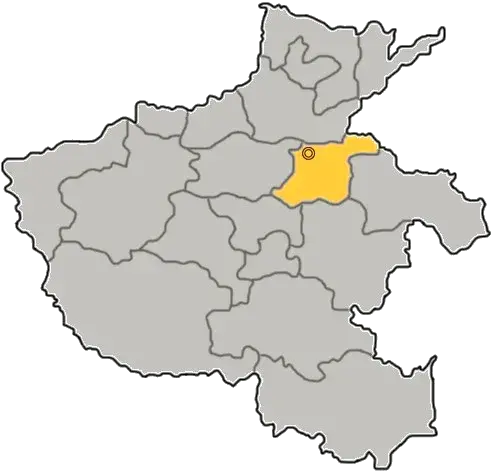
The Jingkang Incident (靖康之变) occurred between 1126 and 1127 (the first and second years of the Jingkang era of Song, corresponding to the fourth and fifth years of the Tianhui era of Jin), representing the catastrophic capture of the Northern Song imperial capital Bianliang (modern Kaifeng, Henan) by Jurchen Jin armies. The invasion resulted in the abduction of Emperor Huizong, Emperor Qinzong, royal consorts, and tens of thousands of subjects into northern captivity, concluding the Northern Song dynasty. During the Xuanhe era, Emperor Huizong's indulgence in Taoist mysticism and extortionate aesthetic levies (huashigang) provoked massive agrarian rebellions, while the reckless Alliance Conducted over the Sea against Liao exposed deep military rot. Following Liao's annihilation, the Jin invaded along eastern and western routes. While loyal minister Li Gang successfully repelled the initial siege in early 1126, Emperor Qinzong yielded to defeatist factions, dismissing Li Gang and ceding three strategic commanderies alongside massive bullion ransoms. When the Jin returned in late 1126, both Jurchen armies trapped the capital. Emperor Qinzong disastrously trusted charlatan Guo Jing's fraudulent "Divine Soldiers," opening the city gates and allowing Jurchen troops to overrun the battlements. In 1127, the Jin deposed both emperors, pillaged imperial libraries and state treasures, and marched the imperial court north to remote Wuguocheng. The catastrophe stimulated deep national consciousness, prompted Prince Zhao Gou to establish the Southern Song dynasty, and inaugurated over a century of border confrontation.
Song and Jin forge a pact to divide the Liao Empire, exposing Song military vulnerability.
Jin forces advance south; Emperor Huizong abdicates, and Emperor Qinzong ascends the throne.
Li Gang successfully defends the capital, but Qinzong capitulates, ceding territory and paying ransom.
Jin armies unite outside Bianliang; Qinzong deploys charlatan Guo Jing, leading to the capital's fall.
Jin forces depose Huizong and Qinzong, appointing Zhang Bangchang as ruler of the puppet Chu regime.
Over one hundred thousand royals and civilians are marched into northern captivity, extinguishing Northern Song rule.
During the final decades of the Northern Song, Emperor Huizong neglected governance, indulging in lavish court lifestyles, garden construction, and Taoist rituals while delegating authority to corrupt officials such as Cai Jing and Tong Guan. The imperial extraction of rare rocks and timber through the huashigang network impoverished the southeastern provinces, sparking widespread insurrections under Fang La and Song Jiang. Despite severe domestic strains, Emperor Huizong sought the military prestige of recovering the Sixteen Prefectures of Yanyun, repudiating the century-old Chanyuan Treaty with Liao to conclude the Maritime Alliance with the emerging Jurchen Jin dynasty.
When Song armies advanced against the Liao southern capital of Yanjing under eunuch commander Tong Guan, over two hundred thousand Song soldiers were repeatedly routed by desperate Khitan garrisons. The Song court was ultimately forced to pay the Jin dynasty massive subsidies to purchase an empty city captured by Jurchen arms. This debacle laid bare the systemic incompetence and operational decay of the Northern Song military. In late 1125, using Song shelter of defector Zhang Jue as a pretext, Jin Emperor Taizong ordered a two-pronged invasion: Wanyan Zongwang commanded the eastern column through Pingzhou, while Wanyan Zonghan led the western army past Datong, advancing directly toward the Central Plains.
In the first month of 1126, Wanyan Zongwang's eastern cavalry crossed the Yellow River barrier and encircled Bianliang. Paralyzed with terror, Emperor Huizong abdicated in favor of Crown Prince Zhao Huan (Emperor Qinzong) and fled south to Zhenjiang. Upon ascending the throne, Emperor Qinzong appointed Li Gang as Chief of the Mobile Bureau. Li Gang organized the civilian populace, mounted personal defenses on the battlements, and successfully repelled repeated Jurchen assaults using crossbow batteries and stone throwers, while provincial relief armies under veteran generals such as Zhong Shidao converged on the capital.
However, Emperor Qinzong and defeatist ministers Bai Shizhong and Li Bangyan were desperate for peace. Fearing military escalation, Qinzong dismissed Li Gang, dispersed provincial relief forces, and conceded to exorbitant Jin terms: ceding the three vital frontier defense hubs of Taiyuan, Zhongshan, and Hejian, providing five million ounces of gold and fifty million ounces of silver, and sending Prince Zhao Gou and Chancellor Zhang Bangchang as hostages. Constrained by limited expeditionary numbers and wary of regional counter-encirclement, Wanyan Zongwang withdrew north with his booty.
Following the Jurchen retreat, Emperor Qinzong reneged on territorial concessions and attempted to subvert northern garrisons, provoking a decisive Jin counter-offensive. In the autumn of 1126, Jin armies marched south along both axes. Wanyan Zonghan captured Taiyuan after a punishing 250-day siege and crossed the Yellow River to link up with Wanyan Zongwang outside Bianliang in November, establishing an airtight blockade around the capital.
By December, heavy blizzards blanketed the besieged city, leaving garrison defenders starving and frostbitten. Loyal commander Zhang Shuye led thirty thousand reinforcements into the city, engaging in desperate perimeter combat. Tragically, Emperor Qinzong and Chancellor He Li placed imperial defense in the hands of charlatan Guo Jing, an illiterate swindler who claimed mastery over the Taoist "Six Jia Divine Troops." On January 9, 1127, Guo Jing ordered the Xuanhua Gate thrown open to conduct a magical sortie. Jurchen cavalry charged the disorganized mob, routing them instantly while Guo Jing fled with stolen silver. Jurchen shock troops stormed the open gate and occupied the parapets, bringing about the rapid fall of Bianliang's defenses.
Following the breach, the Jurchen command established headquarters at Liujiasi outside the walls, demanding Emperor Qinzong's unconditional personal surrender. Emperor Qinzong arrived at the enemy camp in sackcloth to tender formal submission, styling himself imperial nephew. The Jin military imposed devastating levies, extorting every scrap of bullion, state art, and imperial regalia, while demanding imperial princesses and noblewomen to offset financial shortages. In February 1127, Jin Emperor Taizong issued an edict stripping Huizong and Qinzong of imperial status, reducing them to commoners and installing collaborator Zhang Bangchang as puppet ruler of the "Da Chu" regime. In April, the Jurchen army withdrew northward, abducting Emperor Huizong, Emperor Qinzong, Empress Zheng, Empress Zhu, imperial princes, noblewomen, civil ministers, artisans, and musicians—numbering over one hundred thousand individuals. The capital was sacked, and the Northern Song dynasty ceased to exist.
The Jingkang Incident brought an absolute end to the 167-year rule of the Northern Song. The imperial clan was captured almost in its entirety, with only Prince Zhao Gou escaping. Bianliang, the premier urban center of the medieval world, was plundered of administrative archives, bronze astronomical equipment, and dynastic treasures. Emperor Huizong died in captivity in 1135, followed by Emperor Qinzong in 1156.
The catastrophe transformed the geopolitical and cultural trajectory of China. Politically, Prince Zhao Gou established the Southern Song dynasty at Yingtianfu (modern Shangqiu) before retreating to Lin'an (modern Hangzhou), establishing a century-and-a-half division between Jurchen north and Chinese south. Economically and demographically, the mass exodus of northern refugees completed the southern shift of China's economic and cultural center of gravity. Spiritually, the "Humiliation of Jingkang" became the foundational trauma of the Chinese literary and military imagination, immortalized in Yue Fei's famous poem Man Jiang Hong and forging an enduring tradition of patriotic resistance against foreign aggression.