Sima Rui Deploys to Jianye
Sima Rui is appointed General of Peaceful the East and crosses the Yangtze with Wang Dao, establishing a southern strategic base.
Eastern Jin Dynasty (东晋) · HISTORICAL EVENT
建康定都(东晋建立)
The Founding of the Eastern Jin Dynasty and Capital at Jiankang (建康定都/东晋建立) was a pivotal historical epoch unfolding between 317 and 318, in which Sima Rui, the Prince of Langya and a scion of the Western Jin imperial house, re-established the Jin dynasty in Jiankang (modern Nanjing) following the catastrophic collapse of the Western Jin in northern China. Exhausted by the internecine War of the Eight Princes, the Western Jin court was overrun during the…
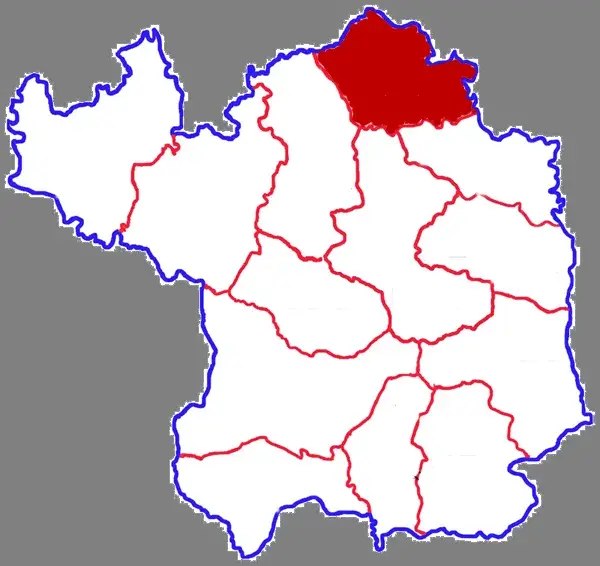
The Founding of the Eastern Jin Dynasty and Capital at Jiankang (建康定都/东晋建立) was a pivotal historical epoch unfolding between 317 and 318, in which Sima Rui, the Prince of Langya and a scion of the Western Jin imperial house, re-established the Jin dynasty in Jiankang (modern Nanjing) following the catastrophic collapse of the Western Jin in northern China. Exhausted by the internecine War of the Eight Princes, the Western Jin court was overrun during the Disaster of Yongjia in 311 when Han Zhao forces seized Luoyang and captured Emperor Huai, followed by the fall of Chang'an and the execution of Emperor Min in 316. Confronting dynastic annihilation, Sima Rui relied upon the visionary counsel of Wang Dao, having established an administrative base in the former Eastern Wu capital of Jianye in 307. By reconciling prominent northern immigrant lineages with indigenous southern gentry leaders such as Gu Rong and He Xun, and absorbing millions of northern refugees, Sima Rui took the title Prince of Jin in 317 and ascended the imperial throne in 318 under the reign title Daxing. The establishment of Jiankang institutionalized the historic power-sharing compact known as "the Wang and Sima clans jointly share the realm," created emigrant administrative divisions, preserved Chinese cultural transmission, and inaugurated Jiankang's two-century legacy as the grand metropolis of the Southern Dynasties.
Sima Rui is appointed General of Peaceful the East and crosses the Yangtze with Wang Dao, establishing a southern strategic base.
Wang Dao stages an imperial procession during the Shangsi festival, winning the allegiance of southern leaders Gu Rong and He Xun.
Han Zhao forces conquer Luoyang, capturing Emperor Huai and initiating massive elite migrations to Jiangnan.
Emperor Min ascends the throne in Chang'an; Jianye is officially renamed Jiankang to observe naming taboos.
Chang'an falls to Liu Yao; Emperor Min surrenders, extinguishing Western Jin authority in northern China.
Sima Rui erects an altar in Jiankang to assume the title Prince of Jin, adopting the reign title Jianwu and establishing a restoration government.
Following news of Emperor Min's murder, Sima Rui ascends the imperial throne, officially founding the Eastern Jin dynasty.
The establishment of the Eastern Jin in Jiankang was the direct outcome of the systemic self-destruction of the Western Jin dynasty. Following the conquest of Eastern Wu in 280, Emperor Wu (Sima Yan) abolished military governorships across commanderies and enfeoffed imperial agnates as regional princes with territorial command over regional armies, seeking to shield the throne with dynastic kin. However, following the accession of the intellectually incapacitated Emperor Hui, factional intrigues led by Empress Jia ignited the catastrophic War of the Eight Princes (290–306).
Over sixteen years of fratricidal combat, eight principal princes mobilized regional armies across the Central Plains to seize imperial regency. The conflict destroyed the elite imperial guards, scorched the agricultural heartland, and drew nomadic auxiliary cavalry deep into northern administrative centers, obliterating the fiscal, military, and institutional foundations of the Western Jin central government.
The collapse of imperial defenses allowed inner-frontier nomadic confederations to launch unchecked military insurrections. Liu Yuan, leader of the Southern Xiongnu, proclaimed the Han Zhao dynasty in Shanxi, inaugurating the mass migrations and military conflicts of the Sixteen Kingdoms.
In July 311 (the fifth year of Yongjia), Han Zhao commanders Liu Yao and Shi Le sacked the Western Jin capital Luoyang, slaughtering thirty thousand imperial officials and civilians, plundering ancestral tombs, setting fire to palaces, and capturing Emperor Huai. In Chang'an, loyalist ministers crowned crown prince Sima Ye as Emperor Min under the reign title Jianxing. However, isolated without supplies or military reinforcements, Chang'an fell in December 316 after a grueling siege in which the populace resorted to cannibalism. Emperor Min surrendered and was subsequently executed in Han Zhao captivity alongside Emperor Huai. After fifty-one years of fragile unity, the Western Jin was extinguished, plunging northern China into over a century of ethnic fragmentation.
Amid the gathering storm in the north, Sima Rui, the Prince of Langya and great-grandson of Sima Yi, displayed farsighted strategic acumen in concert with his close advisor, the Langya lineage patriarch Wang Dao. Sima Rui was modest, cautious, and benevolent, while Wang Dao possessed consummate geopolitical insight. Foreseeing that the Central Plains were doomed to prolonged chaos and that Luoyang could not be defended, Wang Dao urged Sima Rui to relocate southward across the Yangtze River to establish an enduring redoubt.
In late 306, backed by Senior Prince Sima Yue, Sima Rui secured appointment as General of Peaceful the East and Military Commander of Jiangnan. In October 307 (the first year of Yongjia), Sima Rui crossed the Yangtze River with his Langya retainers, establishing his administrative headquarters in Jianye, the former capital of Eastern Wu. Wang Dao served as chief counselor and military adjutant, managing political and administrative affairs. This critical strategic relocation rescued Sima Rui's faction from northern slaughter and established the geographic platform for dynastic restoration in the south.
When Sima Rui and Wang Dao arrived in Jianye in the autumn of 307, they encountered profound local estrangement. Following the Western Jin conquest of Eastern Wu in 280, northern imperial officials had implemented punitive discriminatory policies against southern lineages. Prominent Jiangnan gentry were systematically excluded from high central office in Luoyang, fostering deep generational resentment between southern and northern elites.
For several months after Sima Rui established his headquarters, powerful indigenous lineages including the Gu, Lu, Zhu, and Zhang clans of Wujun, alongside the Zhou clan of Yixing, maintained cold aloofness, refusing to visit the prince's headquarters. Observing Sima Rui's mounting anxiety, Wang Dao counseled patience and identified southern cultural icons: "Gu Rong and He Xun are the foremost luminaries of the southern gentry. If we can win their heartfelt allegiance, the entire southern elite will rally to our banner, and Jiangnan will be secured."
Opportunity arrived during the Shangsi spring purification festival on April 4, 308 (the third day of the third lunar month), when southern populace and scholar-officials gathered along riverside waterways. Wang Dao staged an elaborate ceremonial display. He arrayed the prince's full military retinue with shimmering banners and armor. Sima Rui rode in an ornate imperial carriage, while Wang Dao and his martial cousin Wang Dun, the Governor of Yangzhou, rode humbly on horseback beside the prince's wheels.
Observing that the preeminent aristocrats of northern China bowed reverently before Sima Rui, southern leaders including Gu Rong and Ji Zhan were deeply awed, recognizing Sima Rui as the legitimate dynastic heir of the Central Plains. Gathering on the riverbanks, they prostrated themselves before the prince's carriage. Seizing the moment, Wang Dao personally visited Gu Rong, appointing him Chief of Military Deliberations, while appointing He Xun, the revered master of ritual and son of Eastern Wu statesman He Shao, as Principal Secretary. Overjoyed by this respect, Gu Rong and He Xun accepted office, prompting the entire southern scholar-gentry to enter Sima Rui's administration.
Following the fall of Luoyang in 311, northern China transformed into a wasteland. To escape massacre, the Han Chinese populace undertook the largest trans-regional migration in ancient Chinese history, celebrated as the Southward Crossing of Gowns and Caps.
Several million peasants, artisans, and soldiers fled southward across the Huai and Yangtze rivers. Accompanying the commoners were hundreds of prestigious northern aristocratic houses, led by the Langya Wang, Chenjun Xie, Yingchuan Xun, Taishan Yang, Gaoping Xi, and Chenjun Yuan lineages, who arrived in Jianye to pledge allegiance to Sima Rui.
This massive influx generated intense friction between displaced northern emigrants and entrenched southern landowners. Northern elites claimed cultural superiority based on imperial metropolitan lineage, looking down upon southern dialects and customs, while southern gentry resented northern refugees who seized prime agricultural lands and monopolized central offices.
Wang Dao navigated this existential dilemma through his trademark strategy of "governing through tranquil forbearance." He urged Sima Rui to balance appointments by assigning southern elites to provincial magistracies and judicial offices, appointing He Xun to formulate court rituals, and placing Ji Zhan in command of regional armies. To break cultural divides, Wang Dao learned to speak the southern Wu dialect fluently, conversing with local elders in their native tongue and seeking instruction in southern agricultural traditions. This institutional equilibrium cemented a durable alliance between northern aristocrats and southern landlords.
In 313, Emperor Min (Sima Ye) ascended the throne in Chang'an. To observe strict taboo on the emperor's personal name (Ye sounding identical to the character for Ye in Jianye), imperial edicts formally renamed the southern capital from Jianye to Jiankang. The designation Jiankang carried auspicious philosophical meaning: to establish an enduring foundation of peace and prosperity.
In the winter of 316, tragic news arrived from the north: Chang'an had surrendered and Emperor Min was captured by Liu Yao. The northern court was entirely extinguished, plunging Jiankang into mourning. Senior ministers, including Zhou Yi and Dai Kui, recognized that imperial legitimacy must not perish. As the senior imperial agnate, Sima Rui had to assume the mantle of dynastic restoration.
In April 317 (the third month of the first year of Jianwu), surviving northern governors, led by Wang Jun, Duan Pidi, and Liu Kun, united with southern officials to submit petitions urging Sima Rui to assume the throne. Sima Rui initially declined out of deference to the captive Emperor Min. Yielding to persistent petitions, Sima Rui adopted a provisional compromise. On April 6, 317, he erected an open-air altar south of Jiankang, assuming the title Prince of Jin and adopting the reign era Jianwu, establishing a restoration government and issuing amnesties across the realm.
In March 318, news arrived confirming that the captive Emperor Min had been murdered in Pingyang by Liu Cong at the age of eighteen. The direct imperial line of the Western Jin was terminated.
Following mourning rituals, the civil and military bureaucracy assembled before the prince's palace. Leading the ministers, Wang Dao knelt and declared: "The mandate of heaven and the hearts of the people are settled. If Your Highness does not ascend the imperial throne, where shall the ancestral altars and millions of living souls turn?"
Sima Rui consented. On April 26, 318 (the tenth day of the third month), Sima Rui formally ascended the imperial throne in the palace of Jiankang, becoming Emperor Yuan of Jin, and inaugurating the reign title Daxing. The Eastern Jin dynasty was officially established.
During the coronation ceremony, a historic scene unfolded. As Emperor Yuan ascended the dragon throne, he stood, took Chancellor Wang Dao by the sleeve, and urged him to sit beside him on the throne to share the homage of the assembled ministers. Shocked by this breach of protocol, Wang Dao prostrated himself, declaring: "If the sun were to share the sky with common things, where would the myriad creatures look for light?"
This incident symbolized the constitutional reality of Eastern Jin governance: "the Wang and Sima clans jointly share the realm." With Wang Dao directing central statecraft and his cousin Wang Dun commanding regional military forces in Wuchang, the Langya Wang lineage achieved parity with the throne. Eastern Jin autocracy evolved from imperial despotism into an aristocratic oligarchic coalition known as aristocratic lineage politics.
In his twilight years, Emperor Yuan sought to curtail lineage power by promoting non-aristocratic legalist officials Diao Xie and Liu Wei. In 322, Wang Dun launched an insurrection from Wuchang under the pretext of purging court flatterers. Wang Dun's armies defeated imperial forces and entered Jiankang, resulting in the death of Diao Xie and the flight of Liu Wei. Emperor Yuan was forced to submit, appointing Wang Dun as chancellor before dying of grief later that year. Despite this internal revolt, the overarching compromise forged by Wang Dao preserved dynastic stability, embedding aristocratic co-governance into Eastern Jin statecraft.
Following his enthronement, Emperor Yuan addressed the monumental challenge of expanding the former Eastern Wu citadel into a sprawling imperial capital capable of housing court ministries and millions of displaced refugees.
Architecturally, the court utilized the natural topography of Nanjing, celebrated as "the dragon coiling at Mount Zhong and the tiger crouching at Stone City." The central palace enclosure, known as Taicheng, was constructed on the foundations of the ancient Taichu Palace, measuring five hundred zhang in circumference with gates on four cardinal sides and the central Shenlong Hall. Jiankang was guarded by Purple Mountain to the east, Stone City on the Yangtze River to the west, Mount Fuzhou and Lake Xuanwu to the north, and the Qinhuai River to the south. The court pioneered strict north-south axial symmetry, opening the Xuanyang Avenue south of the palace with central executive ministries aligned on either side, linked across the Qinhuai River by the Vermilion Bird Bridge.
The exterior ramparts departed from rigid northern grid models, constructing tens of li of bamboo and timber palisade enclosures adapted to rivers and rolling hills, punctuated by six grand state gates known as the Six Dynasties Palisade Gates. Along the southern bank of the Qinhuai River, prime northern lineages including the Wang and Xie families constructed ancestral residences along Black Robe Lane (Wuyi Lane), while southern merchants and commoners inhabited busy canal districts along Huaiching Bridge and Changanli.
To settle several million northern refugees, Wang Dao designed the innovative system of emigrant provinces, commanderies, and counties. The imperial court instituted administrative jurisdictions in southern territories retaining the original names of northern homelands.
Refugees received special white household registers exempting them from indigenous corvee labor, while northern lineage patriarchs and military commanders were appointed as emigrant magistrates. This measure preserved community cohesion, prevented refugee revolts, and created an elite pool of battle-hardened troops that formed the foundation for the renowned Beifu Army.
Through the establishment of the capital at Jiankang and the emigrant administration, the Eastern Jin secured political resilience, stimulated the agricultural potential of southern China, and established an enduring state that preserved dynastic rule for one hundred and four years.
The establishment of the capital at Jiankang performed an irreplaceable service in the continuity of Chinese civilization. Confronting the destruction of the Western Jin and the devastation of the Central Plains, Sima Rui and Wang Dao preserved the legal continuity of the Chinese imperial state. Through the migration of elite households, thousands of classical texts, administrative codes, philosophical traditions, calligraphic treasures, and ritual institutions were transferred to the Yangtze basin. This rescued Han Chinese civilization from catastrophic eradication, fostering a golden age of aristocratic culture that produced the calligraphy of Wang Xizhi, the painting of Gu Kaizhi, and the poetry of Tao Yuanming.
Jiankang's emergence as the imperial capital permanently transformed the political geography and economic landscape of southern China. Following Sima Rui's enthronement, Jiankang served as the capital of six successive southern regimes across two hundred and seventy years, earning renown as the Six Dynasties Capital. Developing from a regional fortress into a global metropolis with over two hundred thousand households and more than one million residents, it rivaled Rome and Constantinople as a premier urban center of the ancient world. Concurrently, northern refugees introduced advanced iron plows, sophisticated hydraulic engineering, and double-cropping techniques, transforming the Taihu Lake basin and coastal plains into the new agrarian heartland of China.
Institutionally, the foundation of the Eastern Jin established the definitive model of aristocratic lineage politics (menfa zhengzhi). The power-sharing compact between the imperial house and dominant clans—including the Wang, Yu, Huan, and Xie families—prevented dynastic coups while preserving administrative equilibrium. Furthermore, the emigrant province and commandery system provided a visionary administrative model for managing massive refugee movements, facilitating deep demographic synthesis between northern and southern populations and forging the cultural and material foundations that later enabled the reunification of China under the Sui and Tang dynasties.
Official dynastic chronicles have offered balanced praise for Sima Rui's restoration of the Jin dynasty in Jiankang. In the Book of Jin, official historians observe that when the Jin house suffered catastrophic collapse in the north, Emperor Yuan navigated perilous straits across the southern waters, supported by Wang Dao's wisdom and Ji Zhan's valor, securing Jiankang to preserve dynastic sacrifices and continue the imperial mandate.
The Book of Jin compares Wang Dao to the ancient statesman Guan Zhong, recording that his tranquil statecraft comforted the populace, reconciled competing lineages, and permitted a vulnerable refugee court to re-establish its sovereign seat in Jiankang.
In the Comprehensive Mirror for Aid in Governance, Northern Song historian Sima Guang observed: "The fall of the Western Jin was not the work of a single day; civil war arose within, and barbarians exploited the vacuum. Displaced subjects wandered like travelers on an endless ocean without support. Emperor Yuan arose from Langya and crossed the Yangtze, winning southern hearts through benevolence and gathering northern talent through virtue. Though he failed to recover the ancient capitals, he preserved the surviving populace and continued the crown of Chinese civilization, conferring blessings that endure for ten thousand generations."
Modern historian Chen Yinke famously concluded in his studies of the period that the Eastern Jin state was born of a tripartite political compromise among northern emigrant aristocrats, southern indigenous gentry, and the Sima imperial house, crystallized in the compact of joint rule. The establishment of the capital at Jiankang not only enabled the Chinese state to survive in the south, but also initiated the first profound synthesis between northern and southern cultures and launched the comprehensive agricultural development of Jiangnan, building the indispensable foundation for the later reunification of the Chinese empire under the Sui and Tang dynasties.