Decree Examination Scandal
Niu Sengru and Li Zongmin criticize court policies; Chancellor Li Jifu demotes examiners, igniting partisan hostility
· HISTORICAL EVENT
牛李党争
The Niu-Li Factional Strife (牛李党争) was an acrimonious and protracted bureaucratic feud spanning nearly forty years during the mid-to-late Tang dynasty. The conflict raged primarily between the Niu Faction, led by Niu Sengru and Li Zongmin, and the Li Faction, commanded by Li Deyu and his father Li Jifu. Deeply rooted in the socio-political transformations following the An Lushan Rebellion, the struggle reflected sharp antagonisms between newly ascendant…
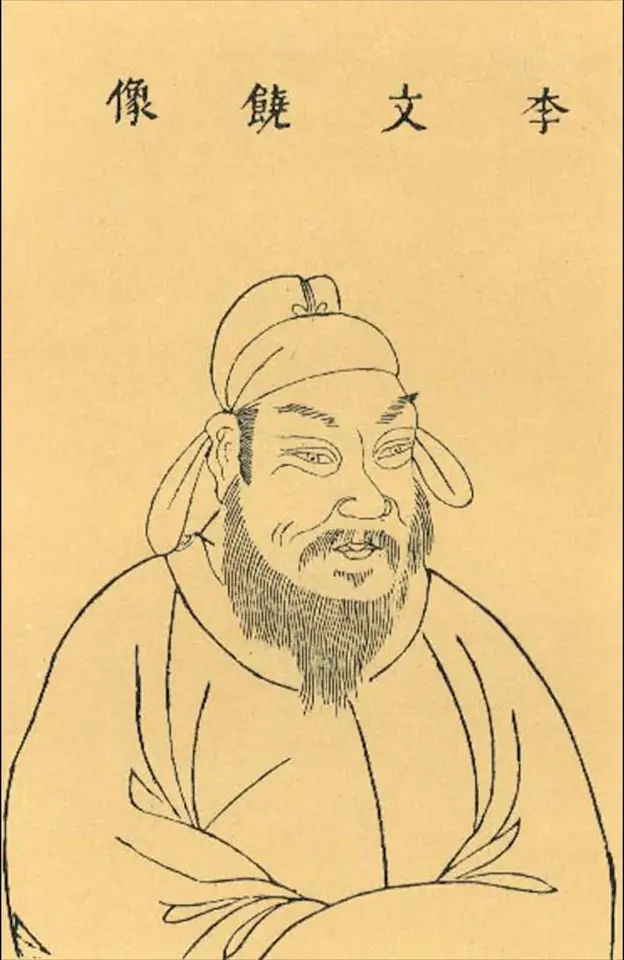
The Niu-Li Factional Strife (牛李党争) was an acrimonious and protracted bureaucratic feud spanning nearly forty years during the mid-to-late Tang dynasty. The conflict raged primarily between the Niu Faction, led by Niu Sengru and Li Zongmin, and the Li Faction, commanded by Li Deyu and his father Li Jifu. Deeply rooted in the socio-political transformations following the An Lushan Rebellion, the struggle reflected sharp antagonisms between newly ascendant civil service examination literati and the entrenched aristocratic lineages clinging to hereditary privilege and traditional administrative seniority. The hostility ignited in 808 during the reign of Emperor Xianzong, when Niu Sengru and Li Zongmin boldly condemned court misrule in their civil examination responses, provoking the fury of Chancellor Li Jifu. Over the reigns of Emperors Muzong, Jingzong, Wenzong, Wuzong, and Xuanzong, both factions relentlessly contested chancellorship appointments, civil examinations, military policy toward rebellious military circuits, and foreign affairs such as the Weizhou surrender controversy. The relentless polarization paralyzed central policy-making, prompting Emperor Wenzong's despairing remark that eradicating northern rebels was easier than uprooting court factionalism. By draining administrative morale and empowering imperial eunuchs to manipulate the succession and military levers, the feud dealt a catastrophic blow to the vitality of the late Tang state.
Niu Sengru and Li Zongmin criticize court policies; Chancellor Li Jifu demotes examiners, igniting partisan hostility
Qian Hui's examination results are challenged by Li Deyu; Muzong orders re-examination and demotes the examiners
Niu Sengru becomes Grand Chancellor while Li Deyu is transferred to command the Zhexi Circuit
Li Zongmin aligns with eunuchs to become chancellor, preempting Li Deyu and banishing him to Yicheng
Li Deyu accepts the surrender of Weizhou; Niu Sengru forces its return to Tibet, leading to the defectors' execution
Emperor Wenzong appoints Li Deyu as chancellor; Li Zongmin and core Niu partisans are expelled from the capital
Emperor Wuzong elevates Li Deyu to sole leadership, conducting extensive purges against Niu faction members
Emperor Xuanzong ascends the throne, instantly dismissing Li Deyu and rehabilitating anti-Li elements
Li Deyu is stripped of official ranks and exiled to Hainan; Niu Sengru and Li Zongmin die in exile and retirement
Li Deyu dies in Yazhou; the passing of key factional leaders brings an end to the four-decade feud
Event Name: Niu-Li Factional Strife (牛李党争); Alternative Name: Niu–Li factional strife, Contention between Niu and Li (牛李之争), Factional Strife of Mid-Tang (唐代朋党之争); Event Type: Court Bureaucratic Factional Conflict (朝廷官僚派系政治斗争); Dynasty: Tang (唐代); Location: Chang'an (Daming Palace and Administrative Chambers); Time Period: 808 (Third Year of Yuanhe) - 849 (Third Year of Dazhong); Parties Involved: Niu Faction (jinshi examination literati led by Niu Sengru and Li Zongmin), Li Faction (aristocratic lineages led by Li Deyu and Li Jifu); Key Figures: Niu Sengru, Li Zongmin, Li Deyu, Li Jifu, Emperor Xianzong, Emperor Wenzong, Emperor Wuzong, Emperor Xuanzong; Cause: Structural friction over bureaucratic recruitment between exam graduates and hereditary elites, triggered by imperial exam criticism in 808; Outcome: Decades of destructive purges across five reigns, ending with Li Deyu's death in exile and the political paralysis of civil ministers; Impact: Crippled imperial governance and civil oversight, enabling palace eunuchs to monopolize military commands and precipitating dynastic collapse;
In the wake of the devastating An Lushan Rebellion, the ancestral dominance of aristocratic lineages in northwestern China gradually eroded. An emergent class of non-aristocratic scholar-officials entered imperial administration in increasing numbers via the rigorous jinshi and special decree civil examinations. These examination graduates formed close intellectual circles bonded by master-disciple connections and shared examination years, valuing literary eloquence and moral rhetoric. In contrast, the venerable aristocratic clans of Shandong, represented by prestigious lineages such as the Cui, Lu, Li, and Zheng, retained substantial court power through hereditary privilege paths. Aristocratic statesmen looked down upon the newly risen graduates as frivolous careerists prone to clique formation, while the graduates attacked hereditary elites as corrupt monopolizers of executive power.
In 808, during the third year of the Yuanhe era, Emperor Xianzong decreed a special civil examination aimed at selecting virtuous candidates capable of candid political admonition. Niu Sengru, Li Zongmin, and Huangfu Shi submitted daring essays excoriating prevailing imperial malpractices and the negligence of executive ministers. The chief examiners, deeply impressed by their intellectual integrity, awarded all three top passing marks. However, Grand Chancellor Li Jifu, the father of Li Deyu, felt personally insulted by their scathing critiques. Weeping before Emperor Xianzong, Li Jifu alleged that the examiners engaged in nepotism. Xianzong sided with his chancellor, demoting the examiners and freezing the appointments of Niu and Li. Outraged by this blatant suppression, censors and civil officials rallied in protest against Li Jifu's jealousy, forcing the emperor to transfer Li Jifu out of the capital. This incident seeded an irreconcilable personal and factional vendetta between the Li lineage and the examination faction.
In 821, during the first year of Emperor Muzong's Changqing era, Vice Minister of Rites Qian Hui presided over the imperial jinshi examinations. Following the announcement of the successful graduates, former chancellor Duan Wenchang and Hanlin Academician Li Deyu memorialized the throne, charging Qian Hui with fraudulent favoritism in passing Su Chao, the son-in-law of Li Zongmin, and Yang Yinshi, the younger brother of drafting official Yang Rushi. Emperor Muzong ordered Hanlin Scholar Bai Juyi to conduct a strict re-examination of the candidate cohort. The review concluded that only three of the fourteen previously passed scholars met standard proficiencies. Enraged by the blatant corruption, Muzong demoted Qian Hui, Li Zongmin, and Yang Rushi to regional posts and annulled the remaining degrees.
The fallout from the Changqing examination scandal transformed individual resentment into institutional partisan enmity. Li Zongmin and Yang Rushi bitterly resented Li Deyu, accusing him of weaponizing court connections to suppress examination talents. Consequently, the two camps hardened into rigid factions whose members engaged in mutual vilification for nearly four decades. Scholar-officials throughout the imperial capital aligned themselves with either the examination literati or the aristocratic coalition, spreading factional intrigue across every organ of the central government.
In 823, supported by civil literati circles, Niu Sengru was elevated to Grand Chancellor by Emperor Muzong, while Li Deyu was dispatched to serve as governor-general of Zhexi Circuit. Niu Sengru adopted cautious governance strategies, maintaining an uneasy truce with palace eunuchs while methodically blocking Li faction candidates from strategic capital positions.
In 825, during Emperor Jingzong's brief and decadent reign, Niu Sengru repeatedly petitioned to resign his chancellorship, eventually obtaining transfer as military commissioner of Wuchang. In Zhexi, Li Deyu demonstrated exceptional administrative acumen and financial discipline, earning profound respect from regional subjects. However, because Niu faction partisans thoroughly entrenched themselves within the capital ministries, Li Deyu remained excluded from executive appointments, maintaining a prolonged administrative stalemate.
In 829, during the third year of the Taihe era, Li Deyu returned to Chang'an as Vice Minister of War. The venerated elder statesman Pei Du recognized Li Deyu's commanding statecraft and enthusiastically recommended him for the chancellorship. Alarmed by this prospect, Li Zongmin secretly bribed influential palace eunuchs, successfully outmaneuvering Pei Du to secure the chancellorship for himself. Immediately upon taking office, Li Zongmin orchestrated Li Deyu's expulsion as commissioner of Yicheng. The following year, Li Zongmin recalled Niu Sengru to a second chancellorship, prompting an exasperated Pei Du to retire from central politics.
In 831, Xidanmou, a regional Tibetan commander governing the vital highland citadel of Weizhou, offered to surrender the strategic city and its garrisons to Li Deyu, who was then commanding the Jiannan West Circuit. Recognizing Weizhou's indispensable value for northwestern defense, Li Deyu swiftly occupied the stronghold and urged the court to garrison it permanently. However, Prime Minister Niu Sengru adamantly opposed the move, insisting that accepting the defection violated recent peace treaties with the Tibetan Empire. Emperor Wenzong foolishly yielded to Niu's counsel, ordering Li Deyu to return Weizhou and hand over Xidanmou and his troops to Tibetan authorities, who subsequently executed them beneath the city walls. This tragic blunder caused universal grief among frontier soldiers and deepened Li Deyu's bitter contempt for Niu Sengru.
Following the Weizhou tragedy, intermediary officials attempted to reconcile the rivals by suggesting that Li Deyu be made Chief Censor. While Li Deyu initially expressed interest in reconciliation, Li Zongmin's partisans torpedoed the initiative. In 833, weary of Li Zongmin's factional manipulation, Emperor Wenzong elevated Li Deyu to the chancellorship. Li Deyu quickly demoted prominent Niu partisans, including Yang Yuqing and Li Han, before removing Li Zongmin to Shannan West Circuit. Yet only a year later, shifting eunuch influence induced Wenzong to recall Li Zongmin and banish Li Deyu once again.
In 841, Emperor Wuzong ascended the throne during the Huichang era. Possessing vigorous military aspirations and despising superficial literary cliques, Wuzong placed boundless confidence in Li Deyu, appointing him Grand Chancellor with comprehensive executive authority. Over the subsequent five years, Li Deyu exercised virtually supreme command over the civil bureaucracy, orchestrating the renowned Huichang Restoration. Under his strategic guidance, imperial forces crushed the rebellion of Liu Zhen in Zelu and effectively countered nomadic Uighur incursions along the northern borders.
Simultaneously, Li Deyu utilized his preeminent authority to execute a ruthless purge against the Niu faction. Niu Sengru and Li Zongmin were demoted to remote, unhealthy prefectures, and their followers were systematically expunged from the capital. While Li Deyu's tenure produced extraordinary administrative successes, his uncompromising treatment of defeated rivals permanently entrenched the cycle of factional revenge.
In 846, Emperor Wuzong died, and Emperor Xuanzong was enthroned with eunuch assistance. Determined to assert sovereign autonomy and undo his predecessor's political framework, Xuanzong moved swiftly against Li Deyu. Within a single day of ascending the throne, Xuanzong dismissed Li Deyu from the chancellorship, banishing him to Jingnan. Aided by resurgent Niu partisans such as Bai Minzhong, the court progressively stripped Li Deyu of all ranks, ultimately exiling him in 847 to the remote tropical island of Yazhou (modern Hainan).
During this period of reprisal, Li Zongmin died while en route to exile. Niu Sengru passed away in Jiangling in 847, and Li Deyu succumbed to illness in Yazhou in 849. With the passing of its primary protagonists, the forty-year Niu-Li Factional Strife finally subsided. However, decades of toxic infighting had completely shattered bureaucratic coherence, leaving the central court at the mercy of powerful palace eunuchs and aggressive regional warlords, driving the Tang empire toward terminal disintegration.
The feud concluded with the mutual ruin of both factions. Li Deyu perished in distant exile in Hainan, while Niu Sengru and Li Zongmin died after enduring demotions and political irrelevance. Across nearly forty years of political retaliation, hundreds of capable ministers were purged, demoted, or recalled at factional whim, depriving the Department of State Affairs of institutional memory and policy consistency.
The Niu-Li strife fatally impaired the late Tang political system. In their relentless quest for chancellorships, rival factions habitually sought patronage from commanding eunuchs of the Shence Army, ceding absolute court hegemony to palace servitors. Furthermore, internal paralysis rendered the throne incapable of supervising regional military commissioners, allowing provincial warlords to expand their autonomous realms unchecked. By consuming the remaining reformist energy of the civil bureaucracy, the conflict accelerated the downward spiral toward the Huang Chao Rebellion and the eventual fall of the dynasty.