Li Yuan Appointed to Taiyuan
Emperor Yang flees to Jiangdu, stationing Li Yuan in Taiyuan with deputies Wang and Gao
Transitional Phase from Late Sui to Early Tang · HISTORICAL EVENT
晋阳起兵
The Jinyang Uprising (晋阳起兵), also known as the Taiyuan Uprising, occurred in the fifth month of 617 CE (the thirteenth year of the Daye era), when the Sui Viceroy of Taiyuan and Duke of Tang, Li Yuan, alongside his second son Li Shimin, launched an armed rebellion in Jinyang (modern Taiyuan, Shanxi) to capture the imperial capital Chang'an and establish the Tang Dynasty. In the twilight of Emperor Yang's reign, ruinous campaigns against Goguryeo and…
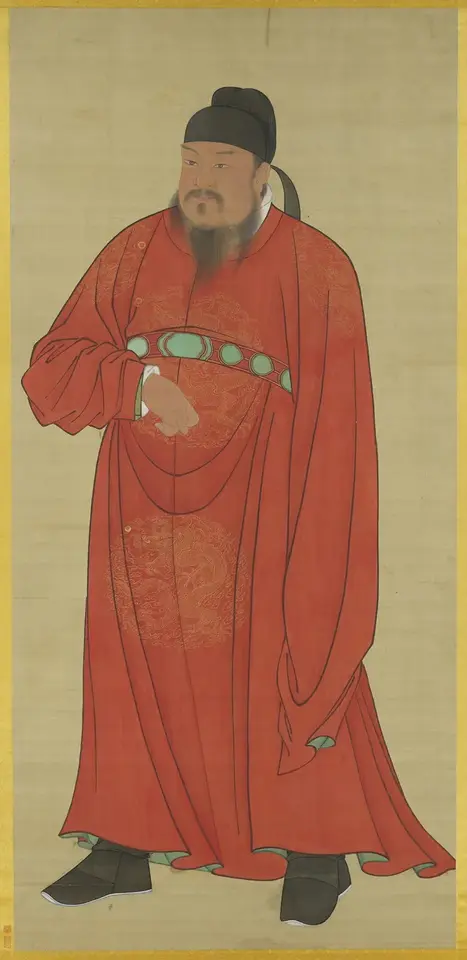
The Jinyang Uprising (晋阳起兵), also known as the Taiyuan Uprising, occurred in the fifth month of 617 CE (the thirteenth year of the Daye era), when the Sui Viceroy of Taiyuan and Duke of Tang, Li Yuan, alongside his second son Li Shimin, launched an armed rebellion in Jinyang (modern Taiyuan, Shanxi) to capture the imperial capital Chang'an and establish the Tang Dynasty. In the twilight of Emperor Yang's reign, ruinous campaigns against Goguryeo and massive canal constructions exhausted civilian life, provoking nationwide peasant wars led by the Wagang Army and Dou Jiande. Stationed at the northern fortress of Jinyang with abundant military stores, Li Yuan faced execution when border rebel Liu Wuzhou captured imperial palaces. Pressed by Li Shimin, magistrate Liu Wenjing, and palace intendant Pei Ji, Li Yuan orchestrated a preemptive coup on June 23, 617 CE, executing deputy viceroys Wang Wei and Gao Junya. Li Yuan distributed palace granaries to raise thirty thousand soldiers, allied with Shibi Khagan of the Eastern Turks to secure his rear, and marched south. Overcoming autumnal downpours, the army crushed Sui general Song Laosheng at Huoyi, crossed the Yellow River, and stormed Daxing (Chang'an) in November. Li Yuan installed Yang You as a puppet sovereign before formally ascending the imperial throne in June 618 CE following Emperor Yang's death in Jiangdu, inaugurating the glorious Tang Dynasty.
Emperor Yang flees to Jiangdu, stationing Li Yuan in Taiyuan with deputies Wang and Gao
Liu Wuzhou revolts in Mayi, prompting Emperor Yang to order Li Yuan's arrest and execution
Li Yuan executes Wang Wei and Gao Junya for treason, seizing total military control over Taiyuan
Pei Ji disburses palace reserves to recruit thirty thousand troops; the Generalissimo Command is founded
Liu Wenjing secures a non-aggression pact with Shibi Khagan, enlisting two thousand Turkic cavalry
Li Yuan performs sacrifices and leads thirty thousand soldiers out of Jinyang toward Guanzhong
Li Shimin outflanks the enemy in fierce fighting, slaying Song Laosheng and securing the pass
The army crosses at Longmen, joining Princess Pingyang's Army of the Lady to swell past 200,000
Tang forces storm Daxing (Chang'an), enforcing strict civilian discipline and securing Guanzhong
Li Yuan installs Yang You as Emperor Gong, assuming supreme authority as Prime Minister
Following Emperor Yang's assassination, Li Yuan ascends the throne in Chang'an, founding the Tang
Ascending the imperial throne, Emperor Yang (Yang Guang) pursued relentless aggrandizement, mobilizing millions of civilian laborers to construct the Grand Canal and erect luxurious palaces in eastern Luoyang. Concurrently, he mounted three massive military expeditions against Goguryeo in Manchuria and northern Korea. The unbearable burden of logistical transport and military drafts caused agricultural collapse across northern China, driving the populace into starvation.
In 611 CE, Wang Bo initiated the first popular uprising in Shandong, calling himself the Knowing Leader. Soon, Zhai Rang and Li Mi organized the formidable Wagang Army, capturing the Luokou state granaries to feed starving peasants. Dou Jiande established the Daxia regime in Hebei, while Du Fuwei overran the Yangtze and Huai river valleys. Local commanderies dissolved into autonomous factions as imperial administrative cohesion disintegrated across the realm.
Taiyuan (Jinyang) had long been revered as the paramount defensive bastion of northern China, functioning as the geopolitical bulwark defending the Central Plains against nomadic steppe confederations. Since the founding of the Sui Dynasty, extensive provisions and weaponry had been stockpiled in Jinyang, providing grain reserves sufficient to sustain operations for a decade. In 615 CE, when Emperor Yang was besieged by three hundred thousand Turkic horsemen at Yanmen, Li Yuan successfully coordinated relief operations, earning appointment as Pacification Commissioner of Shanxi and Hedong.
In 616 CE, perturbed by widespread revolts and prophetic rhymes foretelling that an emperor surnamed Li would supplant the Sui, Emperor Yang evacuated to Jiangdu in southern China, appointing Li Yuan as Viceroy of Taiyuan. To counterbalance Li Yuan, Emperor Yang dispatched trusted officers Wang Wei and Gao Junya as deputy viceroys to closely monitor his conduct. Aware of imperial paranoia, Li Yuan deliberately indulged in heavy drinking and accepted bribes, feigning complacency and a complete lack of ambition to evade political elimination.
While executing suppression campaigns against local rebels, Li Yuan and his ambitious second son Li Shimin recognized the imminent collapse of the dynasty and actively expanded their private network of retainers. Endowed with martial vigor and strategic foresight, Li Shimin distributed financial relief among local gentry and welcomed warriors, forming strong bonds with local commandery elites.
Magistrate Liu Wenjing and palace overseer Pei Ji were Li Shimin's most trusted confidants. Liu Wenjing analyzed the geopolitical landscape, demonstrating that whoever controlled Jinyang could rapidly seize the Guanzhong basin to dominate the empire. Pei Ji, who oversaw Emperor Yang's imperial palace in Jinyang, secretly introduced imperial palace maidens to Li Yuan during a private banquet. When Li Yuan awoke, Pei Ji revealed the act, warning that consorting with imperial concubines was punishable by dynastic extermination, urging him to declare an open uprising to transform peril into sovereign authority.
In March 617 CE, garrison officer Liu Wuzhou launched a mutiny in Mayi, executing Governor Wang Rengong and declaring himself the Dingyang Emperor. Advancing southward, Liu Wuzhou overran Loufan, sacked the imperial Fenyang Palace, and offered captured palace women to Shibi Khagan to enlist Turkic cavalry.
Unable to contain the invasion, Li Yuan was held personally accountable for the desecration of the imperial palace. Emperor Yang issued severe decrees from Jiangdu, commanding that Li Yuan be arrested and transported in chains for judicial execution. Confronting mortal danger, Li Shimin and Pei Ji pressed Li Yuan: "The sovereign is deranged and the empire is fractured; to delay now is to court destruction!" Convinced that passivity ensured death, Li Yuan resolved to launch the uprising.
In the fifth month of 617 CE, Li Yuan invoked the pretext of border defense against Liu Wuzhou and the Turks to instruct Li Shimin and Liu Wenjing to recruit soldiers across Taiyuan, amassing over ten thousand recruits within days. Alarmed by this unauthorized mobilization, deputy viceroys Wang Wei and Gao Junya suspected treason and conspired to assassinate Li Yuan during a state rain prayer at the Jin Temple on June 23.
Informed of the conspiracy by trusted informants, Li Yuan executed a preemptive strike. During a morning administrative conference in the viceregal court, Liu Wenjing presented military officer Liu Zhenghui, who publicly submitted an indictment charging Wang Wei and Gao Junya with colluding with the Turks to betray Taiyuan. As the deputies shouted in protest, concealed guards overwhelmed and arrested them. Two days later, when a Turkic raiding party approached Jinyang's northern gates, Li Yuan presented this coincidence as irrefutable proof of their treason, publicly executing Wang Wei and Gao Junya in the marketplace, consolidating uncompromised executive control over Taiyuan.
With the deputies eliminated, Li Yuan formally commenced the insurrection. Directed by Pei Ji, the administration opened all imperial granaries and armories within Jinyang, distributing grain, silks, and fine weapons among recruits and destitute civilians. Thousands of veteran soldiers and local gentry rushed to enlist, swelling the force to over thirty thousand troops.
Li Yuan established the Generalissimo Command, appointing himself Supreme General. Pei Ji was appointed Chief Administrator and Liu Wenjing as Military Advisor, while Wen Daya and Tang Jian managed state registers. Li Yuan structured his army into three operational divisions: his eldest son Li Jiancheng was named Left Vanguard Commander and Duke of Longxi; his second son Li Shimin was named Right Vanguard Commander and Duke of Dunhuang; while his fourth son Li Yuanji remained as Garrison General to safeguard the Jinyang citadel. The insurgent leadership promulgated strict civilian protections, strictly forbidding looting.
The primary geopolitical obstacle confronting the fledgling movement was the threat posed by Shibi Khagan of the Eastern Turks and his regional ally Liu Wuzhou to the north. A southward expedition into Guanzhong would leave Taiyuan completely vulnerable to a devastating rear assault.
To eliminate this vulnerability, Li Yuan dispatched Liu Wenjing on an accredited diplomatic mission to Shibi Khagan's steppe court. Adopting pragmatic humility, Li Yuan addressed the khagan as an honored ally, declaring: "We march south to restore order to the empire; territory shall belong to the Tang, while all gold, silk, and captives shall be yielded to the khagan." Delighted by these terms, Shibi Khagan recognized Li Yuan's status and dispatched two thousand elite cavalry alongside a thousand fine horses to support the expedition. This astute diplomacy secured Li Yuan's northern flank.
On August 10, 617 CE, Li Yuan performed solemn sacrifices to Heaven and ancestral spirits, raising the standard of restoring dynastic rectitude and marching thirty thousand soldiers southwestward from Jinyang. The army swiftly secured Xihe, advancing toward the mountain fortress of Huoyi (modern Huozhou, Shanxi).
Huoyi guarded the narrow mountain corridors leading into southern Shanxi, defended by veteran Sui commander Song Laosheng with twenty thousand elite imperial soldiers. Heavy autumnal rains fell continuously for twenty days, flooding mountain roads and severing supply routes. Rumors spread that Liu Wuzhou was attacking Taiyuan, leading Pei Ji and senior generals to advise an immediate withdrawal back to Jinyang. Li Shimin and Li Jiancheng vehemently objected; weeping before his father's tent, Li Shimin argued: "We took up arms to save the realm; to retreat now will shatter morale and doom our cause!" Persuaded, Li Yuan ordered an aggressive offensive.
On September 8, the rains ceased. Li Yuan deployed before Huoyi, while Li Shimin and Li Jiancheng led light cavalry to taunt the garrison at the eastern gates. Provoked into reckless combat, Song Laosheng deployed his entire force outside the walls. Li Yuan staged a tactical retreat, drawing the enemy into open ground, whereupon Li Shimin led elite cavalry charging from the southern hills to sever the retreat route, shouting that Song Laosheng had fallen. The Sui battle lines collapsed into panic. Attempting to scramble into the gate, Song Laosheng was pulled from the moat and executed by Tang soldiers. The triumph at Huoyi demolished the main Sui field army in Shanxi, clearing the highway into Guanzhong.
Following the victory at Huoyi, the Tang columns advanced through Linfen and Jiangjun. In October, the army reached Longmen along the Yellow River. Across the river, civilian populations were eager for deliverance. Li Yuan's third daughter, Princess Pingyang, had mobilized tens of thousands of armed volunteers across Huxian, organizing the legendary Army of the Lady, while his cousin Li Shentong raised troops in Lantian.
Li Yuan crossed the Yellow River at Longmen, occupying Fengyi without resistance. Regional commanderies and rebel bands submitted en masse, expanding Tang forces to over two hundred thousand soldiers. Li Yuan dispatched Li Shimin to pacify the northern Wei River plains and positioned Li Jiancheng to guard Tongguan against potential relief columns from Luoyang. In November, Tang forces surrounded Daxing (Chang'an). On December 12, 617 CE, Tang shock troops scaled the walls, capturing the capital with minimal civilian disturbance, while imperial commander Qutu Tong subsequently surrendered.
On December 18, 617 CE, Li Yuan entered the imperial Daxing Palace. He enforced twelve concise legal ordinances, abolished oppressive Sui taxes, and prohibited plunder, winning the deep allegiance of the Guanzhong population.
Operating with calculated constitutional restraint, Li Yuan did not immediately declare himself emperor. Instead, he elevated the thirteen-year-old Prince of Dai, Yang You (Emperor Gong of Sui), as emperor, while according Emperor Yang the honorary title of Retired Emperor. The new sovereign appointed Li Yuan as Grand Chancellor, Prime Minister, and King of Tang. In the spring of 618 CE, news arrived that Emperor Yang had been assassinated by Yuwen Huaji during a military mutiny in Jiangdu. On June 18, 618 CE, Emperor Gong formally abdicated in favor of Li Yuan. Sima Yan ascended the throne in Chang'an, founding the Tang Dynasty and inaugurating the Wude era, establishing the glorious imperial dynasty that would endure for nearly three centuries.
Spanning a mere six months from the purge in Jinyang to the occupation of Chang'an, the Jinyang Uprising stands as an operational masterpiece. With an initial force of thirty thousand men, Li Yuan shattered the main Sui armies in Shanxi, crossed the Yellow River, and amassed over two hundred thousand soldiers. This lightning campaign placed the ancient imperial capital, its palace archives, and the fertile agricultural base of Guanzhong firmly into Tang possession without catastrophic destruction.
Geopolitically, securing the natural ramparts of Guanzhong provided the Tang with an unassailable strategic sanctuary, replicating the historic base from which the Qin and Han had unified China. Insulated from the chaotic warfare consuming the eastern plains, Li Yuan mobilized the immense agrarian and demographic resources of the Wei River valley to defeat rival contenders including Wang Shichong, Dou Jiande, and Xue Rengao. Historically, the uprising terminated late Sui fragmentation, inaugurating the nearly three-century reign of the Tang Dynasty.