Hundred Days' Reform
Reformers attempt to abolish eight-legged essays; conservative coup restores the classical system.
Qing Dynasty (清朝) · HISTORICAL EVENT
科举制废除
The Abolition of the Imperial Examination System (科举制废除) was a transformative political and cultural watershed in modern Chinese history. Established during the Sui Dynasty and spanning over 1,300 years, the imperial examination (keju) system served as the supreme avenue for bureaucratic recruitment and social mobility in imperial China. However, amidst catastrophic foreign incursions and the signing of the Boxer Protocol, traditional literary…
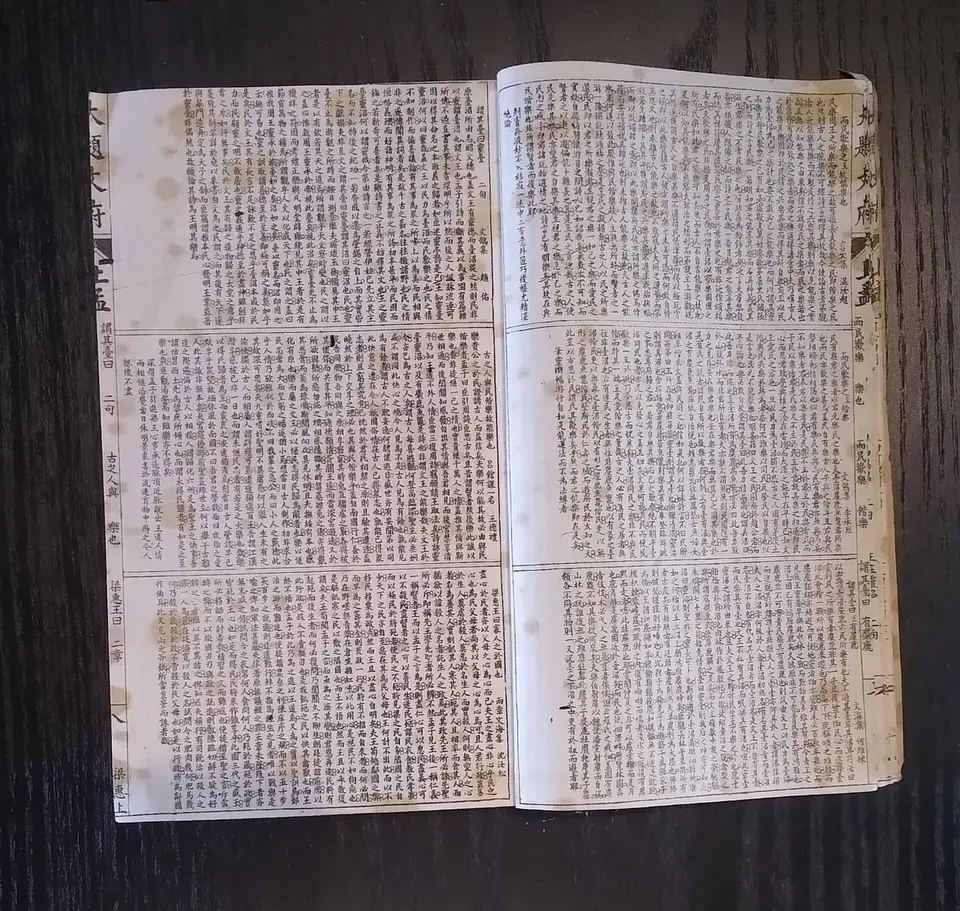
The Abolition of the Imperial Examination System (科举制废除) was a transformative political and cultural watershed in modern Chinese history. Established during the Sui Dynasty and spanning over 1,300 years, the imperial examination (keju) system served as the supreme avenue for bureaucratic recruitment and social mobility in imperial China. However, amidst catastrophic foreign incursions and the signing of the Boxer Protocol, traditional literary examinations proved utterly inadequate for cultivating modern administrative, scientific, and military personnel. Leading provincial viceroys Yuan Shikai and Zhang Zhidong petitioned the throne that modern schools could never flourish while the civil examinations offered an alternative route to office. On September 2, 1905, Empress Dowager Cixi and Emperor Guangxu promulgated an imperial edict terminating all provincial and metropolitan examinations beginning in 1906, dismantling the traditional Confucian gentry order and clearing the path for modern Chinese educational and revolutionary developments.
Reformers attempt to abolish eight-legged essays; conservative coup restores the classical system.
Imperial edict replaces eight-legged essays with essays on Chinese politics and international statecraft.
Zhang Zhidong and Zhang Baixi petition to reduce examination quotas by one-third every three years over a decade.
Qing court conducts its final metropolitan palace examination; Liu Chunlin becomes China's last imperial valedictorian (zhuangyuan).
Yuan Shikai and Zhang Zhidong lead regional viceroys in submitting the memorial urging immediate abolition.
Emperor Guangxu issues the imperial edict permanently abolishing the imperial examination system nationwide.
Imperial court dissolves traditional educational bureaus and establishes the modern Ministry of Education (Xuebu).
Originating during the reign of Emperor Yang of Sui (around 605 CE), the imperial examination system evolved across the Tang, Song, Ming, and Qing dynasties into an elaborate institutional mechanism for state selection. By anchoring state recruitment to competitive examinations rather than hereditary aristocratic birth, the system broadened imperial legitimacy and ensured social cohesion.
However, during the Ming and Qing eras, the examinations became rigidified. Curriculum was restricted to orthodox Neo-Confucian commentaries on the Four Books and Five Classics, evaluated through the formulaic structure of the eight-legged essay (baguwen). Candidates spent decades memorizing classical texts, remaining ignorant of world geography, natural science, modern military statecraft, and industrial commerce.
Following China's defeat in the First Sino-Japanese War (1894–1895), progressive intellectuals recognized that traditional examinations crippled national defense. Although the Hundred Days' Reform of 1898 attempted to replace eight-legged essays with practical policy essays, the reform was aborted by Empress Dowager Cixi's coup.
In 1900, the Boxer Rebellion culminated in the occupation of Beijing by the Eight-Nation Alliance. Under the punitive Boxer Protocol of 1901, foreign powers forced the Qing court to suspend civil service examinations for five years across dozens of northern cities as a deliberate humiliation.
Confronted with imminent dynastic collapse, Empress Dowager Cixi initiated the Late Qing New Policies (Xinzheng) from her wartime refuge in Xi'an. High officials acknowledged that military strengthening and modern industrialization required establishing modern elementary, secondary, and tertiary schools (xuetang). Yet so long as traditional examination degrees remained the sole recognized path to imperial office, talented youths clung to classical memorization, leaving modern academies under-enrolled and neglected.
In July 1901, Viceroy Liu Kunyi of Liangjiang and Viceroy Zhang Zhidong of Huguang submitted the celebrated Joint Memorials on Reform from Jiangnan and Hubei. They urged replacing the eight-legged essay with essays on Chinese political history and practical governance while establishing modern school systems nationwide.
On August 29, 1901, the Qing court issued an imperial edict abolishing the eight-legged essay for all provincial and metropolitan examinations beginning in 1902. Examinations were reorganized into three sessions: the first testing Chinese history and political theory, the second testing international law and applied sciences, and the third evaluating classical interpretations through open essay formats. In 1903, the court introduced a special examination in economics (Jingji Teke) to recruit men of practical talent.
However, altering examination formats failed to resolve the systemic contradiction between traditional examinations and modern schools. Candidates continued to view the civil service exams as the sole legitimate avenue to power, while graduates of modern academies received no formal official ranking, leaving educational modernizers in despair.
In early 1903, the throne directed Minister of Educational Affairs Zhang Baixi and Rongqing, together with Zhang Zhidong, to compile a comprehensive modern educational statute: the Guimao Educational System (Zouding Xuetang Zhangcheng). Recognizing the conflict between schools and examinations, yet fearing popular unrest among millions of classical literati, Zhang Zhidong proposed a gradual compromise.
On March 13, 1903, Zhang Zhidong and Zhang Baixi memorialized to reduce regional examination quotas by one-third in each triennial cycle beginning with the 1904 Jiachen examinations, phasing out the system over ten years while reallocating quotas to modern school graduates.
Simultaneously, the Guimao System established a comprehensive tiered school hierarchy spanning kindergarten through university, deliberately incorporating classical Confucian morals alongside modern mathematics, sciences, and foreign languages. Nevertheless, this dual-track structure sustained confusion: ambitious youths treated modern schools as secondary steppingstones while focusing primary energy on traditional civil examinations.
In early 1904, the Russo-Japanese War erupted on Chinese soil in Manchuria. The decisive victory of modernizing Japan over the Russian Empire sent shockwaves through the Qing court.
Chinese intellectuals and provincial administrators drew a stark conclusion: Japan's ascent proved that national survival in the modern era depended on universal modern education rather than classical memorization. Domestic public opinion rallied around the slogan: "To strengthen the nation, we must nurture talent; to nurture talent, we must build schools; to build schools, we must abolish the imperial examinations!"
Viceroy Yuan Shikai of Zhili, overseeing modern infantry divisions and technical academies in Baoding and Tianjin, felt the bottleneck acutely. Modern armies required thousands of engineers, physicians, and staff officers trained in Western science, but talented students continued cramming classical commentaries. Yuan Shikai telegraphed Zhang Zhidong: "If we wait ten years to extinguish examination quotas, the nation will be dismembered before the reform is complete! We must strike at the root and petition for an immediate, total cessation!" Zhang Zhidong agreed without reservation.
In August 1905, Yuan Shikai and Zhang Zhidong drafted the momentous Memorial Urging the Immediate Cessation of the Imperial Examinations and Promotion of Schools, co-signed by leading provincial governors including Zhou Fu, Cen Chunxuan, Duanfang, and Pang Hongshu.
The memorial presented an uncompromising ultimatum: "So long as the examinations remain unabolished, students will cling to hopes of advancement, and modern schools will never flourish! Surrounded by aggressive foreign powers, national peril is at our doorstep. To save the realm from destruction, we must establish schools; to establish schools, we must immediately halt the examinations! If we hesitate for another decade, China will be partitioned before the transition concludes."
To preempt conservative backlash and pacify traditional literati, the viceroys incorporated protective transitional policies: First, existing holders of imperial degrees (jinshi, juren, shengyuan) would preserve their social status and remain eligible for administrative appointments; Second, public revenues, ancestral lands, and local endowments traditionally earmarked for civil examinations were redirected toward funding modern schools; Third, graduates of certified modern schools would receive standardized national examinations conferring equivalent civil service ranks, creating a direct path from university graduation into state bureaucracy.
The joint memorial alarmed conservative factions in the Grand Council, but under the weight of unanimous backing from powerful regional governors, resistance crumbled. Empress Dowager Cixi summoned her grand councilors to the Summer Palace and approved the memorial.
On September 2, 1905 (the fourth day of the eighth month of the thirty-first year of Guangxu), Emperor Guangxu formally promulgated the historic edict:
"We decree: Good governance and national prosperity depend primarily upon talent; the flourishing of talent depends upon establishing schools. In these days of national peril, the court must boldly cast aside outdated conventions. The memorial of Yuan Shikai and his colleagues arguing that promoting schools requires the cessation of examinations is entirely correct. Beginning with the Bingwu cycle (1906), all metropolitan and provincial examinations are hereby permanently abolished, and all annual licentiate examinations across the provinces shall cease immediately! Existing degree holders shall be appointed according to their qualifications. Provincial governors and education commissioners are commanded to diligently establish schools, so that abundant talent may arise to sustain the imperial shrines and protect the realm!"
This brief decree concluded the 1,300-year history of the imperial examination system. Traditional academies and private tutorial halls (sishu) were converted into primary and secondary schools, and classical examination manuals were abandoned.
Following the edict, the Qing government restructured its central educational apparatus.
In December 1905, the ancient Ministry of Rites and Imperial Academy (Guozijian) were stripped of educational authority. A new cabinet-level Ministry of Education (Xuebu) was created under Minister Rongqing to standardize modern curricula, approve textbooks, and administer school certifications nationwide.
In provincial administrations, traditional educational commissioners were transformed into modern Commissioners of Education (Tixueshi). Within two years, modern schools proliferated to over 37,000 institutions enrolling more than one million students studying mathematics, physical sciences, foreign languages, world history, and physical education, completing China's transition to a modern educational structure.
The edict terminated the classical examination pipeline. Across China, classical academies converted into modern primary and middle schools, modern textbooks proliferated, and young scholars transitioned from memorizing Confucian commentaries to studying mathematics, chemistry, and world geography.
First, it caused a catastrophic sociopolitical rupture by severing the institutional alliance between Confucian scholar-gentry and imperial autocracy. Deprived of bureaucratic advancement through classical study, the gentry class dissolved, stripping the Qing throne of its traditional grassroots rural support. Second, modern schools and overseas study programs in Japan and the West nurtured a radicalized intellectual class. Exposed to modern republicanism and nationalism, modern students became the revolutionary vanguard that toppled the Qing Dynasty in the 1911 Xinhai Revolution. Third, the abolition emancipated Chinese intellectual culture from the constraints of eight-legged essays, laying the educational and cultural foundations for the New Culture Movement of 1919 and modern Chinese scientific and academic disciplines.
Modern translator Yan Fu observed: "When the examinations are abolished, the people of the realm will finally recognize the precious value of specialized modern science, and the vital arteries of China will begin to pulse with life!"
Reformer Liang Qichao reflected in An Intellectual History of the Qing Dynasty: "The termination of this 1,300-year-old institution shook the minds of society far more profoundly than the coup of 1898. From that moment, the thoughts of Chinese scholars departed from ancient ruts, sounding the prelude to revolution."
Historian Luo Rongqu concluded in On Modernization: "The abolition of the imperial examination system was an event of paramount significance in China's modernization. It was not merely an educational reform, but a monumental tectonic shift in social structure that fatally undermined the legitimacy of the imperial state."