Southward Flight
Ge Hong migrates south following the fall of the Western Jin, witnessing catastrophic epidemics and medical shortages, inspiring his dream of a portable folk emergency manual.
Eastern Jin Dynasty (东晋) · HISTORICAL EVENT
《肘后备急方》
The compilation of the Handbook of Prescriptions for Emergency (Zhouhou Beijifang) ((肘后备急方)), originally titled Zhouhou Jiuzufang (Handy Prescriptions for Emergencies), refers to the creation of a landmark clinical emergency manual by the eminent Eastern Jin physician and alchemist Ge Hong between 317 and 343 CE (from the first year of the Jianwu era to the first year of the Jianyuan era) during his seclusion at Mount Luofu and Danyang. Amid…
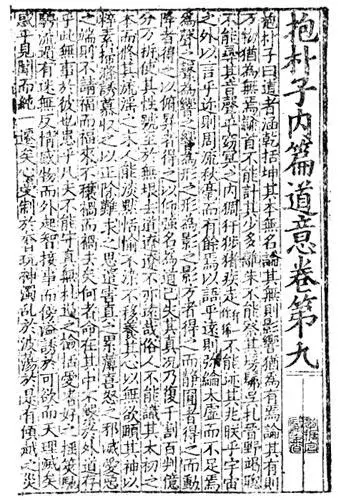
The compilation of the Handbook of Prescriptions for Emergency (Zhouhou Beijifang) ((肘后备急方)), originally titled Zhouhou Jiuzufang (Handy Prescriptions for Emergencies), refers to the creation of a landmark clinical emergency manual by the eminent Eastern Jin physician and alchemist Ge Hong between 317 and 343 CE (from the first year of the Jianwu era to the first year of the Jianyuan era) during his seclusion at Mount Luofu and Danyang. Amid widespread war and virulent epidemics, commoners and travelers frequently perished due to lack of medical aid. Recognizing that ancient medical treatises were bulky and prescribed unobtainable luxury ingredients, Ge Hong condensed his 100-volume encyclopedia Jin Gui Yu Han Fang into a compact, easily portable handbook containing affordable, accessible remedies and moxibustion techniques that could be carried in one's sleeve or behind the elbow (zhouhou). The treatise was later supplemented by Tao Hongjing of the Southern Liang with 101 formulas and retitled Buque Zhouhou Baiyifang, and subsequently expanded during the Jin Dynasty by Yang Yongdao, resulting in the extant eight-volume, seventy-three chapter edition known as Zhouhou Beijifang. The work contains China's earliest clinical accounts of smallpox, scrub typhus, rabies, and beriberi, pioneering the application of rabid dog brain tissue to wounds as an early immunization concept, and establishing the cold extraction of artemisia juice for treating malaria, an observation that directly inspired modern artemisinin therapies.
Ge Hong migrates south following the fall of the Western Jin, witnessing catastrophic epidemics and medical shortages, inspiring his dream of a portable folk emergency manual.
Ge Hong systematically reviews his 100-volume Jin Gui Yu Han Fang, stripping away expensive ingredients and complex preparations to isolate practical remedies.
Residing at Mount Luofu, Ge Hong completes the three-volume Zhouhou Jiuzufang, documenting cold-soaked artemisia for malaria, rabid dog brain application, and artificial respiration.
Ge Hong passes away at Mount Luofu; his Zhouhou Jiuzufang circulates widely among southern scholars and commoners in manuscript copies.
Tao Hongjing collates Ge Hong's text, adding 101 clinically proven emergency remedies to produce Buque Zhouhou Baiyifang.
Jin Dynasty physician Yang Yongdao appends remedies from Zhenglei Bencao, establishing the definitive eight-volume, seventy-three chapter Zhouhou Beijifang.
Chinese pharmacologist Tu Youyou draws direct inspiration from Ge Hong's cold extraction of artemisia juice, successfully isolating artemisinin and saving millions of lives.
The Wei, Jin, and Northern and Southern Dynasties constituted an era of profound political instability and persistent warfare. The collapse of the Western Jin Dynasty following the War of the Eight Princes and the Disaster of Yongjia devastated the Central Plains, forcing mass southward migrations of northern aristocratic clans and refugees. Following the establishment of the Eastern Jin regime south of the Yangtze River, the warm, humid climate and dense southern forests nurtured virulent miasmas, which, combined with the squalor of wartime displacement, caused catastrophic recurring epidemics.
Under these conditions, public health resources were virtually nonexistent. Official medical bureaus served only the imperial court and high aristocratic lineages, while vast rural communities across Southern China remained completely devoid of trained physicians and pharmacies. When commoners were struck by sudden acute diseases or traumatic injuries, poverty and isolation left them helpless.
In the clinical practice of Ge Hong's era, traditional medical texts exhibited severe practical limitations. Classical canons such as the Huangdi Neijing, Nan Jing, and Zhang Zhongjing's Shanghan Zabing Lun contained profound theoretical doctrines, but their bulky multi-volume physical formats made them impossible to consult during travel or sudden emergencies.
Furthermore, elite Han and Jin medical traditions routinely prescribed rare and costly ingredients, such as ginseng, agarwood, bezoar, and deer antler, accompanied by complex, multi-hour decoction protocols. For impoverished peasants, soldiers on active campaign, or travelers in mountain wildernesses, acquiring such luxury drugs was financially impossible, and spending hours decocting remedies was fatal during acute seizures. This harsh reality left commoners dying while waiting for unobtainable remedies.
Ge Hong (283–343 CE), courtesy name Zhichuan and self-styled Master Baopu (Baopuzi), was a native of Jurong in Danyang (modern Jurong, Jiangsu Province). Descended from a prominent southern lineage, he mastered classical literature, Daoist alchemy, and traditional pharmacology. Throughout his medical practice in Jiangnan and Mount Luofu, he witnessed firsthand the suffering of impoverished peasants.
Ge Hong had previously devoted over a decade to compiling the monumental 100-volume medical compendium Jin Gui Yu Han Fang (Prescriptions from the Golden Casket and Jade Box). Yet this massive work required several oxcarts to transport, rendering it useless during sudden roadside emergencies. Driven by deep humanitarian compassion, Ge Hong resolved to break away from aristocratic medical conventions, selecting the most effective, rapidly prepared, and inexpensive single remedies from his hundred-volume collection to fashion a concise emergency manual that anyone could tie behind their elbow for instant consultation.
In the early years of the Eastern Jin, after enduring military campaigns and flight through Jiangnan and Lingnan, Ge Hong witnessed the terrible devastation wrought by warfare and pestilence. While practicing medicine in his native Jurong and around Mount Luofu in Guangdong, he saw countless peasants, traveling merchants, and soldiers perish by roadsides from sudden heart failure, snakebites, cholera, or acute malignant carbuncles.
Through careful clinical observation, Ge Hong recognized that the essence of emergency medicine lay in speed and local availability. Traditional formula books prescribed dozens of rare herbs that could never be found in remote hamlets; even when procurable, their exorbitant prices were far beyond the reach of the poor. Many patients succumbed while their families desperately searched for unavailable drugs.
Consequently, Ge Hong established clear criteria for his emergency handbook: formulas had to be simple, ingredients readily accessible, costs negligible, and preparation instantaneous. Remedies drew extensively upon ubiquitous wild weeds, kitchen staples like salt, vinegar, scallions, and garlic, domestic eggs and poultry, and even chimney soot and fresh well water, ensuring that anyone facing a crisis could obtain ingredients on the spot.
This populist medical philosophy marked a revolutionary departure from elite traditions. Ge Hong dedicated himself to creating an emergency manual that every household could possess and every commoner could administer, extending medical compassion into the humblest huts.
To realize this humanitarian vision, Ge Hong undertook an exhaustive condensation of his earlier 100-volume encyclopedia Jin Gui Yu Han Fang. While comprehensive across internal medicine, surgery, gynecology, and pediatrics, the Yu Han Fang was far too cumbersome for field use.
Working at his desk, Ge Hong scrutinized thousands of classical formulas with clinical discernment. He excised all complex prescriptions requiring more than ten ingredients, all formulas utilizing pearls, amber, or other luxury substances, and all procedures requiring prolonged simmering. Instead, he prioritized single herbs and proven folk formulas that required only crushing for juice or warming in wine.
Simultaneously, Ge Hong emphasized simple moxibustion. While acupuncture required thorough knowledge of meridians and professional bronze needles, moxibustion was safe and simple: a pinch of moxa wool or dried mugwort leaves rolled into cones and burned upon specific acupoints could revive collapsed patients and restore vital energy. Ge Hong selected dozens of memorable moxibustion points, allowing ordinary people to administer treatment using simple diagrams.
After years of meticulous refinement, Ge Hong condensed the 100-volume compendium into a three-volume manual. Because of its light and compact format, travelers and peasants could roll it into their sleeves or fasten it behind their elbows, prompting Ge Hong to name it Zhouhou Jiuzufang (Handy Prescriptions for Sudden Emergencies). Terse and incisive, it became China's first true pocket emergency handbook.
Zhouhou Jiuzufang exhibited extraordinary technical ingenuity in managing acute, life-threatening crises. The treatise commenced with chapters on sudden death (jiuzusi), covering syncope, shock, coma, and sudden cardiac or respiratory arrest, detailing effective onsite resuscitation protocols.
For patients who collapsed unconscious with faint respiration, Ge Hong pioneered the "insufflation into the ear" technique. He instructed rescuers to insert a narrow bamboo tube into the patient's ear canal and blow air vigorously, alternating between ears to stimulate nerve pathways and reopen the airway; he also taught rescuers to insert scallion tips into nostrils to induce sneezing, or firmly pinch the Renzhong and Chengjiang acupoints, closely paralleling modern airway clearance and sensory revival methods.
For hanging victims suffering asphyxial suspended animation, Ge Hong recorded the earliest systematic artificial respiration protocol in world medical history. He cautioned rescuers against severing the rope and allowing the victim to fall; instead, they were to gently lower the body, untie the noose, kneel beside the chest, and rhythmically press the chest and abdomen in alternating flexion and extension to restart pulmonary breathing, while massaging the limbs to restore body warmth. This resuscitation procedure preceded comparable European protocols by 1,400 years.
In external therapeutics and simple moxibustion, Ge Hong invented several indirect moxibustion and alternative instrument therapies. He documented the use of hollow bamboo tubes to draw out purulent toxins, pioneering Chinese suction cup therapy; for acute abdominal pain or cold collapse, he recommended applying hot salt pouches or burning moxa over ginger slices. These practical methods substantially enriched grassroots first-aid capabilities.
In febrile and virulent infectious diseases, Zhouhou Jiuzufang achieved monumental breakthroughs that led world medical science by centuries. Amid the frequent epidemics of the Eastern Jin, Ge Hong applied acute empirical observation to distinguish several acute contagious illnesses that had previously been conflated.
His most celebrated contribution was the treatment of malaria. Malaria was a lethal scourge in the river valleys of Southern China. In his chapter on treating alternating chills and fevers, Ge Hong penned the famous clinical formula: "Take a handful of artemisia, soak it in two sheng of water, wring out the juice, and drink it all." Ge Hong recognized that the active antimalarial components of fresh artemisia were sensitive to heat, inventing a cold-water extraction process. In 1969, this ancient passage inspired Chinese pharmacologist Tu Youyou to alter her laboratory extraction methods, successfully isolating artemisinin, saving millions of lives worldwide, and earning the Nobel Prize in Physiology or Medicine.
In smallpox diagnosis, Ge Hong provided the earliest definitive clinical description in world history. He noted that smallpox entered the Central Plains through troops returning from southern campaigns during the Han Dynasty, earning the folk name "captive sores" (luchuang); he accurately chronicled the clinical progression from high fever to eruptions on the head and body, the central umbilication of pustules, and crusting and peeling, presenting an epidemiological description that astonishes modern virologists.
Regarding parasitic and vector-borne diseases, Ge Hong revealed the transmission mechanism of scrub typhus (shashidu). He described the microscopic sand mites living in riverside grasses, explaining how their bites transmitted venom through the meridians to produce local black eschars, high fever, and lymphatic swelling, while suggesting wild boar fat as a preventive repellent. This observation anticipated Western identification of chigger mite vectors by 1,500 years.
In rabies treatment, Ge Hong introduced an astonishingly modern concept of active immunization. Facing a nearly 100% mortality rate from rabid dog bites, he proposed: "Kill the dog that bit the patient, extract its brain tissue, and apply it directly onto the wound." This therapy utilized the attenuated viral antigens present in the rabid dog's brain tissue to induce local antibody responses, recognized by international medical historians as the earliest primitive forerunner of rabies vaccination.
Following its completion, Zhouhou Jiuzufang circulated widely as handwritten manuscripts among Jiangnan Daoist physicians and southern villagers. Renowned for its rapid efficacy and negligible cost, it was treasured by generations of healers. However, through the turbulence of the Northern and Southern Dynasties, portions of Ge Hong's original draft suffered fragmentation.
During the Southern Qi and Liang dynasties, the preeminent Daoist physician Tao Hongjing, residing at Mount Mao, recognized the irreplaceable practical value of the manual. Using Ge Hong's three-volume draft as his ancestral core, Tao Hongjing incorporated 101 clinically proven formulas possessing the same virtues of simplicity and low cost, expanding the collection and retitling it Buque Zhouhou Baiyifang (Supplemented One-Hundred-and-One Handy Prescriptions). In his preface, Tao Hongjing lauded the work as an indispensable treasure for saving lives.
In the Tang Dynasty, the famous physician Sun Simiao drew extensively upon Ge Hong's emergency principles and single remedies in compiling Qianjin Yaofang and Qianjin Yifang; the imperial compendium Waitai Miyao likewise cited Ge Hong's formulas, embedding his emergency doctrines within orthodox Chinese medicine.
During the Song, Jin, and Yuan dynasties, the treatise underwent its final evolution. During the Jin Dynasty, physician Yang Yongdao, moved by the plight of wartime refugees, took the Southern Song woodblock edition of Tao Hongjing's recension and appended single proven remedies extracted from Tang Shenwei's Zhenglei Bencao at the end of each disease category, creating Fuguang Zhouhoufang.
Through successive refinements by master physicians across centuries, the treatise attained its definitive form in eight volumes and seventy-three chapters, universally known as Zhouhou Beijifang. Frequently reprinted throughout the Ming and Qing dynasties, it remains a cornerstone of clinical therapeutics, celebrated worldwide for its humanitarian spirit and scientific foresight.
The compilation of Zhouhou Beijifang formally established the disciplinary framework of clinical emergency medicine and portable medical manuals in ancient China. Structured into eight volumes and seventy-three chapters, the treatise encompasses thousands of practical formulas for managing sudden acute diseases, internal and external emergencies, infectious pestilences, poisonings, and animal bites.
By establishing the principles of "minimal ingredients, local availability, negligible cost, and immediate efficacy," the handbook revolutionized pharmaceutical practice, transforming medicine from an elite luxury into an accessible survival science for impoverished commoners and rural communities.
In clinical diagnostics and epidemiology, Zhouhou Beijifang established multiple historic firsts that led world civilization by centuries. Its documentation of the clinical progression of smallpox (luchuang) and the ecological characteristics of scrub typhus vectors (shashidu) preceded Western accounts by more than a millennium.
Its application of rabid dog brain tissue onto wounds pioneered the concept of active immunization, while its instructions for artificial respiration and chest compression for hanging victims preceded modern European guidelines by 1,400 years, standing as an enduring model of classical critical care medicine.
The clinical insights within Zhouhou Beijifang achieved modern medical relevance of global magnitude. Ge Hong's instruction to "take a handful of artemisia, soak it in two sheng of water, wring out the juice, and drink it all" dismantled the conventional assumption that medicinal herbs must be boiled in hot decoctions.
This ancient instruction guided Chinese researchers to utilize low-temperature ether extraction, leading to the successful isolation of artemisinin. The introduction of artemisinin transformed global malaria management, saving millions of lives across Asia, Africa, and Latin America, and representing traditional Chinese medicine's greatest modern contribution to world health.
Over centuries, Zhouhou Beijifang has garnered profound acclaim from dynastic physicians and modern international medical historians for its clinical efficacy and extraordinary scientific foresight.
Tao Hongjing observed in his preface to Buque Zhouhou Baiyifang: "The remedies gathered by Ge Hong are those that humble villagers and elderly countrywomen can easily procure; the ingredients consist of pigs, dogs, ducks, and common herbs readily found everywhere. When emergencies arise, they can be utilized instantly, truly serving as an indispensable lifeline for travelers and a supreme treasure for saving lives."
Jin Dynasty scholar Yang Yongdao wrote in his preface to Fuguang Zhouhoufang: "Master Ge Zhichuan of the Jin Dynasty gathered a hundred volumes of formulas named Yu Han; lamenting that their vast bulk made them impossible for travelers to carry, he extracted their essentials into the three-volume Zhouhou Jiuzufang, desiring that anywhere and anytime, people might be rescued from disaster. How vast was his humanitarian benevolence!"
Ming Dynasty medical authority Li Shizhen repeatedly praised the work in the Compendium of Materia Medica (Bencao Gangmu): "Ge Hong's Zhouhou Fang uses remedies that are simple, direct, and specifically tailored for critical emergencies; it is truly an arbiter of human life."
Nobel Laureate Tu Youyou reflected in her Nobel Lecture at the Karolinska Institute: "The discovery of artemisinin was directly inspired by the classical instruction in Eastern Jin Dynasty physician Ge Hong's Handbook of Prescriptions for Emergency: 'Take a handful of artemisia, soak it in two sheng of water, wring out the juice, and drink it all.' This is a true gift from traditional Chinese medicine to the world."