Nationwide Unification and Court Deliberation
Following the fall of Qi, Qin Shihuang unifies China and directs his court to deliberate an exalted imperial title.
Qin Dynasty (秦朝) · HISTORICAL EVENT
创立皇帝制度
The Establishment of the Imperial System (创立皇帝制度) was the momentous institutional transformation carried out in 221 BCE by Ying Zheng, the First Emperor of Qin (Qin Shihuang), establishing an absolute autocracy centered on the figure of the Emperor for the first time in Chinese history. In 221 BCE, upon extinguishing the state of Qi and unifying the realm, Qin Shihuang found the traditional Zhou title of King diminished by widespread misuse during the…
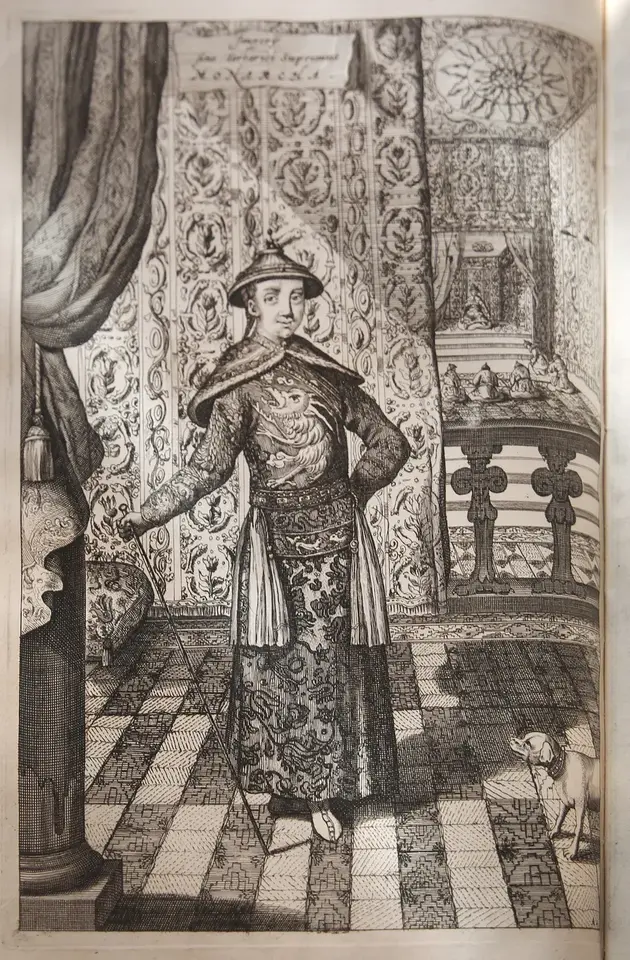
The Establishment of the Imperial System (创立皇帝制度) was the momentous institutional transformation carried out in 221 BCE by Ying Zheng, the First Emperor of Qin (Qin Shihuang), establishing an absolute autocracy centered on the figure of the Emperor for the first time in Chinese history. In 221 BCE, upon extinguishing the state of Qi and unifying the realm, Qin Shihuang found the traditional Zhou title of King diminished by widespread misuse during the Warring States period. He directed his court to deliberate an exalted supreme title. Chancellor Wang Wan, Imperial Censor Feng Jie, and Commandant of Justice Li Si examined ancient precedents and proposed combining the sacred titles of the Three Sovereigns and Five Emperors into the composite title Huangdi. Alongside this exalted title, Qin Shihuang instituted rigorous imperial protocols: the sovereign referred to himself exclusively as zhen, designated imperial orders as zhi and decrees as zhao, and reserved the jade seal (xi) solely for the throne. He abolished the ancient custom of posthumous titles (shifa) to prevent ministers from passing judgment on deceased rulers, styling himself the First Emperor (Shi Huangdi) with dynastic succession designed to endure for myriad generations. Supported by the Three Excellencies and Nine Ministers at the center and universal commanderies and counties across the realm, the imperial system established absolute monarchical supremacy, enduring as the fundamental constitution of imperial China until 1912.
Following the fall of Qi, Qin Shihuang unifies China and directs his court to deliberate an exalted imperial title.
Qin Shihuang combines the titles of the Three Sovereigns and Five Emperors into Huangdi, reserving zhen as the imperial self-designation.
Qin Shihuang condemns posthumous evaluations by ministers as disrespectful, styling himself the First Emperor with succession through myriad generations.
Rejecting Wang Wan's feudal proposal, the throne adopts Li Si's policy, dividing the empire into thirty-six centrally administered commanderies.
The court finalizes the Three Excellencies and Nine Ministers system, centralizing executive authority under the throne.
Qin Shihuang performs the imperial sacrifices on Mount Tai, erecting inscribed steles that link autocracy with the Mandate of Heaven.
Qin Shihuang dies at Shaqiu; Zhao Gao and Li Si alter the imperial will to install Huhai as the Second Emperor.
Han founder Liu Bang assumes the title of Huangdi, preserving the Qin imperial apparatus and establishing standard dynastic practice.
Puyi issues the abdication decree on February 12, terminating the 2,133-year-old Chinese imperial system.
The Warring States period represented a profound socioeconomic and political transformation in ancient Chinese history. The widespread adoption of iron agricultural implements and ox-drawn plowing dissolved the traditional well-field system, fostering private landownership and the rise of a new agrarian peasantry. The Western Zhou political architecture, anchored in patriarchal lineage feudalism (fengjian) and hereditary noble status, fractured under the strain of continuous interstate warfare.
Beginning with the reforms of Shang Yang, the state of Qin instituted systematic legalist measures: prioritizing agriculture, penalizing commercial speculation, rewarding military merit with aristocratic ranks, and establishing administrative commanderies. Between 230 and 221 BCE, King Ying Zheng orchestrated the systematic conquest of Han, Zhao, Wei, Chu, Yan, and Qi, terminating over five centuries of division and establishing China's first unified, centralized multi-ethnic empire.
Under the Western Zhou feudal order, the title of King (Wang) designated the Son of Heaven as the paramount sovereign of all under heaven, standing at the summit of the ritual hierarchy. However, as Zhou royal authority declined during the Spring and Autumn and Warring States eras, regional rulers across Chu, Qi, Wei, Qin, Zhao, Yan, and Han unilaterally assumed the title of King, followed even by rulers of lesser states like Zhongshan and Song. The royal title was utterly degraded.
Upon consolidating all territory within the four seas, retaining the title King of Qin was insufficient. It could neither convey the unprecedented achievement of extinguishing six rival states nor command unquestioned political legitimacy over conquered noble lineages. The founding of an expansive continental empire necessitated an entirely novel title that transcended all historical precedents and embodied supreme sacred power.
The conceptual architecture of the imperial system was rooted in Legalist political philosophy. Building upon the foundational theories of Shang Yang regarding administrative law (fa), Shen Buhai regarding statecraft (shu), and Shen Dao regarding sovereign authority (shi), the late Warring States thinker Han Feizi synthesized a comprehensive doctrine of autocratic monarchical centralization.
Han Feizi posited that affairs belong to the four quarters, but control rests with the center; the sage grasps the essential axis, and all under heaven conforms. He advocated concentrating all legislative, executive, judicial, and military authority within the person of the ruler. King Ying Zheng admired Han Feizi's treatises, declaring that he would die without regret if he could converse with the philosopher. Commandant of Justice Li Si, a fellow student of Han Feizi, systematically translated these Legalist concepts into the administrative reality of the Qin Empire.
In 221 BCE (the twenty-sixth year of King Ying Zheng), following the conquest of Qi, the King of Qin issued an imperial decree commanding his chancellor, imperial censor, high ministers, and court academicians to deliberate an elevated title. In his decree, Ying Zheng declared that he had raised righteous armies to punish tyrannical regimes, pacifying the realm, and that without revising the royal designation, his accomplishments could not be commemorated for posterity.
Chancellor Wang Wan, Imperial Censor Feng Jie, and Commandant of Justice Li Si conducted extensive antiquarian research and submitted a formal memorial: Ancient rulers commanded territories of barely a thousand li, surrounded by tributary domains where feudal lords paid homage at will beyond royal control. Today, Your Majesty has punished the violent and unified all within the seas into commanderies, where statutes are executed uniformly, surpassing the Five Emperors. We respectfully propose the title Supreme Sovereign (Taihuang), with imperial commands designated zhi, decrees designated zhao, and the monarch referring to himself as zhen.
Ying Zheng evaluated the ministers' proposal but rejected the compound Taihuang. He determined that while Huang possessed majesty, the virtues of the Five Emperors (Di) were equally essential. Seeking to unify both titles to demonstrate that his merits outshone both ancient categories of culture-heroes, Ying Zheng rendered his final decision: Remove Tai, retain Huang, and append the ancient title Di, adopting the designation Huangdi (Emperor).
The composite title Huangdi was thus inaugurated. Huang denoted supreme august majesty and divine radiance, while Di invoked the high god and celestial ruler of the cosmos. Synthesizing both designations into a single title conveyed that the sovereign possessed the virtues of the Three Sovereigns and the accomplishments of the Five Emperors, surrounding the mortal ruler with an aura of absolute divine legitimacy and cosmic authority.
Concurrently with establishing the imperial title, Qin Shihuang implemented a comprehensive system of exclusive political vocabulary and ceremonial protocols, strictly segregating the sovereign from all subjects:
First, the imperial self-designation zhen. In pre-Qin usage, zhen had been an ordinary first-person pronoun employed by aristocrats and commoners alike. Qin Shihuang reserved the term exclusively for the Emperor, making its unauthorized use a capital offense.
Second, the standardization of administrative edicts. Major policy pronouncements determining imperial governance were designated zhi (formulations), while specific executive directives were termed zhao (proclamations), imbuing royal commands with sacred authority.
Third, the monopoly over imperial seals (xi). In pre-Qin times, seals of all officials were referred to as xi. Qin Shihuang decreed that all private and official stamps be designated yin, reserving xi solely for the jade seals of the Son of Heaven. He directed Li Si to carve the legendary Heirloom Seal of the Realm from the Heshibi jade, inscribed in seal script with the phrase: Having Received the Mandate from Heaven, May the Sovereign Enjoy Longevity and Eternal Prosperity.
Following the designation of the imperial title, court ministers proposed establishing rules for posthumous names (shifa) in accordance with Zhou precedent, under which successors and ministers evaluated a deceased ruler's conduct to assign an honorific or critical title.
Qin Shihuang rejected the institution outright, declaring: This practice permits sons to evaluate their fathers and ministers to pass judgment upon their sovereigns; it is utterly unacceptable. Qin Shihuang abolished posthumous titles entirely, decreeing: Henceforth, posthumous names are abolished. I shall be the First Emperor (Shi Huangdi). Subsequent generations shall be numbered consecutively as Second Emperor, Third Emperor, and onward unto myriad generations, enduring without end. This established the principle of perpetual dynastic succession.
After adopting the imperial title, Chancellor Wang Wan and conservative grandees argued: The territories of Yan, Qi, and Chu are distant; unless princes are established there, these regions cannot be subdued. We request that royal sons be enfeoffed as kings. Most ministers supported the restoration of Western Zhou feudalism.
Commandant of Justice Li Si argued forcefully against the proposal: King Wen and King Wu of Zhou enfeoffed numerous sons and relatives, but over generations, their descendants grew estranged, attacking one another like deadly enemies while the Zhou sovereign was powerless to prevent conflict. Today, unified under Your Majesty's authority, all land has been divided into commanderies. Imperial sons and meritorious generals can be richly rewarded with tax revenues without giving them independent territorial realms. Dividing the realm into principalities will only breed rebellion. Qin Shihuang endorsed Li Si's counsel, abolishing feudalism nationwide and dividing the empire into thirty-six commanderies staffed by magistrates appointed directly by the throne.
To maintain administrative operations, Qin Shihuang established the central bureaucratic apparatus known as the Three Excellencies and Nine Ministers (San Gong Jiu Qing). Among the Three Excellencies, the Chancellor (Chengxiang) assisted the Emperor in directing civil administration, the Grand Commandant (Taiwei) oversaw military affairs, and the Imperial Censor (Yushidaifu) supervised surveillance and assisted the Chancellor. These three dignitaries held separate portfolios and counterbalanced one another, ensuring that final decision-making power remained concentrated in the sovereign.
The Nine Ministers managed specific imperial and governmental departments, including state sacrifices, palace security, transportation, judicial appeals, foreign reception, the imperial clan, and state treasuries. Bureaucrats were salaried and subject to evaluation and dismissal by the throne, terminating the hereditary aristocratic monopolies of antiquity and creating an administrative apparatus subordinated entirely to the Emperor.
The imperial system established by Qin Shihuang institutionalized the three core tenets of imperial rule: absolute monarchical supremacy, unique imperial veneration, and hereditary dynastic succession. The Emperor wielded undivided legislative, executive, judicial, and military authority, with all state affairs decided by the throne. Imperial edicts carried the force of law, and the fortunes of all subjects depended entirely on the will of the sovereign, creating the enduring paradigm of centralized autocracy that governed China for over two millennia.
The combination of the imperial title with universal commandery governance dissolved the kin-based aristocratic feudal structure of the Western Zhou. Regional officials no longer held hereditary rights to land and subjects, but were appointed, evaluated, rotated, and dismissed by the Emperor through civil bureaucratic procedures. Operating through written documentation and regular reporting, the centralized bureaucracy subordinated local elites to the capital, providing administrative durability for an expansive continental empire.
By binding sovereign power with family lineage, the imperial system generated recurring dynastic cycles punctuated by succession crises, imperial relative dominance, and eunuch interference. However, the conceptual gravity of the imperial system embedded the ideal of universal political unity deep within traditional culture. The principle that all under heaven must eventually unite under a single sovereign became an enduring consensus, shaping the historical trajectory of the Chinese nation.