Regicide and Succession Crisis
Empress Dowager Hu poisons Emperor Xiaoming and installs the toddler Yuan Zhao, triggering massive political turmoil across Northern Wei
Northern Wei Dynasty (北魏) · HISTORICAL EVENT
河阴之变
The Heyin Incident(河阴之变)was a devastating political purge and bloody massacre that occurred in the fourth month of 528 during the Northern Wei dynasty. At that time, the Northern Wei court was paralyzed by severe internal conflict and widespread frontier rebellions. Empress Dowager Hu had long held supreme political control, and escalating conflict with her biological son, Emperor Xiaoming (Yuan Xu), culminated in her poisoning the young emperor and…
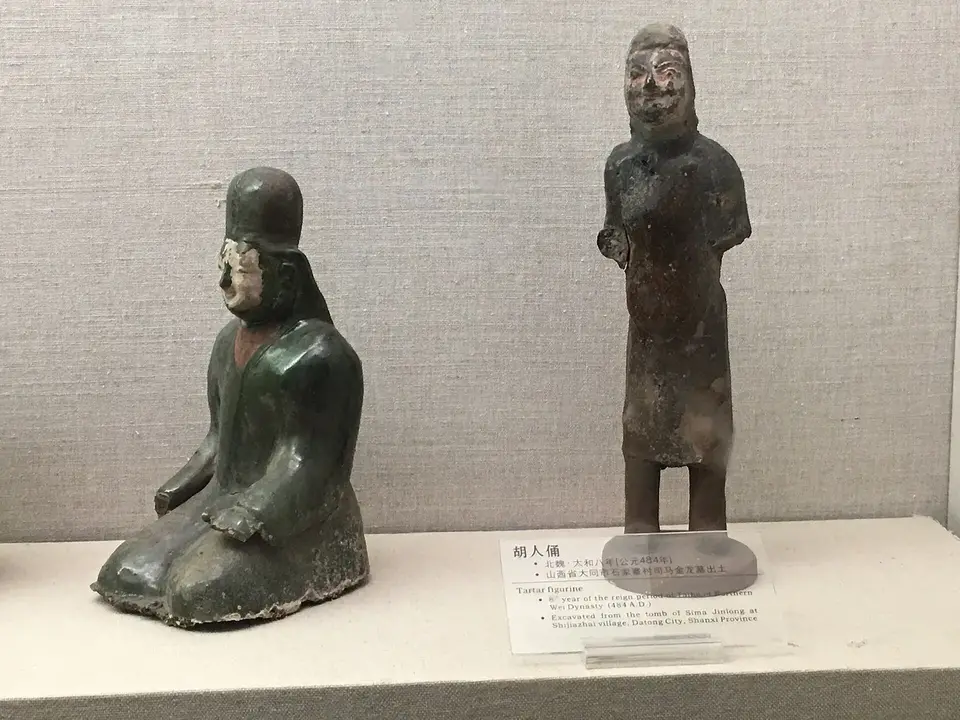
The Heyin Incident(河阴之变)was a devastating political purge and bloody massacre that occurred in the fourth month of 528 during the Northern Wei dynasty. At that time, the Northern Wei court was paralyzed by severe internal conflict and widespread frontier rebellions. Empress Dowager Hu had long held supreme political control, and escalating conflict with her biological son, Emperor Xiaoming (Yuan Xu), culminated in her poisoning the young emperor and replacing him with the three-year-old toddler Yuan Zhao. Capitalizing on the imperial chaos, Erzhu Rong, chieftain of the Qihu tribe and a powerful northern general based in Jinyang, mobilized his cavalry to march south. He proclaimed the Prince of Changle, Yuan Ziyou, as the new emperor (Emperor Xiaozhuang) and advanced rapidly toward the capital city of Luoyang. On the thirteenth day of the fourth month of 528, Erzhu Rong arrived at Taozhu on the north bank of the Yellow River. He executed Empress Dowager Hu and the infant emperor Yuan Zhao by casting them into the Yellow River. Under the pretext of conducting an imperial sacrifice and taking an oath of allegiance, Erzhu Rong lured the assembled civil and military officials of Luoyang to the riverbank and ordered his cavalry to ambush them, slaughtering more than two thousand high-ranking officials and imperial princes, including Prime Minister Yuan Yong. This massacre systematically wiped out the sinicized Xianbei aristocracy and elite Han Chinese civil bureaucrats who had sustained the Luoyang administration since Emperor Xiaowen's reforms. The central court lost all independent power, reducing the emperor to a powerless figurehead. The Heyin Incident fundamentally shifted political hegemony to frontier military warlords, directly paving the way for the territorial disintegration of Northern Wei into the Eastern Wei and Western Wei regimes.
Empress Dowager Hu poisons Emperor Xiaoming and installs the toddler Yuan Zhao, triggering massive political turmoil across Northern Wei
Erzhu Rong raises an army in Jinyang under the slogan of avenging the emperor and purging corrupt officials, marching south toward the capital
Erzhu Rong joins Prince of Changle Yuan Ziyou in Henai and formally proclaims him as Emperor Xiaozhuang of Northern Wei
Vanguard cavalry captures Luoyang and takes Empress Dowager Hu and the infant Yuan Zhao into custody at the Yaoguang Temple
Erzhu Rong drowns Empress Dowager Hu and Yuan Zhao in the Yellow River, and ambushes and slaughters over two thousand court officials at Heyin
Erzhu Rong repents to Emperor Xiaozhuang after failed divinations and escorts the monarch to Luoyang, cementing warlord dominion
Following Emperor Xiaowen's relocation of the imperial capital to Luoyang and his sweeping sinicization policies, the Xianbei royal clan and northern Han aristocratic lineages established a monopolistic political order. The civil and military bureaucracy in Luoyang grew decadent, corrupt, and increasingly alienated from the northern frontier. Meanwhile, the soldiers and traditional Xianbei tribesmen stationed along the Northern Six Garrisons, once regarded as the indispensable defenders and backbone of the state, were degraded to frontier laborers, and their avenues for bureaucratic advancement were effectively closed.
In 523, the Six Garrisons Rebellion erupted along the northern borders, quickly expanding into broad popular uprisings that destabilized northern China. Imperial armies dispatched by the Luoyang court suffered continuous defeats, exposing the military helplessness of the central government. Amidst this turmoil, Erzhu Rong, the hereditary chieftain of the Qihu tribe residing in Xiurong, expanded his cavalry force by incorporating displaced border warriors and surrendering rebel units. He gathered capable military commanders such as Gao Huan, Yuwen Tai, and Haba Yue, rapidly transforming into the preeminent military hegemon controlling Bingzhou and Sizhou.
Within the imperial court at Luoyang, Empress Dowager Hu had ruled as regent since the accession of her infant son, Emperor Xiaoming. She elevated corrupt relatives and favorites, depleted imperial revenues on excessive Buddhist temple constructions, and instigated deadly factional purges within the imperial family. As Emperor Xiaoming reached adulthood, he sought to reclaim sovereign authority, leading to an intractable power struggle between mother and son.
In an effort to break free from his mother's overbearing control, Emperor Xiaoming sent clandestine imperial edicts to Erzhu Rong in Jinyang, instructing him to lead his elite cavalry south toward Luoyang to exert military pressure on the empress dowager. Uncovering the conspiracy, Empress Dowager Hu launched a preemptive strike. In the second month of 528, she poisoned the nineteen-year-old emperor. To retain supreme power, she first falsely declared a newborn imperial princess as a male heir before promptly replacing her with the three-year-old prince Yuan Zhao. This blatant regicide incited overwhelming moral outrage and public condemnation throughout the empire.
Upon receiving confirmation of Emperor Xiaoming's sudden demise, Erzhu Rong conferred with his senior advisers, Yuan Tianmu and Gao Huan, determining that the prime opportunity to take over the imperial capital had arrived. Proclaiming his intention to avenge the deceased emperor and eliminate traitorous courtiers, Erzhu Rong mobilized his cavalry divisions and commenced his southern expedition.
To select a viable candidate for the imperial throne, Erzhu Rong conducted traditional casting divinations, melting gold to cast bronze-gilt statues of potential Northern Wei princes. Only the statue of Yuan Ziyou, the Prince of Changle and son of Prince Yuan Xie, was successfully cast without flaw. Erzhu Rong dispatched his cousin Erzhu Shilong into Luoyang to establish contact with Yuan Ziyou, who willingly agreed to the plan and escaped north across the Yellow River under cover of darkness. On the eleventh day of the fourth month of 528, Erzhu Rong formally enthroned Yuan Ziyou as Emperor Xiaozhuang in Henai Commandery, changing the era name to Jianyi. The new monarch appointed Erzhu Rong as Grand General, Grand Commander, and Manager of Affairs of the Masters of Writing, handing him paramount control over state and military affairs.
The news of Erzhu Rong's formidable advance caused panic in Luoyang. Empress Dowager Hu summoned the remaining court dignitaries to formulate defensive plans, but the capital garrisons were demoralized and unwilling to fight for the regicide ruler. Recognizing that defeat was inevitable, Empress Dowager Hu ordered all imperial consorts to shave their heads and took monastic vows herself, seeking sanctuary within the Yaoguang Buddhist Temple in the hope of evading retributive punishment.
On the twelfth day of the fourth month, Erzhu Rong's vanguard cavalry seized the Xiyang Gate of Luoyang without meeting significant resistance. Soldiers led by Erzhu Shilong entered the temple, seized the tonsured empress dowager and the young emperor Yuan Zhao, and transported them in prisoner carts across the Yellow River directly to Erzhu Rong's primary camp at Heyin.
On the thirteenth day of the fourth month, Erzhu Rong summoned Empress Dowager Hu for interrogation inside his command tent. Confronted by Erzhu Rong's accusations, she argued eloquently, presenting various justifications for her past administration and her handling of dynastic succession. Disgusted by her refusal to admit guilt, Erzhu Rong waved his sleeves and abruptly terminated the audience.
Determined to eliminate any possibility of future female regency or consort interference, Erzhu Rong ordered the immediate execution of both the empress dowager and her infant puppet. Cavalry guards dragged Empress Dowager Hu and the young boy Yuan Zhao to the precipitous riverbanks of Taozhu. Both were thrown directly into the raging currents of the Yellow River, where they drowned instantly.
Having dispatched the dowager and the child ruler, Erzhu Rong moved to eradicate the entrenched Luoyang civil bureaucracy. During the advance on the capital, his confidant, Military Guard General Fei Mu, had warned him that his southern expeditionary force consisted of fewer than ten thousand horsemen; without a decisive and terrifying demonstration of power, the proud and long-established Luoyang elites would never truly submit to frontier commanders once the main army withdrew beyond the Taihang Mountains. Erzhu Rong harbored deep contempt for the luxurious and corrupt lifestyles of the Luoyang aristocracy and resolved to purge the entire court apparatus, brushing aside cautionary warnings from his strategist Murong Shaozong.
Erzhu Rong issued an imperial summons instructing all civil and military officials remaining in Luoyang to cross the river to the temporary pavilion at Taozhu, ostensibly to participate in a grand sacrificial ceremony offering thanks to Heaven and congratulating Emperor Xiaozhuang. Believing that orderly dynastic transition had been achieved, high dignitaries led by Prime Minister Yuan Yong (Prince of Gaoyang) and Minister of Works Yuan Qin arrived in full ceremonial robes.
Once the ceremonial greetings concluded, Erzhu Rong ascended a raised platform and delivered a furious speech, denouncing the assembled ministers for chronic corruption, misgovernance, and failure to preserve the late emperor. As his speech ended, Erzhu Rong signaled his troops. Thousands of concealed Qihu cavalrymen encircled the gathering and drew their sabers, charging into the defenseless crowd. Officials and imperial princes were trampled by warhorses and cut down without mercy. More than two thousand dignitaries, encompassing leading imperial princes, ministers of the state departments, and eminent scholars, perished within hours along the riverbank.
Following the comprehensive purge, Erzhu Rong's personal ambition surged, prompting him to contemplate usurping the imperial throne. Generals such as Gao Huan urged him to declare himself emperor, but commander Haba Yue strongly objected, warning that having mobilized under the righteous banner of restoring imperial legitimacy, seizing the throne prematurely would brand him a treasonous usurper in the eyes of all realm subjects.
Plagued by uncertainty, Erzhu Rong attempted to cast a golden statue of himself to divine the will of Heaven, but four consecutive attempts failed to produce an intact mold. His court astrologer Liu Lingzhu also cautioned that the astral alignments presaged catastrophe should he attempt usurpation. Rattled by superstitious dread and political friction, Erzhu Rong abandoned his immediate imperial pretensions. In the middle of the night on the fourteenth day of the fourth month, Erzhu Rong knelt before Emperor Xiaozhuang in repentance, falsely claiming that the massacre was an unauthorized mutiny by unruly troops. He subsequently escorted Emperor Xiaozhuang into the Luoyang palace, issued formal condolences and posthumous honors to the families of deceased ministers, and organized a caretaker cabinet while retaining absolute military authority from his operational base in Jinyang.
The Heyin Incident struck a fatal blow to the aristocratic ruling class cultivated since Emperor Xiaowen's relocation of the capital. The more than two thousand victims comprised the political pillars of the Xianbei royal clan as well as prominent members of northern elite Han lineages such as the Cui, Lu, Zheng, and Wang clans. The civil administrative apparatus in Luoyang was virtually wiped out in a single afternoon. The disaster irreversibly destroyed the balance between civil scholars and military commanders, ending the dominance of the Luoyang aristocracy in imperial politics.
The catastrophe confirmed the complete subjugation of traditional civil authority to frontier tribal militarism. The Northern Wei court was reduced to a compliant extension of Erzhu Rong's headquarters in Jinyang. Although Emperor Xiaozhuang managed to assassinate Erzhu Rong inside the imperial palace in 530, the imperial house could not reconstruct central authority.
Erzhu clan commanders quickly retook Luoyang and murdered Emperor Xiaozhuang in retaliation. In the ensuing civil strife, Gao Huan and Yuwen Tai, two principal commanders who emerged from Erzhu Rong's ranks, seized control of the eastern and western halves of the northern empire respectively. Each installed rival puppet emperors, leading directly to the formal partition of Northern Wei into Eastern Wei and Western Wei in 534, irrevocably altering the geopolitical landscape of medieval China.
The Book of Wei records: "On the day of Gengzi in the fourth month, the imperial entourage patrolled the river. Secretly summoning the court officials, they gathered at the islet. Cruelly and unjustly, the dignitaries of the court—from Prime Minister and Prince of Gaoyang Yuan Yong on down, numbering over two thousand men—were all slain. When the realm heard of this, all were shaken with terror."
The History of the Northern Dynasties evaluates Erzhu Rong: "Although Rong harbored treasonous intentions, he had not yet launched an open rebellion. Yet upon the executions at Heyin, all under Heaven were filled with horror. From this time forward, the court administration overturned, catastrophes succeeded one another, and the mandate of the Wei was ultimately extinguished."
Sima Guang comments in the Comprehensive Mirror in Aid of Governance: "Rong had long despised the dignitaries of the court, believing them to be greedy, reckless, and chaotic, hated by all under Heaven. He wished to slaughter them entirely and select worthy men to replace them. Thereupon he enacted the violence of Heyin; when scholars and commoners heard of it, all trembled with fear, and the unity of the realm disintegrated."