Tripartite Mobilization
Emperor Taizong launches the expedition, ordering Cao Bin, Pan Mei, and Tian Chongjin to advance along three routes.
Northern Song Dynasty (北宋) · HISTORICAL EVENT
雍熙北伐
The Yongxi Northern Expedition (雍熙北伐) was a major strategic offensive campaign launched in 986 (the third year of the Yongxi era of Northern Song and the fourth year of the Tonghe era of Liao) by Emperor Taizong of Song to recover the Sixteen Prefectures of Yanyun, which had been ceded to the Khitan Liao dynasty by the Later Jin in 936. Following his catastrophic defeat at the Battle of Gaoliang River in 979, Emperor Taizong remained determined to…
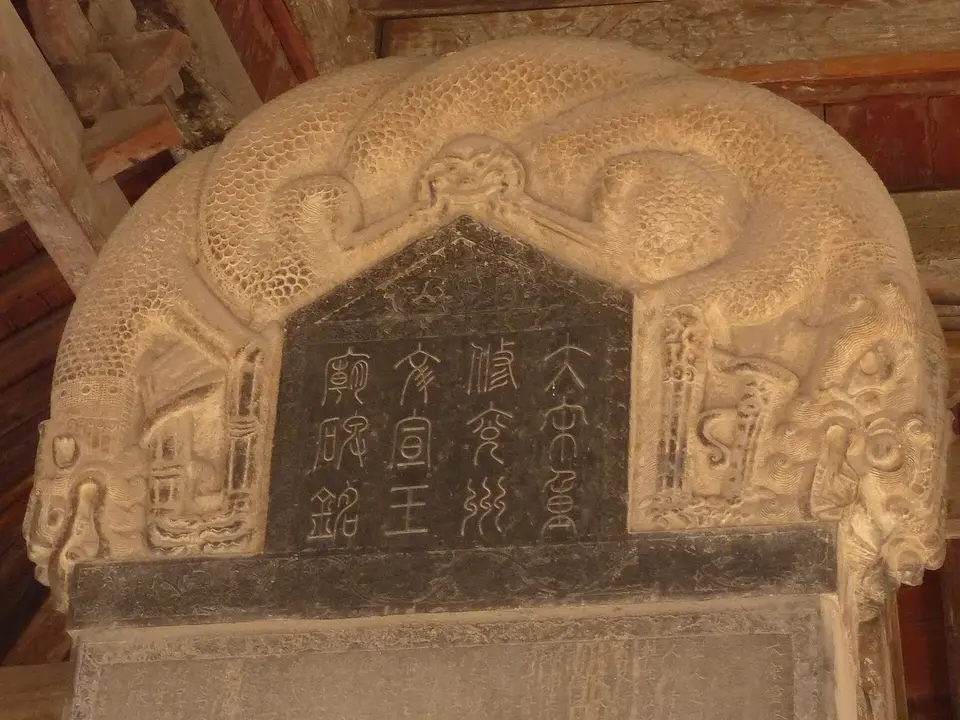
The Yongxi Northern Expedition (雍熙北伐) was a major strategic offensive campaign launched in 986 (the third year of the Yongxi era of Northern Song and the fourth year of the Tonghe era of Liao) by Emperor Taizong of Song to recover the Sixteen Prefectures of Yanyun, which had been ceded to the Khitan Liao dynasty by the Later Jin in 936. Following his catastrophic defeat at the Battle of Gaoliang River in 979, Emperor Taizong remained determined to reclaim the northern natural barriers. In 982, Emperor Jingzong of Liao died, leaving eleven-year-old Emperor Shengzong on the throne under the regency of Empress Dowager Xiao. Misinterpreting the regency as political vulnerability, Song Taizong mobilized over two hundred thousand elite palace troops divided into three prongs: Cao Bin commanded the eastern army toward Youzhou, Tian Chongjin took the central route via Feihu, and Pan Mei and Yang Ye led the western army past Yanmen Pass. While the central and western prongs secured early victories, Cao Bin's eastern army overextended its logistical lines, suffering a catastrophic rout against Yelu Xiuge at Qigou Pass. As Song forces retreated, supervisor Wang Shen and commander Pan Mei coerced veteran Yang Ye into an isolated rearguard action, subsequently abandoning their agreed ambush positions. Trapped at Chenjiagu, Yang Ye fought heroically, sustained severe wounds, and starved to death in captivity. The campaign's collapse permanently reversed the balance of power, forcing Northern Song into permanent strategic defense.
Emperor Taizong launches the expedition, ordering Cao Bin, Pan Mei, and Tian Chongjin to advance along three routes.
Pan Mei and Yang Ye capture Huanzhou, Shuozhou, Yingzhou, and Yunzhou, while Tian Chongjin takes Feihu.
Cao Bin captures Zhuozhou but exhausts grain reserves, falling back before advancing again under subordinate pressure.
Yelu Xiuge annihilates Cao Bin's eastern army at Qigou Pass, forcing a general retreat of all Song expeditionary units.
Abandoned by Pan Mei and Wang Shen at Chenjiagu, Yang Ye fights to the end, dies of starvation in captivity.
The Northern Song permanently abandons offensive operations, realigning northern defenses into passive containment.
In 936, during the Five Dynasties period, Emperor Gaozu of Later Jin (Shi Jingtang) ceded the Sixteen Prefectures of Yanyun to the Khitan Liao dynasty in exchange for military intervention against the Later Tang. The loss of these rugged mountain passes exposed the agrarian plains of northern China to direct cavalry incursions. In 979, after extinguishing Northern Han, Emperor Taizong of Song advanced toward Youzhou (modern Beijing), but suffered a devastating ambush at the Battle of Gaoliang River against Liao general Yelu Xiuge. The emperor was wounded and fled in a donkey cart, leaving a lingering desire for imperial vindication.
In 982, Emperor Jingzong of Liao died, and his eleven-year-old son ascended the throne as Emperor Shengzong, with Empress Dowager Xiao (Xiao Chuo) assuming the regency supported by experienced statesmen Han Derang and Yelu Xiuge. Northern Song frontier commanders, including He Lingtu, submitted memorials arguing that a child monarch and a female regency would inevitably provoke internal palace discord. Eager for military glory and backed by Chancellor Li Fang, Emperor Taizong decided to commit the imperial armies to a three-pronged northern offensive to annex the lost borderlands.
In the first month of 986, Emperor Taizong ordered the synchronized offensive. The eastern army, comprising over one hundred thousand troops under Cao Bin and Cui Yanjin, advanced from Xiongzhou toward Youzhou, serving as a diversionary force to fix the main Liao army. The central army under Tian Chongjin advanced from Dingzhou to seize Feihu and Weizhou, while the western army under Pan Mei and Yang Ye marched north from Yanmen Pass to capture the western tier of prefectures.
Initial engagements proved exceptionally favorable for the western and central columns: Pan Mei and Yang Ye captured Huanzhou, Shuozhou, Yingzhou, and Yunzhou in rapid succession, while Tian Chongjin defeated Liao forces at Feihu. However, on the eastern front, Cao Bin captured Zhuozhou but quickly ran out of food as Khitan light horsemen severed supply convoys, forcing him to fall back to Xiongzhou. Alarmed, Emperor Taizong ordered Cao Bin to dig in and avoid rash engagements. Yet Cao Bin's subordinate commanders, eager to match western victories, pressured him to advance again toward Zhuozhou with limited rations. Empress Dowager Xiao moved her royal guard forward, while Yelu Xiuge deployed cavalry to scorch the surrounding countryside and cut all water and grain supplies. In May, starving and exhausted, Cao Bin's army retreated under torrential rains. Yelu Xiuge overtook them at Qigou Pass (southwest of modern Zhuozhou, Hebei), executing a devastating assault that routed the eastern army, leaving tens of thousands dead along river crossings.
The destruction of the eastern column freed the main Liao army to pivot westward. Emperor Taizong issued emergency decrees ordering a general retreat, commanding Pan Mei and Yang Ye to escort civilian populations south across the passes. Liao commander Yelu Xiezhen swept forward with over one hundred thousand cavalry, recapturing Huanzhou. Recognizing the overwhelming tactical disadvantage, Yang Ye proposed avoiding direct pitched battle, advocating an indirect withdrawal using archers to defend rugged defiles while civilians were evacuated. However, imperial army supervisor Wang Shen and commander Pan Mei questioned his loyalty, sneering that a general commanding thousands of elite troops should not act out of cowardice. Deeply insulted as a former Northern Han officer, Yang Ye replied: "I do not fear death, but wish to avoid squandering imperial soldiers without cause; since you accuse me of cowardice, I shall lead the vanguard to death!"
Before riding out, Yang Ye arranged with Pan Mei to place infantry and crossbowmen in ambush at the mouth of Chenjiagu valley (south of modern Shuozhou, Shanxi) to support his retreat. Yang Ye engaged Yelu Xiezhen's cavalry and conducted a fighting withdrawal toward the rendezvous point. However, assuming that Yang Ye had triumphed and fearing the loss of military credit, Wang Shen abandoned the defile, and Pan Mei failed to maintain the defensive perimeter. Upon reaching Chenjiagu and finding it completely deserted, Yang Ye wept in grief and turned to make a desperate last stand. Suffering dozens of wounds and having lost his son Yang Yanyu in the melee, Yang Ye was captured when his horse fell. He maintained his loyalty by refusing all food, starving to death after three days of captivity.
The Yongxi Northern Expedition concluded in absolute disaster for the Northern Song. Tens of thousands of veteran soldiers perished, and hundreds of thousands of war mounts and supply carriages were lost. The central palace guards, the core of early Song military power, were decimated. The Liao dynasty secured its control over the Sixteen Prefectures and launched retaliatory raids across the northern frontier. Following the defeat, Emperor Taizong stripped Cao Bin and Pan Mei of their offices and exiled supervisor Wang Shen.
The campaign fundamentally transformed East Asian geopolitics. Strategically, the failure eliminated the Northern Song's capacity to recover the Yanyun mountain barriers by offensive force, leaving the northern plains permanently exposed. The court retreated behind passive hydrological defensive networks composed of ditches and flooded paddies in Hebei. Domestically, the defeat accelerated the consolidation of the civilian-dominated bureaucratic state (chongwen yiwu), entrenching centralized oversight over frontline generals through palace supervisors. Culturally, Yang Ye's steadfast loyalty inspired generations of popular drama, giving rise to the celebrated national folklore of the Generals of the Yang Clan.