Qingyuan Factional Purge
Han Tuozhou proscribes Daoxue as "false learning," cashiering Zhu Xi and fifty-eight associates
Southern Song dynasty, Yuan dynasty · HISTORICAL EVENT
理学定为官学
The event in which Neo-Confucianism Established as Official Orthodoxy (理学定为官学) was a monumental milestone in Chinese intellectual and institutional history, marking the transition of Cheng-Zhu Neo-Confucianism from a private academy movement into the supreme state philosophy and official ideology of imperial China. Spanning the reigns of Emperors Ningzong and Lizong of Southern Song to the Yanyou era of the Yuan dynasty (1196 to 1315), this transformation…
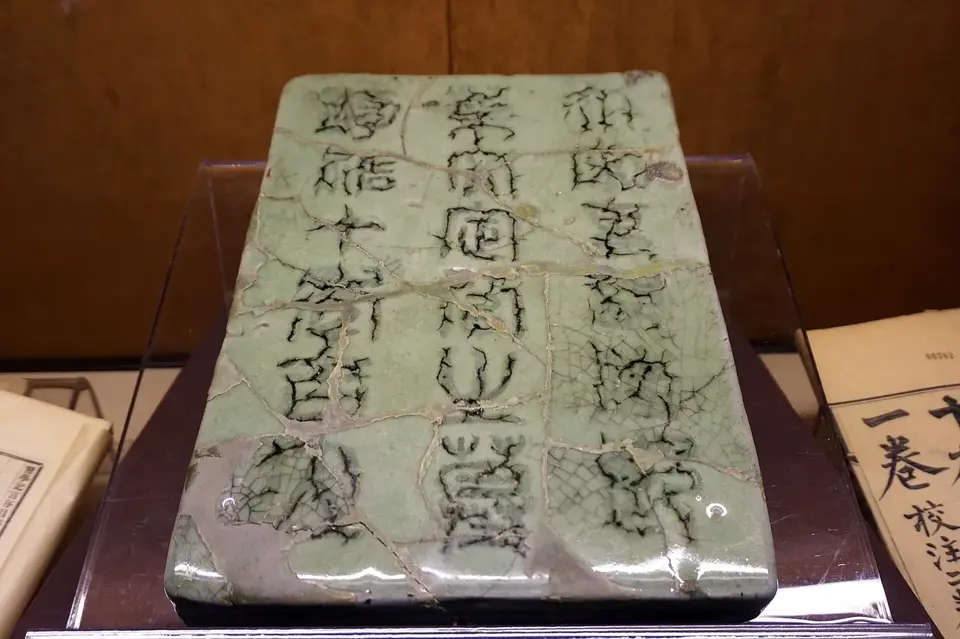
The event in which Neo-Confucianism Established as Official Orthodoxy (理学定为官学) was a monumental milestone in Chinese intellectual and institutional history, marking the transition of Cheng-Zhu Neo-Confucianism from a private academy movement into the supreme state philosophy and official ideology of imperial China. Spanning the reigns of Emperors Ningzong and Lizong of Southern Song to the Yanyou era of the Yuan dynasty (1196 to 1315), this transformation followed deep political tribulations. In the late twelfth century, Zhu Xi completed his monumental Collected Commentaries on the Four Books. However, in 1196 (Qingyuan 2), Grand Councilor Han Tuozhou launched the Qingyuan factional purge, proscribing Daoxue as "false learning" and driving Zhu Xi from office. Following Han Tuozhou's fall, the court under Emperor Ningzong initiated posthumous rehabilitation. In 1224, Emperor Lizong ascended the throne with an ardent personal devotion to Cheng-Zhu teachings, promoting prominent scholars such as Zhen Dexiu and Wei Liaoweng. In the first month of 1241 (Chunyou 1), Emperor Lizong personally visited the Imperial Academy, formally conferring aristocratic titles upon Zhou Dunyi, Zhang Zai, Cheng Hao, Cheng Yi, and Zhu Xi, and enshrining them within the ancestral Hall of the Great Sage in the Confucian Temple while removing Wang Anshi. This decree formally established Cheng-Zhu Neo-Confucianism as the sole official state philosophy. In 1315 (Yanyou 2), the Mongol Yuan dynasty restored the imperial civil service examinations, explicitly mandating Zhu Xi's commentaries as the exclusive evaluation standard, institutionalizing the doctrine as the permanent orthodox gateway to bureaucratic office.
Han Tuozhou proscribes Daoxue as "false learning," cashiering Zhu Xi and fifty-eight associates
Zhu Xi passes away in political disgrace in Fujian amidst strict bans on memorial gatherings
Han Tuozhou is assassinated following military defeat, enabling the repeal of the anti-Daoxue edicts
Emperor Ningzong confers the posthumous name "Wen" upon Zhu Xi, restoring academic honor
Emperor Lizong assumes personal rule, appointing Zhen Dexiu and Wei Liaoweng to high office
Emperor Lizong enshrines Zhou, Zhang, the Chengs, and Zhu Xi in the Confucian Temple, ousting Wang Anshi
Emperor Renzong of Yuan decrees the restoration of the civil service exams based on Zhu Xi's commentaries
The Four Books with Zhu Xi's commentaries become the universal statutory standard for imperial degrees
During the Shaoxing and Chunxi reigns of Southern Song, philosopher Zhu Xi synthesized the diverse currents of the Northern Song masters—Zhou Dunyi, Zhang Zai, and the Cheng brothers—into an integrated philosophical architecture. Zhu Xi extracted The Great Learning and The Doctrine of the Mean from the Book of Rites, pairing them with The Analects and Mencius to create the foundational canon known as the Four Books (Sishu), composing his celebrated Collected Commentaries on the Four Books (Sishu Zhangju Jizhu).
Zhu Xi posited that the Four Books encapsulated the ultimate method for moral self-cultivation and statecraft. Teaching at the White Deer Grotto and Yuelu Academies, his disciples spread across the empire, granting Neo-Confucianism immense intellectual dominance among the gentry. However, the imperial civil service examinations and the Imperial Academy continued to follow the "New Learning" instituted by Wang Anshi's reforms, leaving Neo-Confucianism outside the sanctioned curriculum of the state.
In 1194 (Shaoxi 5), Emperor Ningzong ascended the throne, precipitating an intense factional struggle between imperial kinsman Zhao Ruyu and royal consort relative Han Tuozhou. Zhu Xi, serving as imperial lecturer on Zhao Ruyu's recommendation, repeatedly delivered forthright criticisms of court favoritism, earning Han Tuozhou's bitter hostility.
In 1196 (Qingyuan 2), having seized dictatorial control, Han Tuozhou launched the Qingyuan factional purge to eliminate political rivals. Censors orchestrated accusations denouncing Daoxue as "false learning" (weixue), charging its adherents with forming seditious cabals and hypocritical moral posturing. The court proscribed fifty-nine prominent statesmen and scholars, stripped Zhu Xi of his offices and titles, and banned all examination candidates from citing Cheng-Zhu writings. Zhu Xi passed away in political exile in 1200, casting the Neo-Confucian movement into a severe winter of state suppression.
In 1207 (Kaixi 3), Han Tuozhou's reckless northern campaign against the Jurchen Jin dynasty collapsed in catastrophic defeat, resulting in his assassination at the Yujin Garden. Emperor Ningzong promulgated the Jiading era, initiating systemic administrative reconciliation to restore literati morale.
During the early Jiading years, the court repealed the ban on false learning and exonerated Zhao Ruyu, Zhu Xi, and other proscribed scholars. In 1209 (Jiading 2), Emperor Ningzong conferred upon Zhu Xi the posthumous title of Court Gentleman for Consultation and the prestigious posthumous name "Wen" (Cultured). Later edicts elevated Zhu Xi to Academician of the Baomo Pavilion and Duke of Hui. Disciples of the Cheng brothers and Zhu Xi were recalled to central ministries, private academy lectures revived, and the moral prestige of the school was restored across the realm.
In 1224 (Jiading 17), Emperor Lizong (Zhao Yun) ascended the throne. Having grown up among the common populace, Emperor Lizong was acutely aware of social decay and bureaucratic cynicism, developing an unshakeable conviction that Cheng-Zhu Neo-Confucianism was essential to purify literati conduct. During the Duanping Restoration, Emperor Lizong actively recruited renowned Neo-Confucian masters Zhen Dexiu and Wei Liaoweng to direct central policymaking.
Zhen Dexiu composed the monumental treatise Extended Meaning of the Great Learning (Daxue Yanyi), framing personal moral sincerity as the ultimate foundation of imperial statecraft. Wei Liaoweng founded the Heshan Academy, establishing the school's dominance across Sichuan. Emperor Lizong personally transcribed Zhen Dexiu's memorials in his palace study, designating Neo-Confucianism as the supreme state doctrine while patronizing academies with imperial calligraphic plaques and tax-exempt agricultural estates.
The ultimate formal elevation of Neo-Confucianism into statutory state orthodoxy occurred in the first month of 1241 (Chunyou 1). Facing relentless military advances from the expanding Mongol Empire, Emperor Lizong sought to forge an unassailable cultural and ideological bastion to unite the Han Chinese populace.
On the Dingmao day of the first month, Emperor Lizong led civil and military officials to the Imperial Academy in Lin'an, presiding over a solemn sacrifice before the shrine of Confucius. The emperor issued an epochal imperial decree: posthumously enfeoffing Zhou Dunyi as Earl of Runan, Zhang Zai as Earl of Mei, Cheng Hao as Earl of Henan, Cheng Yi as Earl of Yiyang, and Zhu Xi as Duke of Hui. Crucially, the emperor ordered their spirit tablets permanently enshrined as subordinate companions (congsi) in the central sanctuary of the Confucian Temple.
Concurrently, Emperor Lizong ordered the immediate removal of Wang Anshi's tablet from the Confucian Temple, declaring: "The former scholars Zhou Dunyi, Zhang Zai, Cheng Hao, Cheng Yi, and Zhu Xi illuminated the sacred Way, conferring merit for ten thousand generations. Enshrining them in the Confucian Temple rectifies the orthodox transmission of the Way, while casting out the errors of Master Jinggong purifies the minds of scholars!" This solemn decree formally codified Cheng-Zhu Neo-Confucianism as the sole official state philosophy of the Southern Song dynasty.
The collapse of the Southern Song in 1279 did not diminish the institutional momentum of Neo-Confucianism. When Southern Song scholar Zhao Fu was captured and taken north to Yanjing, he founded the Taiji Academy, training northern scholars Yao Shu, Dou Mo, and Xu Heng, who introduced Cheng-Zhu texts directly to Kublai Khan and Crown Prince Jingim.
In 1313 (Huangqing 2), Emperor Renzong of Yuan (Ayurbarwada), seeking to consolidate imperial governance and recruit Han literati, decreed the revival of the civil service examinations. In 1315 (Yanyou 2), the first Yanyou examinations were held across the empire. The imperial examination statutes enacted a momentous mandate: all examination candidates across provincial and metropolitan sessions were required to interpret the classical texts strictly in accordance with Zhu Xi's Collected Commentaries on the Four Books. Deviations from Cheng-Zhu orthodoxy were disqualified.
The Yanyou reforms permanently bound Cheng-Zhu Neo-Confucianism to the social mobility and political advancement of the scholar-official class. During the Ming dynasty, the Yongle Emperor commissioned the Grand Compendia of the Four Books and Five Classics, and the Qing monarchs Kangxi and Qianlong reinforced this orthodoxy. As a consequence, Cheng-Zhu Neo-Confucianism functioned as the unchallenged state curriculum of imperial China for seven consecutive centuries.
The elevation of Neo-Confucianism to official orthodoxy achieved a historic institutional victory for the Cheng-Zhu school. In the Southern Song, Emperor Lizong's Chunyou enshrinement consolidated the philosophical legacy of Zhou Dunyi, Zhang Zai, the Cheng brothers, and Zhu Xi into the imperial state religion through temple worship. In the Yuan dynasty, Emperor Renzong's Yanyou examination statutes embedded Zhu Xi's Collected Commentaries on the Four Books into the core mechanism of bureaucratic recruitment. This two-stage institutionalization transformed what had been an embattled regional academy movement into the absolute, unquestioned ideological monopoly of the imperial state.
The establishment of Neo-Confucian orthodoxy reshaped Chinese political culture, pedagogy, and literati consciousness for seven centuries. Academically, the Four Books permanently superseded the ancient Five Classics as the premier textual curriculum of China, standardizing philosophical discourse across ethnically diverse dynasties. Morally and socially, it cultivated an enduring tradition of bureaucratic rectitude and sacrificial patriotism, visible in the unyielding resistance of loyalists during the Song-Yuan and Ming-Qing transitions. Conversely, state canonization produced severe ideological ossification: Zhu Xi's interpretations were dogmatically reified into rigid formulas, while the civil examinations degenerated into the stereotyped eight-legged essay, stifling independent philosophical inquiry and scientific exploration during the late imperial era.