Imperial Tutor Appointed
The Jianwen Emperor ascends the throne and summons Fang Xiaoru to court, appointing him Hanlin Academician and trusted mentor.
Ming Dynasty (明朝) · HISTORICAL EVENT
方孝孺之死
The Death of Fang Xiaoru (方孝孺之死) was an earth-shaking political tragedy in 1402 (the fourth year of the Jianwen reign) during which Ming Emperor Chengzu (Zhu Di) captured Nanjing and brutally executed the empire's premier Confucian moralist. As an imperial tutor and Hanlin Academician, Fang Xiaoru served as the ideological architect of the Jianwen Emperor's centralizing policies and was universally venerated as the "spiritual seed of all scholars." When…
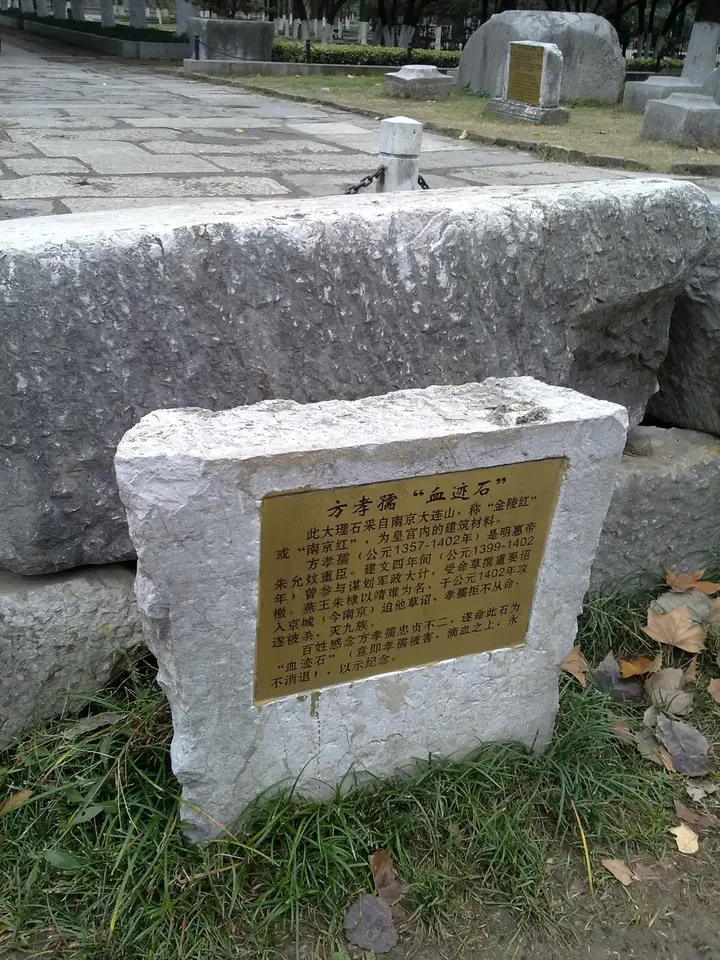
The Death of Fang Xiaoru (方孝孺之死) was an earth-shaking political tragedy in 1402 (the fourth year of the Jianwen reign) during which Ming Emperor Chengzu (Zhu Di) captured Nanjing and brutally executed the empire's premier Confucian moralist. As an imperial tutor and Hanlin Academician, Fang Xiaoru served as the ideological architect of the Jianwen Emperor's centralizing policies and was universally venerated as the "spiritual seed of all scholars." When Zhu Di's rebel Yan army breached Nanjing and imperial palaces burned with the Jianwen Emperor missing, strategist Yao Guangxiao pleaded with Zhu Di to spare Fang Xiaoru lest the intellectual lineage of China be extinguished. Desiring ideological legitimacy, Zhu Di summoned Fang Xiaoru to draft his accession proclamation. Fang Xiaoru arrived wearing mourning garments, weeping bitterly for the fallen emperor. Rebuffing imperial coaxing, Fang Xiaoru furiously denounced Zhu Di as a usurper, cast the brush to the palace floor, and declared that death was preferable to drafting the decree. When Zhu Di threatened him with the extermination of his nine degrees of kin, Fang Xiaoru defiantly declared: "Even if you exterminate ten degrees of kin, what of it!" In a fury, Zhu Di ordered Fang Xiaoru mutilated and executed by slow dismemberment outside Jubao Gate, expanding traditional collective execution to create the unique "extermination of ten clans," butchering 873 kinsmen, disciples, and friends while exiling thousands. Fang Xiaoru's martyrdom marked an absolute suppression of moral conscience by imperial despotism, leaving an eternal monument of righteous moral resistance in Chinese history.
The Jianwen Emperor ascends the throne and summons Fang Xiaoru to court, appointing him Hanlin Academician and trusted mentor.
Prince of Yan Zhu Di rebels in Beiping; Fang Xiaoru drafts all imperial military denunciations condemning the uprising.
Gates of Nanjing are opened to Yan forces; the palace burns and Fang Xiaoru is imprisoned.
Summoned to court, Fang Xiaoru rejects Zhu Di's demands, tosses down the brush, and refuses to draft the accession edict.
Zhu Di executes Fang Xiaoru by dismemberment outside Jubao Gate and orders the extermination of ten clans.
Secret police butcher 873 relatives, students, and associates, exiling thousands of dependents into military servitude.
Ming Emperor Wanli fully rehabilitates Fang Xiaoru, conferring the posthumous title Wenzheng and erecting a memorial shrine.
Following the establishment of the Ming Dynasty, Emperor Taizu (Zhu Yuanzhang) abolished the chancellery and enfeoffed his sons as regional princes across northern frontiers and critical commanderies to defend the throne against external nomadic invasions and internal rebellion. However, following the early deaths of Crown Prince Zhu Biao and veteran elder princes, the imperial throne passed directly to young grandson Zhu Yunwen (the Jianwen Emperor). Possessing private armies and distinguished combat records, martial uncle-princes posed an existential threat to the fledgling court.
Ascending the throne in 1398 (Hongwu 31), the Jianwen Emperor acted upon the urgent advice of counselors Qi Tai and Huang Zicheng to enforce feudal containment (xiaofan), sequentially demoting and exiling five regional princes. Staged precipitously, these demotions prompted Prince of Yan Zhu Di to launch a military rebellion from Beiping in July 1399 under the pretext of purging imperial flatterers, inaugurating the four-year civil war known as the Jingnan Campaign.
Fang Xiaoru (courtesy name Xizhi, styled Xunzhi), a native of Ninghai, Zhejiang, studied under early Ming master Song Lian and was celebrated nationwide as Master Zhenxue for his classical erudition and unbending moral integrity. Upon his accession, the Jianwen Emperor invited Fang Xiaoru to court, appointing him Hanlin Academician and treating him as a sovereign mentor. Throughout the protracted civil war, all major imperial denunciations, wartime manifestos, and edicts condemning the Yan rebellion were composed by Fang Xiaoru's eloquent brush, rallying loyalists across the empire.
In June 1402 (Jianwen 4), the Yan army crossed the Yangtze River and approached the capital, where imperial gates were surrendered by defecting commanders. As the palace compound erupted in flames, the fate of the Jianwen Emperor became an enduring enigma. Zhu Di launched ruthless purges against loyalist ministers, but to legitimate his accession, he urgently needed an eminent moral figure to compose the official coronation proclamation. Before the fall of the capital, Buddhist strategist Yao Guangxiao knelt before Zhu Di and warned: "When the city falls, Fang Xiaoru will certainly not surrender; do not execute him. If you kill Fang Xiaoru, the intellectual seeds of all scholars under heaven will be extinguished!" Zhu Di agreed, ordering guards to bring Fang Xiaoru from the imperial prison.
On July 7, 1402 (the seventeenth day of the sixth month), the Fengtian Hall in the imperial palace was surrounded by armed Yan guards. Seated on the imperial dais and seeking to display magnanimity to win over skeptical scholars, Zhu Di commanded that Fang Xiaoru be brought forward. Wearing rough hemp sackcloth mourning robes to honor the fallen Jianwen Emperor, Fang Xiaoru staggered into the hall and collapsed in tears, his heart-wrenching wails echoing across the palace courtyard.
Descending from his throne, Zhu Di approached Fang Xiaoru with soothing words: "Master, why do you torment yourself so? When I raised troops and entered the capital, it was not out of personal ambition for the throne, but merely to emulate the Duke of Zhou in assisting his young nephew King Cheng." Zhu Di sought to wrap his violent usurpation in the virtuous historical mantle of ancient Zhou feudal regency.
Halting his tears, Fang Xiaoru looked straight at Zhu Di and demanded: "If Your Highness came to emulate the Duke of Zhou, where is King Cheng now?" Zhu Di hesitated and stammered: "King Cheng (the Jianwen Emperor) has immolated himself in the flames."
Unrelenting, Fang Xiaoru interrogated: "Since King Cheng has passed, why not enthrone King Cheng's imperial son?" Flustered, Zhu Di argued: "The empire has endured great turmoil; state governance demands a mature sovereign, not a tender child."
Fang Xiaoru pressed forward: "If statecraft requires a mature monarch, why not enthrone King Cheng's younger brother?" Backed into absolute logical bankruptcy, Zhu Di flushed red with anger and retorted: "This is the private family affair of our imperial Zhu house; why must you interfere, master!"
Unable to refute Fang Xiaoru morally, Zhu Di ordered attendants to place fine parchment and ink brushes before the scholar, commanding: "The accession proclamation requires your unparalleled hand; write the edict for me!"
Attendants forced the wet ink brush into Fang Xiaoru's hand. Gripping the brush, Fang Xiaoru rapidly scrawled four massive characters across the parchment: "The Yan Bandit Usurps the Throne" (Yan zei cuan wei). Tossing the brush violently onto the marble floor, he wept and shouted defiantly: "Death is merely death; the edict shall never be drafted!" His voice echoed through the imperial hall without compromise.
Furious that he had been publicly branded a bandit, Zhu Di rose and snarled menacingly: "Do you not fear the extermination of your nine degrees of kin?" Fang Xiaoru answered with unbending disdain: "Even if you exterminate ten degrees of kin, what of it!"
Livid with rage, Zhu Di ordered palace guards to slit Fang Xiaoru's mouth open from ear to ear, casting him back into the death cells. To fulfill his wrath, Zhu Di took Fang Xiaoru's retort as an excuse to invent the unprecedented penalty of "exterminating ten degrees of kin."
In addition to traditional paternal, maternal, and marital relations, Zhu Di ordered imperial secret police to classify all of Fang Xiaoru's academic disciples and intimate friends as the tenth clan. On the day of execution outside Jubao Gate, Zhu Di forced Fang Xiaoru to witness his relatives, siblings, children, and students executed before him one by one.
Watching his relatives die, Fang Xiaoru wept in agony. When his younger brother Fang Xiaoyou was brought forward to the block, Xiaoyou remained composed and recited an extemporaneous verse: "Why must my elder brother weep so bitterly? To choose righteousness and achieve benevolence occurs here today. Listening to execution drums beat, our souls shall return to our ancestral hills together." Moved by his brother's moral courage, Fang Xiaoru composed his famous death poem, stating that with loyalty tested by tragedy, death brought no regrets.
Executioners subjected Fang Xiaoru to slow dismemberment (lingchi). He perished at the age of forty-six, cursing the usurper to his final breath. Over days of systematic massacres, 873 individuals across his ten clans were put to death, while thousands of women and children were banished into penal military slavery.
Following Fang Xiaoru's mutilation, imperial guards scattered his remains across the execution grounds under penalty of death for anyone attempting burial. Defying death, Fang Xiaoru's devoted disciples Liao Yong and Liao Ming crept into the execution grounds at night, gathered his severed remains, and buried them secretly on Jubao Mountain (modern Yuhuatai). The Liao brothers were soon captured and executed, epitomizing the heroic devotion of the literati.
Generations later, Emperor Renzong began pardoning surviving exile descendants of the Jianwen loyalists. In 1585 (Wanli 13), the Ming court officially exonerated Fang Xiaoru, posthumously conferring the prestigious title "Wenzheng" and constructing a memorial shrine on Mount Yuhuatai. Later, Qing Emperor Qianlong bestowed the posthumous title "Zhonglie" and recorded his supreme loyalty in the official History of Ming.
The death of Fang Xiaoru resulted in the sole historical instance of the "extermination of ten clans." Fang Xiaoru endured dismemberment, while 873 members of his paternal, maternal, marital, and intellectual circles were slaughtered, with thousands of surviving kin banished to military servitude. The physical annihilation of the Jianwen loyalist core extinguished political dissent in the capital, securing Zhu Di's bloody path to the throne.
This atrocity inflicted permanent psychological trauma upon imperial Chinese political culture. By violently subordinating Confucian moral authority to imperial violence, Zhu Di damaged the independent moral standing of the literati class, driving subsequent courts toward subservience. Nevertheless, Fang Xiaoru's fearless resistance against absolute power established an immortal monument of ethical integrity, remaining the eternal symbol of moral defiance in Chinese history.
Modern historians view the death of Fang Xiaoru as a brutal collision between absolute monarchical despotism and independent intellectual conscience. Refusing to validate an illegitimate regime, Fang Xiaoru embodied the highest dignity of the traditional scholar. His martyrdom was not merely feudal loyalty to an emperor, but an unyielding defense of moral truth, institutional justice, and the intellectual freedom of the literati.