Fall of Beijing
Li Zicheng's forces capture Beijing; Chongzhen Emperor commits suicide on Coal Hill.
Qing Dynasty (清朝) · HISTORICAL EVENT
清军入关
The Qing Conquest of the Central Plains (清军入关), commonly referred to as the Entry of the Qing Army through Shanhai Pass, was a pivotal military campaign and dynastic turning point that occurred in 1644. Triggered by the capture of Beijing by Li Zicheng's rebel forces and the subsequent suicide of the Chongzhen Emperor, the event pivoted on the strategic decision of Ming General Wu Sangui to open Shanhai Pass to the Manchu Eight Banners under Prince Regent…
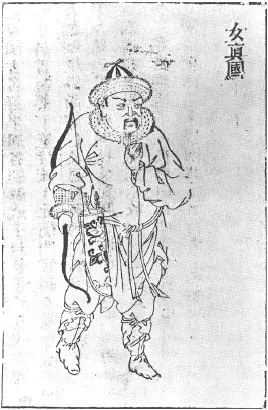
The Qing Conquest of the Central Plains (清军入关), commonly referred to as the Entry of the Qing Army through Shanhai Pass, was a pivotal military campaign and dynastic turning point that occurred in 1644. Triggered by the capture of Beijing by Li Zicheng's rebel forces and the subsequent suicide of the Chongzhen Emperor, the event pivoted on the strategic decision of Ming General Wu Sangui to open Shanhai Pass to the Manchu Eight Banners under Prince Regent Dorgon. At the decisive Battle of Yipianshi just outside the pass, the coordinated strike of Wu's Guanning cavalry and Dorgon's armored Manchu horsemen routed Li Zicheng's veteran forces. Following this catastrophic defeat, Li hurriedly proclaimed himself emperor in Beijing before retreating westward into Shaanxi. Dorgon led his disciplined troops into Beijing on May 2, 1644, maintaining strict order and conducting imperial funeral rites for the fallen Ming monarch to conciliate Han elites. In October 1644, the young Shunzhi Emperor arrived from Shengjing to ascend the throne in the Forbidden City, inaugurating more than two and a half centuries of unified Qing imperial rule over China.
Li Zicheng's forces capture Beijing; Chongzhen Emperor commits suicide on Coal Hill.
Li Zicheng leads over one hundred thousand troops east from Beijing to attack Shanhai Pass.
General Wu Sangui dispatches messengers to Prince Regent Dorgon requesting military assistance.
Wu Sangui meets Dorgon, adopts the Manchu queue hairstyle, and accepts the title of Prince Who Pacifies the West.
Eight Banners heavy cavalry rout the Dashun army during a violent sandstorm outside Shanhai Pass.
Li Zicheng briefly assumes the imperial title in Beijing and sets palace gates ablaze before retreating westward.
Dorgon enters Beijing with the Eight Banners, enforces strict discipline, and honors the deceased Ming emperor.
The Shunzhi Emperor holds enthronement ceremonies in Beijing, formally establishing Beijing as the imperial capital.
By the early 1640s, the Ming Dynasty was devastated by catastrophic famines, fiscal exhaustion, and widespread peasant insurrections across northern and central China. In April 1644 (the third lunar month of the seventeenth year of Chongzhen), Li Zicheng's Dashun army besieged and breached the walls of Beijing. The desperate Chongzhen Emperor hanged himself on Coal Hill (Jingshan), ending 276 years of unbroken Ming governance. Upon entering the imperial capital, the Dashun leadership focused heavily on torturing former Ming officials to extract silver and failed to rapidly consolidate legitimate administrative authority, creating an immense political vacuum across North China.
Shanhai Pass, situated between the Bohai Sea and the Yan Mountains, stood as the impregnable gateway connecting northeastern Manchuria to the North China plain. The pass was defended by Ming Regional Commander Wu Sangui and his elite Guanning Iron Cavalry. While Li Zicheng attempted to induce Wu to surrender, radical rebel commanders in Beijing arrested Wu's father, Wu Xiang, and confiscated his family property. Outraged and facing existential encirclement, Wu executed Dashun envoys and decided to seek military assistance from the Qing court. Concurrently, Prince Regent Dorgon, urged by Han advisors such as Fan Wencheng and Hong Chengchou, recognized this rare historical opening to abandon traditional border raiding in favor of a full-scale campaign to conquer all of China.
On April 13, 1644, Li Zicheng personally led over one hundred thousand seasoned Dashun troops eastward from Beijing to crush Wu Sangui. Realizing his numerical inferiority, Wu dispatched urgent emissaries on April 15 to Dorgon's rapidly advancing army, offering to surrender and open the gates. Dorgon immediately ordered his cavalry to advance at double speed, covering more than two hundred li per day.
On the night of April 21, Wu Sangui rode into the Qing encampment at Weiyuandai to meet Dorgon. Under Dorgon's firm insistence, Wu accepted the Qing title of Prince Who Pacifies the West and commanded his officers and men to shave their heads in accordance with Manchu custom. At dawn on April 22, the gates of Shanhai Pass were thrown wide open, allowing tens of thousands of elite Eight Banners cavalry to enter the fortress undetected by the enemy.
Later that morning, Li Zicheng arrayed his massive army in a vast line stretching from the pass to the seaside at Yipianshi. As Wu's troops engaged the rebel lines in fierce hand-to-hand combat, their lines began to waver under intense rebel pressure. Around midday, a violent dust storm suddenly erupted, blowing sand directly into the faces of the Dashun soldiers. Taking advantage of the obscured vision, Dorgon unleashed his armored White and Yellow Banner cavalry from the right flank. Shocked by the unexpected onslaught of disciplined Manchu heavy cavalry, the Dashun ranks panicked. Rebel General Liu Zongmin was wounded by an arrow, and the entire rebel army disintegrated into a chaotic rout. Qing and Guanning horsemen pursued the fleeing rebels for over forty li, inflicting devastating casualties.
Following the disaster at Yipianshi, Li Zicheng retreated in haste to Beijing. On April 29, he staged an impromptu enthronement ceremony in the Wuying Palace, and early the next morning set fire to several palace complexes and city gates before fleeing westward with massive quantities of looted silver.
Dorgon's forces pursued relentlessly, reaching the capital suburbs within days. On May 2, 1644, Dorgon led his army triumphantly through Guang'an Gate into Beijing. Exercising acute political acumen, Dorgon forbade looting under penalty of death, ordered three days of official mourning for the Chongzhen Emperor and Empress, and buried them with full imperial honors. Furthermore, he retained Ming bureaucratic institutions, re-employed former Ming civil and military officials, and abolished late Ming surtaxes, effectively securing the cooperation of the northern Han gentry.
In October 1644, the six-year-old Shunzhi Emperor arrived from Shengjing and performed the sacrificial rites of enthronement at the Forbidden City. He proclaimed Beijing the official capital of the Great Qing Empire and announced a universal amnesty. Dorgon subsequently dispatched grand armies under Princes Ajige and Dodo to chase Li Zicheng into Shaanxi and push southward against the newly proclaimed Southern Ming regime, embarking on the comprehensive military unification of China.
The entry of Qing forces through Shanhai Pass permanently ended Ming authority in the north and dealt a fatal blow to the Dashun insurgency. Li Zicheng's forces lost all strategic initiative, suffering continuous defeats until Li was killed in Hubei in 1645. Using Beijing as its political and military anchor, the Qing Dynasty launched sweeping southern and western offensives, systematically destroying Zhang Xianzhong's Daxi regime in Sichuan and various Southern Ming loyalist courts in Nanjing, Fuzhou, and Guangdong over the next two decades.
The Qing conquest unified the agricultural heartland of China with the northern steppe, Manchurian forests, and Tibetan plateau under a single centralized imperial framework, establishing the geographical foundations of modern China. However, the initial phase of the conquest brought immense bloodshed, including the mandatory imposition of the Manchu hairstyle and dress, extensive land confiscations in North China, and brutal massacres of recalcitrant cities in Jiangnan, fostering prolonged anti-Qing resistance among Han literati.