Eastern Campaign
Liu Bei mobilized national armies to attack Wu to avenge Guan Yu and retake Jing Province
Shu Han (蜀汉) · HISTORICAL EVENT
白帝城托孤
Entrusting the Orphan at Baidicheng (白帝城托孤) was a pivotal political event in April 223 (the 3rd year of Zhangwu in Shu Han) at Yong'an Palace in Badong, profoundly shaping the Three Kingdoms balance of power. After Guan Yu's earlier triumph in the Flooding of the Seven Armies and subsequent fall in Jing Province, First Sovereign Liu Bei launched an eastern campaign to avenge Guan Yu and recover Jing Province, suffering a crushing defeat against Eastern Wu…
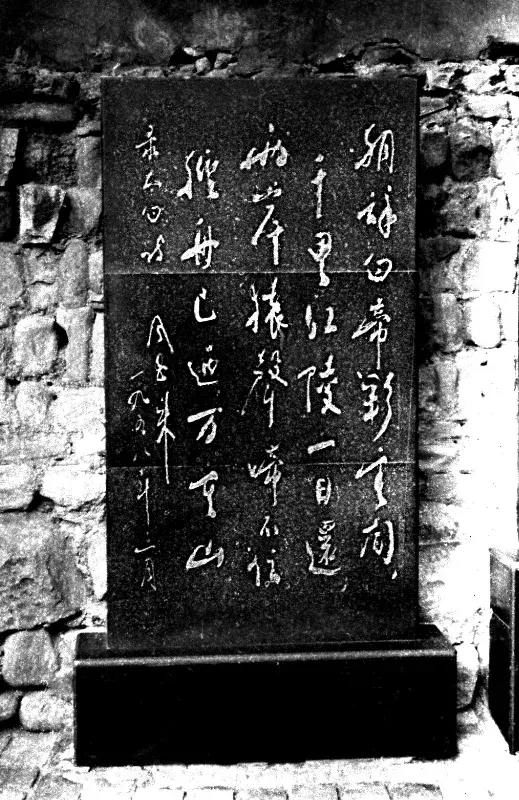
Entrusting the Orphan at Baidicheng (白帝城托孤) was a pivotal political event in April 223 (the 3rd year of Zhangwu in Shu Han) at Yong'an Palace in Badong, profoundly shaping the Three Kingdoms balance of power. After Guan Yu's earlier triumph in the Flooding of the Seven Armies and subsequent fall in Jing Province, First Sovereign Liu Bei launched an eastern campaign to avenge Guan Yu and recover Jing Province, suffering a crushing defeat against Eastern Wu general Lu Xun at Yiling and withdrawing to Baidicheng. Depressed by failure and worn by military campaigning, Liu Bei fell critically ill the following spring. Facing an inexperienced young heir, the loss of Jing Province, severe military exhaustion, and external threats from Cao Wei and Sun Wu, Liu Bei summoned Chancellor Zhuge Liang and Master of Writing Li Yan from Chengdu. Liu Bei famously declared to Zhuge Liang: "Your talent is ten times that of Cao Pi; you will surely bring peace to the state and achieve great deeds. If the heir can be assisted, assist him; if he proves untalented, take the throne yourself." Zhuge Liang wept and pledged absolute fidelity until death. Liu Bei instructed Liu Shan to treat the chancellor as a father, while appointing Li Yan to oversee military defense at Yong'an. This deathbed covenant achieved an orderly succession, providing the institutional foundation for Zhuge Liang's internal reforms, the renewal of the Wu-Shu alliance, and subsequent northern campaigns.
Liu Bei mobilized national armies to attack Wu to avenge Guan Yu and retake Jing Province
Shu vanguard armies captured Zigui and deployed along Yiling as tribal leaders joined the cause
Lu Xun launched a fire attack burning Shu lines; Liu Bei suffered defeat and retreated to Yong'an
Liu Bei remained at Baidicheng, overcome by guilt and exhaustion as chronic ailments intensified
Liu Bei's condition became critical; couriers were sent to summon Zhuge Liang and Li Yan to Yong'an
Liu Bei told Zhuge Liang to take the throne if the heir failed; Zhuge Liang pledged devotion until death
Liu Bei ordered Liu Shan to treat Zhuge Liang as a father and appointed Li Yan to guard Yong'an
Liu Bei died at Yong'an Palace at age 63; Zhuge Liang and Li Yan took charge of state affairs
The imperial cortege returned to Chengdu; Liu Shan ascended the throne and entrusted all governance to Liang
Zhuge Liang dispatched Deng Zhi to restore the alliance with Wu, securing borders for future campaigns
In 219 (the 24th year of Jian'an under Emperor Xian of Han), Guan Yu launched a northern offensive against Cao Wei, flooding the seven armies and shaking the realm. However, Sun Quan of Eastern Wu broke the alliance and dispatched Lü Meng in a covert riverine crossing to seize Jing Province. Guan Yu was captured and executed, depriving Shu Han of its vital southern springboard envisioned in Zhuge Liang's Longzhong Plan to march toward the central plains.
In 221 (the 1st year of Zhangwu), Liu Bei declared himself emperor in Chengdu, establishing Shu Han. Determined to recover Jing Province and avenge his fallen brother, Liu Bei mobilized national armies for a large-scale invasion of Wu. After rejecting Sun Quan's peace overtures, Liu Bei advanced down the Yangtze into Yiling and Xiaoting, deploying a connected line of encampments stretching hundreds of li along rugged ravines. Eastern Wu Grand Commander Lu Xun maintained strict defensive lines until the Shu forces were exhausted by summer heat. In June 222, Lu Xun launched a coordinated fire attack, routing the Shu lines. Key commanders including Feng Xi and Zhang Nan were killed, and naval commander Huang Quan was cut off and surrendered to Wei. Escorted by Zhao Yun, Liu Bei retreated to Yong'an.
Retreating to Yong'an, Liu Bei was overcome with remorse and grief, lamenting: "That I should be humiliated by Lu Xun—is this not Heaven's will!" Reluctant to return to Chengdu, Liu Bei remained at Baidicheng. Prolonged military hardship and deep despair severely aggravated his deteriorating physical condition.
The Shu Han regime faced its most precarious crisis since its founding: Cao Wei prepared for opportunist offensives, Eastern Wu maintained vigilant river positions, and the bulk of Shu's veteran armies had been annihilated. Concurrently, southern indigenous magnates under Yong Kai instigated large-scale rebellions across Nanzhong, while local Yi Province scholar-gentry harbored deep misgivings toward the northern émigré regime. Meanwhile, Crown Prince Liu Shan was only seventeen years old, gentle by nature but lacking administrative experience and military prestige. Conscious that his life was waning, Liu Bei moved to finalize supreme succession arrangements.
In early spring 223 (the 3rd year of Zhangwu), Liu Bei's condition worsened dramatically at Yong'an Palace. Realizing the end was near, Liu Bei dispatched express couriers to Chengdu in February, summoning Chancellor Zhuge Liang alongside Princes Liu Yong and Liu Li to travel east to Yong'an. Master of Writing Li Yan was also ordered to leave Qianwei for the imperial lodge.
Entrusting routine administrative affairs in Chengdu to officials Du Wei and Wang Lian, Zhuge Liang rushed down the Yangtze River to Baidicheng. Upon arrival, he found Liu Bei bedridden and emaciated. Weeping beside the bed, Zhuge Liang listened as Liu Bei reminisced over their two decades of shared struggles since their meeting at the thatched cottage in Longzhong, expressing profound sorrow over the strategic misstep at Yiling. Liu Bei then convened senior ministers for the historic deathbed entrustment.
Propped up in his bed before Li Yan and assembled courtiers, Liu Bei addressed Zhuge Liang with monumental words recorded in official annals: "Your talent is ten times that of Cao Pi; you will surely bring peace to the state and achieve the great undertaking. If my heir is capable of being assisted, assist him; if he proves untalented, take the throne yourself."
In traditional dynastic succession, inviting a minister to take the throne was extraordinary. Hearing this, Zhuge Liang fell prostrate, weeping bitterly and knocking his head upon the floor: "I dare only exhaust all my efforts, maintain unyielding loyalty, and follow with my own death!" Convinced of Zhuge Liang's unwavering devotion, Liu Bei cemented an unparalleled level of sovereign-minister trust.
Liu Bei subsequently dictated an imperial rescript specifically instructing young Crown Prince Liu Shan: "Do not neglect good deeds because they seem small; do not commit wrongful deeds because they seem minor. Only virtue and talent can command respect. Your father lacked virtue—do not imitate me. In all affairs, serve the Chancellor as you would your own father!" This rescript established Zhuge Liang's dual authority as surrogate father and prime administrator, preventing internal succession challenges and stabilizing imperial authority.
To reconcile factional interests within Shu Han and protect state security, Liu Bei formulated an intricate power-sharing structure between Zhuge Liang and Li Yan.
Liu Bei appointed Chancellor Zhuge Liang as the senior regent, granting him authority over the Secretariat and supreme oversight over civil administration, judicial affairs, official appointments, and foreign diplomacy. Concurrently, Liu Bei designated Master of Writing Li Yan as the second regent, appointing him Commander of Internal and External Armies and assigning him to garrison Yong'an as commander-in-chief on the front line against Eastern Wu.
This arrangement demonstrated profound political acumen: Zhuge Liang led the Jing Province émigré faction with administrative mastery, while Li Yan, though originally from Jing, had served under Liu Zhang and enjoyed the confidence of the Dongzhou military faction and indigenous Yi Province scholar-gentry. By delegating front-line military defense to Li Yan while concentrating central governance in Zhuge Liang, Liu Bei alleviated local resentment toward the émigré regime and created checks and balances between field forces and central bureaucracy, establishing institutional stability.
On the 24th day of the 4th lunar month in 223 (June 10, 223), First Sovereign Liu Bei died at Yong'an Palace at the age of sixty-three. In May, Zhuge Liang escorted the imperial coffin back to Chengdu. In August, Liu Bei was interred at Huiling Mausoleum and bestowed the posthumous title Emperor Zhaolie.
Crown Prince Liu Shan ascended the imperial throne in Chengdu, proclaiming the reign title Jianxing and honoring Empress Wu as Empress Dowager. Diligently fulfilling his father's testament, Liu Shan enfeoffed Zhuge Liang as Marquis of Wuxiang, appointed him Governor of Yi Province, and granted him authority to establish his own administrative office. All civil and military affairs were referred directly to Zhuge Liang. Overcoming the trauma of military defeat and the death of its founder, the Shu Han regime accomplished a peaceful transfer of power, entering a decade of institutional prosperity under Zhuge Liang's stewardship.
The entrustment at Baidicheng concluded with the passing of Emperor Zhaolie and the smooth accession of Liu Shan. By entrusting central administration to Zhuge Liang and strategic border defense to Li Yan, Shu Han forestalled factional discord and dynastic instability during succession. The seventeen-year-old emperor ascended peacefully, establishing a rare historical precedent of orderly transfer of imperial power amidst acute national peril.
The event proved decisive for the longevity of Shu Han and the tripartite balance of the Three Kingdoms. First, it legitimized Zhuge Liang's absolute administrative supremacy. Empowered by the imperial rescript, Zhuge Liang enacted comprehensive fiscal, judicial, and agricultural reforms, quickly reviving the shattered economy. Second, Zhuge Liang promptly dispatched envoy Deng Zhi to Eastern Wu, re-establishing the defensive alliance against Cao Wei and neutralizing the danger of a two-front conflict. Finally, the political consolidation enabled Zhuge Liang to pacify the Nanzhong uprisings and embark on five Northern Expeditions, embodying lifelong dedication to the imperial cause.