Process Invention
Commoner Bi Sheng experiments in Bianjing, inventing ceramic movable type and adhesive iron-plate composition
Northern Song Dynasty (北宋) · HISTORICAL EVENT
活字印刷术
The Invention of Movable Type Printing (活字印刷术发明) was an epoch-making technological revolution in communications achieved by the commoner artisan Bi Sheng during the Qingli era (1041–1048) of Emperor Renzong in the Northern Song dynasty. Prior to this innovation, textual reproduction relied exclusively on woodblock printing. Printing required carving entire wooden blocks for every page, which consumed vast resources, made textual errata difficult to…
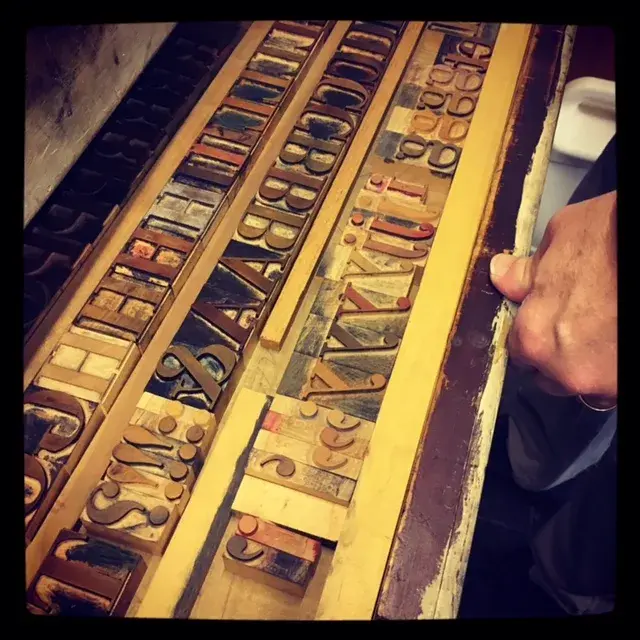
The Invention of Movable Type Printing (活字印刷术发明) was an epoch-making technological revolution in communications achieved by the commoner artisan Bi Sheng during the Qingli era (1041–1048) of Emperor Renzong in the Northern Song dynasty. Prior to this innovation, textual reproduction relied exclusively on woodblock printing. Printing required carving entire wooden blocks for every page, which consumed vast resources, made textual errata difficult to correct, and required immense storage space, restricting the dissemination of knowledge. Drawing upon his craft experience, Bi Sheng invented ceramic movable type. He carved individual Chinese characters onto fine clay blocks, hardened them in kilns, and arranged the type within iron frames coated with a melted mixture of pine resin, wax, and paper ashes. Once leveled with a smooth board, the plate cooled and was ready for inking and impression; heating the plate melted the adhesive, allowing the type to be dismantled and reused indefinitely. Shen Kuo recorded this process in his scientific treatise Dream Pool Essays, preceding Johannes Gutenberg's European movable type by four centuries. The innovation subsequently evolved into wooden type, revolving typesetting wheels invented by Wang Zhen, and metal type. As one of China's Four Great Inventions, movable type dramatically reduced publishing costs, promoted egalitarian literacy, and shaped global intellectual history.
Commoner Bi Sheng experiments in Bianjing, inventing ceramic movable type and adhesive iron-plate composition
The two-plate continuous printing methodology is perfected, establishing the world's earliest practical movable type system
Shen Kuo retires to the Dream Brook Garden and composes Dream Pool Essays, recording Bi Sheng's printing methods in detail
Wang Zhen perfects wooden movable type, invents revolving typesetting wheels, and publishes Methods for Manufacturing Wooden Movable Type
Hua Sui of Wuxi casts bronze type to print classical philological works, demonstrating large-scale metallic typography
The Qing Imperial Printing Office uses cast bronze movable type to print the ten-thousand-volume Complete Collection of Illustrations and Writings
By the mid-to-late Tang and Five Dynasties periods, woodblock printing had achieved technical maturity, primarily applied to Buddhist scriptures, agricultural almanacs, and classical primers. During the Northern Song, urbanization and the expansion of the imperial civil service examinations caused an unprecedented surge in demand for classical literature and historical records among scholar-candidates, stimulating both state imperial academies and commercial publishers.
However, traditional woodblock printing possessed insurmountable limitations. Engravers had to carve entire manuscripts character by character into solid planks of pear or jujube wood, a painstaking endeavor. Producing an extensive multi-volume work required dozens of skilled craftsmen working across multiple years, consuming vast timber resources. Furthermore, an accidental carving mistake required gouging and plugging the wooden block. Once printing concluded, storing thousands of heavy wooden blocks required specialized warehouses vulnerable to rot, moisture, insect damage, and fire. This static manufacturing model could no longer accommodate the accelerating demand for books in Song society.
The founding policy of the Northern Song emphasized civil governance over military authority, promoting Confucian learning and expanding the civil service examination system to commoner households. This created a nationwide boom in scholarly studies and expanded the literate class.
Concurrently, the Ancient Prose Movement championed by Ouyang Xiu and Fan Zhongyan flourished, Neo-Confucianism emerged, private academies proliferated across the provinces, and urban vernacular literature developed. This intellectual vitality imposed rigorous demands on the speed, production volume, and retail pricing of printed works. Devising an adaptable, recyclable, and affordable printing methodology became an urgent technological necessity.
During the Qingli reign of Emperor Renzong, Bi Sheng, a commoner artisan practicing woodblock engraving in the imperial capital of Bianjing, conducted experimental trials and perfected a comprehensive methodology for manufacturing and operating movable type.
For his type medium, Bi Sheng chose fine, pure clay. He shaped the clay into small rectangular blocks and engraved individual reversed characters onto their faces, keeping the borders as thin as the rim of a coin. He then baked the clay pieces in a kiln until they vitrified into hard, durable ceramic type resistant to ink absorption and mechanical wear. To account for varying character frequencies, Bi Sheng prepared multiple identical pieces for common words; for ubiquitous grammatical particles such as zhi and ye, he fashioned over twenty individual pieces per character to prevent shortages within a single page layout.
Bi Sheng's primary mechanical innovation lay in his adhesive iron-plate method for fixing and releasing type. He constructed an iron plate fitted with a raised perimeter frame and spread an adhesive compound composed of pine resin, beeswax, and paper ashes evenly across its surface.
During composition, an iron form was set upon the base plate, and the ceramic pieces were arranged sequentially inside the frame to form a full page. The plate was then placed over a gentle charcoal fire until the adhesive softened. Bi Sheng pressed a smooth wooden board firmly against the face of the type, forcing the uneven clay bases into the molten paste until the surfaces of all characters formed a level plane as flat as a whetstone.
Once removed from the heat, the resin-wax mixture rapidly solidified, binding the type firmly to the iron plate so that it could be inked and printed exactly like a traditional woodblock. When the required print run concluded, the plate was briefly reheated over coals; as the paste liquefied, the printer brushed the characters off the frame by hand without damaging them. The ceramic pieces were sorted by phonetic rhymes and stored in compartmentalized wooden cases for future editions.
To optimize production efficiency, Bi Sheng devised an alternating two-plate workflow. While one plate was inked and impressed by printers, a second plate was simultaneously set and leveled by compositors. When the first print run finished, the second plate was ready for immediate impression, enabling continuous high-speed production that operated with exceptional speed when printing hundreds or thousands of copies.
Because Bi Sheng was a commoner, official dynastic histories preserved no biographical entry for him. The technical specifics of this invention survived through the meticulous observation of the Northern Song polymath Shen Kuo.
Shen Kuo collected technological records during his administrative postings, and his nephews acquired and preserved surviving specimens of Bi Sheng's ceramic type. In his monumental scientific work Dream Pool Essays, Shen Kuo recorded an exact technical description of Bi Sheng's invention, detailing character carving, kiln hardening, adhesive compounding, composition, board leveling, heat dismantling, and phonetic storage. Shen Kuo observed that while the process was inefficient for printing only two or three copies, it became exceedingly rapid for runs of hundreds or thousands, establishing China's historical priority in the invention of movable type.
Bi Sheng's ceramic system provided the conceptual framework for typography, which subsequent craftsmen refined across the Yuan, Ming, and Qing dynasties.
During the Dade era of the Yuan dynasty, agronomist Wang Zhen, serving as magistrate of Jingde in Anhui, developed an operational wooden movable type system and invented the revolving typesetting table. Wang Zhen arranged wooden type according to classical rhyme dictionaries across two large circular turntables measuring seven feet in diameter that rotated on central pivots. The compositor sat seated between the two wheels, turning the tables to fetch characters without pacing, doubling composition efficiency. Wang Zhen documented this methodology in his treatise Methods for Manufacturing Wooden Movable Type and Printing Books, the world's earliest monograph on typographic printing. In the Ming and Qing eras, craftsmen transitioned to metal type, casting bronze type in Wuxi to publish extensive editions, culminating in 1726 when the Qing imperial palace printed the ten-thousand-volume encyclopedia Complete Collection of Illustrations and Writings from the Earliest to Modern Times using cast bronze fonts.
The invention of movable type fundamentally transformed textual reproduction, lowering the costs of book production and shortening printing timelines. The capacity to assemble, dismantle, and reuse type indefinitely eliminated the continuous consumption of timber and manual labor demanded by woodblock carving, converting books from elite luxury possessions into accessible intellectual materials.
This technical advancement reinforced the Song civil service examination system, facilitating the democratization of education and literacy. It provided essential technical support for the dissemination of Neo-Confucian philosophy, Song lyric poetry, and urban vernacular literature, contributing to the historical transition of medieval Chinese society toward a scholar-gentry culture.
As one of China's Four Great Inventions, movable type disseminated to surrounding East Asian states. The Western Xia, Goryeo, and Japan adopted and refined typographic systems, with Goryeo producing the metal-type Jikji in the early fourteenth century.
Furthermore, the concepts and operational mechanics of typography diffused along Eurasian trade routes toward Europe, providing conceptual inspiration and technological impetus for Johannes Gutenberg's invention of the alloy-metal printing press in Mainz around 1450. The proliferation of typographic printing in Europe dismantled the monopoly of the Catholic Church over Latin manuscript copying, serving as a core technological driver of the Protestant Reformation, the Renaissance, and the Scientific Revolution.
Shen Kuo writes in Dream Pool Essays: "During the Qingli reign, a commoner named Bi Sheng invented movable type. His method was to carve characters out of sticky clay, making them as thin as the edge of a coin, and bake them in a fire to make them hard. If one were to print only two or three copies, the method was neither simple nor easy; but if one printed hundreds or thousands of copies, it was exceedingly rapid."
Wang Zhen reflects in Methods for Manufacturing Wooden Movable Type: "In recent times, tin has been cast into characters and strung onto iron rods to make lines, which appear identical to manuscript copies. Now there is an even more ingenious method: making movable characters out of wood and arranging them upon revolving wheels, which halves the labor while doubling the output. Is it not magnificent that this is practiced throughout the realm!"
Joseph Needham concludes in Science and Civilisation in China: "The invention of movable type represents one of the greatest leaps in the history of printing. Bi Sheng not only conceived the independent movable character, but resolved the engineering challenges of vitrification and thermal fixation. Long before typography became standard in Europe, Chinese movable type made the democratization of literacy an operational reality, standing as a pioneer of the modern information society."