Assassination of Dong Zhuo
Wang Yun and Lü Bu kill Dong Zhuo at Weiyang Palace; Wang Yun refuses amnesty to Liangzhou divisions in Shan County.
Eastern Han Dynasty (东汉) · HISTORICAL EVENT
李傕郭汜之乱
The Rebellion of Li Jue and Guo Si (李傕郭汜之乱) was a catastrophic four-year warlord insurrection spanning 192 CE to 196 CE that definitively dismantled the imperial authority of the Eastern Han Dynasty in the capital region of Guanzhong. In the fourth month of 192 CE, Minister over the Masses Wang Yun and Cavalry Commandant Lü Bu assassinated tyrannical warlord Dong Zhuo. However, Wang Yun committed a fatal error by stubbornly refusing to grant amnesty to…
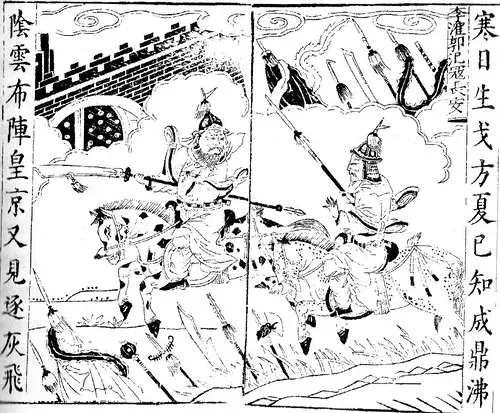
The Rebellion of Li Jue and Guo Si (李傕郭汜之乱) was a catastrophic four-year warlord insurrection spanning 192 CE to 196 CE that definitively dismantled the imperial authority of the Eastern Han Dynasty in the capital region of Guanzhong. In the fourth month of 192 CE, Minister over the Masses Wang Yun and Cavalry Commandant Lü Bu assassinated tyrannical warlord Dong Zhuo. However, Wang Yun committed a fatal error by stubbornly refusing to grant amnesty to Dong Zhuo's Liangzhou forces stationed in Shan County. Urged by strategist Jia Xu to stage an all-or-nothing counterattack, commandants Li Jue, Guo Si, and Zhang Ji rallied over one hundred thousand Liangzhou cavalrymen, marched on Chang'an, routed Lü Bu, drove Wang Yun to suicide, and seized control of the young Emperor Xian (Liu Xie). Once in possession of the capital, Li Jue and Guo Si engaged in destructive looting and soon descended into vicious fratricidal civil war. In 195 CE, Li Jue abducted Emperor Xian while Guo Si seized senior court ministers as hostages, engaging in street fighting across Chang'an that claimed tens of thousands of lives and reduced the historic metropolis to ashes. Guanzhong suffered an unprecedented famine where severe starvation led to cannibalism and total agricultural collapse. Escorted by loyal commanders Yang Feng and Dong Cheng, Emperor Xian endured harrowing battles and fled eastward across the Yellow River on improvised rafts, arriving at the ruins of Luoyang in the seventh month of 196 CE. The disaster extinguished the remaining institutional majesty of the Han court, paving the way for Cao Cao to relocate the emperor to Xuchang and establish hegemony over northern China.
Wang Yun and Lü Bu kill Dong Zhuo at Weiyang Palace; Wang Yun refuses amnesty to Liangzhou divisions in Shan County.
Jia Xu convinces Li Jue and Guo Si to march on Chang'an; Liangzhou forces defeat Xu Rong and besiege the capital.
Rebel troops breach Chang'an; Lü Bu flees east, Wang Yun leaps to his death, and Liangzhou warlords slaughter imperial citizens.
Li Jue and Guo Si war against each other; Li Jue abducts Emperor Xian while Guo Si takes court ministers hostage, incinerating Chang'an.
Zhang Ji brokers an armistice; Emperor Xian begins his flight east, pursued by vengeful warlord cavalry across Cao Yang.
Emperor Xian crosses the Yellow River and reaches the ruins of Luoyang; in the eighth month, Cao Cao welcomes the emperor to Xuchang.
In 189 CE (the sixth year of the Zhongping era), Liangzhou warlord Dong Zhuo marched his cavalry into the imperial capital of Luoyang, deposed Emperor Shao, installed Emperor Xian, and conducted systematic reigns of terror against scholar-officials and civilian populations. Dong Zhuo burned Luoyang to the ground and forcibly relocated the imperial court to Chang'an, provoking a nationwide coalition of regional warlords to take up arms against him. Dong Zhuo's unrelenting atrocities alienated the civil bureaucracy and populace alike.
In the fourth month of 192 CE (the third year of the Chuping era), Minister over the Masses Wang Yun and Director of the Imperial Secretariat Shisun Rui conspired with Dong Zhuo's trusted bodyguard Lü Bu. Exploiting personal grievances between Lü Bu and Dong Zhuo, Wang Yun persuaded Lü Bu to turn his blade against his master. On the twenty-third day of the fourth month, as Emperor Xian convalesced at the Weiyang Palace, Lü Bu personally speared Dong Zhuo to death outside the Northern Gate. The capital rejoiced with celebrations, believing that dynastic governance would finally be restored.
At the time of Dong Zhuo's execution, his son-in-law Niu Fu commanded the main Liangzhou garrison stationed at Shan County, with commandants Li Jue, Guo Si, and Zhang Ji leading veteran divisions under his banner. When Niu Fu was killed in camp turmoil following news of the assassination, Li Jue and Guo Si found themselves leaderless and terrified of impending execution, sending envoys to Chang'an pleading for imperial amnesty.
However, Wang Yun demonstrated fatal political rigidity. Declaring that the realm could not grant two universal amnesties within a single year, Wang Yun rejected their petitions and announced plans to disband the Liangzhou army using regional troops from eastern China. Rumors spread through the camps that the court intended to slaughter every soldier of Liangzhou origin. Panic-stricken and believing doom was imminent, Li Jue and Guo Si prepared to abandon their units and flee in disguise back to their native northwestern lands.
At the critical juncture when Liangzhou officers contemplated desertion, Commandant Jia Xu intervened to challenge their despair. Jia Xu analyzed their dilemma with piercing clarity: "If you abandon your army and flee alone, even a village constable can arrest you. It is far better to lead our forces westward to strike Chang'an and avenge Lord Dong. If we succeed, we can command the realm in the name of the sovereign; if we fail, it will not be too late to scatter into the mountains."
Convinced by Jia Xu's audacious counsel, Li Jue, Guo Si, and Zhang Ji mobilized their camps, spreading panic that the court planned to exterminate Liangzhou men and absorbing scattered detachments along the Yellow River highway. As the rebel column marched westward, their numbers swelled rapidly, reaching over one hundred thousand seasoned cavalrymen and infantrymen by the time they reached Xinfeng.
Wang Yun hastily dispatched former Dong Zhuo generals Xu Rong and Hu Zhen to halt the rebel advance. However, Hu Zhen harbored resentment against Wang Yun and surrendered on the battlefield, while Xu Rong died fighting heroically against overwhelming numbers. Victorious, Li Jue's grand army surged toward Chang'an, placing the imperial capital under tight encirclement by late fifth month.
Li Jue and Guo Si converged with fellow warlord Fan Chou, launching ferocious assaults against Chang'an with stone-throwers and siege ladders. Although Lü Bu mounted stubborn resistance for eight days, defensive morale eroded rapidly. On the first day of the sixth month, regional soldiers from Shu stationed inside the city revolted, opening the northern city gates to let Liangzhou horsemen flood the boulevards.
Recognizing that defense was hopeless, Lü Bu rallied several hundred elite horsemen and fought his way out of the gates, imploring Wang Yun to flee eastward with him. Wang Yun steadfastly refused: "If heaven grants peace to the altars of state, that is my eternal wish; if the dynasty must fall, I shall offer my life as sacrifice! A loyal minister cannot abandon his sovereign; I shall die alongside the state!"
Surging through Chang'an, Liangzhou soldiers unleashed unrestricted looting and massacre, cutting down thousands of officials and citizens. Li Jue and Guo Si forced Emperor Xian to climb the Xuanping Gate tower to grant them official pardons. Wang Yun stepped forward on the parapet, bitterly denounced the rebels, and leaped to his death at age fifty-six, after which Li Jue executed his entire extended family.
Following the capture of Chang'an, Li Jue proclaimed himself General of Chariots and Cavalry and Marquis of Chiyang, while Guo Si became General of the Rear and Marquis of Meiyang, and Fan Chou became General of the Right. Swearing mutual brotherhood, the warlords divided Guanzhong among themselves, reducing Emperor Xian to a helpless puppet. In 195 CE (the second year of the Xingping era), Li Jue murdered Fan Chou, shattering the fragile alliance and triggering open warfare between Li Jue and Guo Si.
In the third month, Li Jue dispatched his nephew Li Xian with thousands of cavalrymen into the Weiyang Palace, seizing Emperor Xian and Empress Fu at swordpoint and carting them off to his fortified camp at the northern fortress, burning imperial palace archives to the ground. In retaliation, Guo Si rounded up over one hundred senior ministers, including Grand Commandant Yang Biao, holding them hostage in his military quarters. The two warlords waged intense urban combat across Chang'an for consecutive months, firing flaming arrows and catapult stones that repeatedly struck the emperor's temporary quarters.
The relentless street fighting devastated Chang'an, reducing magnificent palaces to scorched rubble. Compounding the catastrophe, Guanzhong suffered unprecedented droughts and locust plagues. Grain prices soared to astronomical heights, with five hundred thousand coins unable to buy a single bushel of rice. Famine engulfed the region; hundreds of thousands perished of starvation, and widespread cannibalism reduced the populace to desperation. Within fifty miles of the capital, dead bodies carpeted the highways while wild dogs roamed abandoned streets.
Confronting total economic exhaustion, General Zhang Ji arrived from Shan County to mediate an armistice, urging the warlords to allow Emperor Xian to return to Luoyang. Depleted of provisions and facing mutinous troops, Li Jue and Guo Si reluctantly agreed, allowing the sovereign's entourage to depart the ruins of Chang'an in the seventh month of 195 CE.
However, as the royal carriage reached Huayin, Li Jue and Guo Si reneged on their pact, combining forces to pursue the emperor with tens of thousands of horsemen. Escort commanders Yang Feng and Dong Cheng rallied White Wave insurgent allies and Southern Xiongnu cavalry under Prince Qubei, waging desperate rearguard battles across Cao Yang and Shan County to protect the imperial sovereign. Scores of high ministers and palace ladies were slaughtered along the muddy retreat.
In early 196 CE (the first year of the Jian'an era), the royal column reached the frozen banks of the Yellow River. Under cover of darkness, Emperor Xian crossed the river on dilapidated wooden rafts; desperate courtiers clinging to the gunwales had their fingers severed by swords, and hundreds drowned in the freezing waters. In the seventh month, Emperor Xian finally reached Luoyang after surviving four years of mortal peril. The ancient capital lay in scorched ruins overrun with thorns; ministers camped under collapsing walls and scavenged wild weeds for survival.
The rebellion concluded with Emperor Xian escaping Liangzhou clutches and reaching Luoyang, bringing an end to direct Liangzhou warlord domination over the sovereign. Li Jue and Guo Si were completely wiped out within a few years by internal mutinies and regional rivals. In the eighth month of 196 CE, warlord Cao Cao marched into Luoyang and relocated Emperor Xian to Xuchang, inaugurating the strategy of commanding the realm in the name of the sovereign.
The Rebellion of Li Jue and Guo Si represented the decisive death knell of Eastern Han imperial governance. The public abduction and humiliation of the sovereign in burning palace streets permanently erased the four-century aura of Han imperial majesty. Economically, Guanzhong, the heartland of Western China, was utterly ruined by war, pestilence, and famine, accelerating the historical shift of demographic and economic gravity toward eastern and southern China. Geopolitically, the destruction of central authority formalized unrestricted warlord competition among Cao Cao, Yuan Shao, Liu Bei, and Sun Ce, opening the bloody curtains of the Three Kingdoms era.