Invitation to Shu
Fearing Cao Cao's western advance, Liu Zhang invited Liu Bei into Sichuan to check Zhang Lu
Late Han / Three Kingdoms Period (Jian'an reign of Emperor Xian) · HISTORICAL EVENT
益州之战
The Battle of Yi Province (益州之战) was a pivotal military campaign fought from 212 to 214 CE (the 17th to 19th years of Jian'an) in which Liu Bei conquered the Sichuan basin from regional governor Liu Zhang, establishing the tripartite division of the Three Kingdoms. Following the Battle of Red Cliffs, Liu Bei controlled southern Jing Province and sought the resource-rich realm of Yi Province. Governor Liu Zhang was indecisive and locked in hostilities with…
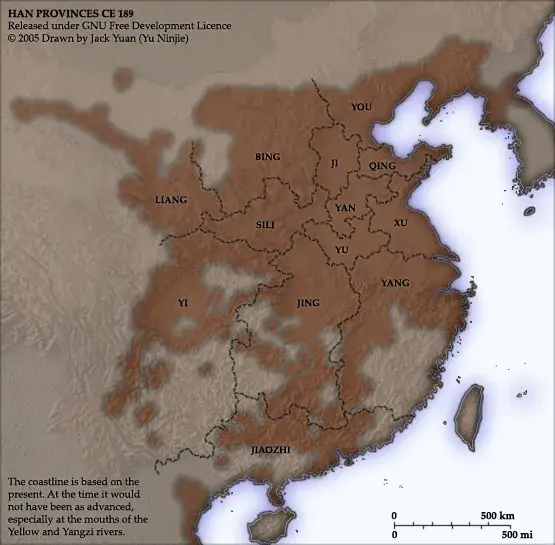
The Battle of Yi Province (益州之战) was a pivotal military campaign fought from 212 to 214 CE (the 17th to 19th years of Jian'an) in which Liu Bei conquered the Sichuan basin from regional governor Liu Zhang, establishing the tripartite division of the Three Kingdoms. Following the Battle of Red Cliffs, Liu Bei controlled southern Jing Province and sought the resource-rich realm of Yi Province. Governor Liu Zhang was indecisive and locked in hostilities with Zhang Lu of Hanzhong. In 211 CE, fearing an invasion by Cao Cao, Liu Zhang invited his kinsman Liu Bei into Sichuan to repel Zhang Lu. Stationed at Jiameng Pass, Liu Bei cultivated the goodwill of the local population. In late 212 CE, after a conspiracy led by official Zhang Song was uncovered, hostilities erupted. Liu Bei executed frontier commanders Yang Huai and Gao Pei, capturing Fu City. Advancing to Luo City, Liu Bei besieged the fortress for nearly a year; advisor Pang Tong was killed in action by a stray arrow. Reinforcements led by Zhuge Liang, Zhang Fei, and Zhao Yun marched up the Yangtze, pacifying peripheral commanderies. When cavalry commander Ma Chao defected to Liu Bei and deployed outside Chengdu, Liu Zhang surrendered to spare the civilian population. Liu Bei assumed the governorship of Yi Province, completing his base in western China.
Fearing Cao Cao's western advance, Liu Zhang invited Liu Bei into Sichuan to check Zhang Lu
Liu Bei encamped at Jiameng Pass, winning the support of local inhabitants without attacking Hanzhong
Zhang Song's conspiracy was exposed and he was executed; relations between Liu Bei and Liu Zhang collapsed
Liu Bei executed Yang Huai and Gao Pei, seized their troops, and captured Fu City
Liu Bei defeated defenders at Mianzhu; Zhang Ren was executed after capture; Luo City was besieged
Zhuge Liang, Zhang Fei, and Zhao Yun sailed up the Yangtze to reinforce Liu Bei in Sichuan
Zhang Fei pardoned Yan Yan at Jiangzhou; Zhao Yun and Zhuge Liang pacified outlying commanderies
Pang Tong was killed by a stray arrow during the siege of Luo City; the citadel fell soon after
Ma Chao deployed outside the northern gate; Liu Zhang surrendered to spare civilian lives
Liu Bei assumed the governorship of Yi Province, distributing honors and returning land to peasants
Encompassing the fertile Sichuan basin, Yi Province was praised as the "Land of Abundance" (Tianfu), protected by mountain ranges and endowed with agricultural wealth. Since 188 CE, Liu Yan had governed the region as an autonomous domain. Following his death, his youngest son Liu Zhang succeeded him. Liu Zhang was benevolent but lacked decisive leadership, and political divisions between local Shu clans and immigrant Dongzhou military factions undermined administrative cohesion.
To the north, Zhang Lu of the Five Pecks of Rice sect broke with Liu Zhang and established an autonomous theocracy in Hanzhong. Enraged, Liu Zhang executed Zhang Lu's mother and younger brother, igniting ongoing border warfare. Liu Zhang dispatched forces under Pang Xi against Hanzhong, but they suffered repeated defeats, leaving the northern approaches of Sichuan vulnerable.
In 208 CE, Cao Cao conquered northern Jing Province. Liu Zhang sent aide Zhang Song to offer respects, but Cao Cao treated the envoy with discourtesy. Returning to Chengdu, Zhang Song urged Liu Zhang to sever relations with Cao Cao and ally with Liu Bei.
In 211 CE, Liu Zhang learned that Cao Cao had ordered Zhong Yao and Xiahou Yuan to march west toward Hanzhong. Terrified that Cao Cao would conquer Hanzhong and invade Sichuan, Liu Zhang sought counsel. Zhang Song proposed inviting Liu Bei: "Cao Cao commands invincible armies; if he seizes Hanzhong and invades Shu, who can resist? Liu Bei is an imperial kinsman and a seasoned commander; inviting him to subdue Zhang Lu will guarantee our security." Despite warnings from officials Huang Quan and Wang Lei—who hanged himself upside down from the city gate in protest—Liu Zhang dispatched Fa Zheng and Meng Da with 4,000 troops to invite Liu Bei into Sichuan.
In the autumn of 211 CE, leaving Zhuge Liang, Guan Yu, Zhang Fei, and Zhao Yun to garrison Jing Province, Liu Bei led tens of thousands of infantry into Sichuan, accompanied by strategist Pang Tong and generals Huang Zhong and Wei Yan. Liu Zhang welcomed Liu Bei at Fu City, hosting celebrations that lasted over a hundred days. Pang Tong and Fa Zheng urged Liu Bei to assassinate or detain Liu Zhang during the festivities, but Liu Bei refused, asserting that trust had not yet been established among the local populace.
Supplied with soldiers, weaponry, and grain, Liu Bei advanced north to Jiameng Pass to guard against Zhang Lu. Rather than attacking Hanzhong, Liu Bei reduced taxes, distributed aid, and won the loyalty of local leaders.
In the winter of 212 CE, Cao Cao campaigned against Sun Quan at Ruxukou. Sun Quan appealed to Liu Bei for assistance. Seizing the pretext, Liu Bei petitioned Liu Zhang for 10,000 veteran troops and provisions to relieve Jing Province. Suspicious of his motives, Liu Zhang provided only 4,000 second-rate troops and half the requested supplies. Liu Bei feigned outrage, declaring to his officers that Liu Zhang hoarded wealth while soldiers risked their lives.
Learning of Liu Bei's proposed withdrawal, Zhang Song sent a secret letter urging him to stay: "Our grand enterprise is near completion; why abandon it now?" Zhang Song's brother, Zhang Su, discovered the treason and reported it to Liu Zhang, who executed Zhang Song and ordered border garrisons to sever communication with Liu Bei. The alliance dissolved into open war.
Pang Tong presented three strategies: "Select elite troops and launch a nocturnal assault on Chengdu; this is the best plan. Lure frontier commanders Yang Huai and Gao Pei to your camp, execute them, and seize their troops to capture Fu City; this is the middle plan. Retreat to Baidicheng and bring up reinforcements from Jing Province; this is the worst plan." Liu Bei chose the middle plan.
In December 212 CE, Liu Bei summoned Yang Huai and Gao Pei to his camp under the guise of bidding farewell. When they arrived with concealed daggers, Liu Bei rebuked them for treason, executed them on the spot, and annexed their forces. He marched south, capturing Baishui Pass, Jiange, and Zhitong before taking Fu City.
In 213 CE, regional officer Zheng Du proposed a scorched-earth defense to Liu Zhang: burn all grain stores in Baxi and Zitong, relocate populations west of the Fu River, and maintain defensive fortifications to starve out Liu Bei's army. Liu Bei was alarmed, but Fa Zheng predicted: "Liu Zhang is too benevolent to harm the people." Liu Zhang indeed rejected the plan, stating: "I have heard of fighting enemies to protect the people, not displacing the people to evade an enemy."
Liu Zhang dispatched generals Liu Gui, Leng Bao, Zhang Ren, Deng Xian, and Wu Yi to engage the invaders, but all were defeated. Wu Yi surrendered at Mianzhu; commanders Li Yan and Fei Guan defected with their divisions. Liu Gui and Zhang Ren withdrew with Liu Zhang's son Liu Xun to defend Luo City. Zhang Ren ambushed Liu Bei at Yan Bridge, but was captured and executed after refusing to serve a new master. Liu Bei encircled Luo City for nearly a year. In the summer of 214 CE, Pang Tong was struck by a stray arrow during an assault and died at the age of thirty-six.
With the siege of Luo City stalled, Liu Bei had sent for reinforcements from Jing Province in late 213 CE. Entrusting Jiangling to Guan Yu, Zhuge Liang mobilized Zhang Fei and Zhao Yun to lead tens of thousands of troops up the Yangtze.
Zhang Fei advanced through eastern Sichuan, arriving at Jiangzhou. Administrator Yan Yan resisted tenaciously before being captured. When Zhang Fei demanded why he had not surrendered, Yan Yan replied: "Our commandery has generals who lose their heads, but no generals who surrender!" Impressed by his courage, Zhang Fei personally untied Yan Yan's bonds and treated him as an honored guest. Moved by this magnanimity, Yan Yan surrendered and persuaded neighboring outposts to submit.
Zhuge Liang dispatched Zhao Yun along the Min River to pacify Jiangyang and Qianwei, while Zhang Fei marched west across Baxi and Deyang. Zhuge Liang led the central column to clear peripheral counties. In the summer of 214 CE, Luo City fell under combined pressure, and allied forces converged outside Chengdu.
As Chengdu was encircled, former northwestern warlord Ma Chao, who had fallen under suspicion in Hanzhong, sent a secret envoy offering to submit to Liu Bei. Liu Bei dispatched messengers to welcome Ma Chao and placed him in command of an assault division deployed north of Chengdu.
Renowned as the "Splendid Ma Chao" among northern tribes, his arrival caused panic within Chengdu's defenses.
Although Chengdu held 30,000 veteran troops and two years of grain reserves, with citizens willing to defend the walls, Liu Zhang lamented: "My father and I have governed for over twenty years without bestowing great virtue on the people. Three years of warfare have soaked the countryside in blood because of me. How can I bear to sacrifice the lives of my people for my own position?"
In May 214 CE, Liu Zhang rejected counsel to resist, rode out in a plain carriage with imperial seals, and surrendered to Liu Bei. The inhabitants wept in gratitude for his compassion. The three-year campaign concluded, giving Liu Bei control of the Sichuan basin.
The campaign concluded with Liu Zhang's surrender and Liu Bei's conquest of Yi Province. Liu Bei assumed the governorship, relocated Liu Zhang to Gong'an with his property intact, and integrated Dongzhou, indigenous Shu, and Jing Province personnel into his administration. Following Zhao Yun's counsel, Liu Bei returned private estates to local farming families, securing administrative stability throughout the region.
The battle was decisive for the tripartite division of the Three Kingdoms. First, it provided Liu Bei with an agriculturally rich territorial base, freeing his regime from reliance upon Jing Province and expanding his manpower, tax revenues, and strategic depth; second, it realized Zhuge Liang's 207 CE Longzhong Plan of controlling both Jing and Yi provinces, providing the foundation for the proclamation of the Shu Han Empire in 221 CE; third, Liu Bei's refusal to cede southern Jing Province after securing Sichuan alienated Sun Quan, precipitating Lü Meng's raid on Jing Province, the death of Guan Yu, and the Battle of Yiling.