Recovery of Taiwan
Zheng Chenggong compels Dutch colonial authorities to capitulate, restoring Taiwan to Chinese governance
Late Ming to Early Qing Transition · HISTORICAL EVENT
明郑台湾政权延续与覆亡
The Continuation and Fall of the Ming Zheng Regime in Taiwan (明郑台湾政权延续与覆亡) encompasses the historical period in which the Southern Ming loyalist Zheng house retreated to Taiwan to maintain a maritime regime until its incorporation into the unified Qing Empire. Following Zheng Chenggong's expulsion of Dutch colonial forces and his sudden death in 1662, his eldest son Zheng Jing defeated succession rivals and established the Kingdom of Dongning. Guided by…
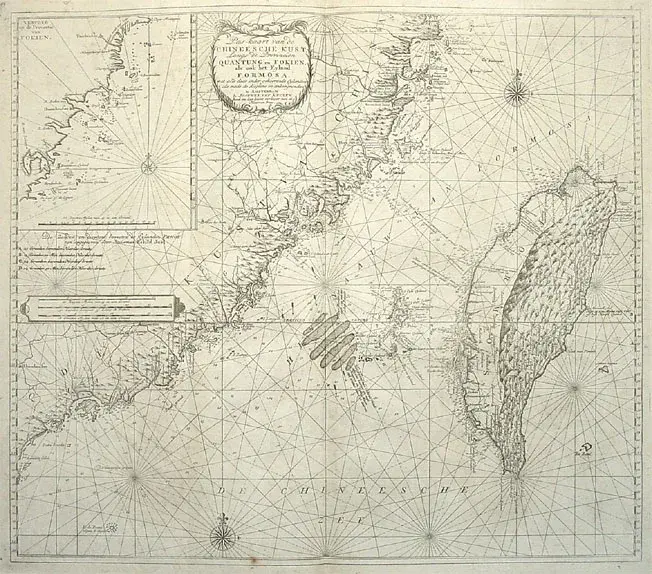
The Continuation and Fall of the Ming Zheng Regime in Taiwan (明郑台湾政权延续与覆亡) encompasses the historical period in which the Southern Ming loyalist Zheng house retreated to Taiwan to maintain a maritime regime until its incorporation into the unified Qing Empire. Following Zheng Chenggong's expulsion of Dutch colonial forces and his sudden death in 1662, his eldest son Zheng Jing defeated succession rivals and established the Kingdom of Dongning. Guided by chief minister Chen Yonghua, Dongning introduced garrison farming, constructed the first Confucian temple and schools, instituted civil service examinations, and maintained clandestine overseas trade networks to defy Qing maritime embargoes. During the Revolt of the Three Feudatories, Zheng Jing launched extensive coastal campaigns in Fujian and Guangdong, which ultimately collapsed due to inter-factional conflict and Qing counter-offensives. Following Zheng Jing's death in 1681, the violent Dongning Coup deepened domestic vulnerability. In 1683, the Kangxi Emperor appointed Admiral Shi Lang to command a decisive naval assault, shattering the Zheng fleet at Penghu. Zheng Keshuang formally submitted Taiwan to the Qing, culminating in the establishment of Taiwan Prefecture and cementing the territorial integrity of the empire.
Zheng Chenggong compels Dutch colonial authorities to capitulate, restoring Taiwan to Chinese governance
Zheng Chenggong passes away at Anping; Zheng Jing triumphs in succession disputes to become Prince of Yanping
Zheng Jing transfers the administrative capital to Taiwan, establishing Dongning and organizing six administrative boards
Chen Yonghua oversees the construction of Taiwan's first Confucian Temple and inaugurates educational academies
Geng Jingzhong revolts against the Qing and invites Zheng Jing to mount military campaigns along the coast
Zheng Jing leads tens of thousands of troops across the strait into Fujian, clashing with Geng over regional territory
Qing amphibious assaults capture coastal bases, compelling Zheng Jing to withdraw his remaining armies back to Taiwan
Zheng Jing dies; Feng Xifan executes Prince Regent Zheng Kezang and crowns the adolescent Zheng Keshuang
The Kangxi Emperor commissions Shi Lang as Admiral of the Fujian Navy to prepare amphibious operations against Taiwan
Shi Lang's naval armada shatters Liu Guoxuan's fleet at Penghu, destroying Dongning maritime defenses
Zheng Keshuang submits the registry of Taiwan and capitulates to the Qing Empire
Kangxi establishes Taiwan Prefecture with three constituent counties under Fujian Province
During the chaotic Ming-Qing transition, Zheng Chenggong carried forward anti-Qing resistance across the southeastern seaboard under the legitimate banner of the Southern Ming Yongli Emperor. Following the collapse of his grand northern expedition against Nanjing in 1659, coastal operational bases dwindled rapidly, subjecting his armies to acute logistical shortages. Seeking an unassailable strategic sanctuary, Zheng Chenggong mobilized several hundred warships and twenty-five thousand troops from Jinmen in 1661, crossing the strait to expel the Dutch East India Company. In February 1662, Dutch Governor Frederick Coyett capitulated, restoring Taiwan to Chinese administration. Zheng Chenggong designated Zeelandia as Anping and Fort Provintia as Chengtian Prefecture, instituting Tianxing and Wannian counties to establish administrative governance.
To sever mainland intelligence and supply lifelines supporting the Zheng fleet, the Qing Regency enforced draconian Coastal Evacuation Orders across five coastal provinces beginning in 1661. Settlements within thirty to fifty li of the coastline were forcibly evacuated and leveled to the ground, with deep boundary trenches dug to enforce absolute maritime isolation. While the evacuation policy inflicted profound devastation upon millions of coastal inhabitants, it severely crippled Zheng supply channels, compelling the Zheng house to reorient its strategic center toward the offshore base of Taiwan.
Shortly after establishing control over Taiwan, catastrophic reports arrived concerning the execution of the Yongli Emperor in Burma by Wu Sangui, alongside the massacre of Zheng family members detained in Beijing. Overwhelmed by personal anguish and worsening insubordination among senior commanders, Zheng Chenggong succumbed to fatal illness at Anping in June 1662 at the age of thirty-nine. His demise triggered immediate civil discord; officers in Taiwan proclaimed his younger brother Zheng Xi as interim ruler, while his eldest son Zheng Jing mounted an expedition from Xiamen. Backed by veteran commanders, Zheng Jing crushed the opposing faction, ascended the throne as the Prince of Yanping, and ushered in the Dongning era.
In 1662, having stabilized his authority over Taiwan, Zheng Jing confronted combined amphibious assaults from Qing forces and Dutch fleets targeting Jinmen and Xiamen. In 1663, Zheng Jing transferred his supreme political and military apparatus from Xiamen to Taiwan. He renamed Dongdu as Dongning, elevated Tianxing and Wannian to full prefectural status, and established six functional administrative boards modeled upon imperial Chinese statecraft. Zheng Jing accommodated surviving Southern Ming royal descendants, including the Prince of Lu's heir Zhu Honghuan, and continued to date state documents under the Yongli era, maintaining ideological legitimacy across coastal waters.
Zheng Jing appointed the scholar-statesman Chen Yonghua as Supreme Consultative Commander to oversee civilian and military affairs. Confronting acute food deficits, Chen Yonghua instituted an extensive military reclamation system known as garrison farming. Military divisions were distributed across the plains of modern Tainan, Kaohsiung, Pingtung, and Yunlin to reclaim virgin lands, combining seasonal agriculture with military drills. This initiative ensured self-sufficiency in food grain. Additionally, the administration introduced modern irrigation canals, refined cane sugar production, and developed advanced solar salt pans, elevating productivity throughout the settlement.
To firmly establish classical Chinese cultural norms on the island, Chen Yonghua urged Zheng Jing to erect temples and academies. In 1666, the Dongning administration erected Taiwan's first Confucian Temple in Chengtian Prefecture, constructing the Minglun Hall alongside it as the supreme imperial academy. Subsidiary schools were systematically opened across prefectures and counties, employing displaced mainland scholars to instruct both Han Chinese and indigenous youths. Furthermore, Chen Yonghua formalized triennial civil examinations to recruit talents into the civil bureaucracy, laying lasting cultural foundations.
Although Qing evacuation edicts severed overt mainland trade, the Dongning navy utilized superior maritime power to dominate shipping lanes across the East China and South China Seas. Zheng Jing turned Anping into an international entrepot, organizing clandestine junk trade networks with coastal ports in Fujian and Guangdong. Simultaneously, Dongning vessels traded across Nagasaki, Manila, Siam, and Batavia, exchanging Taiwanese sugar, deer hides, and textiles for Japanese silver, copper, and European armaments. Dongning also ratified formal trade treaties with the English East India Company, which established a trading post in Anping. Revenue from maritime duties and trade monopolies provided fiscal stability for the regime.
In 1673, Wu Sangui revolted in Yunnan against the Qing court, inaugurating the Revolt of the Three Feudatories. Geng Jingzhong in Fujian and Shang Zhixin in Guangdong soon joined the rebellion. Seeking naval reinforcement, Geng Jingzhong petitioned Zheng Jing to intervene along the southeastern coast, offering territorial rights in Zhangzhou and Quanzhou. In 1674, Zheng Jing launched an expedition across the Taiwan Strait with tens of thousands of troops.
Upon establishing bases at Jinmen and Xiamen, territorial disagreements and supply allocations rapidly poisoned relations between Zheng Jing and Geng Jingzhong. Apprehensive of Zheng naval superiority, Geng refused to surrender Quanzhou. In response, Zheng Jing launched punitive assaults against Geng's positions, capturing Tong'an, Quanzhou, Zhangzhou, and Chaozhou. This internecine strife dissipated the anti-Qing coalition and afforded the Qing imperial command a crucial tactical window to mount a counter-offensive.
Responding to coastal instability, the Kangxi Emperor dispatched Prince of Kang Jieshu to spearhead Eight Banners columns into Fujian. Overwhelmed by imperial forces, Geng Jingzhong surrendered and turned his arms against Zheng Jing. Facing combined imperial attacks, Zheng forces were drawn into attritional defensive warfare. In 1678, the Qing appointed Yao Qisheng as Viceroy of Fujian and Wu Xingzuo as Governor. Yao deployed an astute dual strategy of naval interdiction and psychological warfare, opening recruitment centers with generous bounties to persuade Zheng commanders to defect.
In 1680, Qing forces mounted an amphibious campaign against Jinmen and Xiamen. Admiral Wan Zhengse shattered Zheng naval outposts, while land columns converged upon coastal redoubts. Confronted by widespread desertions and collapsing supply lines, Zheng Jing ordered the abandonment of his mainland strongholds in March 1680, evacuating surviving garrisons back to Taiwan. The coastal expedition concluded in disastrous defeat, exhausting the veteran reserves of Dongning.
Following his return to Taiwan, a demoralized Zheng Jing withdrew from state governance, allowing political factions under Liu Guoxuan and Feng Xifan to dominate court deliberations. In March 1681, Zheng Jing passed away in Chengtian Prefecture at thirty-nine. Before his death, he named his eldest son, Prince Regent Zheng Kezang, as legal successor. Zheng Kezang was widely respected by Chen Yonghua and common soldiers for his administrative integrity and military discipline.
However, Zheng Kezang's strict governance threatened the interests of entrenched noble factions. Immediately upon Zheng Jing's demise, General Feng Xifan conspired with Dowager Lady Dong to assassinate Zheng Kezang. Feng then installed his twelve-year-old son-in-law, Zheng Keshuang, as puppet ruler, concentrating civilian administration under himself while assigning military authority to Liu Guoxuan. This bloody palace revolution alienated loyal commanders, fractured political coherence, and fatally destabilized state cohesion.
Following the suppression of the Three Feudatories, the reunification of Taiwan became the foremost geopolitical objective for the Kangxi Emperor. Although conservative court officials argued that the island was too distant to justify military intervention, Viceroy Yao Qisheng and seasoned naval commander Shi Lang advocated decisive amphibious subjugation. Shi Lang submitted formal memorials demonstrating the strategic necessity of conquering Taiwan to safeguard southern maritime defenses.
In August 1681, the Kangxi Emperor appointed Shi Lang as Admiral of the Fujian Navy with specialized authority to direct the naval campaign. Shi Lang assembled modern war fleets, drilled sailors in adverse weather, and coordinated intelligence gathering. Simultaneously, Yao Qisheng orchestrated supply logistical networks and secured intelligence from surrendered Zheng naval defectors, charting tidal currents and reef formations across the Penghu Archipelago.
On July 8, 1683, capitalizing on seasonal summer monsoons, Shi Lang mobilized over three hundred warships and twenty thousand veteran marine troops from Tongshan, sailing toward Penghu. Recognizing Penghu as the gateway to Taiwan, Dongning had stationed Commander Liu Guoxuan with two hundred warships and extensive coastal fortifications around Magong.
On July 16, Qing and Dongning naval forces engaged in a massive naval confrontation. After initial skirmishes, Shi Lang reordered his naval columns into coordinated central and flanking divisions on July 22. Harnessing favorable wind changes, the Qing fleet bombarded the flagship of Liu Guoxuan with overwhelming artillery barrages. Following fierce naval boarding combat, the Dongning naval lines broke in total rout, losing over a hundred vessels and thousands of troops. Liu Guoxuan fled in a light skiff back to Anping. The battle obliterated the naval power of Dongning.
Following the victory at Penghu, Shi Lang enforced strict discipline, prohibiting looting, caring for wounded enemy combatants, and paying respects at the shrine of Zheng Chenggong to demonstrate imperial benevolence. Shi Lang dispatched emissaries to reassure Dongning leadership that unconditional surrender would be met with imperial clemency.
Confronting total naval isolation and domestic demoralization, proposals by diehards to evacuate to Luzon were rejected. Advised by Liu Guoxuan and Feng Xifan, fourteen-year-old Zheng Keshuang dispatched formal emissaries to Penghu on September 5, 1683, submitting the royal seal and household registries. On October 3, 1683, Shi Lang landed at Luermen, where Zheng Keshuang and his court surrendered. After twenty-two years of maritime governance, the Kingdom of Dongning concluded its rule.
Following the surrender, debates emerged within the imperial court regarding whether to retain or abandon Taiwan. Shi Lang submitted a strategic memorial titled Memorial on the Retention and Abandonment of Taiwan, arguing that Taiwan formed an indispensable naval rampart safeguarding Jiangsu, Zhejiang, Fujian, and Guangdong. The Kangxi Emperor endorsed Shi Lang's strategic counsel. In 1684, the Qing court established Taiwan Prefecture under the jurisdiction of Fujian Province, administering Taiwan, Zhuluo, and Fengshan counties with an imperial garrison of eight thousand soldiers. This historic decision unified maritime boundaries and inaugurated an enduring era of cross-strait integration.
The naval victory at Penghu and the subsequent capitulation of Dongning dismantled the last significant maritime regional regime contesting the Qing Empire. The Qing court treated the surrendered leadership with notable leniency, enrolling Zheng Keshuang into the Han Eight Banners as a Duke and conferring noble titles upon Liu Guoxuan and Feng Xifan. The capitulation incorporated the island's territory and population into standard imperial administrative registries, achieving absolute administrative cohesion.
In terms of maritime frontier security, the creation of Taiwan Prefecture with garrisoned naval detachments permanently foreclosed potential colonial reoccupation by European maritime powers, establishing an enduring defensive perimeter along China's southeastern seaboard. Economically and culturally, the developmental policies initiated under the Zheng house—including agricultural reclamation, Confucian schooling, and mercantile development—laid solid foundations for agrarian civilization in Taiwan. Imperial unification further accelerated cross-strait trade, migration, and long-term socio-economic integration.