Abolition of Nine-Rank System
Emperor Wen of Sui abolished the Nine-Rank System and commanded commanderies to submit examinees, initiating qualifying exams.
Sui Dynasty (隋朝) · HISTORICAL EVENT
进士科设立
The Establishment of the Jinshi Examination (进士科设立) was a landmark institutional reform initiated in 607 (the third year of the Daye era) by Emperor Yang of Sui (Yang Guang), marking the formal founding of China's imperial civil service examination system (Keju). Throughout the Wei, Jin, and Northern and Southern Dynasties, the Nine-Rank System was monopolized by hereditary aristocratic lineages, producing an entrenched caste hierarchy where high…
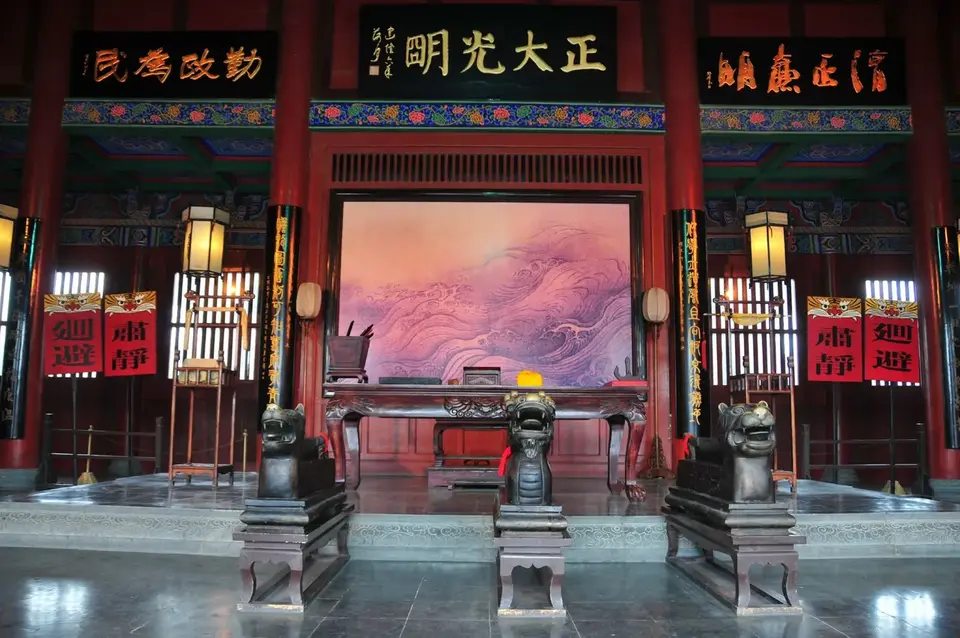
The Establishment of the Jinshi Examination (进士科设立) was a landmark institutional reform initiated in 607 (the third year of the Daye era) by Emperor Yang of Sui (Yang Guang), marking the formal founding of China's imperial civil service examination system (Keju). Throughout the Wei, Jin, and Northern and Southern Dynasties, the Nine-Rank System was monopolized by hereditary aristocratic lineages, producing an entrenched caste hierarchy where high offices were hereditary privileges while talented commoners were barred from public administration. Following the reunification of China, Emperor Wen of Sui abolished the Nine-Rank System and experimented with subject-based examinations. In 607, Emperor Yang formally established the Jinshi examination, testing candidates on policy essays (Shiwu Ce) addressing practical governance, military logistics, and fiscal strategy. Candidates were selected and appointed to official posts based strictly on examination merit. Inherited and refined by the Tang Dynasty through the addition of poetic composition and palace examinations, and made the exclusive examination category during the Song Dynasty, the Jinshi examination abolished hereditary political privilege, stimulated nationwide literacy, and supplied educated civilian bureaucrats who stabilized the centralized imperial state for more than a millennium.
Emperor Wen of Sui abolished the Nine-Rank System and commanded commanderies to submit examinees, initiating qualifying exams.
Emperor Yang of Sui issued the Ten Categories Edict, officially creating the Jinshi examination based on policy dissertations.
The newly founded Tang Dynasty revived the Jinshi degree as an annual regular examination.
The Tang court mandated literary compositions in Jinshi examinations, elevating literary aesthetics in official evaluations.
Empress Wu Zetian personally administered examinations at the palace gates, inaugurating imperial palace testing and promoting commoner talent.
Oversight of examinations shifted from Personnel to Rites, establishing a dual-stage system of qualifying testing and bureaucratic assignment.
Chancellor Wang Anshi abolished subsidiary categories, establishing the Jinshi degree as the sole civil service examination.
Since its inception during the Cao Wei period, the Nine-Rank System originally aimed to evaluate candidates by combining family pedigree with moral virtue and administrative capability. However, over centuries of aristocratic ascendancy during the Eastern Jin and Southern Dynasties, the office of the impartial judge (Zhongzheng) was captured entirely by powerful aristocratic families. Lineage became the sole criterion for rank and appointment. Aristocratic scions acquired grand chancellor posts regardless of talent, while brilliant scholars of humble origins remained permanently excluded from meaningful public service. This hereditary monopoly fossilized the bureaucracy, bred political incompetence, and weakened state capacity.
In 589, Emperor Wen of Sui conquered the Chen Dynasty, ending nearly three centuries of geopolitical fragmentation across China. Confronted with a vast, unified realm, the imperial throne faced formidable challenges from northern military aristocrats and southern cultured gentry who clung to regional autonomy. To curtail the power of hereditary lineages and reclaim royal prerogative over official appointments, Emperor Wen abolished the Nine-Rank System, banned local governors from appointing their own staff, and centralized all personnel decisions under the Ministry of Personnel. The court experimented with rudimentary qualifying exams in classicist subjects, establishing the organizational groundwork for the Jinshi category.
Upon ascending the throne, Emperor Yang of Sui accelerated administrative centralizations. In 607 (the third year of the Daye era), the emperor issued an imperial decree establishing ten examination categories, officially instituting the Jinshi examination.
Unlike classicist categories that emphasized the rote memorization of Confucian canonical texts, the Jinshi curriculum focused primarily on policy essays (Shiwu Ce). The imperial court tested candidates on pressing administrative challenges, frontier defense strategies, hydraulic engineering, and legal reforms. Educated scholars, regardless of their family genealogy, were permitted to register independently and sit for the examinations. Imperial examiners graded submissions based on analytical depth, rhetorical eloquence, and practical feasibility, directly commissioning successful graduates into the imperial bureaucracy. This decree established the core principles of competitive imperial testing: universal eligibility, standardized examinations, meritocratic evaluation, and direct administrative appointment.
Following the transition to the Tang Dynasty, imperial rulers expanded the examination apparatus. Emperor Taizong constructed state academies such as the Directorate of Education and Taixue, dramatically expanding student enrollments and famously remarking that the examination system brought the empire's greatest talents under imperial service.
In 679 (the second year of the Tiaolu era), Emperor Gaozong mandated the testing of miscellaneous literary compositions (poetry and rhymed prose) to evaluate rhetorical brilliance and literary sophistication. Empress Wu Zetian, seeking to cultivate commoner bureaucrats to counterbalance entrenched Guanlong nobles, established the imperial palace examination (Dianshi) presided over directly by the sovereign, alongside military examinations. In 736 (the twenty-fourth year of the Kaiyuan era), administration of the examinations was transferred from the Ministry of Personnel to the Ministry of Rites. The Jinshi degree became the most prestigious, competitive, and celebrated qualification in the Tang realm, earning the famous adage that one was young to pass the Jinshi at fifty years old.
With the founding of the Song Dynasty, Emperor Taizu instituted the state policy of exalting civilian governance over military commanders, substantially increasing Jinshi recruitment quotas. Palace examinations became permanent institutions, rendering all successful candidates direct disciples of the emperor and eliminating the factional ties between examinees and aristocratic patrons that had plagued late Tang politics.
During the Xining era of the Northern Song, Chancellor Wang Anshi reformed the examinations by abolishing classicist categories and consolidating the system exclusively around the Jinshi degree, focusing on classical exposition and policy discourses. The Ming and Qing dynasties formalized a triennial three-tier examination structure: local licensing exams, provincial examinations, and the national metropolitan examination followed by the palace examination. Graduates were classified into three honors classes: Jinshi with Distinction (including the top three: Zhuangyuan, Bangyan, and Tanhua), Regular Jinshi, and Associate Jinshi. The Jinshi examination remained the primary path for elite entry into government service until 1905.
The second emperor of the Sui Dynasty and an ambitious reformer. In 607, he issued the historic decree founding the Jinshi examination, dismantling centuries of aristocratic privilege and establishing China's open competitive civil service examination.
The founding emperor of the Sui Dynasty who unified China. He abolished the corrupt Nine-Rank System, centralized personnel authority under the imperial throne, and instituted preliminary subject examinations that directly enabled the birth of the Jinshi system.
A renowned Tang Dynasty chancellor and statesman who passed the Jinshi examination during the late Sui period. He exemplified the early generation of meritocratic civil servants whose administrative competence helped Emperor Taizong forge the Zhenguan Governance.
A celebrated statesman and chancellor during the reign of Wu Zetian. Entering service through civil examinations, he vigorously championed the appointment of meritorious examination scholars, serving as a pillar of the commoner bureaucratic elite against aristocratic clans.
The establishment of the Jinshi examination dismantled the political monopoly of hereditary aristocratic families. By opening administrative office to commoner scholars based on anonymous, meritocratic academic testing, the examination system created viable avenues for upward social mobility. Deprived of hereditary privileges, medieval aristocratic clans gradually disappeared, transforming China from an aristocratic society into a civilian-bureaucratic state.
The Jinshi system aligned intellectual ambitions with state service, inspiring generations of scholars to master classical literature, administrative ethics, and statecraft. The pervasive desire for educational attainment stimulated private academies and printing technologies across the empire, diffusing Confucian ethics deep into village communities and cultivating a shared civilizational identity across disparate regions.