Liao Ultimatum Delivered
Emperor Xingzong massed troops along the border and sent envoys demanding the return of Guannan.
Northern Song Dynasty (北宋) · HISTORICAL EVENT
重熙增币
The Chongxi Increase of Tribute (Qingli Tribute Negotiations) (重熙增币) was a pivotal diplomatic crisis and treaty revision in 1042 (the eleventh year of the Chongxi era of Liao and the second year of the Qingli era of Northern Song) in which the Khitan Liao Dynasty exploited Northern Song military reversals in the Song-Xia Wars to demand territorial concessions, resulting in an agreed increase in annual Song subsidies to preserve peace. Following the…
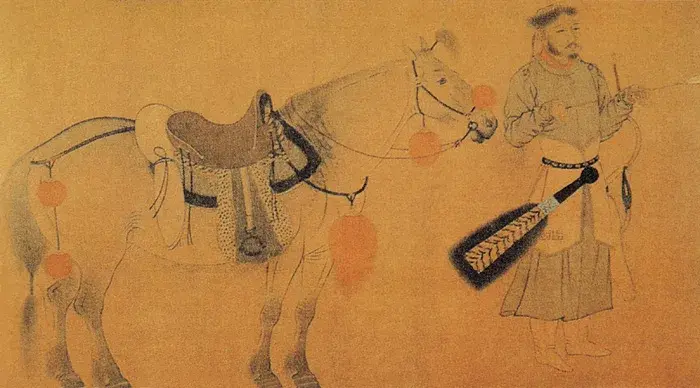
The Chongxi Increase of Tribute (Qingli Tribute Negotiations) (重熙增币) was a pivotal diplomatic crisis and treaty revision in 1042 (the eleventh year of the Chongxi era of Liao and the second year of the Qingli era of Northern Song) in which the Khitan Liao Dynasty exploited Northern Song military reversals in the Song-Xia Wars to demand territorial concessions, resulting in an agreed increase in annual Song subsidies to preserve peace. Following the Chanyuan Covenant of 1005, the two empires had maintained nearly four decades of peace. However, when Western Xia declared independence in 1038 and inflicted crushing defeats on Song armies at Haoshuichuan and Dingchuanzhai, Emperor Xingzong of Liao mobilized an army along the southern border, sending envoys to demand the surrender of the ten Guannan counties recovered by Later Zhou. In response, Emperor Renzong of Song dispatched Vice Commissioner of Military Affairs Fu Bi as envoy to Liao. Exhibiting supreme diplomatic acumen, Fu Bi argued that war would merely allow Western Xia to reap the spoils while peace ensured guaranteed wealth for Liao. Fu Bi unyieldingly refused any territorial cession and rejected the subservient wording of tribute submission. Ultimately, the two states signed a revised accord: Northern Song increased its annual tribute by one hundred thousand ounces of silver and one hundred thousand bolts of silk, while Liao pledged to pressure Western Xia to conclude peace with Song. The negotiation averted a catastrophic two-front war, although the added fiscal burden catalyzed the Qingli Reforms in the Song court.
Emperor Xingzong massed troops along the border and sent envoys demanding the return of Guannan.
Fu Bi arrived at Zhongjing, debating Emperor Xingzong and persuading him to drop territorial claims.
Fu Bi returned to Liao for a second mission, firmly refusing the term "present" to preserve Song dignity.
The courts agreed to an annual increase of 200,000 units of silver and silk under the neutral term "deliver."
Liao withdrew its armies and forced Western Xia to seek peace, restoring northern border security.
The financial strain and diplomatic humiliation inspired Fan Zhongyan and Fu Bi to initiate the Qingli Reforms.
Following the Chanyuan Covenant in 1005, Northern Song and Liao established fraternal relations that fostered peaceful border commerce and cultural exchange for nearly four decades. However, in 1038, Tangut leader Li Yuanhao proclaimed himself emperor of Western Xia, severing tributary ties with Song and sparking the Song-Xia Wars. Song armies suffered catastrophic defeats in pitched battles at Sanchuankou, Haoshuichuan, and Dingchuanzhai, with tens of thousands of elite imperial guardsmen killed or captured. To reinforce the western front, the Northern Song emptied state treasuries and transferred veteran garrisons to Shaanxi, leaving the northern frontier along Hebei lightly guarded.
In the Khitan Empire, Emperor Xingzong (Yelü Zongzhen) faced internal political factions following power struggles with the Empress Dowager and sought foreign victories to enhance his sovereign prestige. Recognizing that Northern Song was militarily depleted and trapped in the west, Xingzong saw an opportunity to extract territorial and financial concessions without firing a shot.
In the spring of 1042, Emperor Xingzong massed a large cavalry force near Nanjing (modern Beijing), demonstrating an intent to cross the Yellow River. In March, he dispatched envoys Xiao Ying and Liu Liufu to Bianjing, demanding the retrocession of the ten Guannan counties south of the Yijin and Wagqiao passes (in modern Hebei), which had been annexed by Later Zhou Emperor Shizong in 959 prior to Song's founding.
The delivery of the Liao ultimatum provoked panic within the Song court. Hawkish generals demanded war, but Grand Chancellor Lü Yijian recognized that fighting a two-front war against both Western Xia and Liao simultaneously would bring national ruin.
Lü Yijian recommended Vice Commissioner of Military Affairs Fu Bi, a courageous scholar-statesman renowned for strategic depth and foreign affairs expertise. Appointed as an imperial envoy, Fu Bi calmly accepted the dangerous mission, bidding farewell to his family and vowing that he would perish on foreign soil before bringing dishonor to his country.
In May 1042, Fu Bi arrived at the Liao Central Capital (Zhongjing Dadingfu) and engaged in intense diplomatic debates with Emperor Xingzong and his Han chancellor Liu Liufu. Confronted with the demand for Guannan, Fu Bi systematically dismantled the Khitan historical claim. He pointed out that Song had inherited Guannan from Later Zhou over eighty years prior, and that the Chanyuan Covenant had explicitly confirmed existing borders. If ancient claims were revived arbitrarily, no border in East Asia could ever remain stable.
Fu Bi then delivered a masterful geopolitical assessment, looking Emperor Xingzong in the eye: "Western Xia is an untrustworthy nomadic predator. For forty years, Song and Liao have maintained mutual peace, trading along border markets while your imperial house enjoys guaranteed wealth without mobilizing a single archer. If you attack Song, our soldiers in Hebei will fight with their backs to the wall. War is unpredictable; if you triumph, your generals will become unmanageable, but if you suffer defeat, domestic instability will erupt, while Western Xia reaps the spoils of both empires. What benefit does this offer the Khitan people?" Deeply impressed by Fu Bi's reasoning, Emperor Xingzong abandoned all claims to Guannan and shifted the negotiations to an increase in annual tribute.
Fu Bi returned to Bianjing to brief Emperor Renzong, who agreed to increase annual payments to avert war. In July 1042, Fu Bi embarked on his second mission to finalize the treaty text. However, Liao chancellor Liu Liufu attempted to humiliate Song by demanding that the annual tribute be designated with the Chinese word "Xian" (meaning to humbly present as an inferior to a superior).
Fu Bi vehemently rejected the proposal before the assembled Khitan court, declaring: "Song is the elder brother state and Liao is the younger brother; how can an elder brother present tribute to a younger brother? Even the Han Dynasty used neutral terms of bestowal when trading with the Xiongnu. If Liao insists upon this insulting wording, Song will cancel the payments and deploy one hundred thousand soldiers to settle the issue on the battlefield!" Observing Fu Bi's defiance and fearing the collapse of the negotiations, Emperor Xingzong relented, agreeing to use the neutral term "Na" (to deliver) or "Yi" (to bestow).
In September 1042, the two monarchs ratified the revised covenant. Northern Song agreed to add one hundred thousand ounces of silver and one hundred thousand bolts of silk to its annual commitments, bringing total annual payments to two hundred thousand ounces of silver and three hundred thousand bolts of silk. In return, Emperor Xingzong formally bound himself to pressure Western Xia to cease its invasions and accept Song suzerainty, withdrawing his mobilization from the border. Upon his return, Fu Bi steadfastly refused imperial promotions and monetary rewards from Emperor Renzong, maintaining that increasing payments represented a fiscal loss to the state.
Vice Commissioner of Military Affairs and later Grand Chancellor of Northern Song. A brilliant diplomat and scholar who undertook dangerous missions to Liao, deflecting territorial extortion and safeguarding national dignity through moral conviction and eloquence.
The seventh emperor of the Liao Dynasty. Seeking foreign triumphs to bolster his domestic authority, he opportunistically blackmailed Song, securing increased annual payments while being persuaded by Fu Bi to maintain long-term peace.
The fourth emperor of the Northern Song Dynasty. Confronted with simultaneous crises in the northwest and north, he pragmatically supported Fu Bi's diplomatic settlement, utilizing financial resources to purchase frontier peace.
Grand Chancellor of the Northern Song Dynasty. A seasoned statesman who navigated the crisis by restraining military hawks and selecting Fu Bi as chief plenipotentiary, avoiding a devastating multi-front war.
A prominent Han Chinese scholar and Chief Minister of Liao. Serving as Xingzong's principal diplomatic strategist, he drafted the territorial claims and contested treaty phrasing against Fu Bi.
The Chongxi Increase of Tribute neutralized the strategic danger of a coordinated two-front invasion by Liao and Western Xia. By conceding an additional two hundred thousand units of silver and silk, Northern Song preserved its Guannan territories and secured Liao diplomatic intervention, which compelled Li Yuanhao of Western Xia to accept Song vassalage in 1044, granting both frontiers decades of stability.
Although the settlement prevented military catastrophe, the added payments exacerbated the chronic financial exhaustion of the Northern Song government. The realization that military weakness compelled diplomatic compromises shocked the Song scholar-elite. In 1043, statesmen Fan Zhongyan, Fu Bi, and Han Qi launched the Qingli Reforms to reorganize bureaucratic efficiency, overhaul civil examinations, and strengthen local defenses, inaugurating the major reform movement of the mid-Song era.