Battle of Gaoping
Emperor Shizong smashes the Northern Han-Liao alliance, establishing imperial authority and determining to reunify China
Later Zhou Dynasty (后周) · HISTORICAL EVENT
王朴献《平边策》
The submission of the Memorial on Pacifying the Frontiers by Wang Pu (王朴献(平边策)) in 955 (Xiande 2) was a monumental strategic event during the Five Dynasties and Ten Kingdoms period that decisively altered the course of Chinese history. Following his decisive victory against the joint forces of Northern Han and the Khitan Liao dynasty at the Battle of Gaoping, Emperor Shizong of Later Zhou (Chai Rong) possessed grand ambitions to extinguish rival regional…
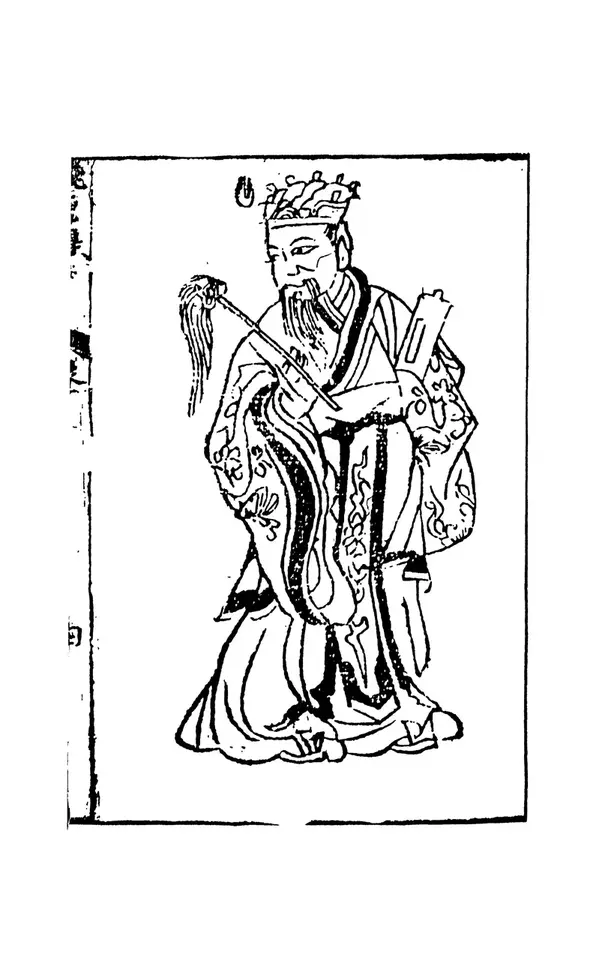
The submission of the Memorial on Pacifying the Frontiers by Wang Pu (王朴献(平边策)) in 955 (Xiande 2) was a monumental strategic event during the Five Dynasties and Ten Kingdoms period that decisively altered the course of Chinese history. Following his decisive victory against the joint forces of Northern Han and the Khitan Liao dynasty at the Battle of Gaoping, Emperor Shizong of Later Zhou (Chai Rong) possessed grand ambitions to extinguish rival regional states and restore the unified imperial realm. To harness collective administrative wisdom, Emperor Shizong issued an imperial edict commanding civilian and military officials to draft comprehensive memorials outlining governance methods and strategies for frontier pacification. In response, Wang Pu, then serving as Vice Director of the Bureau of Review, presented his celebrated memorial. In this strategic treatise, Wang Pu deeply analyzed the fundamental structural errors committed by the fallen Tang and Later Jin dynasties, emphasizing that successful imperial reunification required internal administrative cleansing, agricultural relief, and transparent military discipline. Militarily, he innovatively formulated the principle that "in all campaigns of conquest, one must begin with what is easy," proposing the comprehensive roadmap of subduing the Southern Tang first to absorb southern economic abundance before sweeping west into Shu and finally crushing Northern Han. Emperor Shizong profoundly praised the memorial, elevated Wang Pu into the privy council, and established the text as the supreme state doctrine for national reunification. This blueprint not only directed the Later Zhou's triumphant conquest of the Huainan region, but also served as the foundational military doctrine for the subsequent Song dynasty under Zhao Kuangyin.
Emperor Shizong smashes the Northern Han-Liao alliance, establishing imperial authority and determining to reunify China
Emperor Shizong reforms the imperial guards, trains elite shock divisions, and expands Kaifeng's urban fortifications
Emperor Shizong issues a decree soliciting comprehensive policy treatises on frontier pacification and governance
Vice Director Wang Pu presents his celebrated Memorial on Pacifying the Frontiers outlining grand strategy
Emperor Shizong adopts the memorial as state doctrine, appointing Wang Pu to the central policymaking staff
The court constructs river warships, drills amphibious troops, and accumulates supplies for the Huai River campaign
Emperor Shizong leads an army south against Southern Tang, beginning the three Huainan campaigns
Later Zhou annexes all fourteen prefectures north of the Yangtze, fully realizing the core goal of Wang Pu's memorial
In the wake of the Huang Chao rebellion and late-Tang militarist fragmentation, the Central Plains endured more than half a century of catastrophic disunion during the Five Dynasties and Ten Kingdoms era. Northern dynasties rose and fell in rapid succession, with rampant warlordism and civilian devastation. The Khitan Liao dynasty seized the strategic Sixteen Prefectures of Yanyun, while Northern Han allied with the Khitans to entrench its fortress regime in Taiyuan. Concurrently, southern China fractured into independent regional kingdoms, including Southern Tang, Former Shu, Later Shu, Wuyue, Southern Han, and Jingnan, each maintaining separate dynastic titles and military establishments.
In 954 (Xiande 1), Emperor Taizu of Later Zhou (Guo Wei) passed away, and his adopted son Chai Rong ascended the throne as Emperor Shizong. A resolute and visionary sovereign, Emperor Shizong pledged to restore universal order and peace. Early in his reign, he personally led troops at the Battle of Gaoping, routing the superior joint invasion force of Northern Han and Khitan heavy cavalry against heavy odds. The Gaoping victory elevated his supreme authority among the armed forces. In the aftermath, Emperor Shizong restructured the imperial palace guard, weeded out infirm soldiers, expanded the outer walls of Kaifeng, and promoted flood control, determined to eradicate regional secession within his lifetime.
In 955 (Xiande 2), Emperor Shizong resolved to solicit practical grand strategies from the bureaucratic elite. He issued a solemn imperial decree requiring all court dignitaries, administrative vice directors, and investigating censors to submit two specialized policy papers: one analyzing the hardships of rulership and ministership, and the other detailing practical methods for pacifying frontier rivals, stimulating fiscal productivity, and executing military conquests.
Most civil officials replied with conventional Confucian moralizing, offering vague homilies on benevolent governance without realistic assessments of military geography, supply lines, or enemy troop strengths. Wang Pu, however, possessed exceptional intellect, profound mastery of astronomical calculation, calendar science, and military doctrine, alongside acute geographical knowledge of contemporary regimes. Recognizing a historic opportunity, Wang Pu concentrated his extensive learning into drafting the celebrated Memorial on Pacifying the Frontiers (Pingbian Ce).
In early 955, Wang Pu formally presented the Memorial on Pacifying the Frontiers to Emperor Shizong. The treatise opened with an incisive analysis: "Your servant has heard that the Tang dynasty lost Wu and Shu through losing the proper Path, while the Jin dynasty lost You and Bing through losing the proper Path. By observing the causes of their failure, one comprehends the art of restoring universal order." Wang Pu argued that the collapse of previous dynasties stemmed not from external military superiority, but from internal decay.
Wang Pu elaborated that during periods of dynastic collapse, sovereigns were benighted, administration chaotic, soldiers mutinous, and civilians exhausted. Internal conspiracies bred external rebellions, and minor infractions left unchecked metastasized into outright usurpation. Opportunistic warlords in Wu and Shu claimed imperial titles, while northern enemies occupied strategic frontiers. Therefore, Wang Pu declared, the true method for pacifying regional regimes lay in reversing the structural failings of Tang and Later Jin through comprehensive internal renewal across civil, fiscal, and military sectors.
Wang Pu first expounded his doctrine that "internal governance must precede external expansion." He submitted six foundational maxims for imperial governance: first, advance the worthy and dismiss the incompetent to purify administrative efficiency; second, employ capable administrators and remove the unqualified through strict meritocratic evaluations; third, implement predictable ordinances and reliable rewards to cultivate the trust of the populace; fourth, dispense generous rewards for military achievement and rigorously punish transgressions; fifth, practice frugality and restrain palace expenditures to accumulate fiscal wealth; and sixth, levy light taxes and respect agricultural seasons to enrich civilian livelihoods.
Wang Pu emphasized that successful military campaigns depended fundamentally on robust economic reserves and genuine popular support. Only when imperial granaries were full, armaments plentiful, civilians content, and generals disciplined would the empire possess an irresistible strategic posture. At that juncture, the inhabitants of neighboring rival states, recognizing the prosperity and justice of the Central Plains, would voluntarily offer logistical intelligence and serve as guides for the imperial armies. Wang Pu asserted: "When the hearts of their people align with the hearts of our people, they align with the mandate of Heaven; and aligning with the mandate of Heaven guarantees infallible success."
Regarding overarching military strategy, Wang Pu established the renowned operational maxim: "In all campaigns of conquest, one must begin with what is easy." At the time, Later Zhou was encircled by formidable adversaries: the Khitans and Northern Han to the north, Later Shu to the west, Southern Tang to the south, Wuyue to the southeast, and Southern Han to the far south. Many imperial commanders advocated launching a preemptive northern offensive against Taiyuan, but Wang Pu vehemently argued against this, asserting that Southern Tang should be the primary objective.
Wang Pu demonstrated that among contemporary regional regimes, Southern Tang was the most susceptible to strategic disruption. Although possessing vast territory and abundant treasury stores, its armed forces were notoriously complacent and undisciplined. Furthermore, Southern Tang's frontier stretched across two thousand li from the sea to the Yangtze. Rather than staking imperial fortune on a single risky clash, Wang Pu advocated employing mobile light cavalry detachments to conduct sustained harassing raids along the extensive border.
Wang Pu detailed the operational rhythm: Later Zhou forces should strike wherever Southern Tang defenses were weak, raiding the west if they reinforced the east, and attacking the east if they reinforced the west, compelling southern forces to exhaust themselves in endless transversal maneuvers. Southern commanders, prone to alarm, would repeatedly order nationwide mobilizations; frequent mass call-ups would drain their national treasury and alienate their peasantry. Conversely, should Southern Tang fail to respond promptly during any raid, Later Zhou heavy divisions could strike swiftly into the interior to seize key prefectures north of the Yangtze.
Wang Pu then delineated the complete chronological sequence for imperial unification following the subjugation of Southern Tang. He explained that once Later Zhou absorbed the fourteen prefectures of Huainan north of the Yangtze, the Central Plains would secure enormous tax revenues, vast granaries, experienced naval forces, and prime dockyards along the Huai River. Mobilizing these southern resources alongside veteran northern shock troops, crossing the Yangtze to pacify southern China would become an effortless endeavor.
Once Southern Tang was subdued, isolated regimes like Southern Han in Lingnan and warlords in Hunan would voluntarily submit. Western Shu (Later Shu) under Meng Chang, paralyzed by isolation, could be summoned by imperial dispatch; should they resist, imperial forces could advance along multiple valleys and sweep over Sichuan. With the south and west pacified, the Central Plains would enjoy overwhelming material supremacy, rendering Khitan outposts in Youzhou vulnerable to diplomatic and military pressure.
Regarding the solitary holdout of Northern Han in Taiyuan, Wang Pu identified it as a desperate faction relying on Khitan cavalry that could never be won over by moral persuasion. However, having suffered devastating losses at Gaoping, Northern Han was already strategically enfeebled and incapable of mounting serious offensives against the south. Consequently, it could safely be contained and preserved as the final target of conquest. Wang Pu concluded: "With our troops finely drilled, armaments stocked, laws respected, and commanders dedicated, border pacification can be realized within a single harvest cycle!"
Upon reading the Memorial on Pacifying the Frontiers, Emperor Shizong was overcome with admiration. He recognized that Wang Pu possessed not merely tactical acuity, but an extraordinary grand strategic vision perfectly attuned to geopolitical realities and operational logistics.
Emperor Shizong immediately summoned Wang Pu to the imperial palace for an all-night audience, thoroughly examining operational timing and administrative implementation. Following this meeting, the sovereign broke bureaucratic protocol by appointing Wang Pu Left Policy Advisor, soon promoting him to Senior Reviewing Director to oversee confidential military affairs. Emperor Shizong adopted the Memorial on Pacifying the Frontiers as the supreme guiding blueprint for statecraft, systematically initiating administrative overhauls: regulating Buddhist monastic holdings to cast tongbao copper coins, pruning excessive expenditures, establishing naval construction basins at Kaifeng, and mass-producing specialized riverine warships. In the winter of 955, Emperor Shizong formally launched his southern offensive against Southern Tang, inaugurating the momentous reunification wars envisioned in Wang Pu's grand design.
Following the submission of the Memorial on Pacifying the Frontiers, Emperor Shizong elevated its doctrines into the foundational grand strategy of the empire. Later Zhou implemented systematic administrative reforms, cleansed the bureaucracy, stimulated agriculture, and modernized armaments. Between the winter of 955 and 958 (Xiande 2 to Xiande 5), Emperor Shizong launched three massive campaigns against Southern Tang, winning decisive engagements at Zhengyang, Shouchun, and Mount Zijin. Southern Tang was compelled to surrender fourteen prefectures north of the Yangtze, securing rich grain belts and strategic river barriers for Later Zhou. For his paramount planning, Wang Pu rose to Director of the Bureau of Military Affairs and Grand Guardian, becoming Emperor Shizong's chief advisor. When Wang Pu died suddenly in 959, the emperor wept profusely over his body and posthumously conferred the title of Palace Attendant.
The Memorial on Pacifying the Frontiers remains one of the most brilliant strategic masterworks in Chinese military history. It liberated Central Plains regimes from deadlocked military exhaustion against northern nomadic powers by establishing the doctrine of "subduing the south before the north, and tackling the easy before the difficult." By rapidly integrating the fertile tax revenue, shipyards, and human resources of southern China, the northern dynasty built overwhelming imperial superiority. Crucially, the operational blueprint articulated by Wang Pu was completely adopted by Zhao Kuangyin and Zhao Pu upon the founding of the Song dynasty. The Song armies executed Wang Pu's precise trajectory, subduing Jingnan, Later Shu, Southern Han, and Southern Tang in sequence, ultimately extinguishing two centuries of regional secession since the An Lushan Rebellion and restoring universal dynastic unification.