Accession of Emperor Shao
Emperor Ling dies, Emperor Shao ascends the throne under Empress Dowager He's regency, and He Jin becomes General-in-Chief
Eastern Han Dynasty (东汉) · HISTORICAL EVENT
董卓进京
Dong Zhuo's entry into the capital (董卓进京) was a pivotal military and political coup in the autumn of 189 during the late Eastern Han dynasty, wherein Liangzhou warlord Dong Zhuo seized control of the imperial capital of Luoyang, confiscated the palace guards, and deposed the reigning emperor. Following the death of Emperor Ling, General-in-Chief He Jin sought to eradicate the powerful eunuch faction known as the Ten Attendants. Rejecting the warnings of…
Dong Zhuo's entry into the capital (董卓进京) was a pivotal military and political coup in the autumn of 189 during the late Eastern Han dynasty, wherein Liangzhou warlord Dong Zhuo seized control of the imperial capital of Luoyang, confiscated the palace guards, and deposed the reigning emperor. Following the death of Emperor Ling, General-in-Chief He Jin sought to eradicate the powerful eunuch faction known as the Ten Attendants. Rejecting the warnings of ministers Lu Zhi and Zheng Tai, He Jin summoned frontier general Dong Zhuo to march his army toward Luoyang to intimidate Empress Dowager He. On the twenty-fifth day of the eighth month, eunuchs ambushed and killed He Jin, precipitating a bloody purge of the palace led by Yuan Shao, during which the eunuchs fled with Emperor Shao (Liu Bian) and Prince Liu Xie. Dong Zhuo intercepted the fleeing emperor at Mount Beimang and escorted the imperial brothers back to Luoyang. Through tactical deception, Dong Zhuo assimilated the imperial guard units of He Jin and He Miao, then bribed Lu Bu with the renowned Red Hare horse to assassinate Bingzhou Inspector Ding Yuan. Having centralized military power, Dong Zhuo assembled the court in Chongde Hall on the first day of the ninth month, forcibly deposed Emperor Shao, and installed nine-year-old Emperor Xian, subsequently poisoning the empress dowager and seizing dictatorial authority as Chancellor of State. This event marked the beginning of warlord hegemony and the irreversible collapse of the Han Empire.
Emperor Ling dies, Emperor Shao ascends the throne under Empress Dowager He's regency, and He Jin becomes General-in-Chief
He Jin adopts Yuan Shao's strategy and summons Dong Zhuo to march on the capital despite warnings from Lu Zhi and Zheng Tai
Eunuchs murder He Jin in Jiade Hall; Yuan Shao leads guards into the palace, initiating a general slaughter of eunuchs
Dong Zhuo intercepts Emperor Shao and Prince Liu Xie at Mount Beimang, observing the prince's superior composure
Dong Zhuo repeatedly marches cavalry in and out of Luoyang to feign vast numbers, rapidly absorbing He Jin's troops
Dong Zhuo bribes Lu Bu with Red Hare to assassinate Ding Yuan, consolidating absolute command over all capital forces
Dong Zhuo deposes Emperor Shao in Chongde Hall and enthrones nine-year-old Prince Liu Xie as Emperor Xian
Dong Zhuo poisons Empress Dowager He, takes office as Chancellor of State, and drives Yuan Shao and Cao Cao into flight
During the later decades of the Eastern Han dynasty, the imperial court was polarized by chronic conflict between consort clans and palace eunuchs. In the fourth month of 189, Emperor Ling died, and his fourteen-year-old son Liu Bian was enthroned as Emperor Shao. The emperor's mother, Empress Dowager He, assumed the regency, while her half-brother He Jin took office as General-in-Chief, commanding the central armed forces. Eager to consolidate his family's supremacy, He Jin resolved to eliminate the corrupt Ten Attendants who had dominated imperial administration.
However, Empress Dowager He, indebted to the eunuchs for past political favors and palace assistance, repeatedly rejected He Jin's demands for a comprehensive purge. Observing the impasse, Colonel of Sili Yuan Shao advised He Jin to secretly summon frontier warlords, including Dong Zhuo from Hedong and Ding Yuan from Bingzhou, to lead troops toward Luoyang. Yuan Shao intended to use the physical presence of peripheral armies to coerce the empress dowager into approving the extermination of the eunuchs.
He Jin embraced Yuan Shao's strategy and dispatched urgent imperial summons instructing Dong Zhuo, then General of the Vanguard and Governor of Bingzhou, to march south. Dong Zhuo had spent decades suppressing Qiang rebellions in the northwest, commanding a private army composed of battle-hardened Han cavalry and auxiliary tribal horsemen. Possessing immense personal ambitions and a ruthless temperament, Dong Zhuo immediately recognized the imperial summons as an unprecedented opportunity to dictate terms to the central government.
Many prominent court statesmen recognized the danger of inviting external generals into the capital. Palace Attendant Zheng Tai directly confronted He Jin, declaring that Dong Zhuo was a ravenous wolf who would devour the empire if admitted. Minister Lu Zhi similarly presented urgent memorials arguing that summoning frontier armies would inevitably undermine the constitutional order. Disregarding these prophetic warnings, He Jin obstinately ordered Dong Zhuo forward, clearing the path for an imperial disaster.
On the twenty-fifth day of the eighth month of 189, the Ten Attendants learned of He Jin's scheme and feigned an imperial audience to lure him into Jiade Hall, where they decapitated him. He Jin's lieutenants Wu Kuang and Zhang Zhang, joined by Yuan Shao and Yuan Shu, immediately mobilized the Palace Guards and stormed the palace precincts. They shut the gates and initiated a sweeping slaughter, executing over two thousand eunuchs throughout the palace halls.
Amid the carnage, senior eunuchs Zhang Rang and Duan Gui abducted Emperor Shao and the Prince of Chenliu, Liu Xie. Escaping through the north gate, they fled through the night toward Xiaoping Ford on the Yellow River and Mount Beimang. At that moment, Dong Zhuo's cavalry vanguard had reached the Xianyang Pleasure Garden on the western outskirts of Luoyang. Seeing smoke rising from the palace and learning of the emperor's flight, Dong Zhuo personally led his elite riders in rapid pursuit toward Mount Beimang.
Cornered near the river by pursuing soldiers and Minister Lu Zhi, Zhang Rang drowned himself in the Yellow River. Wandering through thick marshes in darkness, the young emperor and his brother were discovered by Dong Zhuo's cavalry. Confronted by armed riders, fourteen-year-old Emperor Shao burst into tears and was unable to speak coherently. In contrast, nine-year-old Prince Liu Xie calmly questioned Dong Zhuo regarding his mission and explained the sequence of the palace coup with remarkable clarity. Impressed by the boy's composure and wisdom, Dong Zhuo resolved to depose Emperor Shao and elevate Liu Xie to the throne.
Escorting the sovereign back to Luoyang, Dong Zhuo proceeded with extreme caution. Although his Liangzhou cavalry were seasoned combatants, his vanguard numbered only several thousand troops. In terms of numbers, Dong Zhuo was significantly outmatched by the combined forces of the late He Jin and He Miao, as well as the independent Bingzhou division commanded by Inspector Ding Yuan stationed outside the walls.
To project an image of overwhelming numerical strength and cow the court, Dong Zhuo orchestrated a clever deception. Each night, he ordered several thousand horsemen to slip quietly out of the western gates under cover of darkness. The following morning, these units marched back through the western gate in full ceremonial armor, flags unfurled and drums thundering, as if vast reinforcement columns were arriving continuously from Liangzhou. After several days of this charade, imperial ministers and city garrison commanders concluded that Dong Zhuo commanded hundreds of thousands of veteran soldiers, breaking their resolve to resist.
Simultaneously, the sudden deaths of He Jin and He Miao left the imperial guard without recognized leadership. Exploiting their common regional heritage as western frontiersmen, Dong Zhuo approached guard commander Wu Kuang, offering guarantees of protection and patronage. Within days, Dong Zhuo peacefully absorbed the entire capital garrison into his own command, vastly multiplying his military strength and isolating potential civilian opponents.
Following the annexation of He Jin's infantry, only one substantial force remained capable of challenging Dong Zhuo in the capital region: the Bingzhou division commanded by Inspector Ding Yuan, camped outside the walls. Ding Yuan was fiercely devoted to the Han dynasty and was protected by his adopted son, Lu Bu, a martial prodigy celebrated throughout northern China for his incomparable equestrian archery and prowess with the halberd.
Recognizing that a direct clash with Ding Yuan's cavalry would be costly, Dong Zhuo devised a scheme to subvert Lu Bu's allegiance. Learning that Lu Bu was ambitious and easily swayed by material rewards, Dong Zhuo dispatched Cavalry Commandant Li Su, a fellow native of Bingzhou, to visit Lu Bu's encampment in secret. Li Su brought magnificent gifts, including the celebrated Red Hare warhorse, one thousand ounces of pure gold, rare pearls, and promises of high military commissions.
Dazzled by the prospect of immense wealth and supreme rank, Lu Bu agreed to betray his commander. On the night of the Dinghai day in the eighth month, Lu Bu walked into Ding Yuan's tent, murdered his adopted father, and severed his head, presenting it to Dong Zhuo the following morning. Deprived of their commander, the Bingzhou cavalry surrendered en masse. With this ruthless stroke, every regular military formation in the capital fell under Dong Zhuo's absolute command.
With all armed resistance neutralized, Dong Zhuo enacted his plan to change the imperial succession and establish despotic rule. On the first day of the ninth month of 189, Dong Zhuo convened a plenary assembly of high ministers and princes in Chongde Hall. He boldly proposed deposing Emperor Shao and replacing him with Prince Liu Xie. Minister Lu Zhi stepped forward in open court to denounce the proposal, arguing that the young sovereign had committed no moral transgression. Dong Zhuo furiously threatened Lu Zhi with execution, but relented after Minister Wang Yun intervened, instead stripping Lu Zhi of his office.
Disregarding the silence of the intimidated court, Dong Zhuo ordered his soldiers to drag Emperor Shao from the imperial throne, stripped him of the imperial seal, and forced the Grand Master of Ceremonies to read a fabricated decree from Empress Dowager He declaring that the emperor lacked imperial dignity. Dong Zhuo personally escorted nine-year-old Liu Xie to the dragon throne, inaugurating the reign of Emperor Xian.
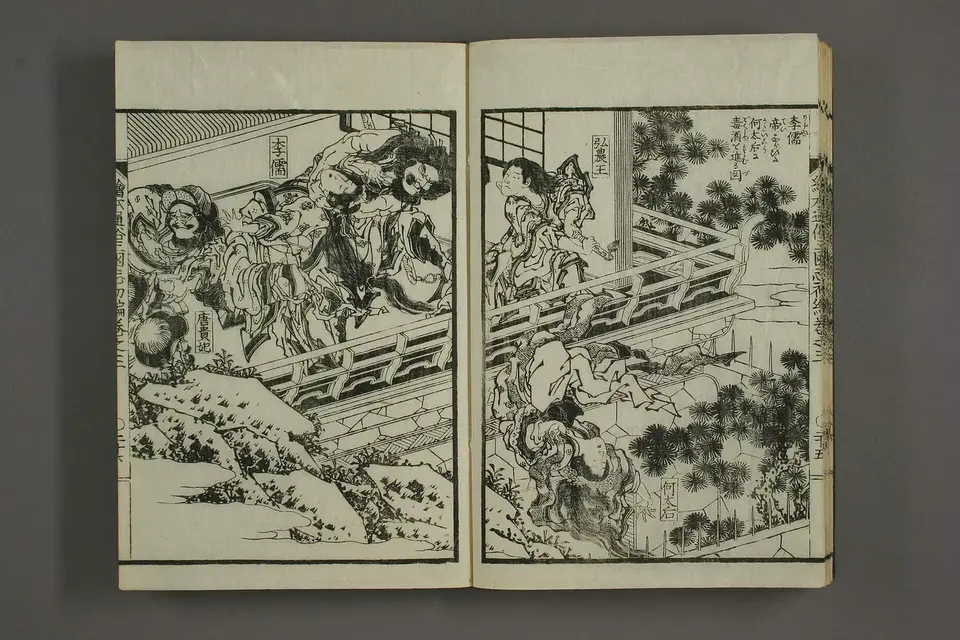
Two days later, Dong Zhuo confined Empress Dowager He to Yong'an Palace, subsequently forcing her to drink poison and exterminating the He clan. The following spring, Dong Zhuo dispatched his confidant Li Ru with poisoned wine to the residence of the deposed emperor in Hongnong, compelling young Liu Bian to commit suicide. The sacred dignity of the Eastern Han monarchy was utterly extinguished.
Having orchestrated the dynastic coup, Dong Zhuo concentrated absolute executive and legislative authority in his own hands. In the ninth month, he appointed himself Excellency of Works, soon promoted himself to Grand Commandant, and assumed the supreme office of Chancellor of State, a title that had remained vacant since the early Han dynasty. He was granted extraordinary imperial privileges, including entering court without hurried steps, bearing a sword into the throne room, and having his personal name omitted during formal ceremonies.
Once in power, Dong Zhuo instituted a brutal tyranny across Luoyang. He permitted his Liangzhou soldiers to pillage civilian neighborhoods, slaughter wealthy merchants to seize their fortunes, and violate noblewomen, while he personally slept in the imperial chambers and assaulted palace maids. The population of Luoyang was plunged into unmitigated terror.
Recognizing that Dong Zhuo's tyranny was irreversible from within the court, Colonel of Sili Yuan Shao and Colonel of the Imperial Guard Cao Cao abandoned their posts and fled the capital. Yuan Shao traveled north to Bohai, while Cao Cao returned to Chenliu, where they began recruiting armies to overthrow Dong Zhuo. Dong Zhuo's entry into the capital irreparably ruptured the fabric of the imperial state, triggering the mobilization of the Guandong Coalition and plunging China into the crucible of the Three Kingdoms.
Dong Zhuo's entry into Luoyang permanently obliterated the civilian bureaucratic structure that had governed the Han Empire for two centuries. Prior to this event, dynastic power struggles occurred within the institutional framework of imperial law, waged between palace officials, eunuchs, and consort clans who derived legitimacy directly from the sovereign. By contrast, Dong Zhuo was an external frontier warlord who entered the capital solely through armed coercion, deposed the reigning emperor, executed court ministers, and subordinated the civilian bureaucracy to military command. This established a fatal precedent where physical force superseded dynastic law.
By violently deposing Emperor Shao, enthroning Emperor Xian, and executing Empress Dowager He and the deposed emperor, Dong Zhuo destroyed the sanctity of the Han imperial lineage. The traditional moral obligations of loyalty and filial piety that bound the scholar-gentry to the Liu imperial house were shattered. Dong Zhuo demonstrated to the entire empire that the Son of Heaven was merely a powerless captive subject to the whims of the strongest warlord, paving the ideological and psychological pathway for Cao Cao's regency and Cao Pi's eventual usurpation of the Han throne in 220.
The atrocities committed by Dong Zhuo in Luoyang provoked unprecedented resistance from the provincial aristocracy. Following the flight of Yuan Shao and Cao Cao, governors and commandery administrators across the empire raised autonomous armies under the pretext of crushing Dong Zhuo. Although the coalition fragmented without liberating the capital, the provincial administration of China was permanently decentralized. Governors retained tax revenues, maintained private legions, and engaged in predatory wars of conquest against adjacent commanderies, initiating the multi-decade conflict of the Three Kingdoms.