Planning of Diaoyu Fortress
Yu Jie commissions the construction of Diaoyu Fortress as the paramount mountain stronghold of Sichuan
Southern Song / Mongol Empire (Yuan Dynasty) · HISTORICAL EVENT
钓鱼城之战
The Battle of Diaoyu Fortress (钓鱼城之战) was an extraordinary siege campaign fought between 1259 (the first year of the Kaiqing era of Song) and 1279 (the second year of the Xiangxing era of Song), in which Southern Song defenders at Diaoyu Fortress in Hezhou, Sichuan (modern Hechuan, Chongqing) held out against the Mongol Empire, killed Great Khan Möngke, and preserved the bastion undefeated for thirty-six years. In 1258, Möngke Khan personally led a…
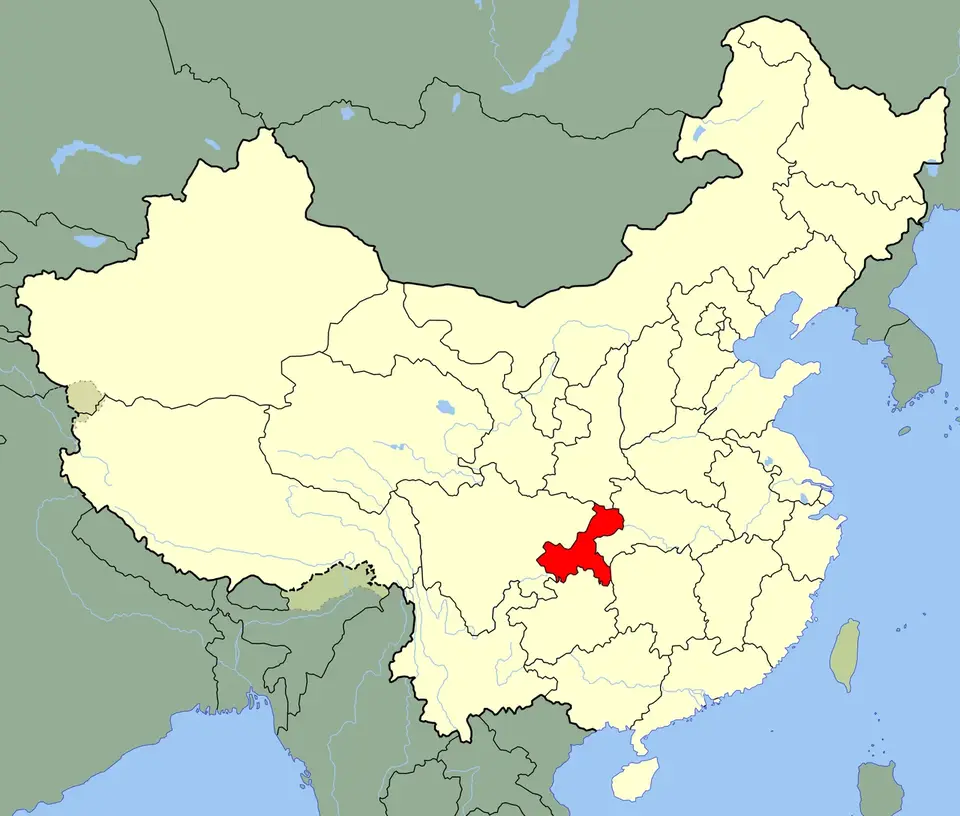
The Battle of Diaoyu Fortress (钓鱼城之战) was an extraordinary siege campaign fought between 1259 (the first year of the Kaiqing era of Song) and 1279 (the second year of the Xiangxing era of Song), in which Southern Song defenders at Diaoyu Fortress in Hezhou, Sichuan (modern Hechuan, Chongqing) held out against the Mongol Empire, killed Great Khan Möngke, and preserved the bastion undefeated for thirty-six years. In 1258, Möngke Khan personally led a formidable army of nearly one hundred thousand troops southward into Sichuan, intending to conquer the Upper Yangtze and sweep downriver to annihilate Southern Song. Song commander Wang Jian and his deputy Zhang Jue capitalized on sheer precipices overlooking the confluence of three rivers, erecting robust stone fortifications, subterranean grain cisterns, and water wells. In the spring of 1259, Mongol forces encircled the fortress, unleashing relentless day-and-night assaults. Utilizing trebuchets and heavy arbalests, Song defenders repulsed dozens of attacks, slew vanguard commander Wang Dechen, and critically wounded Möngke Khan with projectile barrages, causing the Great Khan to perish in camp and forcing the Mongol army to withdraw northward. Möngke's death ignited a succession civil war between Kublai and Ariq Böke and compelled Hulagu to recall his armies from the Middle East, altering Eurasian history. For the next twenty years, commanders like Zhang Jue held the fortress against ceaseless pressure. Only in 1279, following the complete collapse of Southern Song at the Battle of Yamen, did final commander Wang Li peacefully open the gates under Kublai Khan's solemn imperial pledge that not a single inhabitant would be harmed.
Yu Jie commissions the construction of Diaoyu Fortress as the paramount mountain stronghold of Sichuan
Möngke Khan arrives with massive forces; Wang Jian executes the surrender envoy and initiates the defense
Defenders slay Wang Dechen and mortally wound Möngke Khan with catapult stones, driving the Mongol army into retreat
Zhang Jue commands the stronghold through decades of sustained Yuan blockades and attacks
Following the fall of Song, Wang Li surrenders under Kublai Khan's amnesty, concluding thirty-six years of resistance
Upon acceding as fourth Great Khan of the Mongol Empire in 1251, Möngke resolved to execute an all-encompassing strategic encirclement of Southern Song. He devised a three-pronged invasion plan: Kublai was tasked with besieging Ezhou on the Middle Yangtze; Uriyangkhadai was to advance through Yunnan and modern Vietnam into Guangxi; while Möngke personally directed the supreme strike army into Sichuan, seeking to seize the entire Upper Yangtze basin and launch a joint downstream strike against the Song capital of Lin'an.
Years earlier, Southern Song commissioner Yu Jie had overhauled regional defense based on proposals by brothers Ran Jin and Ran Pu. Recognizing that nomadic cavalry excelled on open plains but faltered against fortified mountain ridges, Yu Jie constructed dozens of interlocking citadel bastions along river valleys, with Diaoyu Fortress in Hezhou designated as the primary stronghold commanding the confluence of the Jialing, Qu, and Fu rivers.
Diaoyu Fortress was situated on Mount Diaoyu, five kilometers east of Hezhou, perched on cliffs rising hundreds of meters above encircling rivers. Natural rock escarpments enveloped the plateau, while the summit contained over a thousand mu of fertile arable land and abundant natural springs capable of sustaining long-term independent habitation.
Upon assuming command as Prefect of Hezhou and Deputy Commander of Shannan West Circuit, Wang Jian mobilized garrison troops and refugees to construct formidable masonry battlements, including transverse walls descending to the riverbanks, moats, and stone bastions. His deputy Zhang Jue enforced rigid military discipline, organized elite raiding shock troops, and stockpiled massive provisions and munitions to withstand years of siege warfare.
In February 1259, Möngke Khan's primary army reached the approaches of Diaoyu Fortress after subjugating northern Sichuan. Möngke dispatched surrendered Song official Jin Guobao into the castle to display imperial edicts and demand immediate capitulation. Resolute in their duty, Wang Jian assembled the garrison, denounced the traitor, and had Jin Guobao publicly executed on the battlements to signal their determination to resist to the death.
Infuriated by this defiance, Möngke ordered a comprehensive multi-pronged encirclement. The Mongol army established nine fortified camps surrounding the mountain and erected massive siege towers, catapults, and pavises, launching unrelenting day-and-night storming assaults against the fortress gates.
Wang Jian and Zhang Jue directed the defense with exceptional tactical composure. Firing heavy stone catapults and iron crossbolts from elevated parapets, they repeatedly pulverized assaulting Mongol infantry, while launching nocturnal counter-attacks amid driving rainstorms to burn enemy siege engines and slaughter frontline commanders.
By May, the conflict escalated dramatically. Renowned Mongol general Wang Dechen rode beneath the walls alone to demand surrender; defenders fired a volley of heavy stones that struck him down, inflicting fatal injuries. Frustrated by prolonged deadlock, summer heat, and dysentery spreading through his camps, Möngke Khan personally climbed an observation tower to oversee the bombardment in early July. Detecting the royal position, Song trebuchet batteries unleashed a concentrated barrage that struck the observation post, severely injuring Möngke Khan. On July 21, Möngke Khan succumbed to his injuries and disease in camp. The imperial expeditionary army disintegrated and beat a disorderly retreat northward, securing a triumph for the defenders.
The death of Möngke Khan beneath Diaoyu Fortress sent shockwaves across the Eurasian landmass. Frontline commander Kublai at Ezhou and prince Ariq Böke in Karakorum immediately plunged into a four-year civil war for the throne. Simultaneously, Hulagu Khan, who was conducting the Third Mongol Westward Expedition and had conquered Baghdad, aborted his campaign toward Egypt and Europe to march his veteran divisions eastwards, saving the Mamluk Sultanate and Christendom from potential catastrophe while granting Southern Song a twenty-year respite.
Following the victory, Zhang Jue was promoted to govern Hezhou and lead Sichuan defenses. For nearly two decades, Zhang Jue thwarted repeated blockades and amphibious assaults mounted by Yuan armies, keeping the citadel an impregnable beacon of resistance in the southwest.
In the spring of 1279, Southern Song forces were annihilated at the naval Battle of Yamen, where Chancellor Lu Xiufu leaped into the sea with the child emperor, bringing a formal end to the dynasty. Diaoyu Fortress stood completely isolated as the sole surviving bastion in China.
Surrounded and starved of munitions, final commander Wang Li initiated diplomatic parleys to spare the population. Recognizing the extraordinary heroism of the defenders over three decades, Emperor Kublai Khan issued an imperial edict granting absolute amnesty and pledging that not a single inhabitant would be executed. In early 1279, Wang Li opened the gates, ensuring the survival of over one hundred thousand civilians and soldiers, concluding thirty-six years of undefeated resistance.
The defenders repelled over two hundred attacks across thirty-six years, maintaining the fortress unbreached by force of arms. The death of Möngke Khan shattered the planned three-pronged invasion of Song, forcing all Mongol armies to disengage and retreat from southern China.
The Battle of Diaoyu Fortress is regarded as one of the most consequential defensive engagements in world history. The unexpected demise of Möngke Khan fragmented the unity of the Mongol Empire, triggered internal succession wars, halted the westward conquest of the Middle East, and preserved the Southern Song state for two decades. European scholars frequently refer to Diaoyu Fortress as "The Fortress Where God's Whip Was Broken." The indomitable courage and sophisticated mountain warfare tactics of its defenders remain an enduring monument in military history.