Outbreak of the Xiangshan Insurrection
Qiu Fu leads over a hundred ruined farmers in revolt, opening county granaries to feed starving refugees.
Tang Dynasty (唐朝) · HISTORICAL EVENT
裘甫起义
Qiu Fu Uprising (裘甫起义) was a major peasant insurrection that erupted in eastern Zhejiang during the transition from Emperor Xuanzong to Emperor Yizong (859–860). During the late Tang Dynasty, as central revenues relied heavily on the southeastern circuits, local authorities imposed extortionate taxes and unyielding grain levies upon eastern Zhejiang despite consecutive natural famines. In December 859, Qiu Fu rallied over a hundred destitute farmers in…
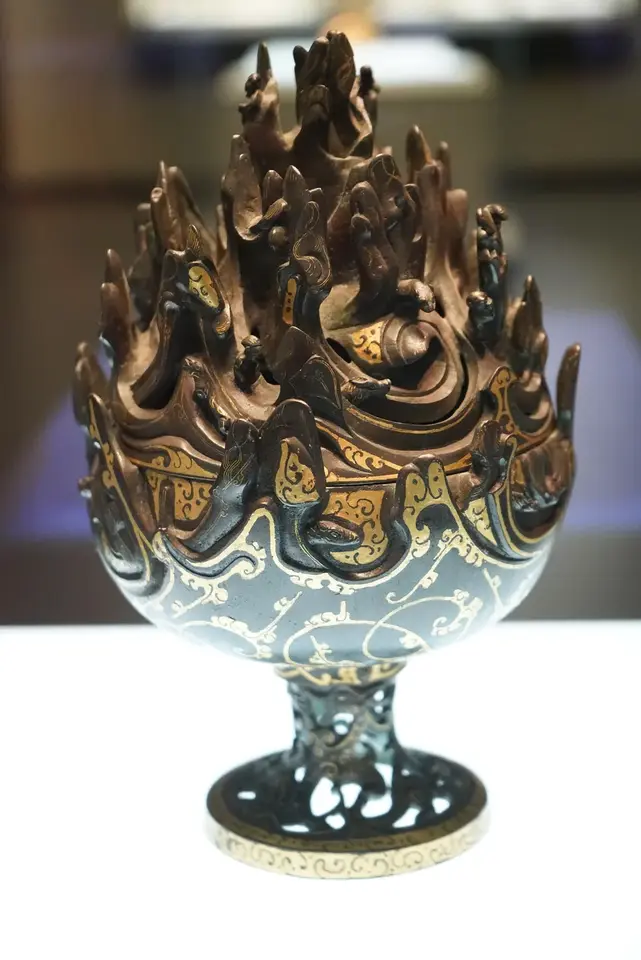
Qiu Fu Uprising (裘甫起义) was a major peasant insurrection that erupted in eastern Zhejiang during the transition from Emperor Xuanzong to Emperor Yizong (859–860). During the late Tang Dynasty, as central revenues relied heavily on the southeastern circuits, local authorities imposed extortionate taxes and unyielding grain levies upon eastern Zhejiang despite consecutive natural famines. In December 859, Qiu Fu rallied over a hundred destitute farmers in Xiangshan, capturing the strategic walled city of Shan County (modern Shengzhou, Zhejiang) and opening government granaries to feed starving refugees. The insurgent army swelled to over thirty thousand fighters, routing imperial forces in the Battle of the Three Brooks. Qiu Fu established an independent administration, styling himself Grand Military Commissioner of the Realm, adopting the era title Luoping, and capturing towns including Dongyang, Shangyu, and Fenghua. Alarmed by the loss of southern tax revenues, the imperial court dispatched veteran commander Wang Shi to lead imperial armies and non-Han cavalry units in a counteroffensive. In June 860, besieged inside Shan County, the rebels fought eighty-three battles over three days before being overwhelmed, with Qiu Fu captured and executed in Chang'an. The uprising marked the opening salvo of the massive peasant rebellions that brought down the Tang Dynasty.
Qiu Fu leads over a hundred ruined farmers in revolt, opening county granaries to feed starving refugees.
Insurgent forces defeat local militias and establish their primary operational base in the fortress of Shan County.
Qiu Fu deploys ambushes along the streams west of Shan County, annihilating the regional army and killing Fan Juzhi.
Expanding to over thirty thousand troops, Qiu Fu establishes the Luoping era and organizes the army into thirty-two columns.
Insurgents capture Dongyang, Shangyu, and Fenghua, intercepting state tax flotillas and alarming the court in Chang'an.
Emperor Yizong replaces Zheng Zhide with Wang Shi, mobilizing northern garrisons and nomadic cavalry to crush the uprising.
Insurgents attempting to push south are ambushed at Tongbai Abbey, losing four thousand men and commander Mao Yingtian.
Besieged inside Shan County, the rebel garrison launches eighty-three separate sorties over three days to inflict casualties on the besiegers.
Following the fall of the city, Qiu Fu and his lieutenants are transported to the capital and executed, concluding the regional uprising.
During the late Tang Dynasty, the imperial court succumbed to corruption and political decline. Palace eunuchs monopolized the Shence Imperial Armies, exercising the power to install and murder emperors while building venal patronage networks. The four-decade-long Niu-Li factional struggle paralyzed civil administration. The geographic territory directly controlled by the central government steadily contracted as autonomous regional warlords across northern China withheld tribute and tax revenues.
Under this distorted fiscal structure, the survival of the imperial court depended entirely on tax revenues shipped from the Huai and Yangtze river basins. In the closing years of the Dazhong era, central and provincial authorities levied arbitrary exactions on eastern and western Zhejiang. Surcharges, raw silk assessments, and exorbitant state salt monopolies weighed heavily on southeastern farming communities, leaving peasants stripped of food supplies while confronting corporal punishment from tax collectors.
Although eastern Zhejiang (governed from Yuezhou, modern Shaoxing) was fertile, it became one of the most heavily taxed regions in the empire. Under the Two-Tax System, peasant quotas were nominally fixed in copper cash, but local magistrates manipulated commutation rates during collection, forcing peasants to deliver grain and silk at arbitrary rates that increased real tax burdens several times over.
Compounding this exploitation, catastrophic droughts and floods devastated eastern Zhejiang during the late 850s, leaving crops withered in the fields. Rather than distributing grain from state granaries, Surveillance Commissioner Zheng Zhide dispatched bailiffs to enforce arrears with floggings. Wealthy landlords and usurers seized this distress to engross smallholder farmlands, reducing independent freeholders to landless refugees.
In August 859, the pleasure-seeking Emperor Yizong ascended the throne, proclaiming the Xiantong era while state administration deteriorated further. In mid-December, desperate smallholders in eastern Zhejiang resolved to resist.
Qiu Fu, a ruined agrarian leader, convened dozens of destitute neighbors in coastal Xiangshan County. Arming themselves with agricultural tools and staves, the insurgents stormed the Xiangshan county seat, opening government granaries and distributing stockpiled grain and silk to starving refugees while emptying prison cells. Displaced laborers, miners, and illicit salt workers rallied to the cause, launching the regional rebellion.
In late December 859, Qiu Fu led his growing force through the Zhejiang interior, overrunning several villages. In January 860, the insurgent army advanced into the strategic town of Shan County (modern Shengzhou, Zhejiang). Situated on the upper Cao'e River, Shan County controlled the passes linking Yuezhou, Taizhou, and Wuzhou, possessing sturdy battlements and granaries. Qiu Fu established his headquarters there, attracting thousands of displaced peasants.
Surveillance Commissioner Zheng Zhide dispatched commanders Liu Su and Fan Juzhi with several thousand provincial troops to coordinate with Taizhou militias and crush the uprising. Qiu Fu feigned retreat, luring the overconfident government forces into the constricted defiles west of Shan County.
In mid-February, the armies met west of the city, where three torrential brooks converged amid thick reed beds. Qiu Fu deployed a holding force north of the streams while ordering vice-commander Liu Sheng to lead the main force through the marshes to lie in ambush within the forested hills. Viewing the shallow water array as amateurish, Fan Juzhi ordered his cavalry to ford the streams in pursuit.
As the imperial soldiers bogged down in the mud, Qiu Fu sounded his war drums, and the hidden ambush force charged from the hills. Surrounding the disorganized column, the rebels killed Fan Juzhi and hundreds of government troops. This victory at the Three Brooks bolstered the prestige of the insurgent movement.
Following the triumph at the Three Brooks, regional refugees, outlaws, and impoverished miners joined the insurgent banners, swelling the rebel army to over thirty thousand men. To coordinate his ranks and renounce imperial authority, Qiu Fu founded an insurgent government at Shan County.
Qiu Fu assumed the title Grand Military Commissioner of the Realm, renounced dynastic allegiance, proclaimed the era name Luoping, and cast bronze official seals inscribed with the characters for Heavenly Peace. The army was reorganized into thirty-two operational columns with designated field commanders and codes of conduct, prohibiting looting among civilian households while seizing the estates of corrupt magistrates to distribute among the poor.
Beginning in late February 860, Qiu Fu dispatched detachments to conquer surrounding districts. The rebels took Fenghua and Ninghai to the east, captured Tangxing to the south, stormed Dongyang to the west, and seized Shangyu and Yuyao to the north, pushing outposts toward Yuezhou and Hangzhou. Intercepting government grain convoys along the rivers, the rebels seized salt taxes and tributary supplies destined for Chang'an, paralyzing the dynastic revenue transport system.
At the peak of their military expansion, strategic divisions emerged within the rebel leadership. Veteran field commanders like Liu Sheng and Liu Meng advocated capturing Yuezhou, the administrative capital of eastern Zhejiang, through an immediate offensive.
Liu Sheng argued that the Yuezhou garrison was demoralized and that taking the regional center would secure vast arsenals and granaries for a protracted war. Once established, the army could advance north across the Qiantang River to sever the Grand Canal, coordinating with northern anti-tax movements.
However, a failed examination candidate named Wang Lu, who had joined the movement, opposed this strategy. Wang Lu argued that assaulting a major administrative seat was too risky, urging Qiu Fu to fortify the passes around Shan County and await imperial pardon negotiations.
Hesitating between these contradictory proposals, Qiu Fu failed to adopt Liu Sheng's plan, missing the operational window to seize Yuezhou.
Meanwhile, urgent petitions reached Chang'an. Because eastern Zhejiang was an indispensable source of state revenue, Emperor Yizong replaced Zheng Zhide in April 860, appointing former Protector-General of Annam Wang Shi as Surveillance Commissioner of Eastern Zhejiang. Wang was granted troops from the Zhongwu, Yicheng, Zhaoyi, and Huainan commands, alongside veteran non-Han cavalry units composed of surrendered Uighurs and Tibetans.
In May 860, Wang Shi's expeditionary forces arrived in Yuezhou. An experienced tactician, Wang Shi instituted scorched-earth measures, confiscating food reserves and intercepting trade into rebel territory. He offered ransoms to sow internal discord and deployed his nomadic cavalry to cut off rebel escape routes to the south.
In mid-May, seeking to break the tightening perimeter, rebel general Liu Sheng led a column south toward Taizhou. Near Tongbai Abbey in the Tiantai Mountains, the force was ambushed by concealed Zhongwu infantry and nomadic cavalry stationed along the forested crags.
Firing arrows from commanding heights, the government troops pinned the rebels in the ravine before cavalry swept through the column. Insurgent commander Mao Yingtian fell in combat alongside four thousand soldiers, forcing Liu Sheng to withdraw the survivors into the redoubts of Xinchang. The defeat shattered the rebel army's southern mobility.
In June 860, imperial forces converged on Shan County, sealing off the last insurgent stronghold. Wang Shi encircled the walls from three directions, constructing siege dykes and palisades to cut off firewood and food supplies.
The defense of Shan County was heroic. To break the siege, Qiu Fu led sorties against the imperial circumvallation lines. Men and women participated in the defense, with female auxiliaries hauling stones and hot oil while frontline warriors engaged in hand-to-hand combat. Over three days, the garrison launched eighty-three counterattacks against the government lines, inflicting heavy casualties on Wang Shi's forces.
However, prolonged isolation exhausted the defenders' food and water. Soldiers subsisted on tree bark and boiled leather armor. On July 13, 860, government forces launched a general assault with scaling ladders and iron rams, breaching the city gates. Imperial troops massacred the defenders in street-by-street fighting.
Qiu Fu and Liu Sheng were captured after resisting to the end. In August 860, Qiu Fu, Liu Sheng, and Wang Lu were transported in wooden cages to Chang'an, where they were executed in the Western Market. Although the central leadership was extinguished, surviving detachments under Liu Meng took to the coastal mountains, sustaining guerrilla warfare against imperial authority.
The Qiu Fu Uprising occurred within the economic heartland that financed the late Tang court. Over eight months of fighting, the rebels captured county granaries, distributed state grain reserves, and severed the canal transit networks through which silk, tea, and salt taxes moved toward Chang'an. The revolt exhausted the central treasury, destabilizing the economic framework that preserved the late Tang state.
Beginning with a modest band of armed farmers, the uprising exposed the hollow combat readiness of regional garrisons. To pacify the insurrection, the central government stripped border garrisons from Zhongwu and Yicheng in the north, relying on foreign nomadic auxiliaries to wage counterinsurgency in the south. This redeployment left northern frontiers defenseless, encouraging military mutinies among regional garrisons.
The uprising demonstrated tactical ingenuity and organizational capability. The movement created an autonomous administration with the Luoping reign title, thirty-two military columns, and distributed seals of office. In the field, the rebels executed operations like the Three Brooks ambush and mounted eighty-three desperate counterattacks during the defense of Shan County, providing operational lessons for subsequent agrarian uprisings.
The rebellion served as the catalyst for the social upheavals that dismantled the dynasty. It proved to peasant communities across China that imperial authority could be broken by concerted resistance. Eight years later, the garrison mutiny led by Pang Xun erupted in Xuzhou, followed in 874 by the massive rebellions of Wang Xianzhi and Huang Chao, which swept across the empire and extinguished the Tang Dynasty.