Founding of the Sui Dynasty
Emperor Wen ascends the throne, initiating policies to overhaul redundant institutions and fiscal waste.
Sui Dynasty (隋朝) · HISTORICAL EVENT
隋代州(郡县制)与均田制改革
The Sui Dynasty Prefecture-County and Equal-Field Reforms (隋代州·郡县制·与均田制改革) were a comprehensive series of administrative streamlining measures and agrarian-fiscal restructurings executed between 581 and 583 (the first through third years of the Kaihuang era) under Emperor Wen of Sui (Yang Jian) to consolidate national reunification and centralize imperial authority. Throughout the Wei, Jin, and Northern and Southern dynasties, competing regimes had…
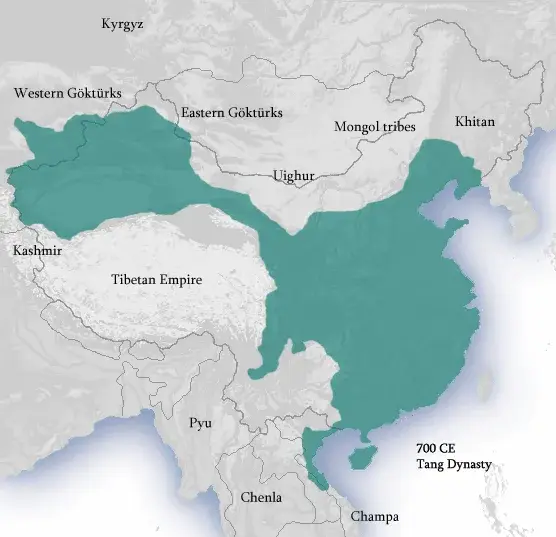
The Sui Dynasty Prefecture-County and Equal-Field Reforms (隋代州·郡县制·与均田制改革) were a comprehensive series of administrative streamlining measures and agrarian-fiscal restructurings executed between 581 and 583 (the first through third years of the Kaihuang era) under Emperor Wen of Sui (Yang Jian) to consolidate national reunification and centralize imperial authority. Throughout the Wei, Jin, and Northern and Southern dynasties, competing regimes had created excessive administrative tiers to appease aristocratic allies, resulting in an unwieldy three-tier structure of circuits, commanderies, and counties. This bloated hierarchy created redundant personnel, high administrative costs, and widespread corruption. Simultaneously, prolonged warfare led to extensive land abandonment, while magnate clans harbored vast numbers of unrecorded tenant cultivators. Upon founding the Sui dynasty, Emperor Wen adopted the proposals of Yang Shangxi to eliminate hundreds of intermediate commanderies, establishing an efficient two-tier administrative model and reserving all official appointments for the central Ministry of Personnel. Concurrently, the court codified the Kaihuang Equal-Field system, coordinated with rigorous household registrations under the Dasuomaoyue and Shujifa statutes. These institutional innovations expanded state-controlled taxable households, laying the material and administrative foundations for the prosperous Kaihuang Reign.
Emperor Wen ascends the throne, initiating policies to overhaul redundant institutions and fiscal waste.
The court enacts the Kaihuang Legal Code and Equal-Field regulations, standardizing land distribution and tax obligations.
Emperor Wen adopts Yang Shangxi's counsel, abolishing commanderies nationwide and instituting a streamlined two-tier system.
Imperial authorities launch demographic audits and standardized taxation, incorporating millions of concealed tenants into state registers.
Sui conquers the southern Chen dynasty, extending the two-tier prefecture-county structure and agrarian policies throughout the Yangtze basin.
Since the late Eastern Han dynasty transformed imperial inspectors into provincial governors, regional circuits gradually evolved into executive administrative units. During the Northern and Southern dynasties, fragmented regimes established redundant administrative districts to reward military commanders and placate displaced aristocrats. Consequently, multiple circuits were frequently created within small geographical territories, and commanderies were established over negligible populations. This overlapping hierarchy generated severe administrative redundancy, escalating payroll expenditures and creating widespread governance inefficiency.
On the socioeconomic level, continuous warfare in northern China devastated rural agriculture and destabilized independent peasant holdings. Powerful aristocratic lineages took advantage of state weakness to engross extensive agrarian estates, concealing refugee families as unrecorded tenants and household dependents. Local magistrates, frequently drawn from or co-opted by these regional elites, shielded powerful families from taxation. As state-registered households plummeted, the imperial treasury faced shrinking agrarian tax revenues and diminished conscription reserves, threatening the stability of the unified empire.
In 583 (the third year of the Kaihuang era), Vice Minister of War Yang Shangxi submitted a memorial addressing the dysfunctions of local governance. Yang argued that the existing administrative network was burdened by redundant offices and excessive fiscal waste, noting that administrative commands were frequently blocked by bureaucratic overlap. He recommended consolidating smaller units, eliminating redundant middle-tier offices, and abolishing commanderies so that provincial prefectures could oversee local counties directly.
Emperor Wen acted on Yang Shangxi's memorial by issuing imperial decrees ordering the nationwide abolition of commanderies. The court dismantled over five hundred commanderies, replacing the three-tier system with an efficient two-tier system of prefectures and counties. Concurrently, the emperor overhauled civil service appointments. Local prefects and magistrates were stripped of their traditional prerogative to hire personal retinues; all officials ranking from the ninth rank upward were directly examined and appointed by the central Ministry of Personnel. Furthermore, the court enforced the rule of avoidance, prohibiting officials from serving in their home localities and mandating periodic rotations to sever entrenched aristocratic networks.
Simultaneously with administrative restructuring, Emperor Wen promulgated the Kaihuang Equal-Field Code in 582. Building upon Northern Wei precedents, the law stipulated that every adult male was entitled to receive eighty mu of arable land and twenty mu of mulberry land, while adult females were allotted forty mu of arable land. In return for state allocations, cultivators paid regular taxes in grain and textiles and performed annual corvée labor. Arable allocations reverted to the crown upon the cultivator's death or retirement, whereas mulberry plots were retained as inheritable family property.
To ensure effective enforcement and prevent aristocratic tax evasion, Grand Secretaries Gao Jiong and Su Wei directed nationwide demographic investigations. In 585, Emperor Wen launched the Dasuomaoyue campaign, sending imperial inspectors to examine households, cross-referencing physical appearance and age with local registers to penalize concealment. Subsequently, Gao Jiong instituted the Shujifa system, which standardized tax liability into five household grades and set imperial tax rates noticeably below the exorbitant private rents demanded by aristocratic landlords. Consequently, millions of concealed agricultural laborers severed their ties with magnate estates, voluntarily registering as free imperial subjects eligible for state land allocations.
The abolition of commanderies eliminated redundant administrative posts, reduced fiscal outlays, and established direct lines of communication between the capital and frontline counties. Through equal-field allocations, demographic verifications, and standardized household quotas, the state reclaimed millions of concealed agriculturalists. The registered population under Sui administration expanded from approximately four million households during the Northern Zhou era to nearly nine million households by the close of the Kaihuang reign.
The Sui reforms established administrative and agrarian blueprints that underpinned early imperial stability through the Tang dynasty. The two-tier prefecture-county hierarchy improved governance efficiency and was maintained in subsequent imperial dynasties. The equal-field distribution provided smallholder cultivators with guaranteed land, releasing agrarian productivity. State granaries, such as the Changping, Liyang, and Luokou complexes, accumulated vast food reserves, establishing the economic foundation of the Kaihuang Reign. Furthermore, pairing land distribution with the garrison militia system supplied the Sui and Tang empires with sustained military manpower, securing long-term imperial reunification.