Uncovering of Convention
Local officials presented fiscal ledgers to the Ministry of Revenue in Yingtian Prefecture; Zhu Yuanzhang discovered prestamped blank books, denounced them as sovereign fraud, and launched nationwide investigations
Ming Dynasty (明朝) · HISTORICAL EVENT
空印案
The Blank Seal Case (空印案) was a major political purge that erupted in the imperial capital Yingtian Prefecture (modern Nanjing, Jiangsu) and across nationwide provinces in the ninth year of the Hongwu era (1376) under Emperor Taizu of Ming, ranking as one of the Four Major Cases of the Early Ming Dynasty. During early Ming times, local Provincial Administration Commissions, prefectures, and counties were required to dispatch officials annually to the…
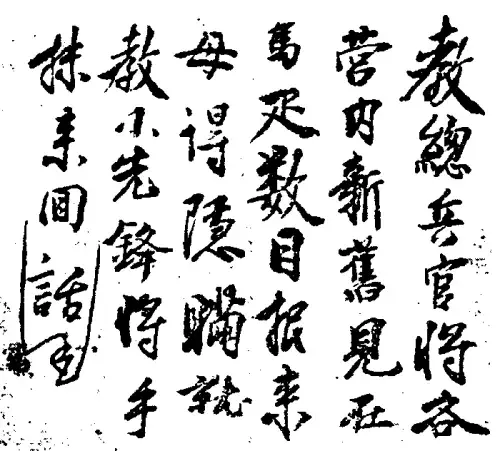
The Blank Seal Case (空印案) was a major political purge that erupted in the imperial capital Yingtian Prefecture (modern Nanjing, Jiangsu) and across nationwide provinces in the ninth year of the Hongwu era (1376) under Emperor Taizu of Ming, ranking as one of the Four Major Cases of the Early Ming Dynasty. During early Ming times, local Provincial Administration Commissions, prefectures, and counties were required to dispatch officials annually to the Ministry of Revenue in the capital to audit tax and grain revenues. Because ancient transportation was arduous and physical tax grains suffered inevitable transit spoilage, the weighed quantity upon arrival rarely matched local departure ledgers exactly. The Ministry of Revenue audited accounts with extreme rigidity, summarily rejecting any imperfect ledger for rewriting and resealing. If local officials returned to their home regions for resealing, the journey took several months and breached mandatory deadlines; hence, yamens had preserved a standard Yuan Dynasty convention of bringing spare blank ledgers prestamped with official seals to fill in accurate verified numbers in the capital. When Emperor Taizu Zhu Yuanzhang uncovered this bureaucratic habit, he flew into a violent rage, interpreting the prestamped blanks as treacherous conspiracy, fraud against the crown, and embezzlement of public revenue. He ordered an uncompromising nationwide judicial purge. Although Assistant Minister of the Personnel Evaluation Directorate Zheng Shili risked execution by submitting a memorial explaining that prestamped seals were an unavoidable pragmatic convenience caused by geographical distances and delayed institutional designs rather than corruption, Zhu Yuanzhang rejected all pleas. Chief administrative officials possessing official seals across provinces, prefectures, and counties were executed en masse, while subordinate deputies were flogged and exiled, dragging upright and celebrated officials like Fang Keqin to death. The disaster decimated the early Ming civil service and served as a stark milestone in the radicalization of absolute imperial autocracy.
Local officials presented fiscal ledgers to the Ministry of Revenue in Yingtian Prefecture; Zhu Yuanzhang discovered prestamped blank books, denounced them as sovereign fraud, and launched nationwide investigations
Zheng Shili risked death to submit an outspoken memorial explaining that blank seals were a logistical necessity due to geographic distance and noting the lack of legal prohibition, pleading for clemency
Zhu Yuanzhang accused Zheng Shili of factional conspiracy, confiscated his estate, sentenced him to penal labor in Jiangpu, and ordered the judiciary to execute the harshest penalties
Principal seal-bearing administrative chiefs across provincial commissions, prefectures, and counties were beheaded, secondary deputies were flogged and exiled, and upright officials like Fang Keqin were executed
Judicial executions concluded; thousands of experienced officials were eliminated, leaving the local bureaucracy devastated while imperial control over seals was rigorously tightened
At the founding of the Ming Dynasty, imperial taxation was collected primarily in the form of grain and agricultural goods, which were transported overland or via inland waterways to the capital or designated military garrisons. At the close of each fiscal year, Provincial Administration Commissions, prefectures, subprefectures, and counties throughout the realm were obligated to compile detailed annual ledgers recording tax revenues and expenditures. Specialized accountants or dispatch officials personally escorted these ledgers to the Ministry of Revenue in the imperial capital for cross-checking. The Ministry conducted rigorous scrutinies, mandating that the physical delivered grain, transit allowances, and written records match down to the smallest fraction before clearing the accounts.
However, hampered by primitive transportation logistics, officials traveling from remote frontiers such as Yunnan, Guizhou, Guangdong, Guangxi, Sichuan, and Shaanxi journeyed thousands of miles over several months. During transit, grain supplies suffered inevitable natural degradation from humidity, pests, and capsized barges. Upon arrival at the capital docks, the verified scale weight almost never matched the departure registers compiled months earlier. Once rejected by the Ministry of Revenue, officials faced the impossible choice of returning thousands of miles home to recalculate, rewrite, and restamp new registers, an ordeal that wasted substantial public funds, delayed fiscal auditing past deadlines, and subjected officials to immediate administrative demotion or corporal punishment.
To overcome the friction between rigid fiscal auditing rules and immense geographic distances, the Yuan Dynasty civil administration had developed a universally acknowledged pragmatic convention: before departing for the capital, local yamens prestamped official government seals onto a batch of blank document sheets or at the conclusion pages of empty accounting booklets. The fiscal delegates carried these stamped blanks to the imperial capital.
Once the Ministry of Revenue completed the physical inventory and determined the exact net received amount, the accountants transcribed the finalized figures directly onto the prestamped blank registers, which were then officially submitted, stamped by the Ministry, and archived. This protocol was treated as standard operational procedure within Yuan and early Ming bureaucratic circles, tacitly endorsed by provincial commissioners, prefects, and ministerial clerks alike. In essence, it functioned as an adaptive coping mechanism developed by local administrative organs to reconcile unrealistic central regulations with logistical constraints, without inherent criminal intent to plunder imperial coffers, nor had any early Ming statute explicitly prohibited it.
In the ninth year of the Hongwu era (1376), Emperor Taizu Zhu Yuanzhang learned by chance in the capital that local delegations held blank paper documents bearing official municipal and provincial seals. Born into an impoverished peasant family that had witnessed the moral collapse and systemic plunder of late Yuan officialdom, Zhu Yuanzhang harbored deep-seated suspicion toward the scholar-bureaucrat class. In his political cosmology, the official seal constituted the sacred instrument of supreme imperial authority and institutional trust, requiring that any sealed decree possess absolute sanctity and finality.
To Zhu Yuanzhang, affixing official seals to blank sheets meant clerks could write whatever tax figures they wished at will. He viewed this not merely as an administrative irregularity, but as direct contempt for the throne, calculated deception, and a convenient cover for systematic embezzlement of state revenues. Enraged, Zhu Yuanzhang refused to see it as a technical accommodation; he branded it a realm-wide conspiracy of systemic official fraud. He ordered the Ministry of Justice, the Censorate, and the Central Secretariat to initiate sweeping nationwide prosecutions, commanding that all seal-bearing magistrates and participating subordinate clerks across the empire be apprehended without exception.
Confronted by imperial fury and the impending annihilation of administrative ranks, local officials nationwide were paralyzed with fear. Ministers at court, terrified of the emperor's wrath, kept silent. Amidst the silence, Zheng Shili, Assistant Minister of the Personnel Evaluation Directorate, whose elder brother Zheng Shiyuan (an assistant surveillance commissioner in Huguang) was arrested in connection with the affair, resolved to risk death by petitioning the throne to save innocent officials.
In a cogent and courageous memorial, Zheng Shili dissected the institutional facts into four essential points: First, official seals were stamped across margin seams or at document ends; local officials could not possibly steal imperial funds through these accounting ledgers, and the investigation had failed to uncover actual bribery or stolen treasury funds. Second, transporting grain across thousands of miles inevitably incurred travel spoilage, making pre-calculated numbers impossible to reconcile prior to Ministry audit; prestamped blanks were merely a pragmatic adjustment to geographical barriers. Third, the dynasty had never enacted an explicit statute forbidding the custom, and punishing officials retroactively for an inherited convention violated the core legal tenet that acts unprohibited by law constitute no crime. Fourth, the dynasty had been established for less than a decade, and competent administrators were exceedingly scarce; executing experienced administrators across the realm would sever the governing backbone of the empire.
Zheng Shili's memorial was forwarded to the emperor through Song Lian, Academician of the Hanlin Academy. Rather than swaying Zhu Yuanzhang, the memorial provoked greater fury. The emperor deduced that a minor functionary like Zheng Shili would never dare defend corrupt bureaucrats across the realm unless directed by high-ranking court conspirators. Zhu Yuanzhang ordered Zheng Shili arrested and subjected to brutal interrogation to identify his supposed backers. Zheng Shili endured torture steadfastly, maintaining that he had spoken solely for justice and the public good of the realm, with no conspiratorial sponsor.
Failing to extract a confession, Zhu Yuanzhang confiscated Zheng Shili's family property and sentenced him to hard labor in Jiangpu, slamming shut any avenue for administrative moderation. Zhu Yuanzhang issued an uncompromising imperial decree: in every Provincial Administration Commission, prefecture, subprefecture, and county yamen nationwide, all principal presiding officials who held custody of official seals were condemned to decapitation for defrauding the sovereign and conspiring in corruption; all assistant and secondary administrative officials, such as vice prefects, assistant prefects, and county magistrates' deputies, were sentenced to one hundred strokes of the heavy bamboo and banished to remote borders in penal military exile.
The execution of the Blank Seal decree was relentless and catastrophic. In this sweeping purge, many upright, capable officials celebrated for clean governance perished merely for adhering to bureaucratic routines. The most prominent martyr was Fang Keqin, father of the renowned Confucian scholar Fang Xiaoru. Serving as Prefect of Jining in Shandong, Fang Keqin had earned widespread popular affection by reducing corvee burdens, promoting agriculture, and refusing illicit gains. Yet because Jining's tax accounts included prestamped blank ledgers, Fang Keqin was indicted for official fraud, dragged to the capital, and executed.
Historical records indicate that several thousand civil officials were put to death, exiled, or cashiered during the Blank Seal Case, with some accounts estimating the affected total at nearly ten thousand individuals. Yamens across the provinces were abruptly emptied of staff, forcing newly appointed greenhorn officials to assume duty in utter terror, which briefly paralyzed regular tax collection and routine civic governance across China.
The Blank Seal Case concluded as one of the bloodiest administrative purges in Ming history. Principal presiding officials across the thirteen Provincial Administration Commissions and hundreds of prefectures and counties were practically wiped out, while seasoned deputy magistrates were banished to pestilential frontier garrisons. This inflicted catastrophic damage on the fledgling dynasty's administrative core, forcing the court to hastily draft unseasoned Imperial Academy students, petty clerks, and provincial literati into administrative vacancies, severely weakening the continuity and professional competence of local government for years.
Following the purge, the Ming court instituted extraordinarily stringent regulations governing official seals and fiscal accounting documents. Local yamens grew excessively timid, rigid, and averse to taking responsibility, choosing endless delays over pragmatic adjustments. Through this reign of terror, Zhu Yuanzhang demonstrated that the emperor's arbitrary will reigned supreme over established bureaucratic precedent and practical reason, laying the psychological and political foundation for the subsequent abolition of the Central Secretariat and the wider political purges of Hu Weiyong and Lan Yu.