Grand Conspiracy
Lin Qing and Li Wencheng agreed to launch simultaneous uprisings in Zhili and Henan on 9th month 15th
Qing Dynasty (清朝) · HISTORICAL EVENT
癸酉之变
The Guiyou Incident (癸酉之变) was an armed anti-Qing uprising in 1813 (the 18th year of Jiaqing, a guiyou year) led by Tianli Sect leaders Lin Qing and Li Wencheng, shaking the very core of Qing governance. The Tianli Sect, an offshoot of the White Lotus Eight Trigrams Sect, advocated the doctrine of "Vacuous Homeland, Birthless Parents." Amidst mid-Qing bureaucratic rot and widespread agrarian distress, Lin Qing in Daxing and Li Wencheng in Hua County…
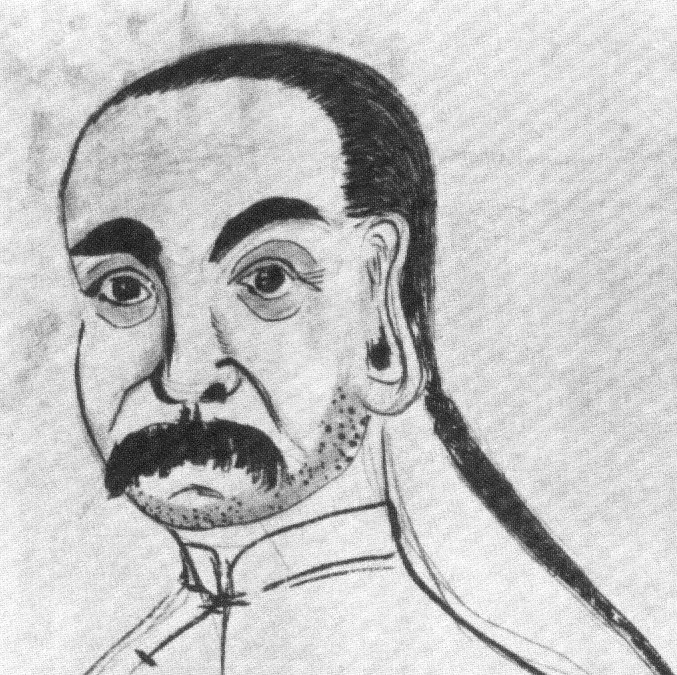
The Guiyou Incident (癸酉之变) was an armed anti-Qing uprising in 1813 (the 18th year of Jiaqing, a guiyou year) led by Tianli Sect leaders Lin Qing and Li Wencheng, shaking the very core of Qing governance. The Tianli Sect, an offshoot of the White Lotus Eight Trigrams Sect, advocated the doctrine of "Vacuous Homeland, Birthless Parents." Amidst mid-Qing bureaucratic rot and widespread agrarian distress, Lin Qing in Daxing and Li Wencheng in Hua County mobilized tens of thousands of followers, conspiring to launch a coordinated rebellion on the Double Ninth Festival. Following an intelligence leak in Henan, Hua County rebels launched their revolt prematurely. On the 15th day of the 9th lunar month, Lin Qing dispatched 200 followers to storm the Forbidden City in Beijing, aided by turncoat palace eunuchs including Liu Dexiang. Infiltrating through Donghuamen and Xihuamen, the rebels advanced to Longzongmen before the Hall of Mental Cultivation. Remaining in the palace, the Second Imperial Prince Minning (later the Daoguang Emperor) personally shot down rebel leaders with fowling pieces, rallying the Firearm and Shenji Brigades to suppress the assault. Lin Qing was captured and executed, while Li Wencheng perished in Henan. The incident struck at the heart of imperial power, prompting Jiaqing to issue an imperial penitential edict on dynastic rot.
Lin Qing and Li Wencheng agreed to launch simultaneous uprisings in Zhili and Henan on 9th month 15th
Magistrate arrested Li Wencheng; sectarians broke jail, killed the magistrate, and seized the city
Lin Qing disguised 200 sectarians as peddlers to infiltrate inner Beijing with eunuch guidance
Insurgents stormed Xihuamen waving banners while Donghuamen attackers were repulsed
Sectarians besieged Longzongmen; Prince Minning shot two rebel leaders atop the walls
Elite Firearm and Jianrui Brigades surrounded and wiped out the insurgents inside the palace
Qing troops captured Lin Qing in Daxing; he was sentenced to death by slow slicing
Returning to Beijing, Jiaqing issued a remorseful edict decrying universal bureaucratic neglect
Besieged at Sizhai, Li Wencheng committed suicide by self-immolation as the stronghold fell
Imperial forces mopped up remaining rebel bases across Henan and Shandong, restoring peace
Following the zenith of the High Qing under Kangxi and Qianlong, Qing feudal autocratic rule experienced a steep descent during the Jiaqing reign. In his twilight years, Qianlong indulged the corrupt grand councillor Heshen, institutionalizing bureaucratic venality and factionalism across the empire. Extravagant court expenditures and oppressive tax surcharges forced countless dispossessed smallholders into vagrancy. Rapid demographic expansion severely strained arable land resources, compounded by frequent Yellow River breaches and unrelenting droughts across northern China.
Although the massive White Lotus Rebellion in Sichuan, Hubei, and Shaanxi was suppressed after nine years of brutal warfare, the imperial campaign consumed over 200 million taels of silver, exhausting the state treasury. Furthermore, the Eight Banners and Green Standard Armies suffered complete moral and martial degeneration. Far from abating, peasant resentment found expression in underground secret societies proliferating throughout the North China Plain.
The Tianli Sect was a prominent branch of the White Lotus tradition, also known as the Eight Trigrams Sect, adhering to the apocalyptic belief in the descent of Maitreya Buddha. It organized adherents under eight trigrams across Zhili, Henan, Shandong, and Shanxi. Li Wencheng directed the Zhen Trigram from Hua County, Henan, while Lin Qing managed the Kan Trigram from Huangcun, Daxing. Li was adept in divination and commanded tens of thousands of followers; Lin operated a teahouse near the capital, building extensive networks among municipal runners, Banner soldiers, and palace eunuchs.
In 1811, Lin Qing and Li Wencheng convened at Daokou, integrating their disparate branches into the unified Tianli Sect. They designated Li as the True Sovereign and Lin as the Sage Patriarch, resolving to initiate a nationwide rebellion in the guiyou year of 1813. Lin converted dozens of palace eunuchs—including Liu Dexiang, Liu Chengsi, and Gao Guangfu—gaining precise intelligence regarding imperial guard schedules and internal defenses, formulating an audacious plot to seize the Forbidden City from within.
In the autumn of 1813, Tianli Sect leaders scheduled their insurrection for noon on the 15th day of the 9th lunar month, an astrologically propitious hour that coincided with the Jiaqing Emperor's departure for the annual imperial hunt at the Mulan Paddock in Chengde, leaving the capital lightly defended. However, in early September, Magistrate Qiang Kejie of Hua County discovered conspiratorial gatherings and arrested Li Wencheng, subjecting him to severe torture that fractured his legs.
On the 7th day of the 9th month, Li's lieutenants Dong Guotai, Feng Keshan, and Niu Liangchen mobilized hundreds of sectarians in an emergency jailbreak. They stormed the yamen, killed Magistrate Qiang, and rescued Li Wencheng. The insurgents captured Hua County and Daokou, while sympathizers seized Changyuan and rose in Shandong. Governor Gao Qi mobilized provincial forces to besiege the county. Incapacitated by broken legs, Li retreated to Sizhai in Hui County and sent couriers to Beijing to inform Lin Qing of the premature uprising, urging him to strike as planned.
In fact, before the capital was attacked, Zhu Haiqing, a relative of conspirator Zhu Xian, discovered the operational plan and informed Prince Yu Yufeng on the 9th day. The indolent prince dismissed the warning: "There are still days left; why panic? Wait until the emperor returns." When the Lugouqiao patrol inspector and Wanping magistrate discovered suspicious movements and reported to Gendarmerie Commander Jilun, the commander furiously berated the magistrate for fabricating slander against the "reign of peace." Official inertia and complacency thus left the gates wide open.
On the 14th day of the 9th month, Lin Qing resolved to proceed. He mobilized 200 picked sectarians disguised as peddlers selling persimmons and dates, concealing white turbans, broadswords, and incendiary materials inside fruit baskets. They infiltrated inner Beijing in small groups, guided by palace eunuchs including Liu Decai, Liu Jin, Zhang Tai, Gao Guangfu, and Liu Dexiang.
At noon on September 15, the rebels converged on the Donghuamen and Xihuamen gates of the Forbidden City. Outside Donghuamen, guards noticed concealed white sashes and drawn blades, sparking a skirmish. The gatekeeper barred the gate, leaving only Chen Shuang and a dozen men inside while the rest were dispersed outside.
At Xihuamen, guards were caught completely off-guard. Eunuch Gao Guangfu removed his outer robe as a prearranged signal, guiding Chen Wenkui and nearly a hundred insurgents through the gate. Waving white banners inscribed "Commissioned by Heaven to Clear the Way," the rebels cut down palace guards and stormed into the palace grounds. Imperial Household Department eunuchs and bannermen scattered in panic; General Celing, commander of the Meridian Gate guard, fled in terror upon hearing the combat. The rebels pressed deep into the inner sanctum.
Advancing through Xihuamen, dozens of insurgents guided by eunuchs dashed toward the Hall of Mental Cultivation and the Grand Council. When they reached Longzongmen, the vital choke point guarding the inner court, panicked guards slammed and barred the heavy gates. Sectarians battered the doors with heavy timber beams, hurled flaming torches over the walls, and loosed flights of arrows into the lintel (arrowheads remain embedded in the Longzongmen plaque today). Several sectarians removed their shoes and scrambled up wooden pillars to scale the walls.
Pandemonium erupted in the Imperial Study, where imperial princes were studying; Empress Xiaoherui was paralyzed with fear. The thirty-one-year-old Second Imperial Prince Minning remained calm, ordering eunuchs to retrieve Emperor Qianlong's antique fowling pieces, quivers, and broadswords. Stepping onto the terrace before the Hall of Mental Cultivation, Minning sighted two rebel commanders waving banners atop the Yuehuamen wall. He fired two precise shots in succession, killing both instantly. Prince Mianzhi shot another climber, checking the momentum of the assault.
Minning issued decisive directives: dispatching couriers to Chengde to inform the emperor; sealing all four gates of the Forbidden City to trap the intruders; assigning Prince Miankai to guard Empress Xiaoherui in the Chuxiu Palace; inspecting the West Long Corridor in person; and stationing guards at the East Long Corridor. Prince Mianke soon arrived with over 1,000 elite troops from the Firearm and Jianrui Brigades. Armed with muskets and pikes, imperial forces surrounded the lightly armed sectarians near Wuying Hall, Broken Rainbow Bridge, and the Imperial Garden. After two days of combat, all intruders were killed or captured, and treacherous eunuchs were summarily executed.
News of the palace assault reached the Jiaqing Emperor on his return journey from Chengde. Stunned, the emperor ennobled Minning as Prince Zhi, bestowed an annual stipend of 12,000 taels of silver, and christened his fowling piece the "Illustrious Weapon" (Weilie). Jilun was stripped of his command, and imperial troops raided Daxing, capturing Lin Qing at his headquarters on September 17. Lin showed no fear under interrogation and was condemned to execution by slow slicing; over 700 residents in Daxing and Tongzhou were slaughtered. Investigation revealed that imperial clan members—including Grace Defender Duke Qingyao and provincial graduate Qingfeng—had joined the sect, hoping to obtain high office upon the dynasty's overthrow.
In Henan and Shandong, Imperial Commissioner Nayancheng, Provincial Commander Yang Yuchun, and Brigade General Yang Fang deployed heavy Krupp-style siege cannons against insurgent strongholds in Hua County and Changyuan. Li Wencheng led surviving rebels to make a desperate stand at Sizhai in Hui County for three months. By November, supplies were exhausted and breakout attempts failed. Li gathered timber and burned himself to death in the compound, while his wife led the remnants to fight to the last person, extinguishing the uprising.
The Guiyou Incident concluded with the annihilation of the palace raiders and the bloody suppression of Tianli Sect followers across northern China. All 200 sectarians who breached the Forbidden City were killed or executed, and tens of thousands perished in Henan. Yet the fact that two hundred lightly armed commoners could penetrate the innermost sanctum of imperial power and reach the Hall of Mental Cultivation exposed profound administrative decay and military impotence.
The incident inflicted severe psychological and political trauma on the Qing dynasty. First, it permanently shattered the illusion of perpetual peace inherited from the High Qing; Jiaqing's penitential edict lamented that such an outrage was unprecedented in imperial history, acknowledging that official oppression drove the people to rebellion. Second, it exposed the complete rot of banner defenses: palace guards deserted their posts, commanding officers fled, and dozens of palace eunuchs actively colluded with rebels. Third, the traumatic event reinforced reactionary conservatism within the court, leaving the empire incapable of structural reform or countering Western imperialist encroachment.