Accession of Emperor Ming
Liu Zhuang ascends the throne, continuing policies of economic recovery and rigorous administrative oversight.
Eastern Han Dynasty (东汉) · HISTORICAL EVENT
永平章和之治
The Rule of Yongping and Zhanghe (永平章和之治), also known as the Rule of Ming and Zhang, was a celebrated golden age in Eastern Han history during the successive reigns of Emperor Ming (Liu Zhuang) and Emperor Zhang (Liu Da). Spanning thirty-one years from Emperor Ming's accession in 57 until Emperor Zhang's death in 88, father and son faithfully preserved the governance framework of dynastic founder Emperor Guangwu. Domestically, they maintained low…
The Rule of Yongping and Zhanghe (永平章和之治), also known as the Rule of Ming and Zhang, was a celebrated golden age in Eastern Han history during the successive reigns of Emperor Ming (Liu Zhuang) and Emperor Zhang (Liu Da). Spanning thirty-one years from Emperor Ming's accession in 57 until Emperor Zhang's death in 88, father and son faithfully preserved the governance framework of dynastic founder Emperor Guangwu. Domestically, they maintained low taxation, curbed consort clans and powerful magnates, and revitalized agrarian production while pursuing proactive diplomatic initiatives in Central Asia. During this era, engineer Wang Jing successfully harnessed the chronic flooding of the Yellow River, guaranteeing centuries of agricultural safety; Emperor Ming welcomed Buddhist monks from India to found the White Horse Temple, initiating state recognition of Buddhism in China; Emperor Zhang convened the White Tiger Hall Conference, where Ban Gu codified orthodox Confucian ethics into the Comprehensive Discussions in the White Tiger Hall; and imperial armies under Dou Gu and Ban Chao defeated the Northern Xiongnu and reopened the ancient Silk Road. Characterized by social abundance and political tranquility, the era marked the zenith of Eastern Han civilization.
Liu Zhuang ascends the throne, continuing policies of economic recovery and rigorous administrative oversight.
Buddhist scriptures arrive in Luoyang aboard white horses, leading to the construction of China's first Buddhist temple.
Emperor Ming commissions Wang Jing to engineer long dikes and waterlocks, halting centuries of devastating floods.
Dou Gu defeats Northern Xiongnu while Ban Chao ventures with thirty-six men into the Western Regions.
Emperor Zhang ascends the throne, relaxing harsh statutes, championing benevolent rule, and encouraging farming.
Emperor Zhang resolves classical debates among scholars; Ban Gu compiles the consensus into Baihu Tongyi.
Emperor Zhang passes away, concluding the three-decade golden age of the Rule of Ming and Zhang.
Following the turmoil of Wang Mang's Xin dynasty and protracted civil war, Emperor Guangwu (Liu Xiu) restored the Han dynasty by streamlining administrative commanderies, demobilizing military retainers, and implementing land surveys to restrain aristocratic encroachment. However, decades of ruinous warfare had drastically reduced national population and left agricultural infrastructure fragile. The young Eastern Han empire urgently required prolonged peace and methodical institutional rehabilitation to reinforce imperial legitimacy and rebuild the domestic economy.
Lessons from the decline of the Western Han impressed upon the Eastern Han court the perilous danger of consort clans and unconstrained imperial relatives. Emperor Guangwu established strict precedents forbidding imperial in-laws from usurping state power. Emperors Ming and Zhang received rigorous instruction in the Confucian classics, particularly the Classic of History and Spring and Autumn Annals. They sought to infuse imperial statecraft with benevolent Confucian ethics, establishing an orderly political realm anchored in moral righteousness, diligent bureaucracy, and legal prudence.
In 57, Emperor Ming ascended the throne. Known for his keen intellect and unyielding resolve, Emperor Ming subjected officials to rigorous appraisals and sternly prosecuted bureaucratic embezzlement and illicit land grabs. Strictly observing Guangwu's ancestral mandates, he denied imperial relatives aristocratic ennoblement and political offices; his consort, Empress Ma, actively constrained her maternal relatives, establishing an enduring standard of imperial modesty. In 70, when Prince of Chu Liu Ying was implicated in treason, Emperor Ming enforced the law impartially, solidifying central imperial supremacy.
In 75, Emperor Zhang succeeded to the throne. Gentle, magnanimous, and deeply devoted to Confucian virtues, Emperor Zhang sought to temper his father's judicial severity. He abolished over fifty excessively harsh criminal statutes, instituted widespread amnesties, and prioritized moral rehabilitation over severe punishments. This complementary interplay between Emperor Ming's judicial firmness and Emperor Zhang's administrative leniency generated an atmosphere of civil harmony and public trust.
The imperial court upheld agriculture as the foundation of the state, adopting the principle that feeding the people was the foremost duty of kingship. Both monarchs repeatedly performed ceremonial plowing rituals, issued decrees remitting field levies and poll taxes, and distributed state lands, grain seed, and draft oxen to returning displaced families while suppressing land accumulation by local oligarchs.
The most transformative infrastructure triumph was the containment of the Yellow River. Since the late Western Han, the lower reaches of the Yellow River and the Bian Canal had suffered catastrophic flooding across dozens of commanderies. In 69, Emperor Ming appointed hydraulic engineer Wang Jing to direct flood control operations. Mobilizing hundreds of thousands of laborers, Wang Jing constructed an unbroken thousand-li embankment stretching from Xingyang to Qiancheng at the Bohai Sea, augmented with sluice gates to regulate flow. This masterwork tamed the river's path, converting vast flooded wastelands into productive farmlands and preventing major course shifts for over eight centuries.
On the frontiers, Emperor Ming ordered General Dou Gu to strike against the Northern Xiongnu in 73, crushing nomad forces at the Heavenly Mountains and establishing military colonies at Yiwu. Concurrently, acting major Ban Chao was sent with thirty-six companions on a daring mission to the Western Regions. Demonstrating extraordinary military skill and diplomatic acumen, Ban Chao pacified Shanshan, Khotan, and Kashgar, single-handedly re-establishing Chinese suzerainty over more than fifty Central Asian kingdoms and securing the Silk Road after more than six decades of disruption. Emperor Zhang subsequently re-established the Protectorate of the Western Regions.
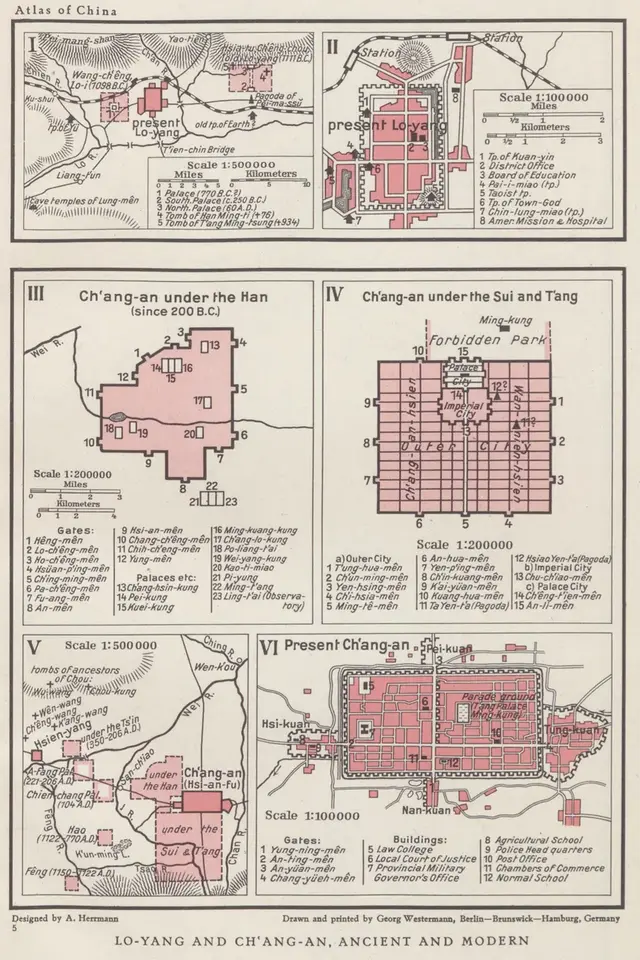
Domestically, Emperor Ming expanded the Imperial Academy and personally lectured on Confucian doctrine to thousands of visiting scholars. Following an imperial dream of a golden figure, Emperor Ming sent envoys westward, culminating in the arrival of Buddhist scriptures and the completion of the White Horse Temple in Luoyang in 68, formally inaugurating Buddhism into imperial China. In 79, Emperor Zhang presided over the White Tiger Hall Conference in Luoyang to resolve doctrinal disputes among Confucian schools, which court historian Ban Gu compiled into Comprehensive Discussions in the White Tiger Hall, officially codifying the Three Fundamental Bonds and Five Constant Virtues into national state ideology.
The three decades of the Rule of Yongping and Zhanghe represented the apogee of Eastern Han political cohesion and societal prosperity. The empire's registered population climbed from 15 million in the late Guangwu reign to more than 43 million, accompanied by extensive land reclamation, brimming state granaries, and stable grain prices. Wang Jing's hydraulic engineering safeguarded the North China Plain against flood disruption, laying an enduring foundation for northern agricultural output.
Ideologically, the publication of Comprehensive Discussions in the White Tiger Hall transformed Confucian ethics into an inviolable imperial legal and moral framework, embedding ancestral norms into the social fabric. Geopolitically, Ban Chao's pacification of the Western Regions removed the nomad threat to the Hexi Corridor, reviving trans-continental commercial and cultural exchange along the Silk Road and expanding Chinese civilizational prestige across Central and Western Asia.
In the Book of the Later Han (Hou Han Shu, Basic Annals of Emperor Ming and Emperor Zhang), Fan Ye extolled: "Emperor Ming revered Confucian learning, and all within the realm submitted to his virtue. His administration was strict yet his heart held hidden mercy; his court was dignified and acclaimed. Emperor Zhang was generous and enlightened, showing compassion in legal punishment and nurturing the people. All under heaven praised Emperor Ming for judicial rigor and Emperor Zhang for benevolent governance, celebrating their reigns as the glorious Rule of Ming and Zhang."
In Zizhi Tongjian, Sima Guang observed: "Emperor Ming was perceptive and farsighted, examining official merits and barring consort clans from power. Emperor Zhang fostered harmony within the imperial house, honored senior ministers, simplified laws, and extended imperial benevolence downward. With enlightened rulers and capable ministers, dynastic governance reached a heights worthy of the ancient Three Dynasties."