Flight to Jiangdu
Fleeing peasant revolts in northern China, Emperor Yang journeys to Jiangdu, abandoning the north.
Sui Dynasty (隋朝) · HISTORICAL EVENT
江都之变
The Jiangdu Coup (江都之变) was a catastrophic imperial guard mutiny and regicide in the third month of 618 CE that destroyed the Sui dynasty at Jiangdu Palace (modern Yangzhou). During the late Daye reign of Emperor Yang (Yang Guang), ruinous military campaigns against Goguryeo and massive civil infrastructure projects exhausted the empire, precipitating widespread peasant rebellions and aristocratic insurrections. In 616 CE, Emperor Yang journeyed south…
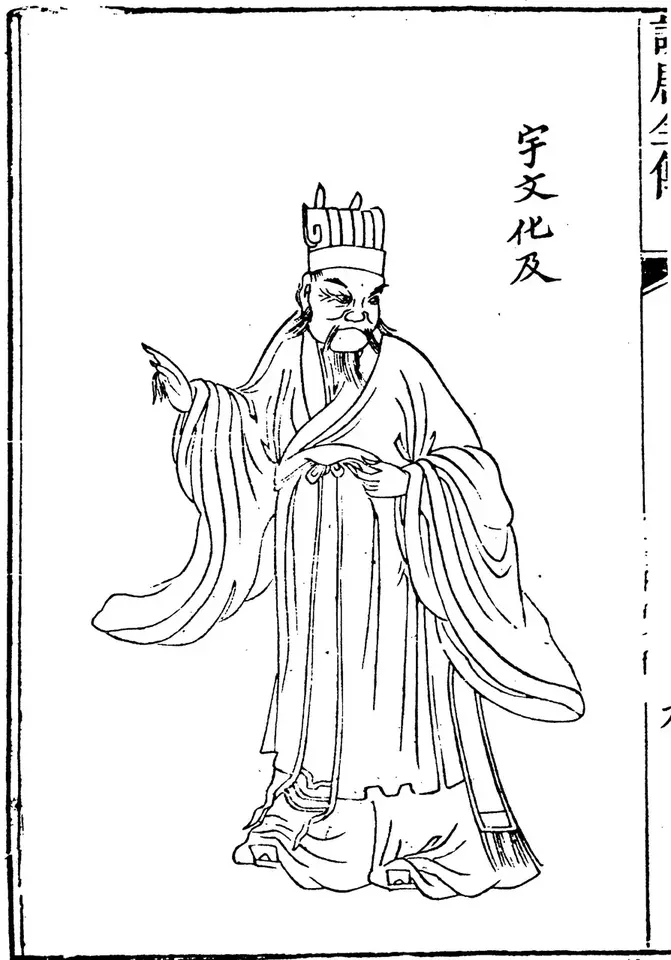
The Jiangdu Coup (江都之变) was a catastrophic imperial guard mutiny and regicide in the third month of 618 CE that destroyed the Sui dynasty at Jiangdu Palace (modern Yangzhou). During the late Daye reign of Emperor Yang (Yang Guang), ruinous military campaigns against Goguryeo and massive civil infrastructure projects exhausted the empire, precipitating widespread peasant rebellions and aristocratic insurrections. In 616 CE, Emperor Yang journeyed south on his third inspection of Jiangdu; terrified by the collapsing northern fronts, he retreated into hedonistic denial, refusing to return north and planning to relocate his court permanently to Danyang. The elite Xiaoguo Guard protecting the palace comprised over 100,000 veterans whose families remained stranded in Guanzhong. Confronted with severed communications and grain shortages, soldiers deserted in droves, while Emperor Yang responded with unsparing executions that alienated his troops. On the night of March 10, 618 CE, guard commanders Sima Dekan, Pei Qiantong, and Yuwen Huaji launched an armed palace mutiny. On the morning of March 11, officer Linghu Xingda strangled Emperor Yang with a white silk sash, slaughtering dozens of imperial princes. The mutiny destroyed the centralized authority of the Sui dynasty, prompting Li Yuan to ascend the throne in Chang'an and establish the Tang dynasty.
Fleeing peasant revolts in northern China, Emperor Yang journeys to Jiangdu, abandoning the north.
Facing starvation and despair, Guanzhong guards desert en masse; Emperor Yang enacts collective executions.
Sima Dekan and Pei Qiantong plot rebellion, choosing Yuwen Huaji as their political commander.
Sima Dekan burns outer camps while Pei Qiantong slays guard commanders and opens the palace gates.
Linghu Xingda strangles Emperor Yang with a silk sash; royal princes and senior ministers are executed.
Yuwen Huaji enthrones Yang Hao, takes the treasury, and marches north; the Sui dynasty dissolves.
Informed of the regicide, Li Yuan deposes Yang You in Chang'an, formally establishing the Tang dynasty.
Emperor Yang's tyrannical governance overtaxed national resources. Mobilizing millions of peasant laborers to construct the Grand Canal, extend the Great Wall, and rebuild Luoyang, while leading three disastrous military invasions of Goguryeo, the dynasty devastated the rural economy. In 611 CE, Wang Bo launched an insurrection in Shandong, sparking nationwide rebellions. By 617 CE, insurgent armies under Li Mi, Dou Jiande, and Du Fuwei dominated the countryside, while garrison general Li Yuan captured the capital Chang'an, reducing direct Sui authority to isolated northern garrisons and the southeastern enclave of Jiangdu.
In July 616 CE, Emperor Yang sailed south to Jiangdu with his royal fleet to escape the collapsing northern fronts. Abandoning administrative responsibilities, the emperor spent his days drinking with concubines in luxurious pavilions, stating fatalistically, "A good head—who will sever it?" He initiated construction on new palaces in Danyang, planning to abandon the Yellow River basin entirely.
The Xiaoguo Guard stationed at Jiangdu numbered more than 100,000 elite horsemen and infantry recruited from the Guanzhong and Guanlong heartlands. Aware that Li Yuan had seized their ancestral homes and facing mounting starvation, the guards grew frantic with homesickness. As unauthorized desertions multiplied, Emperor Yang enacted brutal decrees executing captured deserters alongside their entire tent-mates. This cruelty backfired completely, driving the guard commanders into unified, desperate conspiracy.
In the third month of 618 CE, cavalry commander Sima Dekan, alongside officers Yuan Li and Pei Qiantong, gathered to plot their escape. Initially, they intended merely to plunder imperial stables and race westward back to Guanzhong. However, Yuwen Zhiji, the cunning younger brother of General Yuwen Huaji, learned of the plan and intervened, arguing that fleeing without authority would invite imperial pursuit and urging them instead to mount an armed coup to seize Jiangdu.
Persuaded by Yuwen Zhiji, the officers resolved on regicide. Lacking aristocratic status to command nationwide deference, the conspirators selected Right Tunwei General Yuwen Huaji, a long-time royal favorite, as their titular supreme leader. Weak-willed and fearful, Yuwen Huaji wept and trembled when confronted with the conspiracy, but ultimately consented under coercion and the allure of supreme power.
On the night of March 10, 618 CE, the mutiny commenced. Sima Dekan torched outer military cantonments east of Jiangdu, sending plumes of smoke and flames into the night sky to signal mutinous detachments. Directing palace security, Pei Qiantong feigned an emergency, dismissing palace cavalry guards and spreading rumors that bandits were storming the walls.
At midnight, Pei Qiantong led mutineers to the inner Xuanwu Gate. When loyal guard commander Zhao Yuanshu confronted them, the conspirators cut him down and swung open the gates. Thousands of armed Xiaoguo soldiers poured through the breaches, securing key courtyards and surrounding the imperial private quarters. Warned by palace attendants, Emperor Yang hastily changed into civilian attire and hid inside the West Pavilion.
At dawn on March 11, mutineers breached the inner doors. Pei Qiantong and junior officer Linghu Xingda drew their swords and discovered Emperor Yang trembling behind a bed screen. Emperor Yang rebuked his former bodyguard: "Are you not my old acquaintance? Why do you commit treason?" Pei Qiantong sneered: "We dare not rebel; the army merely yearns for Guanzhong and wishes to escort Your Majesty home!"
The mutineers dragged the fallen emperor to the front hall. Stationed outside, Yuwen Huaji sent an uncompromising demand that the emperor be put to death immediately. Recognizing that his fate was sealed, Emperor Yang declared: "The Son of Heaven has his own way to die; no blood shall be spilled!" He took out a poison capsule, but Linghu Xingda snatched it away. Linghu Xingda shoved the emperor down onto the royal throne, unfastened a white silk ribbon from the emperor's sash, and strangled the fifty-year-old monarch to death.
Following the regicide, the mutineers unleashed an unsparing purge through the palace. Emperor Yang's beloved twelve-year-old son, Prince Yang Gao of Zhao, wept inconsolably beside his father's body; Pei Qiantong drew his sword and decapitated the child on the spot. Over forty princes and royal relatives, including Prince Yang Xiu of Shu and Prince Yang Jian of Qi, were systematically massacred, sparing only Emperor Wen's grandson Prince Yang Hao.
Concurrently, faithful senior ministers who refused to collaborate, including Vice Minister of the Chancellery Yu Shiji, Imperial Censor Pei Yun, and Left General of the Bodyguard Lai Hu'er, were executed. Proclaiming himself Grand Chancellor, Yuwen Huaji enthroned Yang Hao as a figurehead sovereign, plundered the palace treasuries, and marched 100,000 troops northward toward the Central Plains. Empress Xiao assembled discarded wooden bedboards into a crude coffin, burying Emperor Yang's remains beneath the earthen floor of Liuzhu Hall.
The Jiangdu Coup shattered the sovereign legitimacy of the Sui central state. The empire created by Emperor Wen in 581 CE collapsed in a single night. Deprived of imperial leadership, peripheral garrisons and loyalist holdouts disintegrated, transforming the nature of nationwide warfare from fragmented insurgencies against Sui tyranny into an unbridled civil contest among rival military strongmen for the imperial mandate.
Upon receiving news of the regicide, regional leaders abandoned nominal allegiance to the fallen house. In Chang'an, Li Yuan deposed child emperor Yang You in June 618 CE, ascending the throne as founding emperor of the Tang dynasty. In Luoyang, Wang Shichong deposed puppet prince Yang Dong to declare the state of Zheng. Yuwen Huaji's retreat collapsed under successive defeats by Li Mi and Dou Jiande. Benefiting from the strategic sanctuary of Guanzhong, the Tang court commenced its triumphant campaigns to unify China, founding three centuries of imperial prosperity.
In the Old Book of Tang (Jiu Tang Shu, Basic Annals of Emperor Gaozu), Liu Xu reflected: "Emperor Yang wallowed in palace decadence within and inflicted cruel tyranny upon commoners without. The Grand Canal flowed wide, the Liaodong marshes were strewn with white bones, and commoners could no longer endure life. The catastrophe of Jiangdu was brought upon himself, conforming to historical justice."
In Zizhi Tongjian, Sima Guang observed: "Emperor Yang silenced honest counsel, indulged luxury, and prided himself on unmatched brilliance. Yet when peril arrived at Jiangdu, he was humiliated by palace servants and strangled by common scoundrels—a tragedy understood even by women and children. That an emperor commanding ten thousand chariots had not a single soldier willing to die for him proves that the hearts of the people and the army were irrevocably lost. To repay tyranny with treason, no villainy matches the disgrace of Yuwen Huaji."