Five Commissioners Depart
The court dispatches Zaize and four fellow commissioners to study Western and Japanese constitutional systems.
Qing Dynasty (清朝) · HISTORICAL EVENT
预备立宪
The Constitutional Preparation Movement of Late Qing (预备立宪) took place from 1906 to 1911 (from the thirty-second year of the Guangxu era to the third year of the Xuantong era), representing a top-down institutional reform campaign undertaken by the Qing imperial court under internal and external crisis to preserve Manchu dynastic rule while adapting to modern constitutional governance. Following the Boxer Protocol of 1901 and Japan's constitutional…
The Constitutional Preparation Movement of Late Qing (预备立宪) took place from 1906 to 1911 (from the thirty-second year of the Guangxu era to the third year of the Xuantong era), representing a top-down institutional reform campaign undertaken by the Qing imperial court under internal and external crisis to preserve Manchu dynastic rule while adapting to modern constitutional governance. Following the Boxer Protocol of 1901 and Japan's constitutional victory over autocratic Tsarist Russia in the 1904–1905 Russo-Japanese War, elite public opinion converged around constitutional monarchy as the sole path to national salvation. In 1905, the Qing court dispatched five high commissioners abroad to study foreign constitutional systems. In September 1906, Empress Dowager Cixi issued an imperial edict declaring "Preparations to Emulate Constitutional Governance" under the guiding principle that sovereign prerogatives remained with the throne while administrative affairs were opened to public discourse. The court promulgated the Principles of the Constitution in 1908 and established provincial consultative bureaus alongside the central Advisory Council. However, in May 1911, the court abolished the Grand Council to create a "responsible cabinet" under Prince Qing Yikuang, in which nine of thirteen ministers were Manchus and seven were imperial princes. This "Royal Cabinet" exposed the insincerity of imperial reform, driving moderate constitutionalists into alliance with anti-Qing revolutionaries and precipitating the Wuchang Uprising that ended the dynasty.
The court dispatches Zaize and four fellow commissioners to study Western and Japanese constitutional systems.
Empress Dowager Cixi issues an imperial decree announcing preparations for constitutional governance.
The throne issues the Principles of the Constitution, affirming imperial supremacy over a nine-year transition.
Provincial consultative bureaus open nationwide, creating organized platforms for moderate gentry.
Constitutionalists lead three mass petitions, forcing the Prince Regent to shorten the preparatory transition to five years.
The announcement of Yikuang's prince-dominated cabinet alienates constitutionalists and discredits reformism.
The Wuchang Uprising breaks out, prompting provincial assemblies to declare independence and topple the dynasty.
Following the signing of the Boxer Protocol in 1901, the Qing Empire became subordinate to foreign imperialist spheres of influence. The burden of indemnity payments and territorial concessions ignited widespread urban dissent and revolutionary agitation. Between 1904 and 1905, Japan and Russia fought across Manchuria; the triumph of a modernized constitutional Japan over autocratic Tsarist Russia sent shockwaves through Chinese political circles. Intellectuals and gentry concluded that constitutional governance created national strength while autocracy fostered decay. From overseas exile, Liang Qichao advocated constitutional reform, while domestic gentry leaders like Zhang Jian organized associations demanding parliamentary governance.
In 1905, confronting mounting domestic unrest, the Qing court commissioned Duke Zaize, Duanfang, Dai Hongci, Shang Qiheng, and Li Shengduo to survey constitutional governance in the United States, Germany, Great Britain, France, and Japan. Upon their return in 1906, Zaize submitted a confidential memorial arguing that constitutionalism conferred three paramount advantages: "securing the imperial lineage permanently, mitigating foreign encroachment, and pacifying domestic rebellion." On September 1, 1906, Empress Dowager Cixi promulgated an imperial edict formally initiating constitutional preparations, adopting the institutional principle: "Supreme authority is unified within the court, while general administrative affairs are submitted to public deliberation."
Following the 1906 edict, the Qing government restructured central ministries, but entrenched Manchu princes refused to surrender core political monopolies, transforming restructuring into an ethnic power struggle. In 1907, the court authorized the establishment of provincial consultative bureaus (Ziyiju) and the imperial Advisory Council (Zizhengyuan). In August 1908, the court issued China's first constitutional document, the Principles of the Constitution (Qinding Xianfa Dagan). Heavily modeled on the Meiji Constitution of Japan, it declared that "the Great Qing Emperor shall rule the Great Qing Empire in unbroken line for ten thousand generations," reserving supreme legislative, judicial, military, and administrative powers to the sovereign, while setting a protracted nine-year preparatory transition.
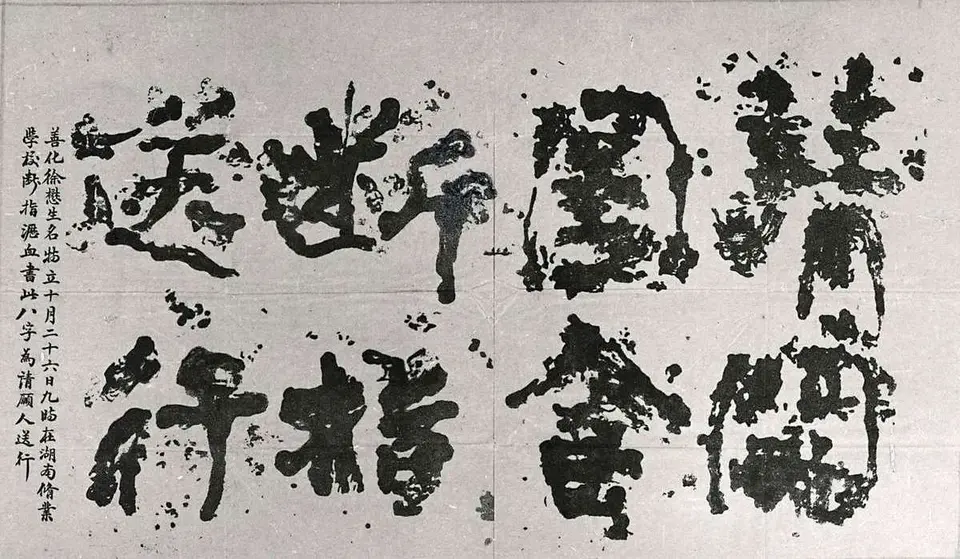
In 1909, provincial consultative bureaus opened in twenty-one provinces. Composed primarily of regional gentry and merchant elites, these assemblies provided constitutionalists with an official political platform. Led by Zhang Jian, consultative leaders formed the Association to Prepare for Constitutional Governance, organizing three nationwide petitions in 1910 demanding the immediate opening of parliament. Hundreds of thousands signed petitions, and delegates demonstrated in Beijing with blood oaths. Under intense public pressure, Prince Regent Zaifeng compromised in November 1910, reducing the preparatory timeline from nine years to five and promising a parliament by 1913.
Despite surface concessions, the Manchu royal family grew suspicious of regional gentry power. On May 8, 1911, the throne abolished the Grand Council and proclaimed the formation of a "responsible cabinet" under Prime Minister Yikuang (Prince Qing). However, out of thirteen ministerial posts, nine were assigned to Manchus, and seven were granted directly to imperial clan princes (including Zaize, Shanqi, and Puwei), while Chinese officials received only four secondary portfolios. Public opinion condemned this administration as the "Royal Cabinet."
The creation of the Royal Cabinet violated the constitutional principle that royal relatives should not monopolize cabinet executive offices, demonstrating that the Qing court used constitutional slogans to consolidate family autocracy. Constitutionalist elites realized that peaceful political evolution was impossible. Weeks later, the court promulgated the nationalization of private trunk railways, sparking the Railway Protection Movement in Sichuan. When the Wuchang Uprising erupted in October 1911, provincial consultative assemblies across southern China renounced their allegiance and declared independence from Beijing, extinguishing the constitutional preparation program.
The Late Qing Constitutional Preparation program collapsed with the formation of the Royal Cabinet. Manchu efforts to monopolize state authority shattered the political trust of provincial elites, isolating the dynasty and driving moderate reformers into active collaboration with revolutionary organizations.
The constitutional movement transformed modern Chinese political development. First, it extinguished reformist illusions in gradual constitutional monarchism, convincing the intellectual elite that autocratic dynasties could not reform themselves voluntarily and paving the way for the 1911 Revolution. Second, consultative assemblies established during the movement introduced Western parliamentary norms, local self-governance concepts, and electoral practices; when revolution broke out, these provincial assemblies provided an institutional framework that rapidly dissolved central control, facilitating the peaceful abdication of the last Qing emperor and the founding of the Republic of China.