Gaoping Tombs Incident
Sima Yi executes Cao Shuang and seizes imperial court power, establishing Sima family autocracy
Cao Wei (曹魏) · HISTORICAL EVENT
淮南三叛
The Three Rebellions in Shouchun (淮南三叛) were a series of armed uprisings launched between 251 and 258 CE by senior Cao Wei generals stationed at the strategic garrison of Shouchun against the autocratic usurpation of the Sima family. Following the Gaoping Tombs Incident of 249, Sima Yi seized control of the Cao Wei court. Stationed at Shouchun, Grand Commandant Wang Ling plotted in 251 to replace Emperor Cao Fang with Cao Biao; Sima Yi marched south, and…
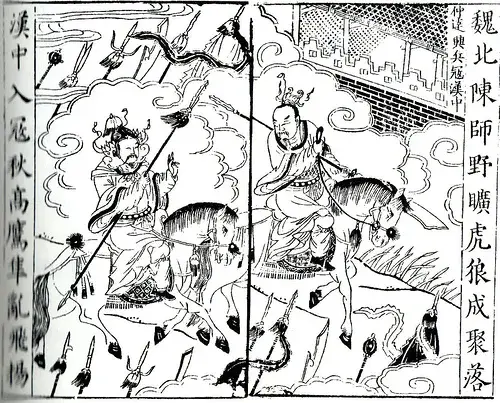
The Three Rebellions in Shouchun (淮南三叛) were a series of armed uprisings launched between 251 and 258 CE by senior Cao Wei generals stationed at the strategic garrison of Shouchun against the autocratic usurpation of the Sima family. Following the Gaoping Tombs Incident of 249, Sima Yi seized control of the Cao Wei court. Stationed at Shouchun, Grand Commandant Wang Ling plotted in 251 to replace Emperor Cao Fang with Cao Biao; Sima Yi marched south, and Wang Ling committed suicide. In 255, after Sima Shi dethroned Cao Fang, General Guanqiu Jian and Inspector Wen Qin rose in revolt; Wen Yang achieved renown through a solo cavalry charge, but Sima Shi crushed the rebellion, dying of an aggravated eye affliction during the retreat. In 257, fearing purges, General Zhuge Dan rebelled in Shouchun, allying with Eastern Wu; Sima Zhao deployed 260,000 troops, besieging the fortress for nearly a year before executing Zhuge Dan and his retinue, who refused surrender. The three rebellions represented the final military resistance of Cao Wei loyalists. Sima Yi and his sons extinguished all armed opposition over eight years, securing unquestioned control and clearing the institutional path for Sima Yan's founding of the Jin dynasty.
Sima Yi executes Cao Shuang and seizes imperial court power, establishing Sima family autocracy
Wang Ling plots to replace Cao Fang with Cao Biao; Sima Yi marches south, and Wang Ling commits suicide
Sima Shi deposes Emperor Cao Fang and installs Cao Mao, provoking resistance among Huainan commanders
Guanqiu Jian and Wen Qin rebel; Wen Yang raids Sima Shi's camp; Guanqiu Jian is killed, and Sima Shi dies at Xuchang
Zhuge Dan executes Le Lin, secures Eastern Wu alliances, and fortifies Shouchun against Sima Zhao's 260,000-man army
Sima Zhao storms the fortress; Zhuge Dan is executed, his retainers refuse surrender, and the rebellions are extinguished
In 249 CE (the tenth year of Zhengshi), Grand Tutor Sima Yi staged a coup in Luoyang while Regent Cao Shuang accompanied the young Emperor Cao Fang to visit the imperial tombs at Gaoping. Sima Yi seized control of the palace gates, executed Cao Shuang and his faction, and exterminated their clans. Sovereign authority was reduced to a figurehead, and civil and military power fell under the control of Sima Yi and his sons, Sima Shi and Sima Zhao.
To prevent resistance from the imperial house, the Sima faction placed the princes of the Cao royal lineage under strict house arrest, depriving them of military commands and prohibiting political assembly. In the capital, officials who voiced opposition were systematically executed, creating intense resentment among veteran commanders and scholar-officials loyal to the Cao Wei state.
In Cao Wei's defensive geography, the regional military command of Huainan, headquartered at Shouchun (modern Shou County, Anhui), was the primary frontier bastion guarding against invasions from Eastern Wu along the Huai and Yangtze rivers. Supported by extensive agricultural colonies and water management networks, the region maintained over one hundred thousand combat troops and extensive granaries.
Because Shouchun faced frontline warfare against Eastern Wu, its military commanders were distinguished veterans who had received honors from earlier Cao Wei monarchs. Stationed far from the capital, these commanders resented the Sima family's usurpation of sovereign power, transforming Shouchun into a stronghold of armed opposition against Sima hegemony.
In 251 CE (the third year of Jiaping), the eighty-year-old Grand Commandant and Commander of Yangzhou Military Affairs, Wang Ling, observed Sima Yi's growing tyranny. Believing that the youthful Emperor Cao Fang was too weak to resist the regency, Wang Ling conspired with his nephew, Yanzhou Inspector Linghu Yu, to dethrone Cao Fang and install Cao Biao, the Prince of Chu and son of Cao Cao, establishing a rival court at Xuchang to preserve the dynasty.
Wang Ling petitioned the court for permission to mobilize troops against alleged Eastern Wu border incursions, intending to deploy his army north toward the capital. However, Sima Yi anticipated the conspiracy. Sima Yi led imperial guards south along inland waterways, arriving unexpectedly before Wang Ling at Xiangxian, while issuing a general pardon to undermine rebel morale. Recognizing that he could not resist, Wang Ling surrendered. While being transported to Luoyang, Wang Ling committed suicide by poison, his co-conspirators were executed, and Cao Biao was compelled to commit suicide.
In 254 CE, Sima Shi, who succeeded Sima Yi as regent, deposed Emperor Cao Fang and installed the thirteen-year-old Cao Mao, provoking widespread outrage across the provinces.
This action incited General Guanqiu Jian and Yangzhou Inspector Wen Qin. Guanqiu Jian was a distinguished commander who had conquered Goguryeo and maintained loyalty to the Cao clan. In January 255 (the second year of Zhengyuan), Guanqiu Jian and Wen Qin mobilized sixty thousand troops at Shouchun. Producing an imperial decree attributed to Empress Dowager Guo that enumerated eleven treasonous crimes committed by Sima Shi, they marched to Xiangxian, urging provincial governors to join the resistance.
Sima Shi mobilized an army of over one hundred thousand troops to advance toward Xiangcheng, despite recovering from surgery for an eye tumor. He directed Zhuge Dan to sever rebel communication corridors from the east while ordering Deng Ai to occupy Lejia to entice the insurgents into battle.
When the armies engaged, Wen Qin and his eighteen-year-old son Wen Yang rode to relieve Lejia. At night, Wen Yang led a cavalry detachment in a charge against Sima Shi's headquarters, shouting Sima Shi's name and throwing the imperial camp into chaos. Bedridden, Sima Shi suffered agony as his eye ruptured through the surgical wound, blinding him; fearing panic, he bit through his bedding to suppress his groans.
At dawn, lacking reinforcements, Wen Yang withdrew. Sima Shi dispatched Sima Ban with eight thousand cavalry in pursuit. Wen Yang turned single-handedly into the pursuing cavalry, charging through their ranks several times, killing dozens of horsemen and escaping unharmed. However, Guanqiu Jian's army dissolved as its supply lines were severed. Guanqiu Jian fled to the marshes of Shenxian, where he was killed by an archer, while Wen Qin and Wen Yang fled to Eastern Wu. Sima Shi died in agony at Xuchang from his ruptured eye during the march back, and his younger brother Sima Zhao assumed control of the military.
In 257 CE (the second year of Ganlu), Sima Zhao consolidated his authority. Zhuge Dan, General Who Conquers the East and Commander of Yangzhou Military Affairs, observed the executions of his associates Deng Yang and Xiahou Xuan and the eradication of Guanqiu Jian's lineage. Fearing that he would be targeted next, Zhuge Dan stockpiled grain and fortified Shouchun.
Sima Zhao dispatched his confidant Jia Chong to evaluate Zhuge Dan's allegiance. When Jia Chong suggested that the dynasty should yield to the Sima family, Zhuge Dan rebuked him: "Are you not the son of Jia Kui? Your family received imperial favor for generations; how can you deliver the altars of state to another clan!" Sima Zhao promoted Zhuge Dan to Minister of Works, summoning him to the capital. Recognizing this as an execution summons, Zhuge Dan killed Inspector Le Lin and rebelled, sending his son Zhuge Jing to Eastern Wu as a hostage in exchange for military intervention. Eastern Wu dispatched troops under Sun Chen, Quan Yi, and Wen Qin to reinforce Shouchun.
Faced with the crisis, Sima Zhao compelled Emperor Cao Mao and Empress Dowager Guo to accompany the expedition, deploying 260,000 imperial troops to Shouchun. Sima Zhao surrounded the fortress with double-layered ramparts and moats, blockading the garrison for nearly a year.
Eastern Wu reinforcements failed to break the encirclement, and food supplies inside Shouchun were exhausted. When Wen Qin proposed expelling northern troops to conserve grain for southern soldiers, Zhuge Dan suspected treachery and executed him. Wen Qin's sons, Wen Yang and Wen Hu, defected to Sima Zhao. Sima Zhao pardoned them and granted them noble titles, ordering them to parade around the city walls to encourage surrender, which undermined the defenders' resolve.
On the twentieth day of February 258, Sima Zhao mounted an assault on the battlements, capturing the city. Zhuge Dan attempted to break through the gates on horseback but was cut down and beheaded by cavalry under Hu Fen, and his clan was executed. Several hundred retainers of Zhuge Dan's personal bodyguard were captured; Sima Zhao offered them pardons if they renounced their master, but they refused, declaring that dying for Lord Zhuge brought no regret, and were executed. The Three Rebellions in Shouchun concluded.
The suppression of the Three Rebellions in Shouchun eliminated the final regular military forces loyal to the Cao Wei imperial lineage. Through three successive campaigns, veteran commanders, loyalist scholar-officials, and veteran garrison troops across the Huai River basin were eradicated.
In the aftermath, Sima Zhao executed opposition figures and replaced regional administrators with loyal clients. The central and provincial military commands fell under Sima control, reducing sovereign authority to a hollow title and rendering Emperor Cao Mao's protest—that Sima Zhao's ambitions were known to every passerby—a reflection of imperial impotence.
The defeat of the rebellions resolved the most dangerous challenges confronting the Sima family during their rise to power. In 260 CE, Sima Zhao orchestrated the assassination of Emperor Cao Mao, installing Cao Huan as a puppet ruler; in 263 CE, Sima Zhao conquered the Shu Han state; and in December 265 CE, Sima Zhao's son Sima Yan forced the abdication of Cao Huan, founding the Western Jin dynasty.
The Three Rebellions in Shouchun were the primary military struggles during the dynastic transition from Wei to Jin. The Sima family's victories eliminated armed opposition, ensuring the transition toward Western Jin imperial rule.
Chen Shou evaluates in the Records of the Three Kingdoms: "Wang Ling possessed upright character, Guanqiu Jian demonstrated exceptional talent, and Zhuge Dan commanded stern authority; all were elevated to prominent regional bastions to manage frontier strategy. Yet wielding authority that unsettled the throne, they plunged into rebellion and destruction, suffering execution and the annihilation of their clans—a tragic end indeed!"
Chen Shou praises the loyalty of Zhuge Dan's retainers: "Several hundred retainers under Zhuge Dan refused surrender and faced execution, declaring that dying for Lord Zhuge brought no regret. That he won men's hearts to such a degree—even the followers of Tian Heng could not surpass them!"
Qing historian Zhao Yi observes in Notes on the Twenty-Two Dynastic Histories: "When the Sima family monopolized power, loyal ministers of Wei rose repeatedly in arms to suppress them. The Three Rebellions in Shouchun involved major regional bastions; Wang Ling, Guanqiu Jian, and Zhuge Dan rebelled in succession, proving that Wei did not lack loyal servants. Yet Sima Yi and his sons possessed exceptional strategic capability, mobilizing swiftly to extinguish each threat. Once Huainan fell, the mandate of Wei was extinguished, beyond the power of any mortal to reverse."