Chenqiao Mutiny and Founding of Song
Zhao Kuangyin is proclaimed emperor by subordinate troops at Chenqiao Station, founding the Song Dynasty while recognizing military vulnerability.
Northern Song Dynasty (北宋) · HISTORICAL EVENT
杯酒释兵权
Dissolving Military Power over a Cup of Wine (杯酒释兵权) refers to a momentous political and military centralization maneuver executed by Emperor Taizu of Song between 961 and 969. During the late Tang and Five Dynasties periods, reckless regional warlords and mutinous commanders frequently deposed emperors, reducing dynastic longevity to brief regimes. In 960, Commander of the Palace Corps Zhao Kuangyin seized power through the Chenqiao Mutiny to found the…
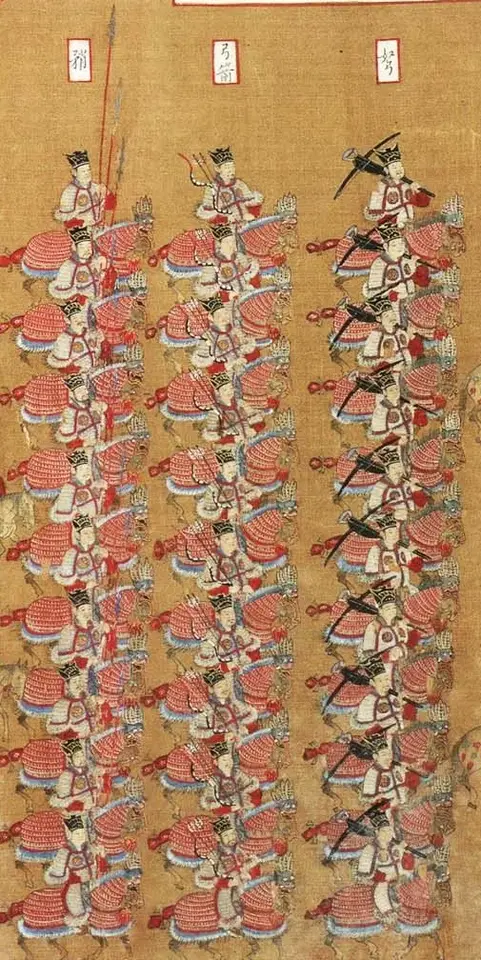
Dissolving Military Power over a Cup of Wine (杯酒释兵权) refers to a momentous political and military centralization maneuver executed by Emperor Taizu of Song between 961 and 969. During the late Tang and Five Dynasties periods, reckless regional warlords and mutinous commanders frequently deposed emperors, reducing dynastic longevity to brief regimes. In 960, Commander of the Palace Corps Zhao Kuangyin seized power through the Chenqiao Mutiny to found the Song Dynasty. Though Taizu suppressed regional revolts in Shanxi and Huainan, he remained deeply anxious that his sworn comrades commanding the elite Palace Guard might stage a copycat uprising. Chief Minister Zhao Pu submitted the strategic formula: "Gradually curtail their authority, control their finances, and gather their elite troops." In the seventh month of 961, Emperor Taizu hosted an intimate banquet for his core commanders—Shi Shouxin, Gao Huaide, Wang Shenqi, and Zhang Lingduo. As wine flowed, Taizu openly voiced his sleepless dread of another imperial yellow robe being thrust upon them by mutinous soldiers. Persuaded by Taizu's blend of royal menace and promised security, the generals submitted petitions pleading illness the following morning, surrendering military command in return for honorary governorships and imperial marriages. In 969, Taizu extended this mechanism to provincial military commissioners. The event eliminated warlord tyranny, established durable civil authority, and anchored centuries of political peace.
Zhao Kuangyin is proclaimed emperor by subordinate troops at Chenqiao Station, founding the Song Dynasty while recognizing military vulnerability.
Emperor Taizu personally directs campaigns crushing armed revolts in Shanxi and Huainan, reinforcing his resolve to dismantle warlordism.
Taizu and Chancellor Zhao Pu confer in private; Zhao Pu articulates the twelve-character doctrine of curtailing authority, controlling wealth, and gathering elite soldiers.
Taizu hosts an evening banquet for Shi Shouxin and fellow commanders; the generals yield military command the following morning.
The court reorganizes the elite guards into the Three Capital Commands under strict civilian bureaucratic oversight.
Taizu gathers regional military governors in Luoyang, systematically stripping their commands and replacing them with civil prefects.
Following the mid-eighth-century An Lushan Rebellion, autonomous military circuits dominated northern China. Provincial commanders wielded absolute local civil, fiscal, and martial authority, treating central imperial edicts with contempt. The ensuing Five Dynasties era witnessed even greater volatility: five dynasties and eight imperial houses succeeded each other across barely fifty years, with over a dozen emperors rising and falling through bloodshed.
Throughout this chaotic era, rulers ascended the throne almost exclusively through the backing of palace guards and senior generals. Soldiers openly declared that whoever commanded the most formidable blades was entitled to the imperial seat. In the spring of 960, Zhao Kuangyin, then Commander of the Palace Corps of Later Zhou, marched north under pretext of defending against Khitan forces. At Chenqiao Station, his subordinate officers draped the yellow imperial robe around him, elevating him to emperor. Having attained sovereign power through a military conspiracy, Zhao Kuangyin harbored intense wariness toward the armed commanders who elevated him.
Within months of the Song Dynasty's founding, two veteran Later Zhou commanders—Li Yun of Zhaoyi and Li Chongjin of Huainan—rose in open revolt against the new court. Emperor Taizu took personal command, deploying his trusted generals Shi Shouxin and Wang Shenqi to crush both insurrections across a year of bitter campaigning.
The insurrections heightened Taizu's acute fear of commanders garrisoned across the provinces. In late 960, Taizu summoned his most astute confidant, Chancellor Zhao Pu, for a private bedchamber audience. Taizu asked: "Since late Tang, eight imperial houses have replaced one another within decades, leaving warfare unending. By what path can I lay down the realm's weapons and construct enduring peace for the state?" Zhao Pu replied with penetrating clarity: "The cause lies solely in the excessive weight of military commissioners and the weakness of the sovereign against overmighty subjects. To resolve it requires no arcane method, but simply to gradually curtail their authority, control their finances, and gather their elite troops; then the realm will naturally enjoy tranquility." This formulation served as the master blueprint for Taizu's restructuring.
On the evening of the ninth day of the seventh month in 961, Emperor Taizu convened an intimate palace banquet, summoning his closest comrades: Commander-in-Chief of the Palace Corps Shi Shouxin, Vice Commander Gao Huaide, Inspector General Wang Shenqi, and Assistant Commander Zhang Lingduo.
After several rounds of wine, Taizu dismissed all attendants and sighed heavily: "Were it not for your valiant efforts, I would never occupy this throne. Yet dwelling in the imperial seat brings immense sorrow; day and night I am consumed by terror, far less fortunate than a simple regional governor, unable to sleep in peace." Shocked, Shi Shouxin and the generals bowed deeply: "The imperial mandate is settled. Who would dare harbor disloyal intent? Why does Your Majesty utter such words?"
Taizu replied significantly: "You and I are brothers, and I have total faith in your loyalty. But should your subordinate officers lust for wealth and fame, and one day drape a yellow robe around your shoulders, could you refuse them even if you did not wish to rebel?"
Hearing the words "yellow robe," the generals turned pale with terror. Remembering that they had performed that very act for Zhao Kuangyin at Chenqiao, they realized the sovereign was issuing an ultimatum. Weeping bitterly, they prostrated themselves on the floor and pleaded: "We are simple and ignorant men, blind to such danger. We beseech Your Majesty to point out a path to life!"
Taizu offered reassuring terms: "Human existence passes like a fleeting shadow; what one truly desires is riches, leisure, and enduring happiness for one's descendants. Why do you not surrender your military commands, depart to govern wealthy regional prefectures, acquire fertile estates, and ensure longevity for your offspring? I shall arrange marriages between our children so that sovereign and subject live without mutual suspicion, enjoying lifelong peace."
Overawed by the emperor's calculated benevolence and thinly veiled warning, the commanders bowed in gratitude. The following morning, Shi Shouxin, Gao Huaide, Wang Shenqi, and Zhang Lingduo submitted simultaneous memorials, pleading advanced age and chronic ailments, and begged release from military duties. Taizu granted their requests with lavish gifts of gold, silver, and estates, reassigning them as honorary military commissioners across regional pacified garrisons while reclaiming the Palace Guard commands into the imperial hand.
Having reclaimed control over the central capital guards, Emperor Taizu addressed the remaining military governors governing the outer provinces. In April 969, Taizu hosted an imperial banquet in the Western Capital of Luoyang for elder statesmen and senior governors, including Prince of Wei Fu Yanqing, Li Jixun of Zhaoyi, and Liu Yanhan of Wuning. Over wine, Taizu again praised their lifelong martial hardships and firmly urged them to surrender provincial command.
Shortly thereafter, Taizu promulgated decrees revoking all military authority exercised by regional commissioners over surrounding subordinate prefectures. Civil officials dispatched directly from the central court were appointed as Prefects and Controllers. Local tax receipts were ordered remitted directly to the capital's State Finance Commission, completely severing the financial and military roots of regional warlords.
Dissolving Military Power over a Cup of Wine averted further military insurrections without executing a single general. The deep-seated plague of autonomous warlords that had devastated northern China since the mid-eighth century vanished completely, placing the military under absolute central imperial oversight.
Following the transition, the Song court abolished supreme military offices such as Supreme Commander of Palace Guards. Operational command was bifurcated: the civilian Bureau of Military Affairs held authorization to deploy armies, while the Three Capital Commands (Palace Command, Cavalry Command, Infantry Command) managed daily troop maintenance. The promotion of civil scholar-officials via imperial examinations anchored the policy of exalting culture and curbing militarism, fostering cultural and commercial prosperity while unintentionally generating structural military vulnerabilities against northern nomadic empires.