Fuli Rout
Emperor Xiaozong's northern offensive collapses at Fuli, prompting Song forces to fall back to defensive lines along the Huai River.
Southern Song Dynasty (南宋) · HISTORICAL EVENT
隆兴和议
The Longxing Treaty (隆兴和议) was a crucial diplomatic peace agreement concluded in 1164 (the second year of the Longxing era of Southern Song and the fourth year of the Dading era of the Jin dynasty) between the Southern Song dynasty and the Jurchen Jin dynasty in the aftermath of the Battle of Fuli. Following Emperor Xiaozong's ascension to the Southern Song throne and the subsequent setback of his offensive campaign, military veteran Zhang Jun…
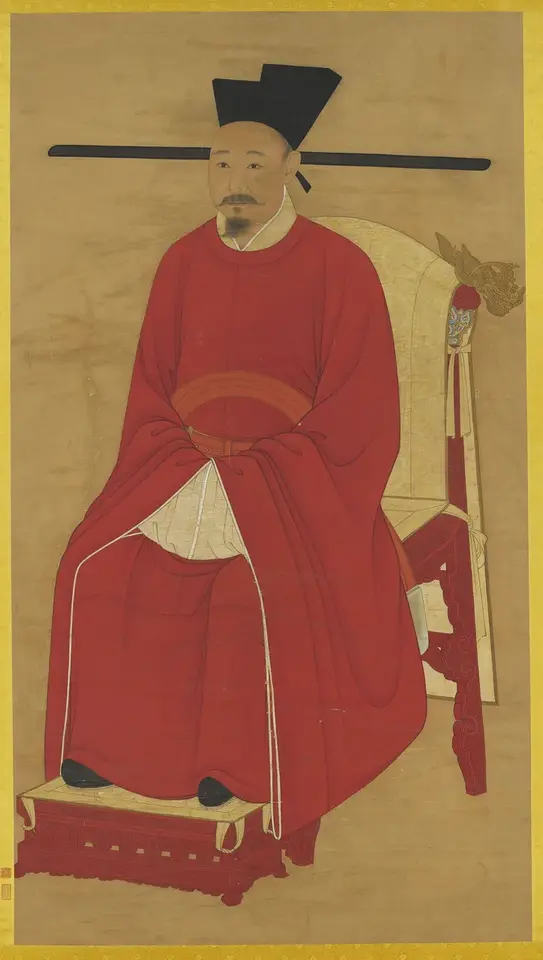
The Longxing Treaty (隆兴和议) was a crucial diplomatic peace agreement concluded in 1164 (the second year of the Longxing era of Southern Song and the fourth year of the Dading era of the Jin dynasty) between the Southern Song dynasty and the Jurchen Jin dynasty in the aftermath of the Battle of Fuli. Following Emperor Xiaozong's ascension to the Southern Song throne and the subsequent setback of his offensive campaign, military veteran Zhang Jun effectively reorganized Jianghuai defenses, halting further Jurchen southward thrusts. Facing overextended logistical lines and lingering instability across northern territories, the Jin leadership abandoned hopes of immediate conquest. Emperor Xiaozong accordingly recalibrated imperial strategy toward pragmatism. Through arduous diplomatic exchanges, Southern Song abolished the humiliating vassal-sovereign relationship established under the earlier Shaoxing Treaty, replacing it with an uncle-nephew ritual protocol and securing modest reductions in annual monetary deliveries. Although Song ceded disputed frontier prefectures and preserved the Huai River boundary, the settlement fostered nearly four decades of durable peace, laying the institutional foundation for the prosperous Qianchun era.
Emperor Xiaozong's northern offensive collapses at Fuli, prompting Song forces to fall back to defensive lines along the Huai River.
Lu Zhongxian travels to the Jin camp for preliminary discussions but is punished upon return for unauthorized concessions.
Pusan Zhongyi advances across the Huai River to occupy Chuzhou, prompting Southern Song to fortify the Yangtze River barriers.
Wei Qi serves as chief ambassador to Zhongdu, firmly resolving protocol titles and financial quotas through bilateral negotiation.
Sworn treaties are formally ratified, inaugurating uncle-nephew diplomatic parity and ending active armed hostilities.
In 1162, Emperor Gaozong abdicated in favor of his adopted heir Emperor Xiaozong. Eager to reclaim northern territories and vindicate ancestral honor, Xiaozong appointed veteran commander Zhang Jun to direct military planning. In the summer of 1163, Song armies crossed the Huai River, securing quick victories at Lingbi and capturing Suzhou. However, rivalry and mistrust between subordinate commanders Li Xianzhong and Shao Hongyuan crippled logistical coordination. A fierce Jin counterattack resulted in a catastrophic Song rout at Fuli, forcing imperial units to retreat south of the Huai River.
Following the defeat at Fuli, Zhang Jun consolidated garrisons across Yangzhou and restored defense works throughout the Huai River basin, successfully repelling localized Jurchen cavalry raids. Although Jin commander Pusan Zhongyi gathered formidable forces north of the river, his troops suffered from protracted supply lines and logistical exhaustion, while Khitan unrest simmered in the northern interior. Recognizing that complete subjugation of the southern state remained unfeasible, Jin Emperor Shizong and the Southern Song court simultaneously inclined toward bilateral cessation of hostilities.
In the wake of the Fuli retreat, conciliation advocates at the Song court regained influence. Chancellor Tang Situi advocated accommodating Jin demands, actively isolating Zhang Jun. Constrained by depleted treasury reserves and administrative friction, Emperor Xiaozong dispatched Lu Zhongxian as an exploratory envoy in late 1163. Jin authorities presented stringent terms, demanding the unconditional return of four border prefectures—Tangzhou, Dengzhou, Haizhou, and Sizhou—and insisting on superior titular recognition.
Lu Zhongxian's unauthorized concessions incited fierce imperial anger upon his return, resulting in his immediate dismissal. Emperor Xiaozong then sent Zhang Tao to negotiate firmer boundaries. Nevertheless, internal sabotage by Tang Situi weakened Song frontline troop deployments, encouraging Jin commanders Pusan Zhongyi and Heshilie Zhining to launch autumn incursions across the Huai River in 1164, seizing Chuzhou and threatening the Yangtze waterline. Reacting decisively, Emperor Xiaozong dismissed Tang Situi, mobilized defensive veteran Yu Yunwen, and dispatched a resolute diplomatic delegation led by Wei Qi.
Confronting resolute Southern Song naval resistance along the Yangtze and hampered by torrential rains that paralyzed northern cavalry, the Jin army abandoned plans for a major amphibious crossing. Emperor Shizong consented to modify earlier punitive demands, redirecting efforts to diplomatic negotiations in Zhongdu. Southern Song envoy Wei Qi conducted firm negotiations, resisting efforts to impose degrading court ceremonial rituals.
Both monarchies finally achieved compromise. In December 1164 (January 1165 in the Julian calendar), sovereign credentials and sworn pacts were exchanged, formalizing the Longxing Treaty.
Its core provisions included: First, political relations were restructured into an uncle-nephew protocol, with the Jin emperor addressed as imperial uncle and the Song monarch as imperial nephew, definitively terminating the vassal status mandated in the 1142 Shaoxing Treaty; Second, annual payments were redesignated from tributary tribute to conventional annual silver and silk subsidies, with shipments reduced by 50,000 units each, totaling 200,000 taels of silver and 200,000 bolts of silk per annum; Third, the bilateral frontier remained fixed along the Huai River and Dasanguan pass, with Southern Song returning the four contested border prefectures; Fourth, both empires agreed to exchange captured military personnel and civilian refugees, with Jin relinquishing demands for the forced extradition of northern subjects who had sought refuge in Song domains.
The Longxing Treaty concluded open hostilities between Southern Song and Jin. Southern Song officially eliminated the ritual humiliation of sovereign-vassal terminology, elevated its institutional status to family seniority, and secured a notable reduction in annual fiscal drains. Territorially, however, Song restored administrative control of four contested frontier prefectures to Jin, reaffirming the Huai River-Dasanguan frontier.
The treaty established a stable balance of power that persisted for roughly four decades, marking the longest period of sustained peace in Southern Song history. Freed from crippling wartime expenditures, the Song court concentrated administrative attention on internal agricultural rehabilitation, water conservancy projects, and maritime commerce. These domestic policies generated significant demographic and commercial expansion, culminating in the golden age known as the Qianchun Era. This enduring geopolitical equilibrium endured until Han Tuozhou launched the Kaixi Northern Expedition in 1206.