Trans-Maritime Envoys
Defecting Liao official Ma Zhi proposes an alliance against Liao; Song envoys sail across the Bohai Sea from Dengzhou to open talks
Northern Song Dynasty (北宋) · HISTORICAL EVENT
海上之盟
The Alliance Conducted by Sea (海上之盟) was a secret diplomatic and military pact negotiated between 1118 and 1123 across the Bohai Sea by the Northern Song dynasty and the newly emerging Jurchen Jin dynasty to partition the Khitan Liao dynasty. Ever since Emperor Gaozu of Later Jin ceded the Sixteen Prefectures of Yanyun in 936, recovering this northern defensive barrier had remained an enduring ambition for successive Song emperors. During the Xuanhe era,…
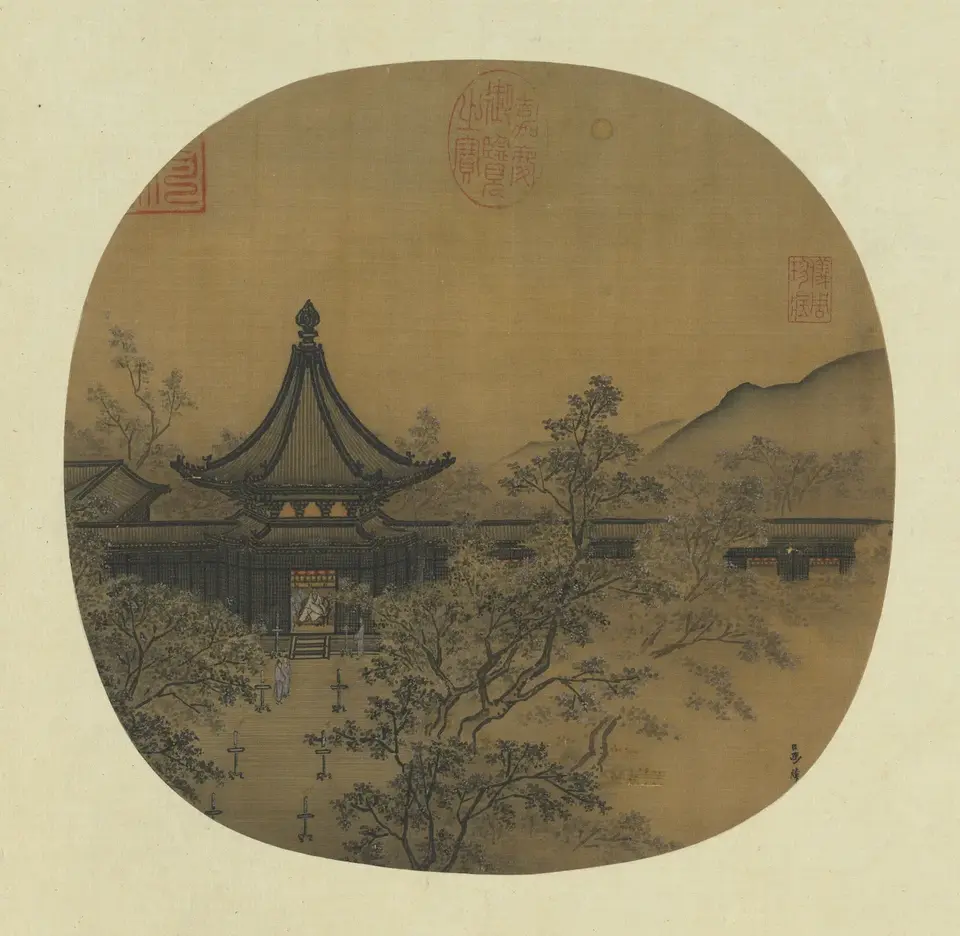
The Alliance Conducted by Sea (海上之盟) was a secret diplomatic and military pact negotiated between 1118 and 1123 across the Bohai Sea by the Northern Song dynasty and the newly emerging Jurchen Jin dynasty to partition the Khitan Liao dynasty. Ever since Emperor Gaozu of Later Jin ceded the Sixteen Prefectures of Yanyun in 936, recovering this northern defensive barrier had remained an enduring ambition for successive Song emperors. During the Xuanhe era, Emperor Huizong, Grand Chancellor Cai Jing, and the influential palace eunuch Tong Guan witnessed the decay of Liao under Emperor Tianzuo and the military rise of Wanyan Aguda's Jin dynasty. They embraced a strategic proposal submitted by the defecting Liao official Ma Zhi to ally with Jin. Because Liao blocked overland routes, envoys crossed the Bohai Sea from Dengzhou in Shandong, agreeing that Jin would capture the Liao Central Capital while Song would seize the Southern Capital (Yanjing). Following the defeat of Liao, Yanyun would revert to Song, while Song would redirect its annual tribute payments from Liao to Jin. However, once hostilities commenced, Tong Guan's army of two hundred thousand troops suffered humiliating defeats outside Yanjing against Liao remnants under Yelu Dashi, forcing Song to bribe Jin to take the city. Jin forces sacked Yanjing, plundered its wealth and population, handed over an empty shell of a city, and extorted massive tax compensation. The alliance destroyed the strategic buffer that had maintained peace between Song and Liao for over a century, exposing Song military weakness and culminating directly in the catastrophic Jingkang Incident and the fall of the Northern Song.
Defecting Liao official Ma Zhi proposes an alliance against Liao; Song envoys sail across the Bohai Sea from Dengzhou to open talks
Zhao Liangsi and Wanyan Aguda finalize the secret Alliance Conducted by Sea, agreeing on a joint pincer offensive
Tong Guan's army of two hundred thousand is routed outside Yanjing by Khitan defenders under Yelu Dashi
Tong Guan invites Jin forces to storm Juyong Pass and seize Yanjing; the Jurchens thoroughly sack the city
Jin transfers the looted shell of Yanjing in exchange for one million strings of cash in tax compensation
Jin renounces the alliance over the Zhang Jue affair and launches an invasion toward Kaifeng, culminating in the Jingkang Incident
In 936 CE, Shi Jingtang, founding emperor of the Later Jin dynasty, ceded the strategic borderland of the Sixteen Prefectures of Yanyun to the Khitan Liao dynasty in exchange for military intervention. Stripped of the natural barrier of the Yan Mountains, the agricultural heartland of the Central Plains was left completely exposed to northern nomadic cavalry incursions, establishing a critical defensive vulnerability for the Song dynasty.
Following the founding of the Northern Song, Emperor Taizu and Emperor Taizong launched major northern expeditions to reclaim Yanyun, suffering catastrophic defeats at the Battle of Gaoliang River and Qigou Pass. In 1004, Emperor Zhenzong and Liao concluded the Treaty of Shanyuan, establishing equal diplomatic relations. Song agreed to provide Liao with an annual subsidy of 200,000 bolts of silk and 100,000 ounces of silver, purchasing over a century of border peace and stabilizing the northern geopolitical balance.
By the early twelfth century, the Khitan Liao Empire experienced severe internal collapse. Emperor Tianzuo of Liao was negligent and tyrannical, imposing extortionate tributary burdens on the Jurchen tribes inhabiting the northeastern forests and rivers, which incited armed resistance.
In 1115, Wanyan Aguda, chieftain of the Wanyan clan, united the Jurchen tribes and revolted against Liao rule, founding the Jin dynasty. Winning victories at Ningjiangzhou and Chulhedian, Jin cavalry routed Emperor Tianzuo's grand army at the Battle of Hubudagang. Liao defenses along the northern frontier disintegrated, and widespread popular revolts in Liaodong destabilized the northern geopolitical landscape.
While the Liao-Jin war raged, Ma Zhi, a former Liao official of prominent Han lineage, fled criminal charges in Liaodong and covertly contacted Tong Guan during a Song diplomatic mission to Liao. Ma Zhi submitted a strategic memorial arguing that Liao collapse was imminent and urging Song to ally with the Jurchens to partition the Khitan realm. He claimed this strategy would enable Song to recover the Sixteen Prefectures without major warfare, establishing historic military prestige.
Tong Guan conveyed the proposal to Emperor Huizong, who was captivated by the prospect of regaining lost territories. Huizong bestowed the imperial surname and renamed him Zhao Liangsi, appointing him to manage secret communications with Jin. Because Liao territory blocked overland access, the Song court dispatched naval expeditions across the Bohai Sea from Dengzhou under the guise of commercial horse-trading missions, opening clandestine negotiations with the Jurchens.
In 1120, Zhao Liangsi crossed the Bohai Sea to the Jin Supreme Capital of Huining to negotiate with Emperor Taizu of Jin (Wanyan Aguda). Following prolonged diplomatic posturing, the parties finalized the secret treaty known as the Alliance Conducted by Sea.
The core provisions stipulated that Jin forces would strike the Liao Central Capital (Datingfu) while Song forces attacked the Southern Capital (Yanjing). Following Liao's destruction, Yanyun would revert to Song administration. In return, Song pledged to transfer the annual tribute formerly paid to Liao to the Jin court. Both sides agreed not to conclude separate peace agreements with Liao. Emperor Huizong and his ministers congratulated themselves on acquiring the frontier buffer merely by transferring existing tribute payments, failing to foresee that eliminating their northern buffer would expose their frontiers to a far more dangerous neighbor.
In 1122, Jin armies advanced rapidly across northern Liao, capturing the Central Capital and Datong and forcing Emperor Tianzuo into hiding. Jin repeatedly called upon Song to fulfill its treaty obligations by taking Yanjing. Emperor Huizong appointed Tong Guan as Supreme Military Commissioner, deploying an army of two hundred thousand troops drawn from elite northwestern frontier garrisons toward the northern border.
However, when the forces reached the Baigou River and Zhuozhou, Song command structures proved disorganized and demoralized. Confronted by a few thousand determined Khitan cavalry commanded by Yelu Dashi and Xiao Gan, Song divisions suffered complete collapse outside Yanjing. Tong Guan retreated in panic, abandoning artillery, baggage trains, and grain stockpiles, resulting in a humiliating military debacle.
Facing total military failure and desperate to conceal his incompetence from the imperial court, Tong Guan resolved to solicit foreign intervention. He dispatched envoys to Wanyan Aguda, offering bribes if the Jurchens would breach the northern passes and capture Yanjing on behalf of the Song.
Recognizing the military vulnerability of the Song, Wanyan Aguda directed Jurchen cavalry through Juyong Pass in December 1122, capturing Yanjing with ease. Having seized the city, the Jin emperor modified the original territorial terms. Before handing over the administrative seat, Jin forces looted the palaces, confiscated public treasuries, and forced tens of thousands of skilled artisans, wealthy merchants, and young civilians to march north as captives. Jin returned only an empty, pillaged city. Furthermore, Wanyan Aguda coerced Zhao Liangsi into signing a supplementary protocol requiring Song to pay an additional annual subsidy of one million strings of cash as compensation for foregone Yanjing regional tax revenues. Tong Guan accepted these humiliating terms and falsely proclaimed a glorious victory to the capital, where Emperor Huizong rewarded his court favorites.
The acquisition of Yanjing exposed the systemic rot of the Northern Song military. Song administrators proved incapable of securing the northern borders, and when the Song court sheltered the defecting Liao-Jin border commander Zhang Jue, Jin commanders cited this action as a breach of the alliance. Following the death of Wanyan Aguda, the new monarch Wanyan Sheng initiated plans for the complete conquest of the Central Plains.
In the autumn of 1125, Jin launched a two-pronged offensive against the Song Empire. Jin armies swept through Yanyun, crossed the Yellow River, and encircled Kaifeng without encountering effective resistance. This invasion culminated in early 1127 with the capture of Emperor Huizong, Emperor Qinzong, and the entire imperial clan, precipitating the fall of the Northern Song dynasty in the historic catastrophe known as the Jingkang Incident.
The Alliance Conducted by Sea represents the most disastrous diplomatic miscalculation in Northern Song history. Following the Treaty of Shanyuan, the Khitan Liao state had transformed into a stable agrarian-pastoral empire that served as an indispensable northern buffer, insulating the Song from the aggressive tribes of the Eurasian steppe. In pursuing the hollow glory of recovering Yanyun, Emperor Huizong dismantled this protective barrier.
The wretched performance of Song forces at the Baigou River and Yanjing disabused the Jurchens of any lingering respect for imperial power. Once Jin consolidated its control over Liao territories, Jurchen cavalry swept south, capturing the capital of Kaifeng in 1127 and carrying thousands of imperial royals into northern captivity, concluding the Northern Song dynasty in national humiliation.
In military and economic terms, the alliance yielded only depopulated and looted urban settlements. To garrison Yanjing and pay the astronomical tax-compensation subsidies demanded by Jin, the Song court extracted brutal tax increases across Hebei and Jiangnan, provoking widespread domestic uprisings such as the Fang La Rebellion.
Far from resolving the northern frontier crisis, the Alliance Conducted by Sea depleted state finances, shattered the military apparatus, and positioned the Northern Song to face the premier military power of twelfth-century East Asia with no strategic defenses, leading to total dynastic collapse.
The History of Song records in the Biography of Zhao Liangsi: "Liangsi presented the plan to capture Yan, and Huizong was delighted, opening frontier friction and antagonizing a powerful neighbor. When the Jin armies marched south and overturned the altars of state, all under Heaven grieved, attributing the origin of the calamity to Liangsi as the chief culprit."
Xu Mengxin records in Compilation of Treaties with the Northern Neighbors: "From antiquity, of all diplomatic pacts aimed at alliance and friendship, none brought faster ruin than the Alliance Conducted by Sea. The strength of the Jurchens was burning like a raging inferno, yet we invited them to become our immediate neighbor. Once Liao was destroyed, we stood alone to receive the blow. Tong Guan and Liangsi boasted of empty merits and deceived the sovereign; that the dynasty perished by their hands is tragic indeed!"
Qing philosopher Wang Fuzhi critiques in On the Song Dynasty: "The fall of Song did not begin at Jingkang, but originated with the Alliance Conducted by Sea. To abandon an established neighbor of a hundred years to feed a wolf's appetite, and then invite that ravenous wolf to grasp one's own throat—the foolishness of Zhao Ji, the villainy of Tong Guan, and the delusion of Zhao Liangsi gathered together; how could the Song not perish!"